Seminario CEDE

- Próximos Seminarios
- 2026
- 2025
- 2024
- 2023
- 2022
- 2021
- 2020
- 2019
- 2018
- 2017
- 2016
- 2015
- 2014
- 2013
- 2012
- 2011
- 2010
- 2009
- 2008
- 2007
- 2006
- 2005
- 2004
- 2003

Jueves 21 de mayo | 12:30 p.m. | W-101
Presenta: Juan Escobar - Universidad de Chile.
Mechanism design under wealth inequality
This paper explores how to allocate an indivisible good to agents who are privately informed about their valuations and wealth. Wealth is distributed in the population of agents and restricts the purchasing ability. The optimal mechanism sells the good at a price below the marginal cost of production with strictly positive probability. Some rich agents are rationed. We discuss how inequality shapes the optimal mechanism.
+ Jonathan Weigel | Does Progressivity Raise Tax Capacity? Experimental Evidence from the D.R. Congo
Martes 19 de mayo | 12:30 p.m. | W-101
Presenta: Jonathan Weigel - University of California Berkeley.
Coautores: Gabriel Tourek , Arthur Laroche , Augustin Bergeron , Joana Naritomi , Marina M. Ngoma.
Does Progressivity Raise Tax Capacity? Experimental Evidence from the D.R. Congo
Progressive taxation is a defining feature of high-income countries' tax systems, but developing countries typically rely on less progressive instruments. We study the introduction of progressive property taxation in a large Congolese city through a citywide field experiment conducted in partnership with the provincial government. Neighborhoods were randomly assigned to either a progressive or a proportional schedule with equal revenue potential. The progressive system increased total revenue by 55\% relative to the proportional one. Revenue gains occurred across the property value distribution: at the top, higher statutory rates mechanically outweighed modest compliance losses, while at the bottom, lower rates induced large compliance gains that more than offset the mechanical revenue loss. Cross-randomized information treatments show that taxpayers' responses were driven by their own rates rather than by others' rates or by the perceived fairness of the overall system. Finally, we examine how statutory progressivity maps into \textit{effective} tax rates (ETRs). Across all systems, ETRs decline with property value --- implying that the rich pay less as a share of wealth --- and this gradient is steepest under the progressive schedule. However, enforcement interventions focused on higher-value properties reverse this relationship, suggesting that investments in targeted enforcement can help align effective with statutory progressivity.
Jueves 7 de mayo | 12:30 p.m. | W-101
Presenta: Nicolás González - Universidad de los Andes.
Coautor: Juan Ferro.
Latin Honors: ¿do they matter?
This paper examines the impact of productivity signals in academia on posgraduate education and labor market trajectories. I exploit discontinuities in the assignment of Latin honors—magna cum laude, summa cum laude, and cum laude—to compare graduates who receive honors with similarly high-achieving graduates who narrowly miss the distinction. Using a regression discontinuity design, I identify the causal effect of academic signaling on postgraduate investments and subsequent labor market outcomes. Evidence shows that while Latin Honors do not significantly increase the likelihood or intensity of postgraduate education, they lead to substantial improvements in the quality of institutions attended. In the labor market, the effects are concentrated on leadership outcomes and, to a lesser extent, international exposure, with little impact on job stability, firm characteristics, or mobility. These findings highlight that academic distinctions primarily operate by shifting individuals toward higher-quality educational and professional opportunities, supporting a signaling interpretation of academic achievement.
Jueves 30 de abril | 12:30 p.m. | W-101
Presenta: José Guerra - Universidad de los Andes.Coautor: Juan Ferro.
Reading Others as Individuals: A Field Experiment on Fiction and Prosociality
What drives prosocial behavior and how it can be shaped through education interventions? This paper examines whether reading literary fiction can causally influence prosociality. In a pre-registered field experiment, university students were randomly assigned to one of two four-week extracurricular courses: a fiction-reading curriculum or a placebo course focused on behavioral science, with equivalent intensity and reading content. After the intervention, participants took part in experimental sessions featuring incentivized economic games and psychological scales. We find evidence that the fiction course increases prosocial behavior, primarily through higher altruism and greater trustworthiness. The effects appear to reflect shifts in individual preferences rather than updates in social norms. While empathy does not change, we find suggestive evidence that fiction increases transportation and attention to what makes others unique—consistent with a social cognition mechanism centered on valuing individuation rather than self–other overlap or empathy. These findings contribute to the growing literature on how narrative experiences shape social behavior and offer paths for future interventions to increase prosociality without social norms change.
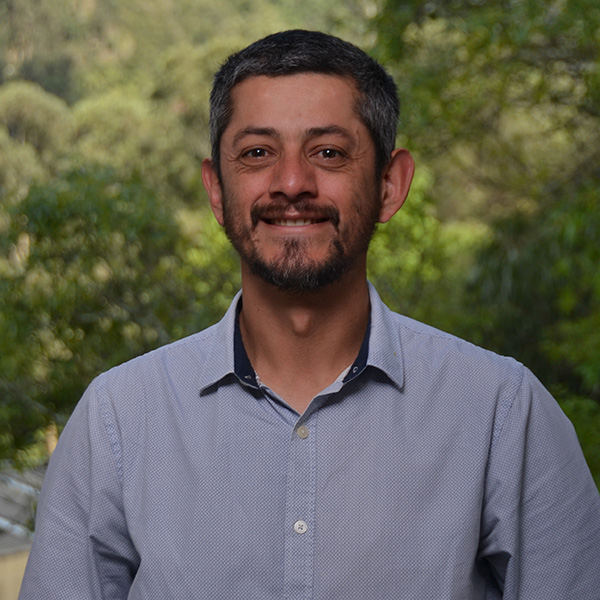
Jueves 23 de abril | 12:30 p.m. | W-101
Presenta: Oscar Becerra - Universidad de los Andes.
An ounce of prevention, a pound of cure? The fiscal impact of natural disasters and preventive investment in Colombian Municipalities
In this paper, we analyze the effect of natural disasters on municipal fiscal outcomes. Unlike national governments, municipalities operate under distinct fiscal frameworks with limited local revenues and dependency on earmarked transfers. By analyzing the universe of Colombian municipalities, we identify a systemic pattern in which institutional rigidities inhibit fiscal adjustments. Using an event-study approach with data from 2000 to 2023, we find no statistically significant effect of disasters on fiscal outcomes, even in municipalities with high levels of preventive investment. These results, robust to alternative severity measures, suggest that rigid institutional setups prevent municipalities from adjusting their finances in response to disasters.
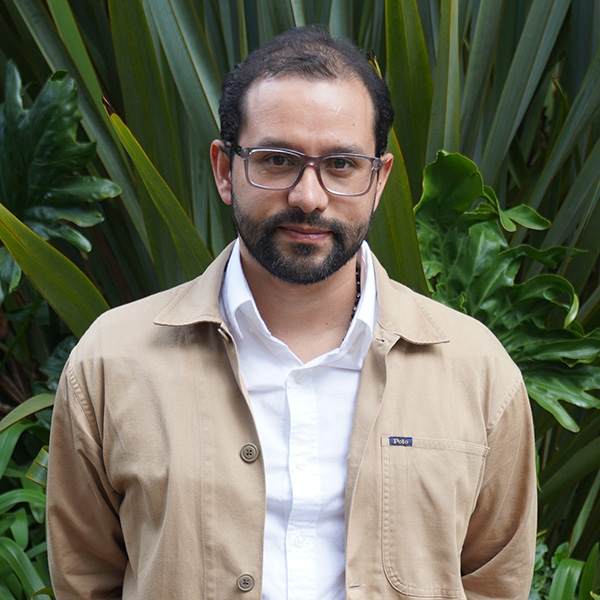
Jueves 16 de abril | 12:30 p.m. | W-101
Presenta: Sebastián Montaño - Universidad de los Andes.
The Labor Market Value of a Timely Diploma
This paper studies how delays in diploma receipt affect the school-to-work transition and long-term labor market outcomes. In Colombia, graduating seniors can wait up to six months to receive their college diplomas after completing all degree requirements. Waiting times are largely determined by administrative procedures and vary considerably across and within programs. Exploiting within-program variation, we show that students experiencing longer delays are less likely to be employed one year after graduation and have significantly lower earnings ten years later. Our findings suggest that delays in diploma receipt disrupt initial firm–worker matching, helping explain the persistence of these effects.

Jueves 9 de abril | 12:30 p.m. | W-101
Presenta: Rachid Laajaj - Universidad de los Andes.
Development as Skills and Altruism
This work emphasizes the central role of skill and altruism in development, understood as an increase in social welfare. In the basic model, skill expands the set of feasible payoffs, while altruism governs the private–social tradeoff in the decision maker’s choice. Higher altruism consistently increases social welfare. By contrast, higher skill needs not: capability expansions combine a positive frontier effect with an ambiguous reallocation effect, potentially toward actions that are privately attractive but socially harmful. When altruism is absent or low, whether more skill contributes to development is therefore subject to a “lottery of technology.” Hence altruism acts as a guardrail, limiting misuse of technology, thus when altruism is sufficiently high, skill improvement unambiguously raises social welfare. The rest of the paper discusses possible counterarguments to the central role of altruism in development. Endogenous technological change makes altruism more influential in the long-run. The effect of institutions is subject to a “lottery of alignment of interests” (between policymakers’ objectives and social welfare), unless the altruism of policymakers is high enough to ensure the good use of institutional power. Allowing altruism to be group-specific highlights that only universal, indiscriminate altruism guarantees development and the effective use of skill improvement. This basic setting appears to speak to many contemporaneous and historical events, and the role of altruism leads to the conclusion that ensuring long-term development requires a selection of altruistic leaders and a shift in the distribution of altruism.

Jueves 26 de Marzo | 12:30 p.m. | W-101
Presenta: Alexia Delfino - Bocconi University.
Coautor: Miguel Espinosa (Bocconi University).
Value Dissonance at Work
Organizations often require employees to collaborate with others who may see the world differently, yet we know little about how misalignment in personal values affects performance within firms. Using survey and administrative data from a world-leading bank, we show that employees whose values diverge from their manager’s perform worse. This effect is not explained by demographic diversity, managerial biases or misalignment with organizational values. The productivity loss of moving from the least to the most misaligned worker is nearly four times larger than that of having a manager of a different gender. Value differences with teammates do not generate similar effects. We provide empirical evidence and a theoretical framework to show that value misalignment with managers can affect performance by discouraging employee-led communication..

Martes 17 de Marzo | 12:30 p.m. | ML-515
Presenta: Jorge Cuartas - Assistant Professor at New York University & Investigador Asociado, CESED, Universidad de los Andes.
Las consecuencias de la violencia en la primera infancia y su prevención
La violencia contra la primera infancia constituye una de las mayores amenazas para la acumulación de capital humano y para las trayectorias educativas, sociales y económicas a lo largo del ciclo de vida. Sin embargo, algunas de sus formas, como el castigo físico, siguen siendo socialmente normativas y altamente prevalentes. En esta charla presentaré evidencia empírica sobre los efectos del castigo físico en el desarrollo humano, con énfasis en los principales desafíos asociados a la identificación causal, así como a la validez externa de los estudios existentes. A continuación, reflexionaré sobre una alianza de investigación–práctica con el Gobierno de Colombia orientada al diseño, evaluación y escalamiento de Apapacho, un programa de prevención de la violencia en la primera infancia. Mostraré cómo integramos (1) teoría económica, psicología y ciencias de la implementación con (2) evidencia empírica proveniente de una evaluación experimental con más de 2.500 madres, padres y otros cuidadores de niños y niñas en primera infancia, así como pilotos y estudios de métodos mixtos, para maximizar la efectividad, aceptabilidad, relevancia, factibilidad y sostenibilidad del programa. Concluiré discutiendo cómo el trabajo interdisciplinario, aplicado y colaborativo con responsables de política puede aumentar de manera sustantiva la efectividad y escalabilidad de intervenciones orientadas a promover el desarrollo infantil temprano.

Jueves 12 de Marzo | 12:30 p.m. | W-101
Presenta: Rakesh Vohra - University of Pennsylvania.
Coautores: Yiqing Xing and Wu Zhu.
The network effects of agency conflicts
We consider a collection of firms linked through equity-holdings whose managers choose risky investment decisions in response to an exogenous shock. Agency conflicts arising from a gap between the firm's value and a manager's present rewards (from shares, penalties, bonuses, etc.) or future career concerns will distort the manager's choices. The nature of the conflict determines whether they are overly conservative or overly risky, as well as the strategic complementarity or substitution of the managers‘ choices, independent of the underlying equity network. However, the network will determine the magnitude of these distortions and whether they are amplified, and we characterize when this is so. Furthermore, even when the holding network is fully diversified, within-firm agency conflicts can prevent the aggregate effect of idiosyncratic shocks from diminishing as received wisdom would suggest. This implies that corporate governance plays an important role in macro fluctuations.

Jueves 5 de Marzo | 12:30 p.m. | W-101
Presenta: Fernando Fernandez - Senior Research Scientist - Wyss Academy for Nature.
Coautores: Mathieu Couttenier, Kai Gehring and Ronny Condor.
Understanding Artisanal Mining
Millions of people depend on artisanal and small-scale gold mining (ASGM) for their livelihoods, yet transitions toward cleaner and more formal mining business models remain rare despite decades of policy interventions. We study the sources of this persistence in the Peruvian Amazon using novel survey data collected from concession owners and workers in Madre de Dios. We document substantial heterogeneity in miners’ economic conditions, exposure to risk and insecurity, access to finance and markets, trust in public institutions, and beliefs about mining and development, and examine how these characteristics relate to stated intentions to adopt clean technologies, pursue formalization, and invest in alternative business models. We then use two complementary survey experiments to discipline interpretation. A randomized conjoint experiment elicits preferences over multidimensional policy bundles, while a vignette experiment isolates the relative importance of liquidity constraints versus downside risk in adoption decisions. Together, the analysis highlights how interacting financial, institutional, and belief-based constraints shape both initial take-up and subsequent follow-through, helping explain why single-instrument policies often fail and informing the design of bundled approaches to support durable mining transitions in environmentally fragile contexts.
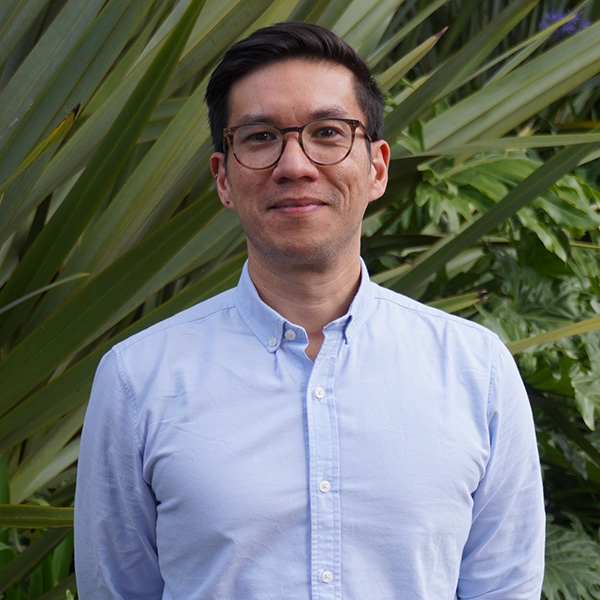
Jueves 26 de febrero | 12:30 p.m. | W-101
Presenta: Andrés Ham - Universidad de los Andes.
Coautores: Juanita Ruiz-Contreras, Andrea Velásquez.
When Violence Hits Home: Labor Markets and Household Responses in a Transit Country
We examine the effects of drug-related violence on household choices in a transit country in the global cocaine trade. Using a shift-share instrumental variables strategy that interacts temporal variation in Colombian coca production with cross-sectional municipal connectivity in Honduras, we find heterogeneous impacts on men, women, and children. Rising homicide rates reduce male labor force participation, especially among self-employed and informal workers. For women, violence increases household work and lowers self-employment wages, reflecting a shift to low-productivity activities. For children, violence raises school attendance and reduces work, consistent with schooling as a protective response. These findings demonstrate that drug-related violence disrupts labor markets and reshapes time allocation within households, underscoring the broader consequences of drug-related violence in transit countries.

Jueves 19 de febrero | 12:30 p.m. | W-101
Presenta: Emanuele Brancati - Sapienza University of Rome (Italy).
Coautores: Francesco Amodio, Nicolás de Roux, Michele Di Maio.
Labor Market Institutions and Wage-Setting Power: Evidence from Latin America and the Caribbean
We measure firms’ wage-setting power in 16 Latin American and Caribbean countries. Exploiting variation in firms’ exposure to trade and exchange rates, we generate shocks to labor demand to trace out firm-level labor supply curves and quantify labor market power. We estimate an inverse labor supply elasticity of 0.82, implying that workers receive 55 cents per additional dollar produced. Wage-setting power is significantly higher among firms in countries with lower union density, limited collective bargaining, and no unemployment protection. This underscores the role of labor market institutions in shaping firms’ wage-setting power and the distribution of the gains from trade.
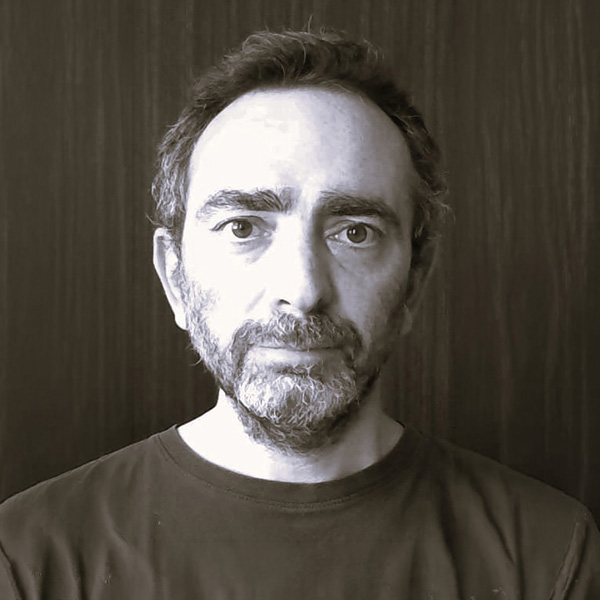
Jueves 19 de febrero | 12:30 p.m. | W-101
Presenta: Michele Di Maio - Sapienza University of Rome (Italy).
Coautores: Emanuele Brancati, Roberta Gatti, Asif Islam.
Under pressure: Global evidence on conflict and firms
This paper provides the first global analysis of the impact of conflict exposure on firm performance, combining geolocalized longitudinal firm-level data with information on political violence events across 89 countries between 2006 and 2019. Our results show that higher conflict exposure leads to declines in both sales and total costs, resulting in no significant effect on profits for surviving firms. The reduction in sales is driven by lower output, which reflects conflict-induced shortages of raw materials and production inputs, as well as increased informal competition. Firms respond to declining sales by adjusting labor costs, substituting skilled workers with unskilled ones. The negative effects of conflict on firms are more pronounced in countries that are more involved in international trade, have weaker institutions, infrastructure, and financial development, were initially at peace, or are characterized by more spatially diffuse conflict. In these settings, greater conflict exposure leads to reductions in both sales and profits.

Lunes 2 de febrero | 12:30 p.m. | ML-513
Presenta: Giselle Labrador-Badia - University of Winsconsin-Madison.
Deposit Segmentation and Bank Competition: Implications for Monetary Policy
This paper quantifies how segmentation and bank market power in deposit markets shape the transmis sion of monetary policy. Using rate data differentiated by deposit account size, I document that uninsured rates are higher than insured rates, significant heterogeneity in banks’ uninsured deposit exposure, and in complete pass-through from policy rates to deposit rates. I develop and estimate a structural model of bank competition with segmented deposit markets by insurance status and spatial competition to understand these patterns and quantify their implications for monetary transmission. I find that uninsured deposits are slightly more elastic than insured deposits, while insured deposits have higher servicing costs. In counterfactual simulations of federal funds rate increases, I find that insured deposit outflows are three times larger than unin sured outflows and pass-through is higher for uninsured rates. Banks substitute toward wholesale funding, contracting lending as monetary policy tightens. Small banks experience larger balance sheet contractions following rate increases, while competitive markets exhibit stronger deposit pass-through. These findings demonstrate that accounting for deposit segmentation is essential for understanding monetary transmission: segmentation amplifies policy effects in competitive markets but dampens transmission in concentrated mar kets.

Viernes 30 de enero | 12:30 p.m. | ML-513
Presenta: Katarina Kuske - Bocconi University.
Co-Parenting and Careers after Divorce
Joint physical custody (co-parenting) is an increasingly popular post-divorce parenting arrangement, and while it benefits children, its economic implications for parents are theoretically ambiguous. I investigate empirically how co-parenting affects parents’ labour market outcomes after divorce, exploiting a custody reform in the Netherlands that encouraged co-parenting and increased its uptake by 7.6 percentage points among parents with young children. I find that mothers who divorce after the reform experience a 0.8% wage decline in an intention-to-treat framework relative to those divorcing before the reform, which implies an average wage loss of about 10% for compliers. This is driven by slower wage growth for mothers in the treatment group, who are less likely to move further away to access better-paid employment. The findings suggest that co-parenting ties both parents to a fixed location, reducing geographical mobility. Treated mothers also reduce their hours temporarily – largely due to rising overtime in the control group – while fathers’ wages and hours remain unaffected. The wage penalty is concentrated among mothers who were secondary earners during marriage and younger at the time of divorce. These patterns are consistent with couples placing greater weight on the primary earner’s career when making location decisions, which makes the post-divorce location constraint under co-parenting bind more tightly for mothers than fathers, thereby widening the gender wage gap. My results indicate an efficiency cost of location constraints under coparenting.

Jueves 29 de enero | 12:30 p.m. | W-101
Presenta: Isabel Di Tella - MIT - Massachusetts Institute of Technology.
Coautor: Emilio Colombi
Do Institutions Remove Inflation’s Grease? Evidence from Brazil’s Indexed Minimum Wage
How do labor market institutions shape the propagation of inflation shocks? We address this question by studying Brazil’s annually indexed minimum wage in a highinflation context. Conventional wisdom suggests that inflation can “grease” labor market adjustments, but institutional wage-setting may alter this mechanism. Using administrative data, we show that indexation creates upward nominal wage rigidity: workers exposed to the policy experience fewer month-to-month wage increases before indexation events, and firms anticipate the policy by rigidifying wages of workers who will be newly bound. We evaluate the macroeconomic implications by introducing a cost-push shock to a New Keynesian model with heterogeneous labor and an indexed minimum wage. While staggered indexation amplifies the inflation as grease mechanism by introducing nominal rigidities, anticipation dampens it via intertemporal substitution. Overall, amplification matters more since cost-push shocks have a weaker effect compared to a setting where the minimum wage indexes every period. Our findings demonstrate that even in high-inflation environments, the institutional structure of wage-setting fundamentally shapes how shocks propagate through the economy.

Viernes 23 de enero | 12:30 p.m. | ML-513
Presenta: Alfredo Mendoza-Fernández - University of California, Berkeley.
Coautor: Serra Pelin
Do Central Banks Follow the Fed?
We study how central banks respond to U.S. monetary shocks. Using a newly constructed dataset covering over 9,500 monetary policy meetings across 59 economies (the MPM-dataset), we show that emerging market economy (EME) central banks systematically move in unison with the Fed, whereas advanced economy central banks do not. We present evidence that this heterogeneity arises because, in EMEs, U.S. monetary shocks are perceived as cost-push shocks, transmitted through exchange rate fluctuations that affect firms’ costs, owing to the greater prevalence of dollar debt and dollar-invoiced imports. A three-bloc open-economy New Keynesian model with dominant currency pricing and partial debt dollarization reproduces these empirical patterns, highlighting that EME responses stem from the immediate impact of Fed shocks on exchange rates and, in turn, on firms’ marginal costs.

Jueves 22 de enero | 12:30 p.m. | W-101
Presenta: Lautaro Chittaro - Stanford University.
Coautor: Cristián Sánchez
Selection in Crisis Lending: Evidence from Chile’s Government-Guaranteed Loans
We study the long-run effectiveness of government-guaranteed loan programs implemented during recent crises. Using administrative and loan application data from the Central Bank of Chile, we track firm defaults five years after the COVID-19 shock. Our instrumental-variable estimates show that these loans postponed defaults for two years but did not reduce total defaults in the long run. Banks used private information to direct credit toward firms that would have been safer even without the program. To assess the welfare implications of the delayed defaults and banks’ selection of safer firms, we build a dynamic model of heterogeneous entrepreneurs disciplined by our causal estimates. The program generated welfare gains 21% above its fiscal cost, with limited rents for banks and modest increases in aggregate risk-taking. Younger firms are the most cost-effective group to support, yet they are the least likely to be approved because their growth relies on leverage, increasing default risk. A budget-neutral redesign that raises guarantees for younger firms and reduces them for the rest could increase welfare by 6pp.

Martes 20 de enero | 12:30 p.m. | SD-702
Presenta: Javier Gonzalez - Southern Methodist University.
Does Watching Women Work, Work? The Effect of Television on Female Labor Outcomes
I study the effect of female empowerment in media on female labor market outcomes using Latin American telenovelas. Using generative AI, I construct a Female Empowerment Index (FEI) for these TV shows from 1960 to 2024. I show that FEI exposure during the impressionable years increases the likelihood of labor force participation among Latin American women. To identify the causal effect of FEI exposure, I implement an instrumental variables strategy using detailed data on television signal coverage in Mexico. The causal estimates confirm the positive effect of FEI exposure, with an effect size comparable to previous studies. Furthermore, FEI changes account for a significant fraction of the aggregate increase in female labor force participation observed over this period. Moreover, both the emotional framing of narratives and the types of jobs depicted play an important role in shaping the effects.
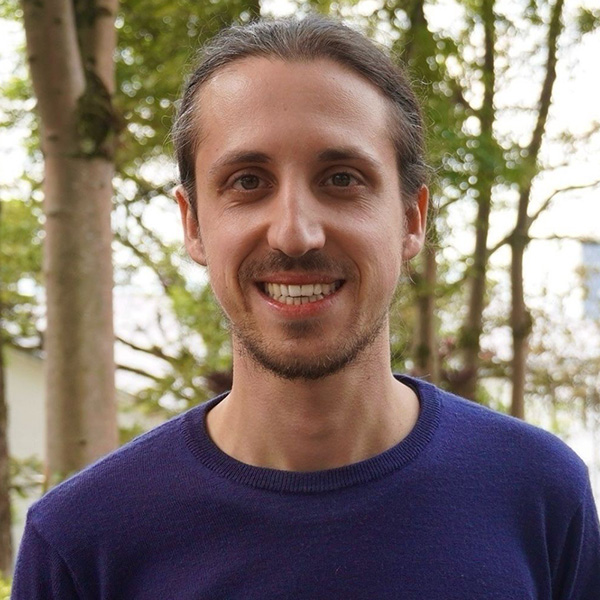
Viernes 16 de enero | 12:30 p.m. | SD-702
Presenta: Matteo Ruzzante - Northwestern University.
Coautor: Felipe Berrutti
Price Regulation and the Adoption–Innovation Trade-off
Regulating the price of existing technologies can spur their adoption yet deter subsequent innovation. In India, price controls on genetically engineered (GE) cotton seeds induced this trade-off. Leveraging the policy’s differential timing across states, we show that mandated price reductions accelerated adoption of GE seeds by farmers. Although seed supply kept pace, innovation subsequently stalled: fewer new varieties were introduced. Using newly assembled data from experimental field trials across India, we show that agronomic yields of new varieties fell in price-controlled states. To quantify the welfare implications of price and yield effects, we develop and estimate a structural model of demand and supply for seeds with endogenous product attributes. While the policy raised farmers’ surplus, especially among the poor, ignoring innovation responses in equilibrium vastly overstates their welfare gains. We use the estimated model to assess alternative policies that better balance adoption and innovation incentives. For a given public budget, incentives for seed developers tied to the productivity of new varieties achieve the highest welfare for farmers.

Miércoles 14 de enero | 12:30 p.m. | SD-702
Presenta: Natalia Pia Guerrero Trinidad - University of Minnesota.
Norms That Travel: The Role of Grassroots Institutions on Antisocial Behavior
In weak-state environments, behavior depends less on formal rules and more on internalized norms, yet how such norms emerge–and whether informal institutions can cultivate them remains unclear. I provide causal evidence that accountable grassroots institutions can form, internalize, and sustain moral norms that shape long-run behavior. My empirical strategy exploits the staggered emergence of Peru’s Peasant Rounds (1976–1983)–community-run security organizations with participatory and accountable design that promoted moral norms– and combines archival, ethnographic, administrative, survey, and original fieldwork data into a new dataset. Using a matched difference-in-differences design across cohorts and birth districts, paired with displacement induced by exogenous weather shocks, I show that exposure to the rounds before age 11 shifts rule-following from fear to empathy, fosters more impartial moral judgments, increases respect for others’ rights, and raises trust beyond the in-group. These changes in moral norms translate into meaningful behavioral outcomes: adult arrests and incarceration fall by roughly 14 percent relative to the control-group mean, and insurgent recruitment declines by about 32 percent. I also find substantial evidence that these norm changes persist when individuals relocate, diffuse into previously unexposed host communities, and extend to the next generation. A placebo comparison with self-defense groups lacking accountability shows no comparable effects. Taken together, the results are consistent with a mechanism in which accountable community institutions socialize children and raise the moral cost of wrongdoing, cultivating intrinsic prosocial motivation that travels with individuals over space and time.
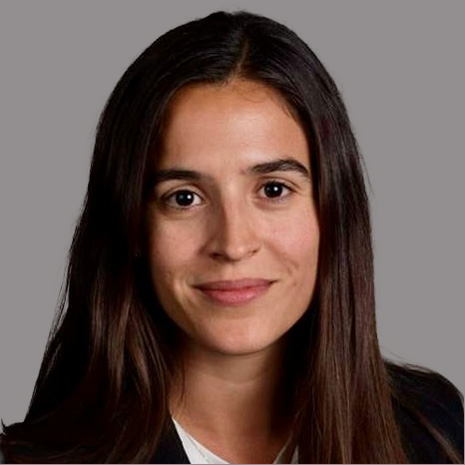
Martes 13 de enero | 12:30 p.m. | SD-702
Presenta: Antonia Vazquez - University of Texas at Austin.
Can We Save Failing Schools? Evidence From Los Angeles
Can investing in failing schools help them improve? This paper studies this question using a natural experiment based on a 2017 lawsuit settlement that allocated substantial resources to the lowest-performing schools in the Los Angeles Unified School District (LAUSD). Using a difference-in-differences design, I compare 50 secondary schools that received an increase of 13.5% on average in their annual budgets for three years, to nearby public, noncharter schools that received no settlement funding. The intervention mandated hiring of additional staff members and allocating of funds for professional development, but allowed discretionary spending on initiatives for high-need students. I find that, in line with the intent of the settlement, schools hired more personnel, including instructional staff such as teachers and counselors and support personnel such as paraprofessionals and school service staff, all effects statistically significant. Settlement schools achieved a 0.75 percentage points reduction in suspension rate relative to unfunded schools, reflecting a marked improvement in performance outcomes. These reductions were particularly notable given that the settlement triggered demographic sorting, with the treated schools losing students overall and shifting toward higher concentrations of economically disadvantaged students and lower Black enrollment. A simple bounding exercise that accounts for demographic sorting indicates that the settlement had meaningful effects on suspension rates, suggesting real improvements on noncognitive dimensions of schooling. Survey evidence suggests that two key mechanisms for lower suspensions were improvements to school climate as reported by staff and students, and enhancements to educators’ capacity and disciplinary approaches.
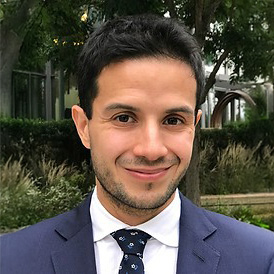
Jueves 27 de noviembre | 12:30 p.m.
Presenta: Román Andrés Zárate - University of Toronto.
Coautores: Josefa Aguirre y Fernanda Ramírez-Espinoza
Violencia en la Escuela
Este artículo estima el impacto de la violencia perpetrada por pares y por el personal escolar sobre los estudiantes víctimas. A partir de datos administrativos de Chile que vinculan reportes de violencia escolar con registros educativos individuales, abordamos limitaciones metodológicas que han dificultado la identificación de los efectos causales de la violencia escolar en el corto, mediano y largo plazo. Usando un diseño de diferencias en diferencias con emparejamiento, encontramos que la exposición a la violencia escolar tiene efectos negativos persistentes: el ausentismo aumenta entre un 46 % y un 64 %, las tasas de repitencia se duplican, y tanto las calificaciones como los puntajes en pruebas estandarizadas disminuyen significativamente, con impactos que se extienden hasta por cuatro años. A largo plazo, las víctimas presentan una probabilidad sustancialmente menor de graduarse de la educación secundaria o matricularse en la universidad. Los efectos son más severos cuando la violencia es perpetrada por adultos que cuando proviene de pares. Evidencia complementaria de encuestas muestra que los incidentes reportados se asocian con mayores percepciones de violencia y discriminación, así como con una menor sensación de pertenencia escolar y menores expectativas por parte de los docentes. Aunque estos efectos psicológicos y de percepción desaparecen un año después de los incidentes, las consecuencias educativas adversas persisten, evidenciando cómo experiencias de violencia, incluso breves, pueden generar desventajas educativas duraderas.

Jueves 13 de noviembre | 12:30 p.m.
Presenta: Rachid Laajaj - Universidad de los Andes.
Coautora: Maria Camila Ortiz Alvarez
Measuring the Climate Adaptation Gap
This paper presents a new approach to decompose the effects of climate change on agriculture into the direct effect of a change in climate conditions and the effect of imperfect climate adaptation. We first provide a theoretical framework showing that to capture both effects, a regression should model agricultural outcomes as a function of both the change in expected weather conditions and its absolute value. The former captures the direct effect, which may be positive or negative, while the absolute value accounts for the fact that any deviation in expected weather, regardless of its direction, creates a need for adaptation, causing inefficiency until the farmer fully adjusts her farming decisions. We further derive econometrically how, in the presence of both a direct and adaptation effect, the omission of the absolute value of the change in expected weather, a common limitation in previous studies, compromises the interpretation of the results. Our analysis predicts that the coefficient(s) in front of the absolute value in weather change should be negative in the presence of a Climate Adaptation Gap (CAG). We take this prediction to US and Colombian data, using the long-differences methodology and variations in expected temperature and precipitation over long periods. The results confirm the existence of a significant CAG in both countries, though substantially larger in Colombia.

Jueves 6 de noviembre | 12:30 p.m.
Presenta: Vitor Possebom - São Paulo School of Economis.
Coautor: Rafael Araujo
Potato Potahto in the FAO-GAEZ Productivity Measures? Nonclassical Measurement Error with Multiple Proxies
The FAO-GAEZ productivity data are widely used in Economics. However, the empirical literature rarely discusses measurement error. We use two proxies to derive novel analytical bounds around the effect of agricultural productivity in a setting with nonclassical measurement error. These bounds rely on assumptions that are weaker than the ones imposed in empirical studies and exhaust the information contained in the first two moments of the data. We reevaluate three influential studies, documenting that measurement error matters and that the impact of agricultural productivity may be smaller than previously reported. Our methodology has broad applications in empirical research involving mismeasured variables.
>>Paper

Jueves 30 de octubre | 12:30 p.m.
Presenta: Alvaro Riascos - Universidad de los Andes y Quantil.
Coautores: Juan David Martín (Quantil) y Daniel Mejía (UniAndes)
Revisiting the Police–Crime Relationship: A structural estimation of a discrete-choice model of offender location
In this paper, we estimate the causal impact of police presence on crime using a structural discrete-choice model of criminal location choice. Our approach combines credible quasi-experimental variation in police patrols—induced by emergency calls unrelated to crime—with a behavioral model of offender decision-making, allowing us to estimate deterrence effects and simulate policy counterfactuals. In our structural model, offenders choose locations based on potential rewards and the risk of apprehension, proxied by police presence. Using an instrumental variable for police deployment based on non-crime emergency calls, we find that increased police presence significantly deters crime. Our main results indicate that a 10% increase in patrol presence leads to roughly a 7–8% reduction in crime, an elasticity toward the upper end of prior estimates. The structural model reveals spatial heterogeneity in deterrence. According to our counterfactual simulations, reducing police response to non-crime emergency calls by 50% would lower total crime by about 7.1%—a reduction equivalent to increasing total police patrol time (comparable to the active force) by 11.2%. These findings extend reduced-form evidence by quantifying offenders’ responsiveness to police presence and by illustrating how alternative deployment strategies can enhance deterrence, with direct policy relevance for resource-constrained cities.

Jueves 23 de octubre | 12:30 p.m.
Presenta: Giorgio Chiovelli - Universidad de Montevideo.
Coautores: Francesco Amodio (McGill University) and Serafin Frache (Universidad de Montevideo)
Beefing Up the Service Sector: Commodity Export Booms and Production Network Spillovers
We show that commodity export booms can propagate up the value chain, reshape production networks, and promote growth in the service sector. We study Uruguay’s beef ex- port boom to China in the 2010s, combining customs, firm-to-firm transactions, employer- employee, and balance sheet data. Firms more linked to exporters experienced higher sales, especially in services, with associated gains in employment, wages, and sales per worker. Aggregate sales rose by 1.79%, with each export dollar generating 46 more cents in domestic sales, 10 cents in services. Over time, service firms reoriented their connections toward beef exporters, amplifying their gains from trade.

Jueves 16 de octubre | 12:30 p.m.
Presenta: Elisa Belfiori - Professor, School of Business, Universidad Torcuato Di Tella.
Coautor: Manuel Macera, Economics Department, Universidad Torcuato Di Tella
Optimal Climate Policy with Demographic Transitions
This paper develops a framework to integrate demographic change into climate policy analysis. We build an overlapping-generations climate-economy model with a rich demographic structure, allowing population growth and survival probabilities to vary over time. These features endogenously determine the age composition of society and shape aggregate preferences over time. A central result of our framework is an aggregation result: despite the heterogeneity across cohorts, the planner’s problem can be recast as a representative-agent model with a time-varying social discount factor that reflects demographic dynamics. Notably, as the population ages, the discount factor declines, causing society to behave as if it were more impatient. We use this framework to study how current global demographic trends affect the social cost of carbon—the model-based measure of the economic cost of climate change. We find that this cost is significantly higher under medium- and high-fertility scenarios, driven by greater emissions from larger populations. These effects are partially offset by higher discounting in aging societies. Relative to a benchmark model with no demographic change, the initial social cost of carbon rises by 20% under medium fertility and by 57% under high fertility. Global temperatures also increase more sharply in these scenarios, suggesting that demographic trends will exacerbate the climate problem.

Jueves 9 de octubre | 12:30 p.m.
Presenta: Maria Pia Paganelli - Trinity University.
From dull to cheerful: the relevance of Adam Smith for today
Is there a secret recipe for economic growth? No, but we can extrapolate some pieces of advice from Adam Smith. An economy can leave behind its “dull” stagnant state and grow when its markets expand, when the productivity of its workers increases thanks to high compensations which are seen as incentives to work harder, and when lobbying and cronyism are kept at bay. Luck plays a role too, but these three ingredients are necessary, even if not sufficient, for an economy to grow and thus be “cheerful.”
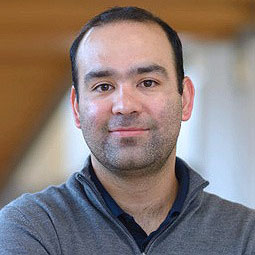
Jueves 25 de septiembre | 12:30 p.m.
Presenta: Luis Felipe Sáenz - University of South Carolina
Coautor: Robert E. Lucas, Jr.
The Global Industrial Revolution
Standards of living were roughly constant before 1800, almost everywhere. In the early 19th century, English-speaking countries began a process of sustained economic growth that continues today. We document that this rise in living standards—first observed in Great Britain and the United States—is now a global phenomenon. Across countries, we observe four robust patterns along the development path: (i) a reallocation of labor out of agriculture, (ii) a demographic transition, (iii) rising human capital, and (iv) a U-shaped trajectory of female labor force participation. We develop a Unified Growth Theory in which these changes arise endogenously from household decisions. Parents choose how to allocate their time between working and raising children, and how to divide labor between a traditional land-based technology and a modern, human-capital-intensive one. A gradual rise in traditional productivity relaxes resource constraints, enabling investments in child quality. These investments, in turn, make the modern sector profitable, triggering a self-sustaining transition to growth. Calibrated to historical data, the model reproduces the main features of the global development path—including, critically, the U-shaped evolution of female labor force participation.
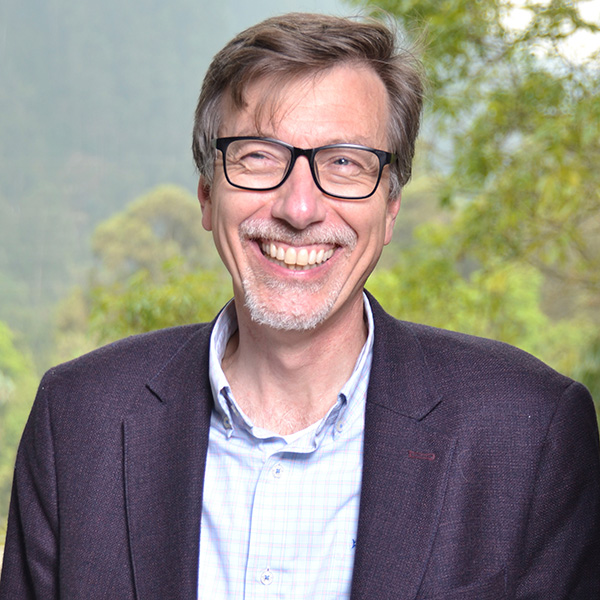
Jueves 18 de septiembre | 12:30 p.m.
Presenta: Hernando Zuleta - Universidad de los Andes
Labor-Saving Innovations? Optimal Capital-Biased Taxation
This paper investigates optimal taxation in a growth model with capital-biased technological change. We study how the optimal allocation of resources between capital accumulation and innovation depends on who controls this decision. Three scenarios are considered: a centralized economy where a planner chooses the allocation to maximize output, and two decentralized economies that differ in their allocation mechanisms. In the first decentralized scenario, households allocate their savings between capital accumulation and innovation to maximize capital income. We show that: (i) If the production function is linear in capital stock, the decentralized solution is optimal. (ii) If the production function is concave in the capital stock, the decentralized solution is sub-optimal, allowing optimal taxation. In the second decentralized scenario, firms, rather than households, decide how to allocate investment resources. Although the firm also maximizes capital income, the resulting equilibrium diverges from both the planner’s and the household-driven case, leading to a distinct expression for the optimal tax. Across both decentralized settings, a tax on RD becomes necessary when the marginal return to capital deviates from the marginal return to innovation.
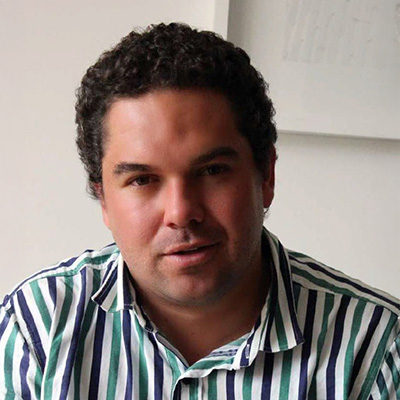
Jueves 11 de septiembre | 12:30 p.m.
Presenta: Juan José Ferro - Universidad de los Andes
Relative price and deterrence: the effect of speeding tickets on road behavior
Governments use fines in order to deter socially unwanted behavior on a wide array of issues. It is commonly assumed that, fixing the probability of sanction, the higher the price, the more deterrent a sanction is. I use data from automated speed cameras in Bogotá, Colombia to measure the deterrent effect of a speeding ticket. By using the real speed limit as a source of exogeneous variation and a regression discontinuity design, I find that speeding tickets have a general deterrent effect on speeding behavior but a null effect on reducing traffic accidents. Using the commercial price of the vehicle as a proxy for wealth and the fact that the monetary sanction is fixed, I find that the deterrent effect is concentrated on the higher quintiles of the distribution. I validate these findings with a judge-IV using the fact that a police agent manually verifies all tickets. Other dimensions of driving behavior show that speeding tickets do change behavior, not only adjust beliefs about enforcement. In short, speeding tickets might be less useful for preventing road fatalities than it is commonly assumed and inefficiently expensive for changing behavior for a considerable number of drivers. They also seem to be of little effectiveness for the current public health challenge of traffic fatalities in low and middle income countries. This evidence points to income based fines as a necessary public policy tool.

Jueves 4 de septiembre | 12:30 p.m.
Presenta: Daniel Schwartz - Universidad de Chile
The Rise of a Nudge: Field Experiment and Machine Learning on Minimum and Full Credit Card Payments
An analysis of corporate income tax reveals a largely overlooked fact: statutory tax rates are higher in developing economies. In addition, statutory tax rates are procyclical in low-income economies, rising during downturns and potentially amplifying recessions. This paper develops a theoretical framework that reconciles these two phenomena. In our model, firms choose between formal and informal operations based on their productivity and the benefits of formalization, while the government---constrained by limited tax collection efficiency---must set a statutory tax rate to finance a given level of expenditure. We show that low state capacity forces governments to adopt high statutory tax rates, which in turn raise the threshold for formalization and exacerbate informality. Moreover, during economic downturns, the contraction of the tax base compels these governments to raise statutory rates, rendering fiscal policy procyclical. We demonstrate that this procyclicality intensifies as state capacity decreases, creating a compounding challenge where the weakest states face the most destabilizing fiscal adjustments during economic downturns. We also show that even when firms in different countries have the same inherent productive capabilities, stronger state capacity leads to higher observed productivity. This creates an artificial productivity gap between developing and developed countries, driven by institutional constraints rather than actual differences in productive potential. A dynamic extension of our model reveals how political instability and high reform costs can trap countries in a low-capacity equilibrium. Our framework offers implications for policies aimed at modernizing tax administration, broadening the tax base, and implementing countercyclical fiscal measures in developing economies.
>>Paper
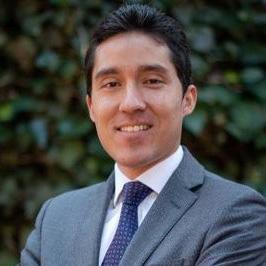
Jueves 28 de agosto | 12:30 p.m.
Presenta: Luis Fernando Mejía - Director ejecutivo Fedesarrollo
Why are Tax Rates High and Procyclical in Developing Economies?
An analysis of corporate income tax reveals a largely overlooked fact: statutory tax rates are higher in developing economies. In addition, statutory tax rates are procyclical in low-income economies, rising during downturns and potentially amplifying recessions. This paper develops a theoretical framework that reconciles these two phenomena. In our model, firms choose between formal and informal operations based on their productivity and the benefits of formalization, while the government---constrained by limited tax collection efficiency---must set a statutory tax rate to finance a given level of expenditure. We show that low state capacity forces governments to adopt high statutory tax rates, which in turn raise the threshold for formalization and exacerbate informality. Moreover, during economic downturns, the contraction of the tax base compels these governments to raise statutory rates, rendering fiscal policy procyclical. We demonstrate that this procyclicality intensifies as state capacity decreases, creating a compounding challenge where the weakest states face the most destabilizing fiscal adjustments during economic downturns. We also show that even when firms in different countries have the same inherent productive capabilities, stronger state capacity leads to higher observed productivity. This creates an artificial productivity gap between developing and developed countries, driven by institutional constraints rather than actual differences in productive potential. A dynamic extension of our model reveals how political instability and high reform costs can trap countries in a low-capacity equilibrium. Our framework offers implications for policies aimed at modernizing tax administration, broadening the tax base, and implementing countercyclical fiscal measures in developing economies.
| Lugar | Salón W-101 |
|---|---|
| Conferencista | Camila Galindo, Universidad de los Andes |
| Coautores | Fabio Sánchez, Universidad de los Andes |
| Abstract | This paper estimates the medium- and long-term impacts of preschool expansion in Colombia and examines whether early education can amplify the effectiveness of a later nutritional intervention. Using administrative data and plausibly exogenous variation in preschool availability, we find that preschool exposure reduces dropout, increases primary and secondary completion, improves test scores on the high school exit exam, and raises higher education enrollment. We then study its interaction with the staggered rollout of a national school feeding program (PAE) beginning in 2012. Students exposed to both interventions, particularly when PAE began in earlier grades, show decreases in dropout and larger gains in secondary completion and test scores, consistent with dynamic complementarity. These results suggest that early education can enhance the productivity of later investments in human capital. |
| Fecha | 21 de agosto de 2025 |
| Hora | 12:30 p.m. |
| Lugar | Salón W-101 |
|---|---|
| Conferencista | Heather Sarsons, University of Chicago Booth School of Business |
| Coautores | Louis-Pierre Lepage and Michael Thaler |
| Abstract | What drives opposition to affirmative action policies? We test whether individuals' college admissions outcomes, relative to their expectations, influence their attitudes toward affirmative action policies and inequality more broadly. Using a retrospective survey, we find that disappointed individuals---those who were admitted to fewer schools than anticipated---believe that affirmative action played an outsized role in their admissions outcomes, have the lowest support for affirmative action policies, and are more willing to donate to anti-affirmative action organizations. They also hold more negative views about the academic qualifications of under-represented minorities. A complementary survey experiment provides causal evidence that disappointing news about one's admissions prospects can directly shift beliefs, reduce support for affirmative action, and make people believe that there is less racial inequality than there actually is. |
| Fecha | 14 de agosto de 2025 |
| Hora | 12:30 p.m. |
| Lugar | Salón W-102 |
|---|---|
| Conferencista | Antoine Zerbini, Universitat Autònoma de Barcelona |
| Coautor | Kun Heo (LSE) |
| Abstract | We analyze the incentives of authoritarian regimes to segment access to censored content through technology. Citizens choose whether to pay to access censored online content at a cost fixed by the regime: the firewall. A low firewall segments access and generates more compliance than full censorship - a high firewall - ever could. Regime opponents self-select into consuming censored content, and comply conditional on positive independent reporting. Regime supporters exclusively consume state propaganda, which secures their compliance. This segment-and-rule strategy can be engineered by making local news outlets uninformative, or by affecting the intrinsic benefit from access. |
| Fecha | 19 de mayo de 2025 |
| Hora | 12:30 p.m. |
| Lugar | Salón W-101 |
|---|---|
| Conferencista | Nava Ashraf, London School of Economics and Political Science (LSE) |
| Coautores | Gharad Bryan, Alexia Delfino, Emily A. Holmes, Leonardo Lacovone, Christian Johannes Meyer, Ashley Pople |
| Abstract | This paper evaluates a scalable psychosocial intervention designed to improve economic outcomes among individuals exposed to trauma and displacement. Guided Mental Experiencing (GME) is a group-based program that trains participants to construct vivid, emotionally coherent simulations of future scenarios. Motivated by a conceptual framework linking trauma to impairments in episodic future simulation, we test GME in two randomized controlled trials. In Ethiopia, where GME was delivered to newly arrived refugees, it increased employment, hours worked, and well-being. In Colombia, where GME was embedded in business training, it mitigated the negative earnings effects observed under training alone. Effects are largest among individuals with high trauma exposure. These results suggest that trauma can impair forward-looking cognition in ways that depress economic engagement, and that repairing this capacity can improve program effectiveness. Simulation-based interventions may thus complement standard approaches to poverty alleviation, particularly in settings where opportunity alone is insufficient to motivate action. |
| Fecha | 15 de mayo de 2025 |
| Hora | 12:30 p.m. |
| Lugar | Salón W-102 |
|---|---|
| Conferencista | Carolina Castro Osorio, Universidad de los Andes |
| Coautores | Santiago Herrera, Brigitte Castañeda, María Alejandra Vélez |
| Abstract | Global efforts to mitigate climate change include Reducing Emissions from Deforestation and Forest Degradation (REDD+). However, evidence on its effectiveness remains mixed, with many studies finding limited impacts on deforestation and overlooking potential effects on other economies. This study evaluates the effectiveness of collective REDD+ agreements signed by Afro-Colombian communities in curbing both deforestation and coca cultivation. Using satellite data and a difference-in-differences approach, we find that REDD+ projects significantly reduced deforestation by an average of 33 m² per pixel and coca cultivation by 0.33 ha / km2, which is approximately 9,695 hectares of avoided deforestation and 7,098 hectares of contained coca crop expansion annually. These significant impacts, which stand in contrast to findings from previous REDD+ evaluations, likely stem from the way these collective agreements strengthen local monitoring systems, enhance social cohesion, and improve economic conditions. |
| Fecha | 12 de mayo de 2025 |
| Hora | 12:30 p.m. |
| Lugar | Salón W-101 |
|---|---|
| Conferencista | Laura Juárez González, Centro de Estudios Económicos, El Colegio de México CEE |
| Coautor | Fernanda Márquez-Padilla |
| Abstract | We estimate the labor and health effects of the menopause transition for U.S. women. Using data from the NLSYW and the SWAN and applying an event study methodology which exploits the individual-level variation in the time of menopause, we find that women undergoing this transition have a lower probability of employment of almost 20 percentage points, and a higher probability of working part-time if they remain employed. We do not find significant impacts on their monthly earnings or hourly wage. Regarding health, we find that menopause increases the probability of having osteoporosis and bone fractures but does not have a significant impact on the probability of being diagnosed with diabetes, high blood pressure, or high cholesterol. We also find that the probability of taking hormones to treat symptoms increases throughout the menopause transition, as expected. However, such increase in hormonal take-up is concentrated among White and highly educated women, which highlights the unequal access to treatment, and probably different menopause experiences, associated with traditional markers of socioeconomic status. |
| Fecha | 8 de mayo de 2025 |
| Hora | 12:30 p.m. |
| Lugar | Salón W-101 |
|---|---|
| Conferencista | Margarita Gáfaro González, Banco de la República |
| Coautores | Nicolás de Roux y Zach Brown |
| Abstract | This paper examines the impact of Internet expansion on banking competition and credit access in rural Colombia. Using a staggered rollout of the National Fiber Optic Program from 2013 to 2016, we analyze the effects of broadband availability on public and private bank lending. We find that Internet connectivity reduced loan disbursements from the state-run Banco Agrario de Colombia (BAC) while increasing private bank lending, particularly for small enterprises. The shift was initially driven by reduced information frictions and later reinforced by new private bank entry. The findings suggest that Internet access facilitates competition and improves borrower outcomes by increasing access to better-matching credit products. |
| Fecha | 24 de abril de 2025 |
| Hora | 12:30 p.m. |
| Lugar | Salón W-101 |
|---|---|
| Conferencista | Mateo Uribe-Castro, Universidad de los Andes |
| Coautor | Diana Ricciulli-Marin |
| Abstract | This study examines the relationship between land inequality and tax collection. Contrary to traditional models that emphasize the redistributive role of taxation, we focus on its role in providing public goods that help develop markets, increasing productivity--i.e. enforcement of property rights, coordination, roads, electricity, etc. To explore this relationship, we build a simple model of public good provision where landowners decide whether or not to comply with property taxes taking into account: 1) the role government expenditure has on their property values, and 2) their expectation of the punishment when evading taxes. We validate the model empirically, using data from Colombian municipalities between 1923 and 1960, in two ways. First, we use detailed land values' data from cadastres available for a subsample of municipalities and the model's structure to predict tax revenues and compare them with actual revenues. Second, we show evidence in favor of the main model predictions: land concentration is positively correlated with tax revenues per capita, and negatively correlated with the average fiscal cost of collecting one peso. These correlations are robust to controlling for measures of potential sources of omitted variable bias. Moreover, they are stronger for places that stand more to gain from the development of markets. |
| Fecha | 10 de abril de 2025 |
| Hora | 12:30 p.m. |
| Lugar | Salón W-101 |
|---|---|
| Conferencista | Luis A. Puch, Universidad Complutense de Madrid |
| Coautores | Antonia Díaz, Jesús Ruiz |
| Abstract | In this paper we propose a theory to investigate the importance of investment-specific technical change (ISTC) in shaping the short run response of macroeconomic aggregates to energy price shocks. In absence of ISTC, aggregate energy efficiency in an economy (i.e, the amount of energy use per unit of capital) responds to changes in energy prices. Here we show that ISTC may be a substitute of energy efficiency: embodied technical change rises the productivity of capital and endogenously increases energy efficiency (i.e., the amount of energy use required per unit of quality-adjusted capital). We estimate the model on U.S. data for the period 1960-2022 using Bayesian estimation techniques, and we assess the relative importance of energy price and ISTC shocks. The estimated model offers an explanation to the softened response of the economy to oil price shocks in recent decades compared to that in the 70s: by increasing investment in the years of high ISTC growth, the economy was increasing its energy efficiency, shielding against the impact of energy price shocks. |
| Fecha | 3 de abril de 2025 |
| Hora | 12:30 p.m. |
| Lugar | Salón W-101 |
|---|---|
| Conferencista | Jessica Leight, International Food Policy Research Institute (IFPRI) |
| Abstract | Adoption of climate-smart agricultural practices that can reduce land degradation and buffer households vis-a-vis intensifying weather fluctuations is notably low in sub-Saharan Africa, and one underexplored constraint in a context of thin labor markets and restrictive gender norms is the ability to optimally allocate labor within a spousal unit. This randomized trial in rural Ethiopia explores the salience of this constraint in the context of a bundled intervention providing training and inputs to encourage uptake of fruit trees intercropped with home gardens, and fertilized with compost. Clusters were randomly assigned to a pure control arm or one of two intervention arms: in the first arm, the intervention was targeted to women alone while in the second arm it was targeted to couples, with both spouses also engaged in a joint planning exercise to optimize labor allocations. The findings suggest that the bundled intervention on average increased the probability of adoption of CSA by at least 50%. In general, these effects are symmetric across treatment arms, but for composting --- the most time- and strength-intensive practice --- the effects are significantly larger in the couples' arm for households identified as non-cooperative at baseline, suggesting that optimal intrahousehold allocation of labor may be a meaningful constraint for effective adoption in this subsample. |
| Fecha | 27 de marzo de 2025 |
| Hora | 12:30 p.m. |
| Lugar | Salón W-101 |
|---|---|
| Conferencista | Santiago de la Cadena, Universidad de los Andes |
| Abstract | A pesar de que los cierres de las escuelas son frecuentes y afectan de manera importante los resultados educativos de los niños, la evidencia respecto a cómo proteger el logro educativo de los niños en esos contextos es aún escasa. Este artículo explora el impacto de entregar alimentación escolar para consumo en casa como una alternativa para proteger el logro educativo de los niños cuando las escuelas están cerradas. Empleando la implementación del Programa de Alimentación Escolar para aprendizaje en casa (PAEC) en Colombia, que llegó al 75% de los niños del sector educativo durante el cierre general de escuelas causado por la pandemia del COVID-19, el artículo muestra que entregar alimentación escolar en casa durante el cierre de escuelas redujo la probabilidad de desertar del sistema educativo entre el 39-54% durante el año en que estuvo cerrada la escuela, y entre 13 y 26% un año después. Este efecto puede llegar a ser el doble del impacto que tiene la alimentación escolar regular cuando las escuelas están abiertas. Los efectos encontrados son mayores en preescolar y primaria, y para poblaciones vulnerables como los indígenas, las comunidades rurales, y los niños con discapacidad. EL PAEC también redujo en 11% la repitencia, pero no tuvo efectos significativos en los niños de extra-edad, reafirmando que – como es usual en la literatura – a pesar de que la alimentación escolar es una intervención efectiva para fomentar la permanencia escolar, sus impactos en otras variables clave del logro educativo son más modestos. |
| Fecha | 13 de marzo de 2025 |
| Hora | 12:30 p.m. |
| Lugar | Salón W-101 |
|---|---|
| Conferencista | Mauricio Romero, Instituto Tecnológico Autónomo de México (ITAM), Universidad de los Andes |
| Coautor | Abhijeet Singh (SSE) |
| Abstract | Many eligible families fail to apply for social programs due to multiple frictions such as information constraints and application complexity. This study evaluates a large-scale randomized controlled trial (RCT) testing interventions to increase take-up of the 25% reservation for disadvantaged children in private schools under India's Right to Education (RTE) Act. Conducted across urban and rural areas in Chhattisgarh, the experiment evaluates the effects of information provision and application assistance --- both independently and in combination. The design allows us to assess complementarities between interventions and heterogeneities across socioeconomic groups and geographic areas. Preliminary findings suggest that application assistance significantly increases take-up, while information provision alone has a more limited impact. There is no evidence of complementarities between the interventions. While treatment effects vary across areas, machine learning methods fail to accurately predict these effects out-of-sample. |
| Fecha | 6 de marzo de 2025 |
| Hora | 12:30 p.m. |
| Lugar | Salón W-101 |
|---|---|
| Conferencista | Paul Andrés Rodríguez Lesmes, Universidad del Rosario |
| Coautores | Giancarlo Buitrago (UN), Natalia Serna (U. Stanford), Marcos Vera-Hernández (UCL) |
| Abstract | Terminations of health plans are common in managed care systems around the world. This paper examines how to reassign consumers to incumbent insurers after such terminations. We propose an equilibrium model of competition in which insurers can respond to the reassignment rules through their provider networks. The setting is Colombia where the largest health insurer was terminated by the government in December 2015 and where insurers compete mainly on provider network breadth. We find that random reassignment outperforms other reassignment rules in terms of consumer welfare, health care spending, and provider network breadth because it reduces market power. However, this policy is ineffective in reducing adverse selection due to slight increases in switching rates. |
| Fecha | 27 de febrero de 2025 |
| Hora | 12:30 p.m. |
| Lugar | Salón W-101 |
|---|---|
| Conferencista | Tomás Rodríguez, Universidad de los Andes |
| Coautores | Paula Jaramillo, Juan Sebastián Lemos y Mónica Vargas |
| Abstract | This paper evaluates the causal impact of enrolling in a standard pre‐calculus course on students’ performance in differential calculus and their broader university trajectories at an elite university in Bogotá, Colombia. Using a fuzzy Regression Discontinuity Design that exploits the SABER 11 mathematics score cutoff of 79—above which students are exempt from the pre‐calculus requirement—we compare outcomes for students near the threshold. Our analysis reveals that enrollment in the pre‐calculus course increases differential calculus grades by approximately 0.12 grade points on a 0–5 scale and reduces the probability of failing the course by about 18 percentage points. Heterogeneity analyses indicate that the benefits of the pre‐calculus course are notably larger for women than for men, with women experiencing a 27 percentage point reduction in failure probability (versus 15 percentage points for men) and a statistically significant grade improvement, while the effect for men is more variable. Moreover, significant differences emerge across students’ socioeconomic backgrounds—as measured by residential “estrato”—and their high school academic calendars. Despite the marked improvements in calculus performance, taking the pre‐calculus course does not delay overall graduation timelines. |
| Fecha | 20 de febrero de 2025 |
| Hora | 12:30 p.m. |
| Lugar | Salón W-101 |
|---|---|
| Conferencista | Steven Brownstone, UC San Diego |
| Abstract | Agricultural mechanization plays an important role in countries’ productivity growth. Through labor markets, mechanization’s impacts extend beyond mechanizing farmers themselves. This study presents results from a randomized experiment that studies the impact of reducing farmer barriers to mechanization at the village level. By combining government farmer training infrastructure with rentals, the intervention tripled the uptake of a technology that replaced manual rice transplanting. For farmers, labor costs decreased with no change in yields or other expenses, leading to a 6% increase in profits. At the labor market level, mechanization led to a 7% decrease in days of labor demanded for transplanting, which translated to a 6% decrease in piece-rate transplanting wages. Beyond the first-order distributional impacts, the wage effects reduce the relative profitability of further mechanization. This is illustrated in a quantitative model calibrated to the experimental results. The model shows how the same reduction in the fixed cost of adopting mechanization under a shallower labor supply curve results in larger increases in productivity with more income for workers. The study shows how labor market frictions shape how mechanization impacts workers, farmers, and economies. |
| Fecha | 11 de febrero de 2025 |
| Hora | 12:30 p.m. |
| Lugar | Vía Zoom |
|---|---|
| Conferencista | Socorro Martinez, UC Davis |
| Abstract | Effective government leadership demands skills in planning, budgeting, and personnel management, areas where business experience may be valuable. Business owners could apply their management skills in public administration to optimize resources, enhance public service delivery, or promote private sector growth. However, these skills may not translate to the public sector, where different rules prevail, and a lack of political expertise could ultimately undermine the delivery of public services. This paper studies the impact of electing business owners as mayors in Brazilian municipalities. By leveraging a national business registry from the Brazilian Federal Revenue Agency that includes information on the owners, merged with candidates’ data from the Electoral High Court, I identify business candidates. Using a regression discontinuity design for close elections, I find that electing a business mayor reduces municipal revenue by 7.5% and spending by 8%. Evidence suggests that the reduction in revenue may be due to challenges in accessing intergovernmental transfers, indicating that managerial experience may come at the expense of political skills. Despite the decrease in spending, business mayors do not negatively affect public service delivery or local economic activity. I find no impact on health outcomes and a small but positive effect on private sector employment. These results indicate improvement in cost-effectiveness by achieving equivalent service levels with fewer resources. I examine management as a driver of increased effectiveness and find that business mayors do not improve personnel management outcomes, suggesting a limited ability to transfer or adapt their management experience to the public sector. |
| Fecha | 10 de febrero de 2025 |
| Hora | 12:30 p.m. |
| Lugar | Salón ML-513 |
|---|---|
| Conferencista | Vinicius Cicero, Colorado State University |
| Abstract | This paper investigates the impact of resource booms on export value, concentration, composition, and sophistication in resource-rich developing economies. Using a shift-share instrument that leverages heterogeneous exposure to Chinese demand after China’s 2001 WTO accession and the ex-ante composition of export baskets, I examine the causal effects on export baskets and sectoral employment of Brazilian local economies. The findings reveal increased export values and concentration in more exposed regions, with a shift from resource-based manufactures to primary products and declining export sophistication. Despite wage growth in primary and service sectors, primary employment remained stable while manufacturing jobs contracted, resembling a Dutch disease pattern. These results underscore the trade-offs of resource booms, where short-term gains in export value and sectoral wages may be offset by long-term development challenges. Given Brazil’s similarities to other commodity exporters, these findings may indicate similar trends emerging across developing economies. |
| Fecha | 7 de febrero de 2025 |
| Hora | 12:30 p.m. |
| Lugar | Salón W-101 |
|---|---|
| Conferencista | Francisco Eslava, University of British Columbia |
| Abstract | This paper examines whether female leadership can reduce violence in the context of the Colombian conflict. To identify the effect, I leverage closely contested local elections between male and female candidates, alongside a novel dataset with the location and gender of guerrilla unit commanders. I find that female leadership has a negative effect on conflict violence that amounts to a 60% reduction in the most demanding specification. I document even larger reductions in violence when both a female mayor and a female guerrilla commander are present, revealing that synergies between female leaders on opposing sides of the conflict further contribute to de-escalation. To understand the reasons behind this reduction in violence, I use text analysis on a novel dataset of campaign statements, revealing that female mayors employ less confrontational language when addressing the conflict. Additionally, I leverage timing of conflict events to show that guerrilla units with female commanders are less likely to retaliate following unilateral attacks. I interpret these patterns as evidence of a genderbased preference for de-escalation. Finally, to study how these preferences translate into lower violence, I build a simple theoretical model to show that gender differences in “negotiation skills” can account for the observed empirical patterns. Testing the model’s predictions and ruling out alternative explanations, I conclude that female leaders consistently opt for de-escalation over violent confrontation whenever possible. |
| Fecha | 6 de febrero de 2025 |
| Hora | 12:30 p.m. |
| Lugar | Salón W-101 |
|---|---|
| Conferencista | Maddalena Totarelli, University of Amtesrdam |
| Abstract | This paper examines the impact of the Rehabilitation & Reintegration initiative, a prison-based job training and skills development program, on recidivism, labor market, and social outcomes. I use a difference-in-differences strategy to assess the causal impact of the program, introduced in the Netherlands in 2007. Drawing on rich administrative data from Statistics Netherlands and the Dutch Ministry of Justice and Security, I find that prisoners eligible in the program are 4.5 percentage points (14%) less likely to reoffend over a period of three years. The program also increases earnings, though only for native and older prisoners, and enhances stable housing and personal relationships. My results highlight the potential of rehabilitation programs in facilitating the successful reintegration of former prisoners into society. |
| Fecha | 4 de febrero de 2025 |
| Hora | 12:30 p.m. |
| Lugar | Salón ML-513 |
|---|---|
| Conferencista | Edoardo Tolva, University of Warwick |
| Abstract | The transport sector is the backbone of international trade and has faced multiple disruptions in recent years. I study the substitutability between different transport modes and how mode-specific trade cost shocks affect international trade flows. I use the closure of Russian airspace in 2022 as an exogenous change in transport costs to provide novel estimates of the elasticity of substitution between transport modes. To quantify the importance of this margin of adjustment in equilibrium, I develop a Ricardian model of international trade with multiple transport modes. Modes are substitutable but endogenous congestion forces limit substitutability. I apply this framework to quantify the effects of recent trade cost shocks such as the closure of Russian airspace and the Suez Canal blockage. Transport mode substitution reduces welfare losses by 4% relative to a non-substitution scenario. However, substitution has potentially negative consequences for the carbon footprint of international trade. Higher sea transport costs can lead to increased carbon emissions due to substitution toward more carbon-intensive air transport. |
| Fecha | 31 de enero de 2025 |
| Hora | 12:30 p.m. |
| Lugar | Salón W-101 |
|---|---|
| Conferencista | Carmen Villa, University of Warwick |
| Abstract | Youth clubs are community-based after-school programmes, typically offeredfree of charge to teenagers in underprivileged neighbourhoods. I provide the firstcausal estimates of their effects on education and crime, leveragingquasi-experimental variation from austerity-related cuts, which led to the closureof 30% of youth clubs in London between 2010 and 2019. I usedifference-in-differences research designs and novel data to compareneighbourhoods affected by closures with those unaffected. Teenagers in areasaffected performed nearly 4% worse in national high-school exams. Youths aged10 to 17 became 14% more likely to commit crimes. Youth clubs provide keysupport in a lasting manner, particularly to teenagers from low-incomebackgrounds. The effects are due to youth clubs offering unique amenities thatsupport positive behaviours rather than mere incapacitation. Closing youth clubswas not cost-effective; for every£1 saved from closures, there are associated lossesof nearly£3 due to forgone returns to education and crime costs. |
| Fecha | 30 de enero de 2025 |
| Hora | 12:30 p.m. |
| Lugar | Salón W-101 |
|---|---|
| Conferencista | Sebastian Montano, University of Maryland |
| Abstract | Public sector jobs have regulated pay structures that commonly tie wage growth to promotions. This paper leverages novel data and quasi-experimental variation in the allocation of promotions to examine how credit utilization and household labor supply respond to wage increases. We exploit the sharp discontinuity from an exambased promotion policy to compare the outcomes of nearly identical police officers in Colombia before and after they receive a 25 percent pay raise. Four years after promotion, officers accumulate debt for about 160 percent of their annual pay increase. This response is driven by mortgages and personal loans, two types of installment credit. As a result, officers need only one-third of the raise to repay their quarterly financial obligations. Using household data, we show a significant reduction in wives’ employment after their police husbands are promoted. This effect is more pronounced among couples with school-age children, but cannot be explained by changes in fertility decisions. Our findings suggest that households rely on credit instruments to adjust their time and consumption allocation in response to a pay increase. |
| Fecha | 28 de enero de 2025 |
| Hora | 12:30 p.m. |
| Lugar | Salón ML-513 |
|---|---|
| Conferencista | Nicolás Rodríguez, The University of Arizona |
| Abstract | This paper investigates communication with multiple, identically informed Senders with a single, uninformed Receiver. Players have common interests, the state space is infinite, and Senders’ message spaces are finite. Thus, while players prefer full information revelation, their language does not allow for it. Efficient communication requires Senders to use language heterogeneously, assigning non-convex meanings to individual messages, while ensuring that message profiles convey convex information. Achieving efficiency, hence, hinges on solving a delicate coordination problem among the players. |
| Fecha | 24 de enero de 2025 |
| Hora | 12:30 p.m. |
| Lugar | Salón W-101 |
|---|---|
| Conferencista | Pedro Pichetti, INSPER Institute of Research and Education |
| Abstract | The instrumental variables (IV) method has been widely studied in cross-sectional settings. However, many practical applications involve panel data, in settings where a unit’s treatment status may turn on or off over time. I show that in the presence of dynamic treatment effects, i.e., if past treatments affect current potential outcomes, standard methods are no longer valid if the instruments are serially correlated. This paper shows the nonparametric identification of dynamic causal effects in a potential outcomes framework in which potential outcomes depend on the treatment path taken by a unit through time but the first stage is static, in the sense that at each period the IV only instruments its contemporary treatment. I provide a nonparametric estimator that is consistent over the randomization distribution and derive its finite-population limiting distribution as the sample size increases. Monte Carlo Simulations illustrate the desirable finite-sample properties of the estimators. An application of the estimator show that law enforcement curbs illegal deforestation until two years after the actual detection of illegal practice, but effects fade out afterwards. |
| Fecha | 23 de enero de 2025 |
| Hora | 12:30 p.m. |
| Lugar | Salón W-101 |
|---|---|
| Conferencista | Daniel Jaramillo, The University of British Columbia |
| Abstract | Do released offenders influence the criminal behavior of individuals in the neighborhoods they rejoin? Using a unique dataset on arrests, prison releases, and places of residence for the universe of men in Ecuador and exploiting a mass pardon in a difference-indifference design, I find evidence that released offenders contribute to increased criminal activity among their neighbors. On average, one additional release leads to an increase of 0.85 arrests, excluding the released offenders themselves. First-time offenders account for 42% of this effect, with the primary mechanism being the spread of criminal behavior through peer and family networks. These peer effects are larger for defendants who served longer portions of their sentences, suggesting that time spent in prison may intensify criminal behavior. Finally, I show that access to job training programs during incarceration can help mitigate these effects. |
| Fecha | 21 de enero de 2025 |
| Hora | 12:30 p.m. |
| Lugar | Salón W-101 |
|---|---|
| Conferencista | Jorge Bonilla, Universidad de los Andes |
| Coautores | Clara Villegas-Palacio, Santiago Arango-Aramburo, Sergio Orrego, Universidad Nacional |
| Abstract | Short-term exposure to air pollution increases the risk of respiratory diseases. This risk is higher during critical air quality events when episodes last for several days and are harmful to the most vulnerable groups. A common strategy in Latin America is temporarily adjusting transport policies to reduce emissions and the impact on people's health. Medellín, Colombia's second-largest city, and the Aburrá Valley Metropolitan Area have been implementing driving restrictions since 2017, which, unlike other cities, not only banned cars but also restricted the circulation of motorcycles and trucks. Restrictions that quickly became stricter for old vehicles. Using a two-way-fixed effects model, we empirically evaluate the effectiveness of the implemented plan between 2017 and 2019 on pollutant concentrations and examine the impact on vehicle trips, noise, and possible changes in regular on-road tests of vehicle environmental performance. Our results show that the implemented plan has reduced air pollution by 2%-24% for several pollutants. The red alerts, introduced with the strictest bans, showed the largest reduction. Particulate matter showed the most significant improvement in air quality. In general, reductions in air pollutant concentrations tend to be greater when restrictions apply to trucks or older vehicles and when bans cover more license plates. Vehicle trips and noise also declined, and there is some evidence of an increase in on-road vehicle testing. These findings suggest that introducing differentiated restrictions focalizing the most stringent bans on the most polluting vehicles is an effective policy to reduce air pollution during short-term episodes of poor air quality. |
| Fecha | 28 de noviembre de 2024 |
| Hora | 12:30 p.m. |
| Lugar | Salón W-101 |
|---|---|
| Conferencista | Hoover Quitian, Universidad de los Andes |
| Abstract | El artículo explora el efecto del consumo de tecnologías sanitarias sobre la probabilidad de morir, a diferentes niveles de deterioro del estado de salud de los individuos. Se emplearon registros de la base de datos de suficiencia, de la Unidad de Pago por Capitación, que cuenta con información de atenciones de aproximadamente 28 millones de colombianos, entre los años 2013 y 2019. Como estrategia de identificación, se utilizó el cuasi experimento generado por el cambio de los individuos de Entidad Aseguradora, realizado por el Sistema de Salud cuando decreta el cierre de la entidad por insolvencia. Los resultados sugieren que el efecto del consumo de tecnologías se reduce cuando los individuos no tienen afectaciones muy graves sobre su estado de salud y cuando su riesgo de morir es considerable. |
| Fecha | 21 de noviembre de 2024 |
| Hora | 12:30 p.m. |
+ Sandra Aguilar-Gómez | Killer Congestion: Temperature, healthcare utilization and patient outcomes
| Lugar | Salón W-101 |
|---|---|
| Conferencista | Sandra Aguilar-Gómez, Universidad de los Andes |
| Abstract | Extreme heat deteriorates health, increasing morbidity and mortality. Its widespread impact can cause surges in healthcare demand, leading to hospital congestion. This paper offers the first analysis that separates the direct health effects of extreme heat from the indirect effects caused by hospital congestion. Using data from Mexico’s largest healthcare subsystem, we find that higher temperatures increase emergency department (ED) visits and hospital admissions. At daily maximum temperatures above 34°C, ED visits rise by 7.5 percent, and hospitalizations by 4 percent. Although more patients are admitted from EDs, the likelihood of individual admissions drops as temperatures rise, indicating a capacity constraint in healthcare. This trend results in more severe cases being sent home on hotter days. For admitted patients, we use three approaches to identify spillovers from crowding that worsen care quality: a) with no change in patient composition, a day exceeding 34°C results in a 5 percent rise in excess deaths, b) a temperature spike the day after admission increases excess mortality by 3 percent, and c) higher temperatures reduce the length of hospital stays. Consistent with declines in hospitalization rates and average stay lengths, death certificate data show an increase in the share of deaths occurring outside hospitals. This discovery also highlights a potentially important new avenue of climate adaptation. If hospital congestion contributes to the excess health damages from a changing climate, expanding labor and capital investments and better surge management tools can help reduce those damages. |
| Fecha | 14 de noviembre de 2024 |
| Hora | 12:30 p.m. |
| Lugar | Salón SD 203-4 |
|---|---|
| Conferencista | Víctor González-Jiménez, Erasmus University Rotterdam |
| Abstract | This paper shows that well-established biases in decision making under uncertainty generate poverty traps. A theoretical framework is developed to show that: i) probability weighting and ambiguity attitudes can lead individuals to systematically undervalue profitable investments, and ii) poverty exacerbates the consequences of these investment errors. The model predicts that poverty persists because these biases disproportionately discourage investment among poor individuals, while rich individuals continue to invest regardless. These theoretical predictions are validated using data from two experiments conducted on representative samples of American households. |
| Fecha | 1 de noviembre de 2024 |
| Hora | 12:30 p.m. |
| Lugar | Salón W-101 |
|---|---|
| Conferencista | Oskar Nupia, Universidad de los Andes |
| Abstract | How do political parties decide how to allocate campaign resources between vote-buying and traditional campaigning? This decision ultimately determines the presence and extent of vote-buying. Nevertheless, we lack a proper understanding of how this decision is made. This paper aims to fill this gap by building a political competition model with two political parties, brokers, and expressive and non-expressive citizens who value political ideology and public goods. The results provide new insights into the factors that lead to decreased vote buying, particularly the degree of expressiveness of voters who are not involved in the vote-buying market and the mobilization technologies of parties. By taking these new elements into account, we can devise new strategies that may be helpful in reducing the level of vote-buying. |
| Fecha | 31 de octubre de 2024 |
| Hora | 12:30 p.m. |
| Lugar | Salón W-101 |
|---|---|
| Conferencista | Danilo Aristizabal, Universidad de los Andes |
| Abstract | There is a close relationship between poverty and social and labor exclusion. I evaluated two ALMPs that targeted people who have difficulties in finding a formal job in a developing country. First, I analyze the effect of a training component of a labor intermediation policy (LIP) called Boost to Employment (BE) on the probability of finding a formal job for vulnerable job seekers in a developing country. I exploit the variation in the leniency among labor counselors as an instrument to approximate the probability that job seekers receive the training component. I also test which courses are the ones that helped job seekers to find formal jobs. I find that those workers who received the training component increased the probability of working in the formal sector by 21 percentage points one year after the implementation of the program compared to those workers who did not. The formal job benefits course seems to be driving my results. Second, I study the effect on labor market outcomes of a payroll tax cut for new hires of young workers under the age of 28 in an economy with a high binding minimum wage. I use exposure to wage rigidities to identify the effect. I measure an individual's exposure to wage rigidities as the gap between the median salary, in the city in which the individual lives, and the minimum wage set at the national level. I use a difference-in-difference model. I find that the effect of a payroll tax cut is asymmetric for youth who face labor markets with a binding minimum wage and those who do not. |
| Fecha | 29 de octubre de 2024 |
| Hora | 12:30 p.m. |
| Lugar | Salón W-101 |
|---|---|
| Conferencista | Juan Sebastián Galán, Universidad de los Andes |
| Coautores | Alan Gómez (Universidad de los Andes) y James A. Robinson (University of Chicago) |
| Abstract | A key topic in social science is explaining why states are organized in very different ways with important consequences for economic prosperity. In this research we use the history of Colombian paramilitarism to advance a new hypothesis about it: the organization of the state fundamentally reflects the kinship structure of society. We lay out a model in which more central commanders within the networks of paramilitary groups elicit greater effort from their combatants, an effect that is complementary to recruiting more kin members (i.e., family) . However, less delegation also leads to less specialized and hierarchical organizations, with ambiguous effects for war making. We test predictions using a unique time-varying dataset on the organizational networks and composition of these groups collected from transitional justice documents. |
| Fecha | 24 de octubre de 2024 |
| Hora | 12:30 p.m. |
| Lugar | Salón W-101 |
|---|---|
| Conferencista | Nicole Fleskes, Rice University |
| Abstract | This paper studies how dealers provide liquidity in over-the-counter (OTC) markets during an acute crisis when they can choose their capacity: how fast they can execute orders and their inventories. I develop a search model of an OTC market in which trade between homogeneous dealers is centralized, but trade with investors is subject to search frictions proportional to dealer order execution rates. Dealers have positive bargaining power and charge intermediation fees to investors: dealers face a trade-off when choosing their capacity between their income from intermediation fees and capital gains, and the flow costs of their order execution rate and inventories. The model features a one time aggregate adverse liquidity shock to investors' private valuations. The more severe the liquidity shock, the lower the order execution rate dealers choose and the longer they wait to begin taking on inventories. Compared to a constrained planner, the existence of dealer bargaining power results in a double-sided hold-up problem that can be resolved in the steady state in a knife-edge case, but not out of the steady state following an aggregate liquidity shock. A calibration to the U.S. secondary corporate bond markets suggests that inefficiencies in dealer capacity results in larger welfare losses following a shock compared to the steady state. |
| Fecha | 17 de octubre de 2024 |
| Hora | 12:30 p.m. |
| Lugar | Salón W-101 |
|---|---|
| Conferencista | Brigitte Castañeda, Universidad de los Andes |
| Abstract | Do the macroeconomic effect of a carbon tax differ between countries, according to the primary energy source? I answer this question with a theoretical model of directed technical change and test empirically the main results. I find four main results: (i) In the absence of subsidies, carbon taxes have a negative effect on economic growth, (ii) this negative effect is a decreasing function of the proportion of clean energy sources. (iii) subsidies for clean inputs have a positive effect on economic growth, and (iv) the magnitude of this effect grows with the proportion of clean energy sources. The empirical results are consistent with the predictions of the theoretical model and suggest that policymakers could consider this relationship between the energy mix and the economic effect of a carbon tax when creating environmental regulations. |
| Fecha | 10 de octubre de 2024 |
| Hora | 12:30 p.m. |
| Lugar | Salón W-101 |
|---|---|
| Conferencista | Marcela Eslava, Universidad de los Andes |
| Coautores | Laura Alfaro, Martí Mestieri, Luis Felipe Sáenz |
| Abstract | We explore the phenomenon of "jobless industrialization" in late-industrializing countries. In these economies, unlike the case of early industrializers, the manufacturing sector’s contribution to overall employment fell short of its contribution to value added by a large gap, even at the peak of industrialization. After showing that joblessness concentrates in the segment of the largest, most productive manufacturing firms, we develop a general-equilibrium model featuring heterogeneity across firms, self-selection into occupations and formality, and distortions in labor, capital, and product markets that apply to formal activity only. Using establishment level data spanning five decades, we estimate the impact of minimum wages, payroll taxes, as well as capital and product-market distortions on the share of employment absorbed by the manufacturing sector, characterized by larger (and more formal) firms. Revenue and labor market distortions affect high-productivity manufacturing firms the most. The minimum earnings constraint prevents lower-productivity agents from becoming formal workers. These elements lead to a small formal manufacturing sector that contributes relatively more to value-added than employment—thus generating jobless industrialization. Through counterfactual exercises we assess the role of different dimensions of human capital and different regulations, including corporate revenue taxes, payroll taxes and mínimum earnings. Our results shed light on potential policies to address the shortage of modern jobs in these economies. |
| Fecha | 26 de septiembre de 2024 |
| Hora | 12:30 p.m. |
| Lugar | Salón W-101 |
|---|---|
| Conferencista | Leopoldo Fergusson, Universidad de los Andes |
| Coautores | Natalia Garbiras (Harvard), Michael Weintraub (Uniandes) |
| Abstract | Can accents change how individuals interact with others and their social beliefs? This study investigates the impact of accents on social interactions using conjoint experiments within an online survey of 6,000 Colombian respondents. Participants evaluated pairs of hypothetical profiles, each accompanied by audio clips of voices with accents indicative of varying socio-economic statuses. The profiles included additional details on income, education, and other relevant attributes. Our results reveal a significant "accent premium," where profiles featuring high-class accents are consistently favored over those with lower-class accents across social and professional contexts. Notably, this preference does not extend to foreign high-class accents. Further analysis demonstrates that class-based accents influence perceptions of inequality—particularly heightening concerns among participants of lower socio-economic status—and diminish interpersonal trust. These findings highlight the role of accents in reinforcing socio-economic barriers and offer insights for policies aimed at reducing inequality and enhancing social mobility. |
| Fecha | 19 de septiembre de 2024 |
| Hora | 12:30 p.m. |
| Lugar | Salón W-101 |
|---|---|
| Conferencista | Juliana Jaramillo Echeverri, Banco de la República - CEER |
| Abstract | Can radio campaigns affect fertility? This paper examines the impact of a national radio campaign promoting family planning clinics in late 1960s Colombia on the country's rapid fertility decline. The campaign, initiated by Profamilia in 1969, provided information about the location of clinics without providing detailed contraceptive information. Using data from the full count 1973 census and information on clinic locations and radio programs, the study leverages exogenous variation in radio signal strength to estimate the campaign's effect on fertility. I follow a difference-in-differences strategy to compare fertility before and after the start of the radio campaign at the individual level. The findings indicate that the radio campaign reduced between 4% to 14% the probability of having a child one year after the campaign. The effects are stronger for women living close to a Profamilia clinic. However, by 1973 motherhood was still almost universal. This research contributes to the understanding of the effects of family planning programs and media exposure on fertility decline, highlighting the role of media in overcoming geographical barriers and driving social change. |
| Fecha | 12 de septiembre de 2024 |
| Hora | 12:30 p.m. |
| Lugar | Salón W-101 |
|---|---|
| Conferencista | Paul Soto, Board of Governors of the Federal Reserve System |
| Abstract | This paper examines the link between industrial production and the sentiment expressed in natural language survey responses from U.S. manufacturing firms. We compare several natural language processing (NLP) techniques for classifying sentiment, ranging from dictionary-based methods to modern deep learning methods. Using a manually labeled sample as ground truth, we find that deep learning models--partially trained on a human-labeled sample of our data--outperform other methods for classifying the sentiment of survey responses. Further, we capitalize on the panel nature of the data to train models which predict firm-level production using lagged firm-level text. This allows us to leverage a large sample of "naturally occurring" labels with no manual input. We then assess the extent to which each sentiment measure, aggregated to monthly time series, can serve as a useful statistical indicator and forecast industrial production. Our results suggest that the text responses provide information beyond the available numerical data from the same survey and improve out-of-sample forecasting; deep learning methods and the use of naturally occurring labels seem especially useful for forecasting. We also explore what drives the predictions made by the deep learning models, and find that a relatively small number of words--associated with very positive/negative sentiment--account for much of the variation in the aggregate sentiment index. |
| Fecha | 5 de septiembre de 2024 |
| Hora | 12:30 p.m. |
| Lugar | Salón W-101 |
|---|---|
| Conferencista | Guido Alfani, Bocconi University |
| Abstract | Recent research in economic history has unearthed previously unknown facts about the long-term trends in inequality. We now have, for at least some areas of Europe, continuous time series of key inequality indicators from ca. 1300. Most of these series have resulted from the research conducted by the ERC-funded project EINITE – Economic Inequality across Italy and Europe 1300-1800 and by its follow-up project, SMITE – Social Mobility and Inequality across Italy and Europe 1300-1800. These new data are changing the way in which we perceive economic inequality not only in the past, but even today – as a key lesson from history, is that economic inequality (especially, but not only, of wealth) has a marked tendency for increasing over time, and only catastrophes on the scale of the Black Death or the World Wars managed to bring it down, albeit temporarily. Additionally, the new historical evidence is also relevant to the debate about the long-term determinants of inequality growth. This seems to be independent, to a large degree at least, from economic growth. Other factors seem to have played a crucial role, including institutional factors and in particular (in the early modern period) the rise of the fiscal-military state. The seminar will provide an overview of recent research on inequality in preindustrial Europe, with a particular focus on some areas on which research is currently ongoing, in particular the southern Italian regions of Apulia and Sicily. |
| Fecha | 29 de agosto de 2024 |
| Hora | 12:30 p.m. |
| Lugar | Salón W-101 |
|---|---|
| Conferencista | Kirill Borusyak, University of California, Berkeley |
| Coautores | Rafael Dix-Carneiro and Brian Kovak |
| Abstract | We examine how to interpret estimates from a commonly used migration regression relating changes in local population to exogenous local labor demand shocks. Using a simple model of local labor markets with mobility costs, we find that most conclusions drawn from migration regression estimates are likely to be substantially misleading. Intuitively, the conventional migration regression is misspecified due to the bilateral nature of location choices. Workers choose where to live based not only on the shock to their current location, but also on the shocks to potential alternative locations, which are omitted from the regression. Analytical results and simulations based on Brazilian data show that conventional migration regression estimates are inaccurate for the local population effects of either shocks to individual locations or all observed shocks taken together and often substantially understate the amount of worker reallocation driven by observed shocks. These problems are particularly acute when workers face industry switching costs in addition to geographic mobility costs. Simple alternative approaches leveraging the model’s structure exhibit far better performance. |
| Fecha | 22 de agosto de 2024 |
| Hora | 12:30 p.m. |
| Lugar | Salón W-101 |
|---|---|
| Conferencista | Diego Ramos, Dartmouth College |
| Coautor | Elsa Voytas (Dartmouth College) |
| Abstract | We examine perceptions of the history of race in the United States and its impact on present-day political polarization. Based on survey data from 14,044 US respondents, we examine historical narratives surrounding key racial events among both white and Black individuals. Our analysis unveils notable discrepancies in beliefs regarding the causes of the Civil War, the achievements of the Civil Rights Movement, and the enduring legacy of slavery on Black Americans today. Ideological divisions in historical interpretations, particularly among white respondents, emerge prominently, while differences across race and generation are less pronounced. Moreover, we investigate the political ramifications of these historical viewpoints through two experimental interventions. Participants were randomly prompted to contemplate their own perspectives on these issues and to confront the views of others. The results of our experiments indicate that historical narratives about race can exacerbate polarization in institutional satisfaction. Liberals exhibit heightened pessimism and dissatisfaction with the current institutional framework as a result of the treatments, while conservatives remain largely unaffected. This study underscores the significance of understanding the origins and repercussions of historical accounts concerning intergroup tensions, which may contribute to contemporary political divisions. |
| Fecha | 15 de agosto de 2024 |
| Hora | 12:30 p.m. |
| Lugar | Salón W-101 |
|---|---|
| Conferencista | Tomás Rodríguez, Universidad de los Andes |
| Coautores | Fernando Castrillón, Lucas Gómez, Santiago Herrera |
| Abstract | In this paper we study the relationship between ideological segregation in Twitter and external events in the context of the "estallido social" of 2021 in Colombia. We analyze the tweeting behavior of approximately 37,000 users active in political discussions during the two most intense months of the 2021 "estallido social" in Colombia, supplemented by event data from ACLED. Our findings reveal a significant increase in political segregation within daily weighted and directed re-tweet networks of right, left, and center groups during spikes in street violence. Notably, around critical days, defined as days with violent activity spikes over two standard deviations above the mean users exhibited a 20 to 30 percentage point increase in attention towards individuals of their own ideology, with a corresponding decrease in attention towards those of differing ideologies. This endogamic shift was most pronounced among right-wing users, followed by the left-wing users. Users from the political center and unclassified users showed a less pronounced shift in behavior. These changes were primarily driven by sporadic participants in Twitter conversations during critical periods, while regular re-tweeters in fact displayed an increase in exogamy during these times. |
| Fecha | 8 de agosto de 2024 |
| Hora | 12:30 p.m. |
| Lugar | Salón W-102 |
|---|---|
| Conferencista | Anouch Missirian, TSE - Toulouse School of Economics |
| Coautores | Olivier Deschênes, Chris Costello, Mike Melnychuk, and Gavin McDonald |
| Abstract | Despite recent improvements in the ecological status of wild-capture fisheries, a significant share (33%) of global marine stocks remains overexploited. While top-down management has been shown to work in many settings, there is growing interest in demand-side interventions, which work through consumer-originated price signals to incentivize reduced fishing pressure. The effectiveness of demand-side interventions would rely, in part, on a large enough supply elasticity of fisheries, though this crucial statistic is notoriously difficult to estimate and remains elusive in the literature. Using plausibly exogenous variation in fish prices and extensive data on the world's fisheries, we derive an empirical approach to estimate this elasticity using an instrumental variables estimator. We find it is very low -- similar to that observed in comparable sectors. This suggests that even if prices did respond to demand-side interventions, the supply response would be small. To determine whether the ensuing supply response would have meaningful ecological consequences, we combine a bioeconomic model of fisheries with a global model of supply and demand for seafood calibrated with our estimates. We find that even interventions that lead to dramatic demand shifts are unlikely to achieve more than marginal improvements to fisheries status. In contrast, we find that supply-side policies (such as well-enforced fishing quotas), even imperfectly designed or implemented, can result in substantial recovery. |
| Fecha | 27 de mayo de 2024 |
| Hora | 12:30 p.m. |
| Lugar | Salón W-101 |
|---|---|
| Conferencista | Paulina Restrepo, Research Federal Reserve Bank of St. Louis |
| Coautores | Anton Cheremukhin, Antonella Tutino |
| Abstract | We examine shifts in the U.S. marriage market, assessing how online dating, demographic changes, and evolving societal norms influence mate choice and broader sorting trends. Using a targeted search model, we analyse mate selection based on factors such as education, age, race, income, and skill. Intriguingly, despite the rise of online dating, preferences, mate choice, and overall sorting patterns showed negligible change from 2008 to 2021. However, a longer historical view from 1960 to 2020 reveals a trend towards preferences for similarity, particularly concerning income, education, and skills. Our findings refute two out of three potential explanations: reduced search costs and growing spatial segregation– as potential causes of these long-term shifts. In particular, we conclude that people’s capacity to process and evaluate information hasn’t improved despite technological advancements. Among the remaining demographic factors we identify enhanced workforce participation and college attainment among women as the primary drivers of the U.S. marriage market transformation. Furthermore, we find that the corresponding changes in mate preferences and increased assortativeness by skill and education over this timeframe account for about half of the increased income inequality among households. |
| Fecha | 23 de mayo de 2024 |
| Hora | 12:30 p.m. |
| Lugar | Salón W-101 |
|---|---|
| Conferencista | Lucas Marín, Universidad de los Andes |
| Coautores | Manuel Fernández (UniAndes), Eduard Martínez (UniAndes), Paulo Murillo (Universidad del Tolima), María Alejandra Vélez (UniAndes) |
| Abstract | The academic discourse on illicit economies has traditionally viewed them as impediments to social and economic progress. However, other strand of literature acknowledges that these activities can serve as crucial lifelines for vulnerable and marginalized communities, offering essential means of survival amidst adversity. Additionally, extractive economic booms, such as the cultivation of illicit crops, may boost various facets of socio-economic development. Our study aims to investigate the socio-economic role of illicit economies by analyzing the recent surge in coca cultivation in Colombia alongside the concurrent cessation of hostilities with Latin America’s oldest guerrilla faction. We employ a difference-in-differences identification strategy and night-time lights as a measure of economic activity. Our estimates reveal that a one standard deviation increase in coca crops between 2014 and 2019 raised municipality-level Gross Domestic Product (GDP) by 5.1%-6.3%. We delve into the effects of the coca boom on variables related to fiscal revenue, violence, and land use patterns. We find null effects on fiscal revenue and various indicators of violence, as well as on the production of legal crops. However, we estimate a 70% increase in deforestation rates and a substantial (58.5%) increase in areas converted from coca cultivation to pastures for cattle ranching in the Colombian Amazonian region. While our results emphasize the economic significance of this illicit economy in stimulating short-term economic activity and leaving certain forms of observable violence unaffected, they also provide evidence of the diminishing of certain aspects of natural capital, which might have effects on long-term development. |
| Fecha | 16 de mayo de 2024 |
| Hora | 12:30 p.m. |
| Lugar | Salón W-101 |
|---|---|
| Conferencista | Anghella Rosero, Universidad de los Andes |
| Fecha | 9 de mayo de 2024 |
| Hora | 12:30 p.m. |
| Lugar | Salón W-101 |
|---|---|
| Conferencista | Hoyt Bleakley, Universidad de Michigan |
| Coautor | Paul Rhode (Michigan) |
| abstract | In the Antebellum United States, “free soil” areas had greater economic development than the areas where slavery was legal, yet free farming did not displace slave-based agriculture in the slave states. Was free soil a “magic dirt,” or could free farms compete in the slavery-legal region? We consider three classes of tests. First, we construct, separately for the two regions, suitability indices using soil and climate endowments. The indices suggest free-soil techniques could have prospered in the Upper South. Second, we show that endowments earning a high (hedonic) return on free soil received little return where slavery was legal. Third, we randomly sample farmers from the 1860 agricultural census in Kentucky and compare them to free farmers in states across the Ohio River. Kentucky farmers without slaves had farms of lower value per acre but produced more output per farm value than either their slaveowning neighbors or farmers in the neighboring free states. Together, this evidence indicates that a free-soil society could have thrived in the border South but prevailing institutions held back free farms. |
| Fecha | 2 de mayo de 2024 |
| Hora | 12:30 p.m. |
| Lugar | Salón W-101 |
|---|---|
| Conferencista | Hernán Vallejo, Universidad de los Andes |
| Abstract | This article presents a theory of lifetime welfare, considering the corresponding cycles, trends, and span. The model suggests that economic agents should focus more on smoothing the mean welfare of individuals than on smoothing their consumption and their income, since they are not the same. Given that private and public decisions can generate internalities and externalities, and thus, inefficiencies, these results can justify individual, social, and Government interventions, for example in lifestyle, and the education, health, pension, and insurance markets. |
| Fecha | 25 de abril de 2024 |
| Hora | 12:30 p.m. |
| Lugar | Salón W-101 |
|---|---|
| Conferencista | Andrea Otero-Cortés, Banco de la República |
| Coautores | Lukas Delgado-Prieto, Andrés Calderón |
| Abstract | Hard discount stores (HDS) have changed the dynamics of the traditional retail sector by selling a basket of products at very low prices. This business model has gained significant market shares in many countries, but little is known about its impact on the labor market. To fill this gap in the literature, we study the impact of the entry of hard discounters on local labor markets in Colombia. Leveraging the staggered geographic expansion of major discount chains throughout the country as part of our empirical strategy and collecting information from different sources, such as administrative records on social security and household surveys, we analyze the impact of these stores on labor formality and tax collection. Our results show that the arrival of HDS in a municipality increases local formal employment, especially in retail, manufacturing, and agriculture. This suggests that there are significant spillover effects from retail to other industries, as most of the goods these stores sell are locally produced. As for the informal sector, increased competition between formal and informal businesses has no significant effect on informal employment. However, there seems to be a decline in the labor income of informal retailers, suggesting that the margin of adjustment is not through lower employment but via lower earnings. |
| Fecha | 18 de abril de 2024 |
| Hora | 12:30 p.m. |
| Lugar | Salón W-101 |
|---|---|
| Conferencista | Luis Roberto Martínez, Northwestern University |
| Coautor | Maria Carreri |
| Abstract | Fiscal rules are a promising tool to improve fiscal discipline and reduce waste in public spending, but their effectiveness and political feasibility remain unclear, particularly in weakly institutionalized settings. We leverage exogenous variation across Colombian municipalities in exposure to a fiscal rule that limits the operating expenditures of local governments. Our difference-in-differences analysis yields three main findings. First, the fiscal rule is highly ef-fective at reducing operating expenditures and the probability of a current deficit. Second, there is no meaningful impact on local public goods or living standards. Third, the fiscal consolida-tion leads voters to be more satisfied with their local government and to re-elect the incumbent party at higher rates. These findings suggest that fiscal rules can reduce waste in public ad-ministration and can help to align fiscal policy with the preferences of voters in settings, like Colombia, with weak political parties and limited career concerns for local politicians. |
| Fecha | 11 de abril de 2024 |
| Hora | 12:30 p.m. |
| Lugar | Salón W-101 |
|---|---|
| Conferencista | Alvaro Sandroni, Northwestern University |
| Abstract | The abilities that produce evolutionary advantages can be systematically impaired after repeated competitions with highly hereditarian transmission of the winners' abilities. Economically relevant abilities may therefore not emerge after multiple competitions. Instead, ability may gradually deteriorate over time (i.e., converge to complete ineptitude) or change with no ultimate direction. This evolutionary antithesis is counterintuitive, but holds under general premises of core models of repeated competitions. |
| Fecha | 4 de abril de 2024 |
| Hora | 12:30 p.m. |
| Lugar | Salón W-101 |
|---|---|
| Conferencista | Juan Dubra, Universidad de Montevideo, Uruguay |
| Coautores | Rob Waiser, Jean-Pierre Benóit |
| Abstract | Employee burnout has long plagued firms and salespeople are particularly susceptible. The prevalence of burnout indicates that work-related effort is not only costly in the present but has carryover effects into the future. The single-period principal-agent model commonly used to study sales force compensation design cannot fully account for this, as it effectively treats periods as independent. We incorporate ‘effort cost spillovers' in a dynamic, two-period principal-agent model, with the salesperson's effort cost in the second period increasing in both her second-period and first-period efforts. We use this model to explore optimal compensation design and to consider the connection between incentives and burnout. If the firm and salesperson are forward-looking, we find that the firm can achieve its first-best outcome by committing to a contract for both periods in advance. Without commitment, the first-best remains achievable when effort spillovers are sufficiently small. Surprisingly, when the first-best is not achievable, the firm's equilibrium strategy may be to induce the salesperson to burn out in the first period (working so hard that she rejects any second-period contract that the firm would offer). This holds even when the salesperson cannot be replaced in the second period and the first-best outcome requires her to work in both periods. |
| Fecha | 19 de marzo de 2024 |
| Hora | 12:30 p.m. |
| Lugar | Salón W-101 |
|---|---|
| Conferencista | Sergio Ocampo Díaz, Western University in London, Ontario |
| Coautores | Richard Audoly, Rory McGee, Gonzalo Paz-Pardo |
| Abstract | We use 25 years of tax records for the Norwegian population to study the mobility of wealth over people’s lifetimes. We find considerable wealth mobility over the life cycle. To understand the underlying mobility patterns, we group individuals with similar wealth rank histories using agglomerative hierarchical clustering, a tool from statistical learning. The mobility patterns we elicit provide evidence of segmented mobility. Over 60 percent of the population remains at the top or bottom of the wealth distribution throughout their lives. Mobility is driven by the remaining 40 percent, who move only within the middle of the distribution. Movements are tied to differential income trajectories and business activities across groups. We show parental wealth is the key predictor of who is persistently rich or poor, while human capital is the main predictor of those who rise and fall through the middle of the distribution. |
| Fecha | 14 de marzo de 2024 |
| Hora | 12:30 p.m. |
| Lugar | Salón W-101 |
|---|---|
| Conferencista | Rafael Lalive, Universidad de los Andes |
| Coautores | Helene Benghalem, Doriana Tinello, Matthias Kliegel, Michele Pellizzari y Sascha Zuber |
| Abstract | Looking for jobs is complicated and frustrating. We present the results of a randomised multi-treatment intervention offering jobseekers access to online tools aimed to improve the effectiveness of their job search. In one treatment arm, jobseekers have access to a purposely designed online job search platform that recommends vacancies by proximity with the jobseeker’s skill profile (Jobs-for-You, J4U ). The second treatment consists of online cognitive training sessions that help maintain crucial skills during unemployment (Cognition, COG). The intervention also includes a treatment arm with both the online platform and the cognitive training (J4U&COG) and a control group. We implemented the intervention in the Swiss cantons of Neuchatel and Vaud in 2021 and 2022. Results show that participants in both the J4U and COG group search jobs closer to their skill profiles than the control group, but only if they were mismatched in their previous jobs. For participants aged 35 or older, we find jobs more rapidly than the control group, and job finding increases primarily through J4U participants locating jobs in occupations they had not worked before entering unemployment, i.e. occupational mobility. Those participants with cognitive training (COG) tend to find higher skilled jobs more rapidly than the control group. Younger participants take longer to find jobs, mostly because they are less likely to return to the pre-unemployment occupation. We find no difference in outcomes between the group receiving the combined treatment J4U&COG and the controls, possibly because of a form of task congestion. |
| Fecha | 7 de marzo de 2024 |
| Hora | 12:30 p.m. |
| Lugar | Salón W-101 |
|---|---|
| Conferencista | Nicolás de Roux, Universidad de los Andes |
| Coautores | Luis R. Martínez (University of Chicago), Camilo Tovar (IMF), Jorge Tovar (Universidad de los Andes Colombia) |
| Abstract | We study the medium- and long-term effects of Venezuela’s 2009 ban on imports from Colombia on Colombian manufacturing firms. Using a synthetic control design, we first document a significant targeted reduction in Venezuelan imports from Colombia between 2009 and 2013. We then leverage microdata from customs transactions and the manufacturing census to compare the performance of firms with varying exposure to the trade war—as determined by the proportion of their previous exports destined to Venezuela. Through difference-in-differences and event-study approaches, we show that exposed firms experienced a notable decline in exports, total sales, and production, yet there was no impact on their survival probability. Moreover, these firms reduced their capital stock, input usage, labor, and wages. These contractionary effects persist up to ten years after the trade war, though firms initially exporting to a larger number of destinations seem to be less affected. We find no effects on standard measures of productivity, suggesting that firm capabilities and know-how remain unchanged. Despite evidence of firms adapting by diversifying exports to other countries, this shift was not sufficient to ensure a full recovery. |
| Fecha | 29 de febrero de 2024 |
| Hora | 12:30 p.m. |
| Lugar | Salón W-101 |
|---|---|
| Conferencista | Anders Fremstad, Colorado State University |
| Abstract | Economists are not well-known for agreeing with each other, but in the 1960s an unusual consensus emerged around anti-poverty programs in the United States. Utilitarians and Austrians joined Post Keynesian, feminist, and institutionalist economists to speak in one voice about the benefits of a negative income tax (NIT). Several economists won the attention of Sargent Shriver, the leader of President Johnson’s War on Poverty, and were given over 100 million dollars to experiment on America’s poor. What happened next should have become a champagne moment for experimental economics. Instead, the NIT experiments were prematurely ended and NIT proposals were abandoned. We argue that economists bear some responsibility for the perceived failure of the NIT experiments, because their theoretical framework emphasized labor supply and their empirical analysis focused on statistical significance. We re-analyze archival data from the largest, most comprehensive experiments, the Seattle and Denver Income Maintenance Experiments (SIME/DIME). Evidence from two-way fixed effect regressions shows that the NIT experiments had little effect on families’ employment and work hours. Moreover, the NIT sharply increased wage rates, which more than offset their shorter work hours. The most comprehensive NIT experiment in US history shows that the policy helped impoverished families by substantially increasing their wages, incomes, and capabilities. |
| Fecha | 22 de febrero de 2024 |
| Hora | 12:30 p.m. |
| Lugar | Salón W-101 |
|---|---|
| Conferencista | Oskar Nupia – Andrés Álvarez, Universidad de los Andes |
| Fecha | 15 de febrero de 2024 |
| Hora | 12:30 p.m. |
| Lugar | Salón W-101 |
|---|---|
| Conferencista | Joshua S. Graff Zivin, University of California San Diego |
| Coautor | Gregor Zinger |
| Fecha | 8 de febrero de 2024 |
| Hora | 12:30 p.m. |
| Lugar | Salón W-101 |
|---|---|
| Conferencista | Antoine Bommier, ETH Zürich |
| Coautores | François Le Grand, Cormac O’Dea and Daniel Harenberg |
| Abstract | We analyze lifecycle saving using a recursive utility model calibrated to match estimates of the value of a statistical life. The novelty of our approach is that we require preferences to be monotone with respect to first-order stochastic dominance while disentangling risk aversion and the intertemporal elasticity of substitution. We show that, with a positive value of life, risk aversion reduces each of savings, stock market participation, and annuity purchase. Risk averse agents insure against early death by consuming more when young and retaining wealth for bequests. These results contrast with those of previous studies using non-monotonic recursive models. |
| Fecha | 1 de febrero de 2024 |
| Hora | 12:30 p.m. |
| Lugar | Salón W-101 |
|---|---|
| Conferencista | Pablo Querubin, Professor of Politics and Economics at New York University |
| Coautor | Massimo Pulejo |
| Abstract | What is the equilibrium effect of politicians’ wages in the presence of criminal groups, that use both bribes and violence? With a regression discontinuity design, we show that better-paid local politicians in Italy are significantly more likely to prevent corruption in public procurement, but are also more likely to be targeted by criminal attacks. The disciplining effect of wages, which subsides after three years, is driven by a change in incumbents' behavior rather than improved selection. These findings show how higher wages may curb corruption, but also foster the use of violence as an alternative tool to influence policymaking. |
| Fecha | 25 de enero de 2024 |
| Hora | 12:30 p.m. |
| Lugar | Salón W-101 |
|---|---|
| Conferencista | Julian Neira, University of Exeter |
| Coautores | Hugo Hopenhayn (UCLA) y Rish Singhania (Exeter) |
| Fecha | 21 de noviembre de 2023 |
| Hora | 12:30 p.m. |
| Lugar | Salón W-101 |
|---|---|
| Conferencista | Manuel Fernández, Universidad de los Andes |
| Coautores | Marco González-Navarro y Climent Quintana-Domeque |
| Fecha | 9 de noviembre de 2023 |
| Hora | 12:30 p.m. |
+ Andrés Moya | Thriving Beyond Borders: Exploringt the Life Outcomes of Forcibly Displaced Children
| Lugar | Salón W-101 |
|---|---|
| Conferencista | Andrés Moya, Universidad de los Andes |
| Coautores | Tatiana Hiller (University of California), Sandra Rozo (World Bank) |
| Abstract | Este seminario abordará los resultados de la primera ola de la Encuesta Panel para Niños, Niñas y Adolescentes Venezolanos (VenRePs-Kids), un estudio longitudinal que incluye a 3,100 niños, niñas y adolescentes venezolanos y colombianos en Medellín, una de las ciudades Colombianas con uno de los mayores flujos de migración venezolana. La encuesta VenRePs-Kids permite identificar y cuantificar las brechas en el acceso a servicios y en el desarrollo cognitivo y socioemocional, y en la salud mental y física entre los niños, niñas y adolescentes Venezolanos y Colombianos y los factores que explican estas brechas. |
| Fecha | 2 de noviembre de 2023 |
| Hora | 12:30 p.m. |
| Lugar | Salón W-101 |
|---|---|
| Conferencista | Leonardo Bonilla-Mejía, Investigador del Grupo de Análisis del Mercado Laboral (GAMLA) del Banco de la República |
| Coautores | Juan Muñoz-Morales y Román David Zárate |
| Abstract | This paper examines the impact of trade liberalization on wage inequality in developing economies. We study a new mechanism that may amplify or lessen the inequality effect of trade. In particular, we include different degrees of substitutability between labor and intermediate inputs across sectors into a dynamic quantitative trade model. We use administrative data from Colombia and exploit exogenous tariff variation to estimate the key elasticities of the model through an indirect inference approach. We find complementarities between labor and intermediate inputs in the non-tradable sector and substitutability in the manufacturing and agricultural sectors. Armed with the estimates, we compute the gains from the trade reform, finding that different substitutabilities in the production function amplifies the wage inequality effects. |
| Fecha | 19 de octubre de 2023 |
| Hora | 12:30 p.m. |
| Lugar | Salón W-101 |
|---|---|
| Conferencista | Daniel Mejía, Universidad de los Andes |
| Coautores | Camilo Acosta, Angela Zorro Medina |
| Abstract | In this paper we exploit the arguably exogenous staggered implementation of an extensive criminal procedural reform in Colombia between 2005 and 2008 to assess its intended and unintended consequences. The reform had explicit objectives, such as guaranteeing due process protection of the accused, reducing the use of pretrial detention, making the processing of criminal cases more efficient, reducing procedural times, and improving the mechanisms for early termination of criminal processes. Our results show that the reform achieved most of its goals. Namely, a significant reduction in the use of pretrial detention of about 17%-34%; a large and significant reduction in procedural times (18%); an increase in the use of mechanisms for early termination of the criminal process through settlements (43%-66%); and a large and significant increase in the percentage of cases that reach adjudication. Nevertheless, the reform also had negative unintended consequences on arrest, clearance, and crime rates. Our results indicate that arrest rates decreased by about 33% and clearance rates by 16%-27%. The reform also directly affected the incentives for criminal behavior and led to an increase in both property crimes (19%) and violent crimes (17%) as a result of the implementation of the reform. Our paper shows that well-intended reforms aimed at increasing due process protection can create unintended consequences in the administration of justice that led to increases in crime and raises the question of how to balance constitutional protections with public safety by creating special provisions and guidelines directed to mitigate potential adverse effects on crime rates. |
| Fecha | 12 de octubre de 2023 |
| Hora | 12:30 p.m. |
| Lugar | Salón W-101 |
|---|---|
| Conferencista | Michael Weintraub, Universidad de los Andes |
| Coautores | Verónica Abril (Universidad EAFIT), Ervyn Norza (National Police of Colombia), Santiago M. Perez-Vincent (Inter-American Development Bank), Santiago Tobón (Universidad EAFIT) |
| Abstract | Low trust in state actors constrains state capacity, hindering growth and development. This paper studies how state actors can build public trust by improving the quality of their interactions with citizens. First, we propose a mechanism that links improved interactions to public trust—the belief that the state actor implements welfare-enhancing policies: improved interactions lower the expected burden of engaging with the state actor, promoting cooperation, motivating citizens to believe that cooperation is worthwhile, and increasing trust in the state actor. We then evaluate a randomized experiment in five cities in Colombia to empirically assess the relationship between the quality of interactions and public trust in the Colombian National Police. More specifically, our low-cost intervention retrains officers in procedural justice principles---such as fairness and respect---while intensifying police-citizen interactions. We find that the intervention improved willingness-to-pay for police services, public trust, and citizens' perceptions of fair treatment, suggesting that low-cost interventions can help build trust between police and communities. Our also results suggest that intensifying interactions alone is insufficient to improve public trust, but when combined with fair treatment, citizens' perceptions of the police improve. We also find a limited impact on officers' trust in citizens and their beliefs about citizens' public trust, implying that institutional culture change may require more profound efforts. |
| Fecha | 28 de septiembre de 2023 |
| Hora | 12:30 p.m. |
| Lugar | Salón W-101 |
|---|---|
| Conferencista | Jorge Luis Montero, Universidad de los Andes |
| Abstract | The global health crisis has disrupted economic activities and posed significant challenges to fisheries management and enforcement. In this paper, I examine the impact of the COVID-19 pandemic on property rights in the context of unauthorized fishing activity. This study investigates to what extent the pandemic has led to an increase in unauthorized fishing, potentially undermining existing property rights systems. To do so, I compile a comprehensive database with weekly, country-level fishing effort data for 146 countries before and after the COVID-19 lockdowns and international fishing access agreements data. I employ a combination of Regression Discontinuity Design and Differences in Differences approaches to shed light on the consequences of the pandemic for marine resource governance. The findings indicate that the implementation of restrictions resulted in a decrease in overall fishing efforts; however, unauthorized fishing activity increased. These results are robust to various model specifications and robustness checks. This paper offers valuable insights for policymakers and stakeholders aiming to protect and strengthen property rights in the face of unforeseen disruptions. |
| Fecha | 21 de septiembre de 2023 |
| Hora | 12:30 p.m. |
| Lugar | Salón W-101 |
|---|---|
| Conferencista | Leopoldo Fergusson, Universidad de los Andes |
| Coautores | Giorgio Chiovelli, Luis R. Martínez, Juan David Torres, Felipe Valencia Caicedo |
| Abstract | We study state modernization and its fiscal and political consequences in the Spanish empire in the Americas in the 18th century. We focus on the intendancy system, which introduced a new corps of provincial governors to address misgovernance by local colonial officers. Our empirical strategy leverages the staggered implementation of this reform across the empire, extending from present-day Mexico to Argentina. Using administrative data from the royal treasuries, we show that the intendancy system led to a sizable increase in Crown revenue, driven by a strengthening of state presence far from the traditional centers of power, and the disruption of local elite capture. The reform also caused a reduction in the incidence of rebellions by indigenous peoples, who were harshly exploited under the status quo. However, the intendancy system also heightened tensions with the local Creole elites, as reflected by naming patterns, and plausibly contributed to the nascent independence movement. |
| Fecha | 14 de septiembre de 2023 |
| Hora | 12:30 p.m. |
| Lugar | Salón W-101 |
|---|---|
| Conferencista | Juan Camilo Cárdenas, Director del CODS, Universidad de los Andes |
| Fecha | 31 de agosto de 2023 |
| Hora | 12:30 p.m. |
| Lugar | Salón W-101 |
|---|---|
| Conferencista | Julia Seither, Universidad del Rosario |
| Coautores | Catia Batista, (Nova School of Business and Economics) |
| Abstract | Both too low and too high aspirations can prevent the poor from making optimal investments. We test the hypothesis that the relationship between aspirations and investments is non-monotonic among urban micro-entrepreneurs in Mozambique. We document that at baseline, individuals on average aspire to increase their income by almost 5.000% over the next 10 years. Drawing on insights from existing aspirations literature, we randomize three interventions that expose individuals to local, realistic role models, support them in defining achievable goals to prevent over-shooting, or teach business skills through simple heuristics. Treated individuals decrease their aspirations in all conditions by between 16% - 25%. They also change their savings and investment behavior. More than one year after the intervention, entrepreneurs in either aspirations condition have between 90% - 120% higher business profits relative to the control group. We argue that overly ambitious aspirations are a relevant constraint to optimal investment choices that may contribute to business growth failure. |
| Fecha | 24 de agosto de 2023 |
| Hora | 12:30 p.m. |
| Lugar | Salón W-101 |
|---|---|
| Conferencista | Roman Andres Zarate, University of Toronto |
| Coautores | Pía Basurto, Manuel Barrón y Martín Carbajal |
| Abstract | This paper examines schools' effects on college outcomes in Peru, a country without a high school exit standardized test, relate to school reputation and school value-added on learning. We first estimate the impact of selective public exam schools on college outcomes using an RDD around the admission cutoffs. Despite little evidence of gains in learning, graduating from these schools improves college applications, admissions, and enrollment, especially at top private universities. We provide evidence that this result is partially explained by selective exam schools serving as a signal about applicants' abilities. The effects are similar for other signals, such as marginally obtaining the IB diploma. We next estimate and validate school value-added on college outcomes for all high schools in Peru. Consistent with the exam school effects, school gains on test scores are not predictive of effects on college outcomes after controlling for average high school graduates' characteristics. These results are consistent with distortions in the transition from high school to higher education due to information frictions. |
| Fecha | 17 de agosto de 2023 |
| Hora | 12:30 p.m. |
| Lugar | Salón W-101 |
|---|---|
| Conferencista | Alejandra Montoya, University of Maryland |
| Abstract | This paper uses a dynamic Roy model and data from the National Longitudinal Survey of Youth 1997 to analyze the decision to pursue two-year or four-year college choices and estimate their associated net value. In this model, the net value varies across three dimensions of abilities: cognitive, socio-emotional, and mechanical, which are estimated using a measurement system. I focus on characterizing the average individual who would conclude that there was a schooling path different from the one she chose that would have led to higher net value. This classification is derived from comparing simulated net values, which consider potential earnings and costs, associated with each schooling path. The results provide valuable insights into the implications of credit constraints and regional characteristics on achieving the highest net value. In particular, short- and long-term credit constraints are important factors preventing people from achieving the highest net value as four-year graduates. Moreover, four-year and high school graduates finding higher net value in a two-year degree are more likely to come from and live in rural areas. Finally, there is evidence of a strong sorting for the cognitive and mechanical abilities but only weak sorting for the socioemotional ability. |
| Fecha | 10 de agosto de 2023 |
| Hora | 12:30 p.m. |
| Lugar | Salón W-101 |
|---|---|
| Conferencista | Mateo Uribe-Castro, Universidad del Rosario |
| Coautores | Sebastián Galiani, Luis F. Jaramillo |
| Abstract | We study the impact of the Panama Canal on the development of Canada’s manufacturing sector in the years from 1900 to 1939. Using newly digitized county-level data from the Census of Manufactures and a market-access approach, we exploit the plausibly exogenous nature of this historical episode to study how changes in transportation costs influence the location of economic activity and productivity dynamics. Our reduced-form estimates show that lowered shipping costs led to greater market integration of marginally productive Canadian counties with key markets both inside and outside of Canada. This development permitted the reallocation of production activity to places whose production levels had been inefficiently low before the Canal opened. A shift from the 25th to the 75th percentile in terms of gains in market access brought about by the opening of the Canal led to a 9% increase in manufacturing revenues and input expenditures. Productivity rose by 13%. These effects persist when general equilibrium effects are considered: the closure of the Canal in 1939 would have resulted in economic losses equivalent to 1.86% of GDP, chiefly as a result of the restriction of the country’s access to international markets. Altogether, these results suggest that the Canal substantially altered the economic geography of the Western Hemisphere in the first half of the twentieth century. |
| Fecha | 25 de mayo de 2023 |
| Hora | 12:30 p.m. |
| Lugar | Salón W-101 |
|---|---|
| Conferencista | Felipe Lozano Clavijo, Assistant Professor School of Public and International Affairs – University of Georgia |
| Abstract | Over a two-week span in December 2007 a massive spike of prescription opioids surged suddenly into retail pharmacies in 78 counties in five Southeastern U.S. states. These “spike counties” experienced an average increase in opioid deliveries of 313\% over baseline, with one Mississippi county experiencing a 1300% increase. The magnitude of this surge was over 3.4 billion morphine milligram equivalent units - more than 147 million standard doses. The pattern of facts available is consistent with the hypothesis that Colombian drug cartels became suddenly unable to launder large amounts of physical cash at the end of 2007 at a time when their capacity to supply eastern US heroin markets was failing and therefore used their excess physical cash to acquire prescription opioid products which could then be diverted to the illicit drug market in the US east of the Mississippi River. Importantly, any relative increase in prescription opioids (manufactured with very tight therapeutic windows) in the illicit market would be expected to displace heroin at least partially (manufactured with varying potency which cannot be known prior to consumption), implying the spike in diversion amounted to an unplanned harm-reduction shock for prior heroin or other non-prescription opioid users. We estimate novel difference-in-differences models of substance-specific opioid mortality, using counties west of the Mississippi River as controls, and the geographic distance to a spike county as the intensity of treatment. We find that in the two years following the shock, there were fewer deaths from heroin and all non-prescription opioid mortality in localities up to 200 miles (driving distance) from spike counties, with benefits becoming generally smaller and statistically insignificant beyond that point. We argue that these reductions can be directly attributed to the diversion and account for 448 lives saved in the spike counties’ vicinity per year, or nearly 30% of heroin deaths in those areas. |
| Fecha | 18 de mayo de 2023 |
| Hora | 12:30 p.m. |
| Lugar | Salón W-102 |
|---|---|
| Conferencista | Benjamin Lessing, University of Chicago |
| Abstract | If states strive to establish monopolies on the legitimate use of force, why is criminal governance---gang rule---over civilians so common and persistent, especially in urban zones within easy reach of state forces? How have the resulting “duopolies of violence” survived decades of aggressive policing? Why do drug-retailing gangs often govern without taxing their subjects at all? ``Market-for-Protection'' models of state formation and that assume competition among symmetric, would-be monopolists provide limited traction on these questions. Instead, I develop a public-goods model where state and criminal governance overlap, and in which each stands to benefit the other actor. I adapt Mcguire and Olson’s (1996) model of stationary banditry by including a second bandit---the gang---and, in an extension, a drug market in which gang governance (and taxation) affect drug profits by winning (losing) residents' loyalty. Under some conditions, the state prefers criminal duopoly to Weberian monopoly: if gangs' relative costs of governance are sufficiently low, or if they can draw on illicit drug profits to finance governance. I analyze equilibria in which state repression of trafficking incentivizes gangs to channel drug profits into governance and reduce taxes on residents, indirectly benefiting the state enough that it prefers duopoly. Even if partially offset by the political costs to elected officials of criminal governance, these underlying fiscal benefits help explain the persistence of duopolies of violence over generations. |
| Fecha | 17 de mayo de 2023 |
| Hora | 12:30 p.m. |
| Lugar | Salón W-101 |
|---|---|
| Conferencista | Walter Sosa Escudero, Universidad de San Andrés, Argentina |
| Coautores | Javier Alejo, Leonardo Gasparini, Gabriel Montes-Rojas |
| Abstract | The ‘paradox of progress’ is an empirical regularity that associates more education with larger income inequality. Two driving and competing factors behind this phenomenon are the convexity of the ‘Mincer equation’ (that links wages and education) and the heterogeneity in the returns to education, as captured by quantile regressions. We propose a joint least-squares and quantile regression statistical framework to derive a decomposition to evaluate the relative contribution of each explanation. We apply the proposed decomposition strategy to the case of Argentina 1992 to 2015. |
| Fecha | 11 de mayo de 2023 |
| Hora | 12:30 p.m. |
| Lugar | Salón W-101 |
|---|---|
| Conferencista | Juan Sebastián Galán, Universidad de los Andes |
| Coautores | Maria Bautista, James A. Robinson, Ragnar Torvik, y Rafael Torres |
| Abstract | This paper examines the social origins of Colombian paramilitary behavior in 2000-2006. Based on fieldwork, we hypothesize that peasant (campesinos) commanders were more likely to develop preferences characterized by reciprocity and develop a model of reciprocity which predicts that more reciprocal commanders should provide both more violence (fears) and public goods (dreams). We collect and geocode novel paramilitary data from Transitional Justice Tribunals. Exploiting discontinuities across paramilitary front boundaries, we find empirical support for the predictions of our model, suggesting that in contrast to conventional wisdom, violence and public goods provision can be complements. |
| Fecha | 4 de mayo de 2023 |
| Hora | 12:30 p.m. |
| Lugar | Salón W-101 |
|---|---|
| Conferencista | Jesús Otero, Universidad del Rosario |
| Coautores | Ana María Iregui (Banco de la República) y Héctor Núñez (CIDE y Banco de México) |
| Abstract | We test for weak- and strong-form efficiency of fixed-event individual forecast revisions of Brent and WTI prices using proprietary microdata from Energy & Metals Consensus Forecasts produced by Consensus Economics. We contribute to the literature on strong-form efficiency testing by assembling a comprehensive list of empirically relevant variables that are assumed to be in the information set of the forecasters. This set includes variables that aim to capture the effects of COVID-19 and the Russia-Ukraine conflict. We overcome the variable selection problem with fat data using a novel form of multiple testing and two popular methods from the penalised regression literature. Our results show that analysts' current revisions are independent of past revisions in most cases, supporting that Brent and WTI price forecast revisions are weakly efficient. However, there is little support for strong-form efficiency, conditional on passing weak efficiency. Indeed, we find that forecasters use past values of several variables to revise their forecasts, including measures of the extent of COVID-19 and the Russia-Ukraine conflict. |
| Fecha | 20 de abril de 2023 |
| Hora | 12:30 p.m. |
| Lugar | Salón W-101 |
|---|---|
| Conferencista | Eduard Martínez, Universidad de los Andes |
| Abstract | This paper studies the effect of the intensive margin of a negative economic shock on crime. I collect the criminal records of 165,000 users of DMG, an informal financial sector firm that closed in Colombia at the end of 2008. I exploit the exogenous variation in users with capitalizable deposits within the days around the firm's statal intervention. The results suggest increased criminal reports for those suffering from the negative economic impact. Additionally, I found that criminal reports of the other household members increased by 3.5%. Finally, I use the lost investment amount to estimate the elasticity of crime. |
| Fecha | 13 de abril de 2023 |
| Hora | 12:30 p.m. |
| Lugar | Salón W-101 |
|---|---|
| Conferencista | Fabio Sánchez, Universidad de los Andes |
| Coautores | Juliana Londoño-Vélez (UCLA), Catherine Rodríguez (UAndes), Luis Esteban Álvarez (DNP) |
| Abstract | Se analizan los efectos de la ayuda financiera en la movilidad social. En 2014 Colombia implementó un programa de ayuda financiera a nivel nacional -SER PILO PAGA- que cubre la matrícula de cuatro año programas de pregrado en 33 universidades de "alta calidad". Se estiman los efectos de este programa sobre resultados educativos y del mercado laboral obtenidos siete años después la terminación de la escuela secundaria. Se explotan las reglas de asignación discontinua del programa basada en los puntajes de las pruebas SABER 11 y la riqueza del hogar (puntaje Sisbén) utilizando un diseño de regresión discontinua. Para identificar los efectos por fuera de estas discontinuidades se utiliza un modelo de diferencias en diferencias. Hay cuatro resultados clave. Primero, la ayuda financiera tiene un efecto duradero en el acceso a educación superior de calidad, exponiendo a los estudiantes a universidades con alto aprendizaje y primas salariales. En segundo lugar, la ayuda financiera impulsa la movilidad social al expandir el logro educativo en educación superior e los ingresos laborales, en parte aumentando la productividad de los estudiantes. Tercero, la ayuda financiera reduce las brechas de riqueza de aprendizaje y de ingresos entre los estudiantes que tienen el mismo logro educativo. En cuarto lugar, estos importantes beneficios no se compensan con las correspondientes pérdidas para los no beneficiarios. Como resultado, la ayuda financiera mejora tanto la equidad como la eficiencia. Gracias a las ayudas económicas, las universidades actúan como "motores de movilidad social" más que como "baluartes de privilegio". |
| Fecha | 30 de marzo de 2023 |
| Hora | 12:30 p.m. |
| Lugar | Salón W-101 |
|---|---|
| Conferencista | Rocío Madera, Southern Methodist University |
| Coautores | Chris Busch (LMU Munich), Fane Groes (Copenhagen Business School) |
| Abstract | Individual-level labor income risk is partially insured within households. The traditional focus has been on active spousal insurance, in the sense of a spouse entering the labor market in response to the other spouse losing their job (the added worker effect). With increasing female labor force participation, two earner households are more common, which implies that the traditional insurance channel is less relevant. Instead, it is im- portant to understand the degree to which individual risk is correlated within couples, which limits the scope of within-household insurance. We use tax register data on the full Danish population and, (i.), document a large amount of heterogeneity in income covariation of spouses, (ii.), relate such differences to joint characteristics of spouses, including measures of sorting in the labor market, and (iii.) use moments of income changes of sorted and not sorted couples to estimate an earnings process of joint earn- ings with correlated shocks. We further show that spousal similarity in labor market characteristics translates into a higher degree of household-level consumption respon- siveness to negative income changes, which is consistent with our findings that most of the correlation shows up in the permanent component of earnings risk. Our findings are consistent with the notion that the scope of spousal insurance in response to labor income shocks of the partner is limited by the extent to which both face correlated labor market risk. |
| Fecha | 16 de marzo de 2023 |
| Hora | 12:30 p.m. |
| Lugar | Salón W-101 |
|---|---|
| Conferencista | Alvaro Sandroni, Northwestern University |
| Coautor | Leo Katz (University of Pennsylvania) |
| Abstract | We ask whether the decisions of a rational and impartial judge can be distinguished from a coin toss. The question is inspired by the logic of the selection effect: Cases that have a clear outcome tend to be settled out of court. But that means that the cases that tend to go to court are often decided by small shocks on perceptions, the equivalent of a coin toss. That conclusion changes when judges are biased in their prior beliefs. In that event, outcomes will be determined exclusively by the judge’s prior beliefs. Either way the outcome of the case tends to be decided as if it is unaffected by the merits of the arguments presented in court. However, taken to its logical conclusion, the selection effect leads to something we refer to as the paradox of open methods: if rational judges decide to evaluate the merits of the cases that go to court, they will come to regret this as wasteful effort and strictly prefer to ignore the merits of the case. But if judges ignore the merits of the case, and this becomes generally known and taken into account by the litigants, judges will come to regret doing so and end up strictly preferring to attend to the merits of cases. This paradoxical seesaw can only be resolved in a full game-theoretical model of strategic interaction between the judge and the litigants. We refer to this game as the Judging Game. The strength of the selection effect and the fraction of judges who evaluate the merits of cases can thus be determined by the equilibrium of the Judging Game. |
| Fecha | 14 de marzo de 2023 |
| Hora | 12:30 p.m. |
| Lugar | Salón W-101 |
|---|---|
| Conferencista | Christian Manuel Posso, Banco de la República |
| Abstract | We study gender inequality within the physicians’ labor market. We document significant gender gaps in earnings, starting in the early years of their careers. We provide evidence of firm-level drivers of this labor market inequality. We show that firm-specific wage premiums explain about 70 percent of the gender gap in the specific case of physicians. In addition, we show that the relative wage-setting effects - which measure the proportion of the difference that is associated with the presence of low supply elasticities - dominate, while the sorting effect plays only a tiny, negative role. Finally, we explore how the random assignment of recently graduated physicians to their first job— through a nationwide public service program in Colombia — with pre-set hospital wage policies and random allocation of hospitals, allow us to study the importance of hiring practices in the first and subsequent years of female physicians’ careers. Using administrative data from the program, we find that the random assignment to the first job increases the probability of a woman being hired and her earnings up to 5 years after the program. The evidence suggests that the random assignment to the first job fostered impartiality in hiring and access to graduate degrees. |
| Fecha | 9 de marzo de 2023 |
| Hora | 12:30 p.m. |
| Lugar | Salón W-101 |
|---|---|
| Conferencista | Facundo Sepúlveda, Universidad de Santiago de Chile |
| Coautor | Fabio Méndez (Loyola University Maryland) |
| Abstract | We study the life cycle pattern of job displacement, including wage losses and displacement risk, in an Overlapping Generations economy with a frictionless labor market. In our model, finitely lived worker-firm pairs accumulate both firm specific and general human capital. Competition for zero tenure workers and the non contractible nature of specific capital implies that wages are higher than productivity for newly tenured workers, and lower for those with longer tenure. In the life cycle, the expected value of the firm is then hump shaped, so displacement risk is naturally u-shaped, as in the data. Our model provides novel insights regarding the empirical relationships between tenure, age, and both displacement risk and post displacement wage loss. While most of the literature uses a framework based on search frictions to study job displacement, our results suggest that the non contractible nature of specific human capital can, by itself, explain most of the empirical regularities under study. |
| Fecha | 2 de marzo de 2023 |
| Hora | 12:30 p.m. |
| Lugar | Salón W-101 |
|---|---|
| Conferencista | Miguel Acosta-Henao, Central Bank of Chile |
| Coautores | Sangeeta Pratap (CUNY), Manuel Taboada (Central Bank of Chile) |
| Abstract | Using confidential credit registry data, merged with firm tax records in Chile, we evaluate the macroeconomic consequences of relationship lending. We find that longer relationships between banks and firms give access to more credit at better terms, and that more productive and larger firms have stronger relationships with banks. We find no systematic evidence of evergreening. We build a dynamic model of firms behavior where firms choose to borrow within relationships or in arms-length transactions jointly with their investment and borrowing decisions. Calibrating the model to the Chilean data, we find that borrowing in relationships is characterized by lower collateral requirements and looser working capital constraints, but greater contract enforceability. Counterfactual experiments indicate that the effects of relationship lending are large. Eliminating relationship lending implies a loss of more than 40 percent in steady state output and capital, of which the most significant loss comes from the reduction in the banks’ ability to enforce the debt contract and repossess a greater fraction of firms´ assets in case of default. |
| Fecha | 23 de febrero de 2023 |
| Hora | 12:30 p.m. |
| Lugar | Salón W-101 |
|---|---|
| Conferencista | Pedro Américo, Vancouver School of Economics at the University of British Columbia |
| Abstract | This article documents the impact of the Brazilian railway network on technology adoption between the middle nineteenth and twentieth century. I exploit variation induced by geographic location, where municipalities near the least-cost routes were more likely to be connected to the railway system, to identify the effects of railroads on mechanized cotton spinning capacity. I show that the expansion of railways increased the adoption of new technologies in the textile industry. The railroads, built to export coffee, connected the national industry to the modern overseas machinery market, increasing the import of new technologies. In the medium term, this technological catch-up resulted in the shift of workers from the agricultural sector to the industrial sector. Municipalities initially connected to the railroad have higher per capita income today, despite the closure of many railway stations. Overall, the results show the importance of domestic trade costs to partly explain the slow diffusion of new technologies and industrialization to the peripheral countries between the XIX and XX centuries. |
| Fecha | 2 de febrero de 2023 |
| Hora | 12:30 p.m. |
| Lugar | Salón |
|---|---|
| Conferencista | Laura Muñoz-Blanco, Trinity College Dublin |
| Abstract | This paper provides evidence that exposure to shocks that trigger population outflows leads to early marriage by young women, putting them on a poor-life development path. Exploiting a novel dataset and the plausibly exogenous occurrence of earthquakes within Indonesian provinces, I show that an earthquake raises the annual hazard of women marrying before the age of 18 by 44%, compared to non-exposed young women. The overall effect of earthquakes on women’s age at marriage masks substantial heterogeneity. The effects are larger for earthquake-induced migrant versus left-behind women. By obtaining informal insurance from marriage, induced migrants marry earlier as a financial coping strategy: a marriage payment, an increase in labour return when the husband joins the household, and social integration in receiving communities. This is not the case for left-behind women. I find evidence that a supply shock drives this result. Large population outflows and school building destruction that leads to a drop in schooling explain the results for left-behind women. |
| Fecha | 1 de febrero de 2023 |
| Hora | 12:30 p.m. |
| Lugar | Salón W-101 |
|---|---|
| Conferencista | Tatiana Andrea Reyes, University of California, Berkeley |
| Abstract | Many college admissions systems use a combination of GPA and standardized test scores to determine access to more selective programs. In this paper, I study the impacts of a 2013 reform in the Chilean admission system that sought to increase equity by introducing a third component, based on a student’s GPA relative to the historical average at their high school. Simulating the admission mechanism with and without the relative GPA boost, I classify applicants into three groups: (i) those who gained access to more selective programs (pulled-up), (ii) those who lost access to more selective programs (pushed-down), and (iii) those whose admission was unaffected. Applying the same procedure in earlier years, I identify the same groups, facilitating a difference-in-differences design to estimate the impacts of the 2013 reform on enrollment, persistence, and graduation. Pulled-up students were able to persist in their newly accessed programs, resulting in more selective degree attainment with no effect on overall BA completion. Pushed-down students, who tended to come from better-educated/higher-income families, experienced comparable-sized reductions in the probability of graduating from selective programs, offset by gains in graduation from less selective programs. I conclude that the reform improved equity with little or no loss in efficiency. |
| Fecha | 31 de enero de 2023 |
| Hora | 12:30 p.m. |
| Lugar | Salón W-101 |
|---|---|
| Conferencista | Rachid Laajaj, Universidad de los Andes |
| Coautor | Karen Macours (Paris School of Economics) |
| Abstract | Farmer’s learning is a decisive driver of the process of technology adoption and dis-adoption, yet few studies take a close look at this process. To address this, we implemented a randomized control trial in Kenya where 10 farmers in each treated village participated in agronomic research trials, which gave them the opportunity to test new inputs in their own parcels during 3 rainy seasons. Drawing from detailed data collection on various forms of knowledge during 6 consecutive seasons, we take a deep dive into the learning process and differentiate it by the initial skill level of each farmer. We draw 10 lessons regarding how the treatment affected farmers’ beliefs, know-how, practices, input use, returns and the role of social connections in this process. The findings point to a costly and challenging learning given the multidimensionality of input and practices. Differences by skill level are large, in particular for complex things to learn such as the complementarity between different practices or the relative comparison between different inputs. The results are not always consistent with the standard learning models, hence we propose an alternative model which, although less tractable, better captures the complexity of learning about the potential returns and learning how to farm in a multi-dimensional decision environment. |
| Fecha | 24 de noviembre de 2022 |
| Hora | 12:30 p.m. |
| Lugar | Salón W-101 |
|---|---|
| Conferencista | Yonas Alem, University of Gothenburg |
| Coautor | Meseret B. Abebe (Addis Ababa University) |
| Abstract | We identify the impact of the 2015-16 El-Niño-induced drought on the adoption of productivity-enhancing inputs and labor allocation of smallholder farmers in Ethiopia, one of the countries severely affected by the drought. The availability of nationally representative panel data collected before and after the drought on both the drought-affected and non-affected households allows the identification of the impact of the drought using difference-in-differences with propensity score matching. Contrary to the expectation, we find that the drought significantly increased the adoption of fertilizer and pesticides, but it reduced the adoption of improved seeds. We show that the primary mechanism that explains the increase in fertilizer and pesticide use is the reallocation of agricultural land from pulse cultivation to cereals, which is fertilizer and pesticide-intensive. We also find a considerable reduction in the allocation of household labor to own farming and a comparable increase in the share of labor allocated to productive safety net activities. Our findings have important implications on understanding the full cost of climate change on smallholder farmers and crafting appropriate adaptation strategies, because climate change is predicted to increase the frequency and intensity of El-Niños. |
| Fecha | 17 de noviembre de 2022 |
| Hora | 12:30 p.m. |
| Lugar | Salón W-101 |
|---|---|
| Conferencista | David Pérez-Reyna, Universidad de los Andes |
| Coautor | Filippo Rebessi (California State University, East Bay) |
| Abstract | We analyze the interaction of financial development and trade in a small open economy. In a benchmark economy with full financial development, there is no misallocation. When financial development is imperfect, access to borrowing in local currency is expensive. This causes misallocation to arise among the most productive firms. Productive firms with small initial capital access the international credit market by paying a fixed cost. By borrowing in foreign currency, they scale up close to their benchmark size. Larger firms borrow from domestic credit markets and are smaller than their benchmark counterparts. More expensive borrowing hinders firms to pay the fixed cost to export. Therefore, lower financial development causes firms to be worse off during devaluations, relative to the benchmark. |
| Fecha | 10 de noviembre de 2022 |
| Hora | 12:30 p.m. |
| Lugar | Salón W-101 |
|---|---|
| Conferencista | Camilo Antonio Arias, Doctorado Universidad de los Andes |
| Abstract | One of the channels through which wars affect development is that they have negative consequences on the health of the people from the moment they are in uterus. This study presents evidence of the consequences of the end of armed conflict, based on the analysis of a natural experiment, presented in Colombia, and generated by the end of the conflict between the National Government and the guerrilla of the Revolutionary Armed Forces of Colombia-FARC. Using the administrative records of more than 5 million births between 2011 and 2018, and differences in differences model specifications, evidence is found that the end of conflict increased the probability of very low weight births because, in the absence of conflict, the birth of fetuses with lower health dotation were possible. Evidence is found that this consequences occurs with greater intensity in the municipalities in which the ceasefire was accompanied by the intention to improve the institutional presence and, furthermore, that is related to the fact that end of conflict reinforced the probabilities that deliveries are attended in health institutions and by medical personnel. |
| Fecha | 27 de octubre de 2022 |
| Hora | 12:30 p.m. |
| Lugar | Salón W-101 |
|---|---|
| Conferencista | Oscar Becerra, Universidad de los Andes |
| Coautores | Eduardo Cavallo (BID), Carlos Santiago Guzmán (ACNUR) |
| Abstract | The literature that studies individual’s retirement planning highlights the importance of providing information that enable agents to make better choices. Using a program that mandates individuals to take free financial advice before changing their pension plan, we study the role of providing financial information on retirement planning. We find that the introduction of the information program changed individuals’ retirement planning decisions in the short run, as a sizable fraction of individuals decided not to change their pension plan. However, the role of information was rather moderate, as most of the reduction was related to the additional cost of getting the advice. Conditional on participating in the program, receiving information led individuals to take better one-time decisions, but it did not change their behavior over time. |
| Fecha | 20 de octubre de 2022 |
| Hora | 12:30 p.m. |
| Lugar | Salón W-101 |
|---|---|
| Conferencista | Nikita Sangwan, Indian Statistical Institute |
| Abstract | Digital job matching platforms can increase labor force participation by reducing job search costs, with potentially greater benefits for women. We implement a cluster RCT in which matched husband-wife pairs residing in urban, low-income neighborhoods in Delhi, India, are offered registration on a hyper-local job aggregator platform that matches them to potential employers (non-network arm). In another treatment arm, both the husband-wife pair and the wife's network are made the same offer (network arm), while no offer is made in the control group. Approximately one year after the intervention the probability that the husband was working increased by 4.7% along with a more than 55% increase in days and hours of work in the network arm. Consequently, his monthly earnings more than doubled in this treatment arm. Surprisingly, the wife's overall work status did not change at either margin, instead, the probability that she was self-employed rose by almost 37.5% a year later in the network treatment. The results highlight the role of social network structures and social norms in effectuating gendered impacts of new labor market technology in developing countries. |
| Fecha | 13 de octubre de 2022 |
| Hora | 12:30 p.m. |
| Lugar | Salón W-101 |
|---|---|
| Conferencista | Marcela Eslava, Universidad de los Andes |
| Coautores | John Haltiwanger, Nicolas Urdaneta |
| Abstract | What determines the distribution of establishments in terms of size and life-cycle growth? How are those determinants related to aggregate productivity? We provide novel answers by developing a framework that uses price and quantity information on establishments’ outputs and inputs to jointly estimate the demand and production parameters, and subsequently establishments’ quality-adjusted productivity, deriving both micro-level and aggregate implications. We find that the dominant source of variation in establishment size is variation in quality/product appeal but that variation in technical efficiency plays an important supporting role. Multiple factors dampen dispersion in establishment size including dispersion in input (quality adjusted) prices, markups, and residual wedges. Relatively moderate dampening factors induce large aggregate allocative efficiency losses relative to their absence. We show that joint estimation of the parameters of the demand and production function crucially affects inferences on the determinants of the size distribution of firms and their implications for aggregate productivity. |
| Fecha | 29 de septiembre de 2022 |
| Hora | 12:30 p.m. |
| Lugar | Salón W-101 |
|---|---|
| Conferencista | Nicolás de Roux, Universidad de los Andes |
| Coautores | Julián Arteaga (UC, Davis), Margarita Gáfaro (Banrep), Ana María Ibáñez (BID) |
| Abstract | The size of farms is an important determinant of agricultural productivity. This paper studies how rural land markets respond to weather shocks and how the farm size distribution changes as a consequence. Using two unique administrative data sets with transaction-level information on land sales in the country of Colombia and a land registry covering most of the country, we estimate the impact of extreme temperature events on the frequency of land sales and on the farm-size distribution of small geographical units. We find that local land markets that experienced more frequent shocks have more land sales, more owners, and more and smaller farms. |
| Fecha | 22 de septiembre de 2022 |
| Hora | 12:30 p.m. |
| Lugar | Salón W-101 |
|---|---|
| Conferencista | Andrés Zambrano, Universidad de los Andes |
| Abstract | El PIB potencial, definido como aquel no inflacionario, se usa como un instrumento para definir la postura de la política monetaria. El propósito de este documento es encontrar una medida de PIB tendencial coherente con las necesidades de política fiscal que considere los costos de una política expansiva a través del pago de intereses de la deuda soberana. Para responder esta pregunta, se propone un modelo de ciclos reales con un hogar que sustituye consumo privado y consumo público, una firma agregada sujeta a choques de productividad, un sector externo que demanda deuda soberana y una autoridad fiscal que se preocupa por la sostenibilidad de la deuda. El modelo encuentra una relación negativa (positiva) entre la tasa de interés de la deuda soberana y la brecha del producto (desempleo), y una relación positiva con la brecha del gasto (empleo) público. Estas correlaciones son encontradas en los datos reales y se usan para la estimación del PIB tendencial fiscal a través de un filtro de Kalman. |
| Fecha | 15 de septiembre de 2022 |
| Hora | 12:30 p.m. |
| Lugar | Salón W-101 |
|---|---|
| Conferencista | Mateo Hoyos, University of Massachusetts Amherst |
| Coautor | José Alejandro Coronado (UCL) |
| Abstract | We study the dynamic effects of trade liberalization on structural change and growth for a developing economy at the municipal level. We exploit exogenous tariff reductions introduced by the FTA between Colombia and the US in 2012. By relying on a quasi-experimental shift-share research design, operationalized through local projections difference-in-differences (LP-DiD), we show that municipalities facing higher tariff reductions are characterized by lower total and GDP per capita. We argue and provide evidence that a key mechanism through which this instance of trade liberalization operated was regressive structural change: municipalities facing higher tariff reductions are characterized by lower manufacturing shares in GDP. |
| Fecha | 1 de septiembre de 2022 |
| Hora | 12:30 p.m. |
| Lugar | Salón W-101 |
|---|---|
| Conferencista | Miguel Sarzosa, Purdue University |
| Coautores | Abigail Banan (Purdue University), Torsten Santavirta (Helsinki University and Uppsala University) |
| Abstract | Much of the recent work on gender economics explains gender gaps pointing to differences in preferences, societal gender norms and prescriptive stereotypes about what women and men should be good or bad at and what they should like or dislike. But what happens to the individuals that do not behave/choose like the gender-typical person? We address this question using longitudinal data that allows us to measure gender conformity during childhood—using a seemingly irrelevant questionnaire—and tracks individuals through their life. We find that female nonconformers have substantially better school careers, labor market outcomes and are more likely to end up in male dominated occupations as compared to their gender conforming counterparts. We find the opposite pattern among male gender nonconformers; they perform substantially worse at school, earn less as adults and are more likely to be unemployed relative to their gender conforming male peers. We also see a positive correlation between gender nonconforming boys and mental health and addiction issues later in life. Furthermore, we find that gender nonconforming girls tend to delay childbearing in adulthood and face higher incidence of divorce. |
| Fecha | 25 de agosto de 2022 |
| Hora | 12:30 p.m. |
| Lugar | Zoom |
|---|---|
| Conferencista | Juan Herreño, University of California, San Diego |
| Coautores | Aimé Bierdel, Andrés Drenik, Pablo Ottonello |
| Abstract | We study the macroeconomic implications of asymmetric information in capital markets. We build a general-equilibrium capital-accumulation model in which capital is traded in decentralized markets, with sellers having more information about capital quality than buyers. Asymmetric information distorts the terms of trade for sellers of high-quality capital, who list higher prices and are willing to accept lower trading probabilities to signal their type. Led by the model’s predictions, we propose an identification strategy to measure the degree of asymmetric information based on the relationship between listed prices and selling probabilities and apply it using a unique dataset on a panel of individual capital units listed for trade. By combining the model and empirical measurement, we show that the degree of asymmetric information has quantitatively large effects on aggregate income levels and operates through three channels: aggregate investment, capital unemployment rate, and average quality of employed capital. |
| Fecha | 18 de agosto de 2022 |
| Hora | 12:30 p.m. |
| Lugar | Salón W-101 |
|---|---|
| Conferencista | Luis Rojas, Universidad Autónoma de Barcelona |
| Coautor | Dominik Thaler (European Central Bank) |
| Abstract | The feedback loop between sovereign and financial sector insolvency has been identified as a key driver of the European debt crisis and has motivated an array of policy proposals. We revisit this “doom-loop” focusing on governments' incentives to default. To this end, we present a simple 3-period model with strategic sovereign default, where debt is held by domestic banks and foreign investors. The government maximizes domestic welfare, and thus the temptation to default increases with externally-held debt. Importantly, the costs of default arise endogenously from the damage that default causes to domestic banks' balance sheets. Internally-held debt thus serves as a commitment device for the government. We show that two prominent policy prescriptions – lower exposure of banks to domestic sovereign debt or a commitment not to bailout banks – can backfire, since default incentives depend not only on the quantity of debt, but also on who holds it. Conversely, allowing banks to buy additional sovereign debt in times of sovereign distress can avert the doom loop. We also show that the recently proposed anti fragmentation tool of the ECB could also backfire if local banks engage in a selloff of sovereign debt. |
| Fecha | 11 de agosto de 2022 |
| Hora | 12:30 p.m. |
| Lugar | Salón B-401 |
|---|---|
| Conferencista | Ethan Kaplan, University of Maryland |
| Coautores | Jörg Spenkuch, Cody Tuttle |
| Abstract | In 1974, a federal court ordered that public schools in Jefferson County, KY be desegregated. To achieve racial integration, students were assigned to a busing schedule that depended on the first letter of their last name. This led to quasi-random variation in the number of years of busing and, for the initial cohorts, whether individuals were bused at all. We use this variation to estimate the long-run impact of busing on political participation and preferences. Focusing on white males, we do not detect any effect on voter turnout. We do, however, find that busing significantly increases Democratic party affiliation more than forty years later. Consistent with the idea that attending a formerly black, city school causes a change in the broad ideological outlook of whites, we also find that bused individuals are less likely to donate to organizations that advocate for conservative causes. |
| Fecha | 17 de junio de 2022 |
| Hora | 11:00 a.m. |
| Lugar | Zoom |
|---|---|
| Conferencista | Álvaro Riascos, Universidad de los Andes |
| Coautores | Douglas Newball-Ramírez, Mateo Dulce Rubio, Andrés Hoyos |
| Abstract | Overall, the causal relationship between proactive policing (in the sense of more time of police presence) and the incidence of crime is not yet well established. In this work, we use a unique experimental data set tailored to identify the causal impact of police patrolling on crime. Using this data, set we exploit an identification strategy based on a random utility model of crime location choice. The model allows us to identify agents’ utilities from observable data. We were able to estimate own-and cross-elasticities of crime to patrolling time and we were able to evaluate alternative patrolling strategies (i.e, interventions or policy scenarios). To the extent of our knowledge, both the identification of elasticities and the counterfactual analysis are novel features in this literature. Our estimates show that 1% more time patrolling reduces crime an average of 0.19%. Cross-price elasticities show little support to negative spillover effects of police patrolling. We also evaluate four different patrolling time allocation strategies without increasing the total police time available. Our results show that allocating police time according to crime incidence and the elasticities of each quadrant, could potentially reduce violent crime by 4.13% and property crime by 6%. |
| Archivo | Ver documento |
| Fecha | 3 de junio de 2022 |
| Hora | 11:00 a.m. |
| Lugar | Salón B-401 |
|---|---|
| Conferencista | Juan Sebastián Galán, Universidad de los Andes |
| Coautor | Eduardo Montero (Harvard University) |
| Abstract | This paper examines the effects of African ancestral ethnic differences on long-run economic development in the Americas through the lens of the Colombian Pacific lowlands. We trace the African ethnic origins of afro-colombians by linking a wealth of ethnographical sources with contemporary micro-level data on lastnames. Exploiting discontinuities along the geographical boundaries of Afro-Colombian Community Councils (ACCs), we find preliminary evidence of a “reversal of fortunes”. In contrast to the view that slavery broke African ties, individuals whose ancestors came from more economically developed ethnicities — characterized by centralized governance, loose kinship ties, and non-collective property rights — exhibit worse living standards today. Based on evolutionary anthropology insights, we hypothesize that cultural mismatch explains why opposite African ancestral ethnic traits — including decentralized governance, tight kinship ties, and collective property rights — may have been more useful for adapting to the new Colombian environment of exploitation. |
| Fecha | 20 de mayo de 2022 |
| Hora | 11:00 a.m. |
| Lugar | Zoom |
|---|---|
| Conferencista | Natalia Garbiras Díaz, Postdoctoral fellow en el European University Institute |
| Coautor | Tara Slough (Profesora Asistente de la NYU University) |
| Abstract | States collect vast amounts of data for use in policy making and public administration. Central governments frequently solicit data from the bureaucrats of decentralized government entities. When central governments use these data in policymaking, bureaucrats in decentralized entities may face incentives to report inaccurately, limiting the quality of state data. We study these dynamics in the production of Colombia’s 2020 National Transparency Index in collaboration with the Colombian Attorney Inspector General’s office. A field experiment varied the salience of direct oversight of the reported data by this watchdog agency in direct communication to individual bureaucratic entities. Bureaucrats respond to more salient oversight by changing reporting behavior. Through an independent audit of subjects’ transparency practices, we describe how bureaucrats’ reporting behaviors vary in the actual transparency practices of their organization. We argue that the strategic dynamics inherent to decentralized data production by bureaucrats render state data an important but understudied political outcome. |
| Fecha | 13 de mayo de 2022 |
| Hora | 11:00 a.m. |
| Lugar | Salón RGD-112 |
|---|---|
| Conferencista | Jorge Mondragón Minero, Instituto Tecnológico Autónomo de México (ITAM) |
| Abstract | The Original Sin Hypothesis states that emerging economies are restricted to issue external debt in foreign currencies. However, little attention has been given to the question: Which foreign currency should external debt be issued? In this paper, I study external debt in foreign currency by emerging economies and its link to default risk. I document empirically that as default risk increases, the share of external debt issued in the foreign currency linked to trade falls. I build a real sovereign default model where a small open economy issues debt in two different foreign currencies and faces fluctuations to the real exchange rates associated with them. Theoretically and quantitatively, the model replicates the negative relationship between spreads and the share of debt issued in the foreign currency linked to trade. Lastly, the model matches the fluctuations in share of foreign currency sovereign external debt issued in US dollars by Argentina from 2010 to 2020. |
| Fecha | 3 de mayo de 2022 |
| Hora | 12:30 p.m. |
+ Alexander Buriticá | Vacas, árboles y leche: prácticas sostenibles en una cadena de valor ganadera
| Lugar | Salón B-401 |
|---|---|
| Conferencista | Alexander Buriticá, Universidad de los Andes |
| Fecha | 29 de abril de 2022 |
| Hora | 11:00 a.m. |
| Lugar | Zoom |
|---|---|
| Conferencista | Suanna Oh, Paris School of Economics |
| Abstract | Does identity influence economic behavior in the labor market? I investigate this question in rural India, focusing on the effect of caste identity on job-specific labor supply. In a field experiment, laborers choose whether to take up various job offers, which differ in associations with specific castes. Workers are less willing to accept offers that are linked to castes other than their own, especially when those castes rank lower in the social hierarchy. Workers forego large payments to avoid job offers that conflict with their caste identity, regardless of whether these decisions are made in private. |
| Fecha | 22 de abril de 2022 |
| Hora | 11:00 a.m. |
| Lugar | Zoom |
|---|---|
| Conferencista | Maria Micaela Sviatschi, Princeton University |
| Coautores | Antonella Bandiera, Lelys Dinarte-Diaz, Juan Miguel Jimenez, y Sandra V. Rozo |
| Abstract | How can territorial control by armed non-governmental actors impact long-term development? This article investigates the economic, social, and political consequences of guerrilla’s territorial control in the Salvadoran Civil War. It employs spatial regression discontinuity design and census data to compare areas around and close to the boundary of guerrilla’s controlled territories between 1981 and 1991. Results indicate that areas inside and in close proximity to guerrilla-controlled boundaries have significantly less night light density, worse education outcomes, and lower wealth indexes relative to the areas outside in the 2010s. These effects are primarily driven by the erosion of labor markets, lower public goods provision, and higher political discontent and mistrust. |
| Fecha | 8 de abril de 2022 |
| Hora | 12:00 p.m. |
| Lugar | Zoom |
|---|---|
| Conferencista | Petr Martynov, University of California, Berkeley, Haas School of Business |
| Abstract | An extensive set of land use regulations shape the geography of most major US cities. I study how the distribution of these restrictions affects the location of industries within the city, aggregate productivity, and welfare. In a theoretical framework, the welfare effects of density restrictions depend on the strength of spillover effects, which I estimate using multiple datasets on economic activity within New York City. The estimates based on variation in the historical zoning reform imply higher productive externalities in the office sector and negative amenity externalities in the industrial sectors. Counterfactual policy simulations show that current density restrictions are very costly — increasing allowed density in the city by 5% leads to a welfare gain of 1%. Heterogeneity across sectors magnifies the welfare effects of restrictions on the office sector and in the city center. |
| Fecha | 5 de abril de 2022 |
| Hora | 12:30 p.m. |
| Lugar | Salón B-401 |
|---|---|
| Conferencista | Fabio Sánchez, Universidad de los Andes |
| Coutores | Adriana Camacho (Universidad de los Andes), Valentina Duque (Universidad de Sidney), Michael Gilraine (New York University) |
| Abstract | Este artículo analizaos el efecto del ambicioso Programa Vivienda Gratuita de Colombia en Los resultados educativos de los niños, niñas y jóvenes. El programa entrego vivienda gratuita a los beneficiarios a través de un sorteo en áreas deseables. Se evalúa el programa aprovechando los sorteos de viviendas y vinculando a los solicitantes con sus hijos e hijas en edad escolar. Encontramos que ganar la vivienda aumenta la graduación de la escuela secundaria en siete puntos porcentuales – un aumento del diecisiete por ciento en relación con la media de los controles-, los puntajes en las pruebas Saber 11 y el ingreso a la universidad. Los mecanismos que explican estos resultados indican que los ganadores de las viviendas reportan mejores condiciones de entorno -incluyendo menores tasas de criminalidad- y tiempos de viaje más cortos para acceder a bienes públicos. En adición, los hijos e hijas de los ganadores asisten a mejores escuelas. |
| Fecha | 1 de abril de 2022 |
| Hora | 11:00 a.m. |
| Lugar | Salón W-101 |
|---|---|
| Conferencista | José Alberto Guerra, Universidad de los Andes |
| Coutores | Leopoldo Fergusson (Universidad de los Andes), James Robinson (University of Chicago) |
| Abstract | Formal rules can only partially reduce opportunistic behavior in human interactions. Cooperative or pro-social behavior, arising as a social norm and enforced by third parties (often at a personal cost) is therefore essential to achieve desirable social outcomes. But social norms do not always promote efficient outcomes. We study one particularly pernicious social norm (the "no sea sapo norm", as it is referred to in Colombia) that breaks the enforcement mechanism through third-party punishment: it dictates people to mind their own business and not snitch on others. We implement a set of fairness games. A third party can punish unfair behavior, but those behaving unfairly can enforce the "no sea sapo" norm upon the third party. We find that the mere possibility of enforcing the "no sea sapo" norm increases the deviation from fair social outcomes. The effects are quantitatively important, to the point that living in a society where people may enforce the "no sea sapo" norm is equivalent to living in a society without third-party punishment. Moreover, players expect others to enforce the norm, and anticipate facing fellow players' condemnation for inviting pro-social behavior. Despite using the norm, players understand that it is normatively unappealing. |
| Fecha | 25 de marzo de 2022 |
| Hora | 11:00 a.m. |
| Lugar | Salón RGD-210 |
|---|---|
| Conferencista | Jorge Castro, Universidad de los Andes |
| Abstract | La psicología ha identificado cómo las personas suelen reemplazar procesos de decisión complejos con reglas sencillas llamadas heurísticas. En particular la formación de expectativas sobre el precio futuro puede ser un proceso complejo que se puede reemplazar utilizando únicamente los precios más recientes o incluso solo el último disponible. En este documento se estudia el efecto de estas heurísticas en la función de oferta agrícola. Se utiliza un panel dinámico para modelar la oferta agrícola tomando como aproximación para las expectativas de los productores agrícolas los precios y sus decisiones previas. Se incluyen una serie de variables que reflejan las heurísticas como regresores. Se encontró que la función de oferta tiene un exceso de producción ante precios altos. Además, se explora la relación de estas con la disponibilidad de información y el nivel educativo de los campesinos, mostrando que este fenómeno se presenta en lugares con baja disponibilidad de información y bajos niveles de educación haciendo a estas poblaciones más vulnerables a fenómenos de sobreproducción. |
| Fecha | 18 de marzo de 2022 |
| Hora | 11:00 a.m. |
| Lugar | Salón RGD-210 |
|---|---|
| Conferencista | Nicolás de Roux, Universidad de los Andes |
| Coautores | Giogia Barboni (Warwick) Juan Camilo Cárdenas (Massachusetts Amherst y Uniandes) |
| Abstract | We use a large, randomized controlled trial involving 7,063 late clients of a Colombian private bank to understand whether providing borrowers with text messages containing different types of behavioral nudges to repay their loan improves repayment rates, and which of these nudges is the most effective. The trial leverages several streams of text messages that address different barriers and biases to loan repayment faced by borrowers. We find that receiving a nudge to repay decreases borrowers' average likelihood to be late by 4%. The effects are more pronounced when borrowers receive a nudge that leverages social and moral norms of repayment. Our results are concentrated among late borrowers with a good credit history. We also find some evidence that those living in areas with high trust towards banks respond more to nudges. Our findings suggest that behavioral nudges are effective tools to improve repayment behavior when borrowers have preferences for repayment and when there is scope to improve their repayment behavior. |
| Fecha | 11 de marzo de 2022 |
| Hora | 11:00 a.m. |
| Lugar | Zoom |
|---|---|
| Conferencista | Andrés Zambrano, Universidad de los Andes |
| Coautor | William F. Maloney (World Bank) |
| Abstract | This paper models an entrepreneur's choice between investing in a safe activity or experimenting with a new risky one, and how much to invest in \entrepreneurial capital" that permits more effective use of arriving information on the latter- how much to learn how to learn. Optimal investment depends on the cost, the distance from the entrepreneurial frontier, and non-monotonically, on the expected return on the risky activity, leading to three learning regimes including a potential resource curse. The model is supported by historical evidence from Latin America and simulations of the relative decline of the Chilean versus US copper industries. |
| Fecha | 4 de marzo de 2022 |
| Hora | 11:00 a.m. |
| Lugar | Zoom |
|---|---|
| Conferencista | Juan Pablo Uribe, Brown University |
| Abstract | This paper studies how the housing market in Colombia responds to policies aimed at increasing homeownership among low-income households. Private sector developers received tax incentives to build houses priced below a cutoff, and households received subsidies to buy houses below the same cutoff. The paper models an equilibrium between heterogeneous developers building differentiated housing and heterogeneous households purchasing homes. The model is estimated using bunching around the price cutoff induced by the policies. To benefit from the policy, households buy housing units up to 30 percent smaller and bunch at the policy cutoff. A counterfactual simulation shows that without supply-side incentives, developers may exit the market; their profits would be 14 percent lower. |
| Fecha | 4 de febrero de 2022 |
| Hora | 11:00 a.m. |
| Lugar | Zoom |
|---|---|
| Conferencista | María Aristizabal-Ramirez, University of Michigan |
| Coautor | Christian Posso (Banco de la República de Colombia) |
| Abstract | This paper examines the impact of changes in corporate credit supply on employment and wages outside of financial-crisis episodes. We construct a rich annual employee-employer-credit-bank database using Colombian administrative data from the period 2008--2018 and estimate corporate credit-supply shocks using firm and bank fixed effects. These estimates provide new evidence on three empirical facts: In response to a positive credit-supply shock, (i) firms increase their investment but do not change their average employment or wages; (ii) wages decline in the bottom half of the wage distribution while increasing at the top of the distribution; and (iii) firms with more liquid assets increase employment. We develop a small-open-economy model where the effect of a credit-supply shock is consistent with the empirical facts. In the model, two opposing mechanisms are key to explaining the results: capital-low-skill substitutability and firm-specific liquidity constraints to finance labor. These competing forces explain why average wages and employment do not change in response to credit-supply shocks while low-skilled wages decline. We use the model to study how permanent reductions in the banking intermediation premium influence firm-level responses to credit-supply shocks. Relative to the baseline model, we show a positive short-term impact on employment and wages and a negative long-term effect. |
| Fecha | 3 de febrero de 2022 |
| Hora | 12:30 p.m. |
| Lugar | Zoom |
|---|---|
| Conferencista | Humberto Martínez, Rutgers University |
| Abstract | Why do emerging markets accumulate foreign reserves for precautionary purposes while advanced economies do not? In this paper, I argue that, in contrast to advanced economies, developing countries accumulate reserves because they lack the sufficient fiscal capacity - ability to extract resources from its citizens - to provide liquidity during crises successfully. By accumulating reserves, developing countries emulates the liquidity provision capabilities of advanced economies. To show this argument, I develop a three period model of small open economy whose funding costs are driven by a global financial cycle. Moreover, I present empirical evidence for a sample of 100 countries between 1990 and 2018 that countries with lower fiscal capacity tend to have larger stocks of foreign reserves. In terms of policy, it shows that overcoming currency mismatch, without improving fiscal capacity, might not be sufficient to eliminate the need for foreign reserves. |
| Fecha | 1 de febrero de 2022 |
| Hora | 12:30 p.m. |
| Lugar | Zoom |
|---|---|
| Conferencista | Paula Beltran, UCLA |
| Abstract | In this paper, I study the transmission of an aggregate funding supply shock in a lending network and quantitatively assess the implications for the allocative efficiency of funding pro-vision of the US Money Markets Funds Industry. I build a tractable model that features bank sand funds that bargain over the terms of trade subject to an incomplete network of existing counter parties and bilateral bargaining. I discipline the model using data on the funds’ port-folio. I show how to identify the key parameters of the model by exploiting granular shocks of connected agents. Taking as primitives the observed changes in assets under the management of prime funds at the onset of the COVID-19 crisis, the model accounts for 85% of the drop in total lending and 70% of the increase in price dispersion. I show that the allocation is inefficient. Faced with the same drop in asset under management and taking as given the network of bilateral counterparties, a central planner would reduce lending by 9% instead of 14% in equilibrium. Finally, I use the model to examine the effectiveness of the Overnight Repo Repurchase Facility. |
| Fecha | 28 de enero de 2022 |
| Hora | 11:00 a.m. |
| Lugar | Zoom |
|---|---|
| Conferencista | Dario Romero, Columbia University |
| Abstract | This paper studies how changes in access to international markets affect the direction of technical change. I use two historical trade shocks that transformed markets for the Spanish textile industry at the end of the 19th century, along with newly digitized data on textile patents and production in Spain. First, after Spain effectively forced its colonies to buy manufactured cotton goods in 1891, I document an increase in cotton textile innovation relative to other fabrics. Second, after the Spanish-American war and the unexpected loss of these captive markets, I find that innovation in cotton textiles changed towards new weaving patents relative to other parts of the cotton textile production process such as threading. After 1898, cotton industrialists entered and competed in international markets where more sophisticated fabrics were in demand. Using novel archive data from a big cotton firm, I provide price and quantity-based evidence of the strength of each type of technical change. Finally, I show that these new incentives to innovation translated directly into adopting new mechanized tools in the sector. I find evidence of an expansion in industrial technology due to an increase in mechanized cotton looms used in Spain after 1900. Together, these results provide some of the first causal evidence on how international trade shapes the direction of the technical change. Although each shock meant access to new markets for Spanish cotton textiles, their effect on innovation varied because the composition of textile demand was different. |
| Fecha | 27 de enero de 2022 |
| Hora | 12:30 p.m. |
| Lugar | Zoom |
|---|---|
| Conferencista | José Gallegos, IIES Stockholm |
| Abstract | A vast literature has documented that US inflation persistence has fallen in recent decades. However, this empirical finding is difficult to explain in monetary models. Using survey data on inflation expectations, I document a positive co-movement between ex-ante average forecast errors and forecast revisions (suggesting forecast sluggishness) from 1968 to 1984, but no co-movement afterwards. I extend the New Keynesian (NK) setting with noisy and dispersed information about the aggregate state, and show that inflation is more persistent in periods of greater forecast sluggishness. My results show that the change in firm forecasting behavior, documented in survey data, explains around 90% of the fall in inflation persistence since the mid 1980s. I also find that the disconnect between inflation and the real side of the economy in recent decades can be explained by the change in information frictions. Contrary to the literature which has emphasized a flattening of the NK Phillips curve in recent data, I do not find any evidence of the change in the structural slope of the Phillips curve once I control for the change in information frictions. |
| Fecha | 25 de enero de 2022 |
| Hora | 12:30 p.m. |
| Lugar | Zoom |
|---|---|
| Conferencista | Tatiana Velasco Rodríguez, Columbia University |
| Abstract | How does the desegregation of elite schools impact academic achievement? And does desegregation affect students' interactions with different types of peers within their school? In this paper, I study a natural experiment at an elite university in Colombia where the number of low-income students tripled as a result of the introduction of the financial aid program Ser Pilo Paga. The average increase in the percentage of low income peers -9.5 percentage points- had modest to null impacts on wealthy students' academic performance. I shed light on the mechanisms behind this lack of peer effects by studying changes in social interactions using data on students' co-movements across campus captured by turnstiles located at all entrances. Desegregation led to increased connections between wealthy and low-income students. At least half of the increase in interactions between wealthy and low-income students, however, is explained by interactions of wealthy students with low-income but high-achieving students. These results suggest students diversify their interactions primarily among students with similar academic achievement levels. |
| Archivo | Ver documento |
| Fecha | 21 de enero de 2022 |
| Hora | 11:00 a.m. |
| Lugar | Zoom |
|---|---|
| Conferencista | Juan Felipe Riaño Rodríguez, British Columbia |
| Abstract | This paper provides the first systematic empirical examination of bureaucratic nepotism and anti-nepotism legislation in an entire modern bureaucracy. By linking confidential information on family ties and administrative employer-employee records for the universe of civil servants in Colombia, I uncover three sets of empirical findings. First, using a novel methodology of family network reconstruction, I provide evidence on the pervasiveness of close family connections in the public administration and demonstrate its negative relationship with the performance of public sector agencies. Second, by further exploiting within-bureaucrat variation in family connections generated by the turnover of top non-elected bureaucrats, I show that family connections to public sector managers and advisors distort the allocation and compensation of workers at lower levels of the hierarchy. Connected bureaucrats receive higher salaries and are more likely to be hierarchically promoted but are negatively selected in terms of public sector experience, education, and records of misconduct. Third, I evaluate an anti-nepotism legislation reform by exploiting a sharp discontinuity in the set of family connections restricted by this law. I prove the limited effectiveness of this reform and show how bureaucrats strategically responded to this policy change by substituting margins of favoritism and reshuffling posts within the public administration. |
| Fecha | 20 de enero de 2022 |
| Hora | 11:00 a.m. |
| Lugar | Zoom |
|---|---|
| Conferencista | Arlen Guarin, UC Berkeley |
| Coautores | Juliana Londoño-Vélez y Christian Posso |
| Abstract | Can reparations for victims of human rights violations help rebuild lives? We estimate the effects of reparations across the life cycle, leveraging variation induced by Colombia’s program for victims of the internal armed conflict. The reparations consist of large one-off, lump-sum payments of up to 10,000 USD (PPP 26,000 USD) and represent, on average, three times recipients’ annual household income. We link comprehensive national administrative panel microdata and measure numerous individual- and household-level outcomes, including work and living standards, health care utilization, and intergenerational impacts on victims’ children. We exploit the staggered rollout of reparation payouts and the unexpected timing of their receipt using event study approaches and document three main sets of results. First, reparations cause an immediate decrease in the probability of formal employment driven by shifts out of low-pay, high-risk, salaried jobs. Three years after receipt, victims have higher wages and are more likely to own an active business. Second, reparations cause an economically meaningful decrease in health care utilization, consistent with improved health thanks to better working and living conditions. Third, reparations increase high school test scores and college attendance rates of victims’ children. We conclude that the large transfers of money provided by reparations allow households to make fundamental investments, narrow the gaps formed due to conflict, and appear to be an effective policy tool to promote recovery and development. |
| Fecha | 18 de enero de 2022 |
| Hora | 11:00 a.m. |
| Lugar | Zoom |
|---|---|
| Conferencista | José Morales-Arilla, Harvard University |
| Abstract | Do autocrats favor their supporters during economic shocks? I introduce a model of redistribution and regime stability that shows how in-group favors can be a strategic response to economic downturns. The model predicts that, as economic shocks worsen, autocrats may favor their supporters and confront opposition protests to save on appeasement costs. I test the model's main results in two empirical settings. First, I focus on the Venezuelan blackouts of 2019. Consistent with the model, the Maduro regime was more likely to exempt regime-supporting regions affected by the blackout from later power rationing. Moreover, blackout-induced protests were limited to opposition-leaning regions. I then focus on negative rainfall shocks in Sub-Saharan Africa. Droughts magnify differences in development, protests and state-coercion outcomes in favor of leaders' home regions. |
| Fecha | 17 de enero de 2022 |
| Hora | 11:00 a.m. |
| Lugar | Zoom |
|---|---|
| Conferencista | Rodrigo Rodimiro, Georgetown University |
| Abstract | Major technological changes have come with an adjustment period of stagnant productivity before the economy operates at its full potential. The mechanism of this adoption process is still not well understood. Using event studies, I document that productivity increases with a five-year lag after the adoption of industrial robots in Brazilian local labor markets. Combining employer-employee matched data with a novel measure of robot adoption, I provide first evidence of establishment-level labor reorganization and organizational capital depreciation induced by the automation process. During the five years after adoption, labor switching across occupations increases within firms, moving from production to support activities. I show that firms’ organizational capital measured by workers’ firm-occupation-specific experience depreciates and then slowly re-accumulates. When these processes stop, the productivity gains reach their maximum. I use these results to estimate a general equilibrium model with heterogeneous firms, endogenous robot adoption, and organizational capital accumulation. The model accounts for the productivity paradox, the diffusion of industrial robots, and the change in the aggregate skill demand. The model highlights the role of organizational costs accompanying the adoption of new technologies. I illustrate its usefulness by using it to characterize the implications of the “innovator’s dilemma.” |
| Fecha | 14 de enero de 2022 |
| Hora | 11:00 a.m. |
| Lugar | Zoom |
|---|---|
| Conferencista | Hernando Zuleta, Universidad de los Andes |
| Coautores | Andrés Zambrano, David Montoya, Andrés Álvarez |
| Abstract | Labor informality, common in Latin American economies, is both a cause of low productivity and vulnerability, and a buffer that mitigates job destruction after negative shocks. In the current circumstances, informality is also associated with a higher risk of contagion, thus reducing the willingness of households to get involved in informal activities. To understand and quantify these mechanisms, we propose an SIR model featuring a dual labor market, where households imperfectly substitute informal and formal consumption, and calibrate it to Colombian and Peruvian data. Considering a higher risk of contagion from the informal sector doubles the size of the recession, whereas having less rigidities in markets allows for a faster recovery. Targeting transfers and using selective lockdowns have a similar epidemiological effect as its non-targeted counterparts, but at a lower economic cost. The paper also casts light on the inconvenience of long lockdowns. |
| Archivo | Ver documento |
| Fecha | 10 de diciembre de 2021 |
| Hora | 11:00 a.m. |
| Lugar | Zoom |
|---|---|
| Conferencista | Diana Van Patten, Yale University's School of Management |
| Coautor | Esteban Méndez-Chacón (Banco Central de Costa Rica) |
| Abstract | This paper exploits a natural experiment to study the extent to which attitudes towards trade reflect economic fundamentals. In 2007, Costa Rica was the first developing country to put a free trade agreement (FTA) to a national referendum; with only one question on the ballot, 60% of Costa Rican adult citizens casted a vote on whether they wanted a trade agreement (CAFTA-DR) to be ratified, or not. We use disaggregated results of the referendum and match these results with detailed employer-employee data, firm customs and balance-sheet data, firm-to-firm transactions data, and data on household composition and expenditures. We document that a firm’s exposure to the FTA significantly influences the attitudes of its employees towards trade policy. We find that high-skilled workers are, on average, more likely to be in favor of the free trade agreement, and that within-industry heterogeneity is key in explaining votes, as compared with sector exposure. We find a role for local labor market competition in explaining vote shares, in particular for households employed in non-tradable sectors. Finally, we compare the importance of the earnings channel with respect to the expenditures channel, and document that both are salient in explaining voting behavior. |
| Fecha | 3 de diciembre de 2021 |
| Hora | 11:00 a.m. |
| Lugar | Zoom |
|---|---|
| Conferencista | Andrés Moya, Universidad de los Andes |
| Coautores | Arturo Harker & María José Torres (Uniandes), Alicia Lieberman & Vilma Reyes (UCSF) |
| Abstract | Protecting caregivers and children from effects of violence, toxic stress, and deficits in maternal care is a key challenge in fragile and conflict-affected settings. In this paper we report the results from a randomized trial of Semillas de Apego, a community-based psychosocial model for mothers of young children among families affected by violence and forced displacement. The model aims to promote maternal mental health as an outcome itself but also as a pathway to foster the healthy child-mother emotional bonds and early childhood development. We implemented the model in Tumaco, Colombia a municipality torn by conflict and forced displacement and randomized the model across 18 Early Childhood Development Centers that serve vulnerable communities. Over 4 sequential cohorts, 1,372 caregivers participated in the evaluation, with 714 assigned to the treatment group and 662 to control. 83 percent of the participants had been directly victimized while 57 percent had been forcefully displaced by violence. Group-sessions were led by community members who did not have formal training or experience in psychosocial models but who were trained and supervised for this purpose. At the 8-month follow-up, we find positive impacts on the three core dimensions of the model: improvements of 0.14 standard deviations (sd) in a maternal mental health index; 0.24 sd in an index of child-mother interactions, and 0.19 sd in an early childhood development index. Despite this progress, we also find that the pandemic had a negative toll on maternal mental health and parenting stress regardless of the treatment status. Our findings speak to the need and feasibility of implementing quality psychosocial programs in fragile and conflict-affected settings but also on the importance of designing comprehensive strategies that address the different social and economic determinants of mental health. |
| Fecha | 26 de noviembre de 2021 |
| Hora | 11:00 a.m. |
| Lugar | Zoom |
|---|---|
| Conferencista | Pierre-Olivier Gourinchas, University of California, Berkeley |
| Coautores | Ṣebnem Kalemli-Özcan, Veronika Penciakova, Nick Sander |
| Abstract | We estimate the impact of COVID-19 on business failures for small and medium sized enterprises (SMEs) using firm-level data in seventeen countries. Absent government support, the failure rate of SMEs would have increased by 9.1 percentage points, representing 4.6 percent of private sector employment. Resulting non-performing loans are modest, decreasing the riskweighted common equity Tier-1 capital ratio from 14.1 to 12 percent. Government support limited to “at-risk” firms would have low fiscal costs (0.8% of GDP). Less targeted policies such as government guaranteed loans are similarly effective, but substantially more expensive, with disbursed funds representing up to 5.8% of GDP. |
| Fecha | 19 de noviembre de 2021 |
| Hora | 11:00 a.m. |
| Lugar | Zoom |
|---|---|
| Conferencista | Andrea Velásquez, University of Colorado Denver |
| Coautores | Ana Maria Ibáñez, Juliana Quigua, Jimena Romero |
| Abstract | The inflow of migrants from El Salvador to the United States has increased persistently since 1980. In spite of the intensification of immigration policies in the U.S. in the last decades, by 2017, 25% of people born in El Salvador were international migrants. This paper shows that the temperature shocks the country has suffered in the last decade have been an important push-factor. We find that temperature shocks negatively affected both agricultural production in El Salvador and the labor market of agricultural workers. Labor markets act as a transmission mechanism of the negative impact of weather shocks on agricultural workers, who react by migrating internationally or switching to the non-agricultural sector. Moreover, we find that access to remittances and migrant networks help to alleviate the negative effects on production caused by high temperatures and therefore on the need to rely on international migration. Our results suggest that, despite the current anti-immigrant political climate, high temperatures have been an important driver of rising international migration from El Salvador, and highlight that there should be a global responsibility relative to the consequences of climate change. |
| Fecha | 12 de noviembre de 2021 |
| Hora | 11:00 a.m. |
| Lugar | Zoom |
|---|---|
| Conferencista | Nathan Nunn, Harvard University and CIFAR |
| Coautor | Eoin F. McGuirk (Tufts University) |
| Abstract | We consider the effects of climate change on seasonally migrant populations that herd livestock – i.e., transhumant pastoralists – in Africa. Traditionally, transhumant pastoralists benefit from a cooperative relationship with sedentary agriculturalists whereby arable land is used for crop farming in the wet season and animal grazing in the dry season. Droughts can disrupt this arrangement by inducing pastoral groups to migrate to agricultural lands before the harvest, causing conflict to emerge. We examine this hypothesis by combining ethnographic information on the traditional locations of transhumant pastoralists and sedentary agriculturalists with high-resolution data on the location and timing of rainfall and violent conflict events in Africa from 1989–2018. We show that droughts in the territory of transhumant pastoralists lead to conflict in neighboring areas. Consistent with the hypothesis, these conflict events are concentrated in agricultural areas; they occur during the wet season and not the dry season; and they are due to rainfall’s impact on plant biomass growth. This mechanism explains a sizable proportion of conflict events in Africa, particularly civil conflicts and religious-extremist attacks. We find that the effects are muted in the presence of irrigation aid projects, but not in the presence of other forms of foreign aid. |
| Fecha | 5 de noviembre de 2021 |
| Hora | 11:00 a.m. |
| Lugar | Zoom |
|---|---|
| Conferencista | María Orduz, Universidad de los Andes |
| Abstract | This article finnds the effect and mechanisms that Central Government's spending in education has on academic performance, considering a Colombian reform to the educational system as a quasi-natural experiment. The reform generated an exogenous change in the amount of public school spending that each municipality received from the Central Government. To find the causal effect of national expenditure on education in academic results, I use the variation of public school expenditure, the standardized test results for Saber11, and the probability of entering higher education between 2003 and 2013. I use an instrumental variable model and conclude that an increase in spending per student during her academic life of one million pesos (270 USD) generates an improvement of 0.2 standard deviations in the total test score, 0.25 standard deviations in math, and 0.1 in language scores. It also has a positive effect of 3.3 percentual points in the probability of entering higher education. I find that there is significant heterogeneity among centralized and decentralized municipalities in the context of asymmetric decentralization. Furthermore, I find that the students per teacher's ratio, teacher's salaries, and teaching material are relevant mechanisms to explain these effects. |
| Fecha | 3 de noviembre de 2021 |
| Hora | 11:00 a.m. |
| Lugar | Zoom |
|---|---|
| Conferencista | Juliana Helo, Universidad de los Andes |
| Abstract | This paper analyzes the environmental effects of an adaptation policy intended to protect farmers from extreme weather events. We use the case of the Colombian coffee sector, which was severely affected by ENSO-La Niña extreme rainfall events and subsequent pest-proliferation during 2010 - 2011. In response, the National Federation of Coffee Growers (NFCG) changed its policy to protect farmers from future weather shocks by conditioning renewal credits to the use of pest-resistant seeds. We exploit the timing of the policy, and a novel dataset that includes the census of coffee plots, their characteristics, production systems, seed variety, among others, from 2006-2014, matched with satellite tree cover data to analyze its environmental effect. We find that conditioning renewal credits on a change in seeds diminishes tree cover on treated coffee growers by 370 squared metes, equivalent to 2% of the average farm size in our sample. Tree cover is not only important to protect crops from rising temperatures, but also to maintain soil fertility, and control erosion. We calculate that this average loss in tree coverage on treated farms translates to a release of 2,000 tons of carbon. |
| Fecha | 29 de octubre de 2021 |
| Hora | 11:00 a.m. |
| Lugar | Zoom |
|---|---|
| Conferencista | Joao Ayres, Research Department Inter-American Development Bank |
| Coautores | Gaston Navarro (Federal Reserve Board), Juan Pablo Nicolini (Federal Reserve Bank of Minneapolis and Universidad Torcuato Di Tella), y Pedro Teles (Banco de Portugal, Catolica Lisbon SBE, and CEPR) |
| Abstract | We explore quantitatively the possibility of multiple equilibria in a model of sovereign debt crises. The source of multiplicity is the one identified by Calvo (1988). This type of multiplicity has been at the heart of the policy debate through the European sovereign debt crisis. Key for multiplicity in the model is a stochastic process for output featuring long periods of either high or low growth. We calibrate the output process in the model using data for southern European countries that were exposed to the debt crisis. We also calibrate the model to Brazil and Argentina. We find that expectations-driven sovereign debt crises are empirically plausible, but only in periods of stagnation. Multiplicity is state dependent: in periods of stagnation and for intermediate levels of debt, interest rates may be high for reasons unrelated to fundamentals. |
| Fecha | 22 de octubre de 2021 |
| Hora | 11:00 a.m. |
| Lugar | Zoom |
|---|---|
| Conferencista | Boyoung Seo, Department of Business Economics and Public Policy at Kelley School of Business, Indiana University |
| Coautores | R. Andrew Butters, DanielW. Sacks |
| Abstract | Recent research shows prices are insensitive to local demand conditions because national chains charge geographically uniform prices. We examine the price response to local cost shocks, including 68 excise tax changes, 76 sales tax changes, and other geographically-based cost differences, using data on 35,151 retail stores in 143 multistate chains. We find local cost shocks are passed-through to local prices, with no spillovers to unaffected stores in otherwise affected chains, and at similar rates for national and local chains. Firms adjust local prices according to local cost changes, suggesting retailers respond asymmetrically to local cost and demand shocks. |
| Archivo | Ver documento |
| Fecha | 15 de octubre de 2021 |
| Hora | 11:00 a.m. |
| Lugar | Zoom |
|---|---|
| Conferencista | Sandra Rozo, World Bank |
| Coautores | Ana María Ibáñez, Andrés Moya, María Adelaida Ortega, Marisol Rodríguez Chatruc |
| Abstract | What are the impacts of regularization on migrant’s lives? This study examines the effects of the PEP visa, an opportunity for regularization for half a million Venezuelan refugees in Colombia. We collect a survey of 3,455 migrant families and leverage four identification strategies to assess the effects of the program in migrant’s life outcomes. Causal effects are estimated using a fuzzy regression discontinuity design that compares the wellbeing of migrants who arrived to Colombia close to June 8th, 2018 (eligible for the program) and those who arrived later (not eligible). The results indicate that migrants with a PEP visa have 18% and 24.5% higher consumption and income per capita relative to the other migrants. Migrants with a PEP visa also have more access to safety nets and financial services, better labor conditions, less food insecurity, are more integrated to the Colombian society, and showed more resilience to the COVID-19 crisis. The program had negligible effects on migrant’s labor formalization. |
| Archivo | Ver documento |
| Fecha | 8 de octubre de 2021 |
| Hora | 11:00 a.m. |
| Lugar | Zoom |
|---|---|
| Conferencista | Victoria Nuguer, Inter-American Development Bank (IADB) |
| Coautores | Leonardo Barreto y Alan Finkelstein Shapiro |
| Abstract | Emerging economies (EMEs) exhibit high regulatory barriers to firm entry, where the latter are associated with reduced access to credit markets. Reforms that reduce firm-creation costs have therefore become a key policy priority. At the same time, access to domestic credit markets can expose EME firms to external financial shocks that propagate to EMEs via the banking system, such as those experienced during the Global Financial Crisis. We present new VAR evidence showing that in response to adverse shocks to the US banking system, EMEs with low firm-creation costs exhibit smaller contractions and earlier recoveries in cross-border bank flows, domestic bank credit, and GDP compared to EMEs with high firm-creation costs. A two-country model with banking frictions, cross-border bank flows, and endogenous firm entry can successfully explain this evidence, and suggests that greater EME firm participation in domestic credit markets need not lead to greater macro and financial volatility. |
| Fecha | 1 de octubre de 2021 |
| Hora | 11:00 a.m. |
| Lugar | Zoom |
|---|---|
| Conferencista | Juanita González, London School of Economics (LSE) |
| Coautores | Robyn Klingler-Vidra, Su Wang y Xiang Yin |
| Fecha | 24 de septiembre de 2021 |
| Hora | 10:00 a.m. |
| Lugar | Zoom |
|---|---|
| Conferencista | Julieta Caunedo, Cornell University |
| Coautor | Namrata Kala |
| Abstract | Economic activity in developing countries is labor-intensive, low-scale, and fam- ily run, with substantial family managerial time spent supervising hired labor. We use a randomized control trial that subsidizes access to rental equipment markets to study the impact of the adoption of mechanized practices on labor demand, productivity and managerial span of control. The intervention induces greater mechanization in the upstream production stage, and labor savings con- centrated in downstream, non-mechanized stages. The reduction in worker su- pervision needs increases the span of control and allows households to increase non-agricultural income. We use the experimental elasticities to estimate a struc- tural model where farmers make labor supply decisions in the family enterprise and outside of it. The consumption-equivalent welfare from the intervention amounts to 0.9%. The model provides structural estimates of the marginal re- turn to capital at 8.8%, and the shadow value of family labor, 20% below their outside option in non-agriculture. |
| Archivo | Ver documento |
| Fecha | 17 de septiembre de 2021 |
| Hora | 10:00 a.m. |
| Lugar | Zoom |
|---|---|
| Conferencista | Juliana Salomao, University of Minnesota |
| Coautores | Bryan Gutierrez, Victoria Ivashina |
| Abstract | In emerging markets, a significant share of corporate loans are denominated in dollars. Using novel data that includes loan-level currency and the cost of credit, in addition to several other transaction[1]level characteristics, we re-examine the reasons behind dollar credit popularity. We find that a dollar[1]denominated loan has an interest rate that is 2 percentage points lower per year than a loan in local currency. Expectations of exchange rate movements do not explain this difference. We show that this interest rate differential for lending rates is closely matched by the differential in the deposit market. Our results suggest that the preference for dollar loans is rooted in the local depositors preference for dollar savings, and a banking sector that is strongly incentivized to closely match its foreign-currency assets and liabilities. Cross-borrower variation points to competitive pressure among banks to explain the significant pass-through of this differential. |
| Fecha | 10 de septiembre de 2021 |
| Hora | 10:00 a.m. |
| Lugar | Zoom |
|---|---|
| Conferencista | Juan Sebastián Galán, Universidad de los Andes |
| Coautores | María A. Bautista y James A. Robinson (University of Chicago) |
| Abstract | This paper studies Colombian paramilitarism as a natural experiment to understand the logic of the really existing Colombian state. In contrast to stylized dichotomies of different types of states (ie: Weberian “rational-legal” vs. patrimonial), we develop a model where the Weberian core allows for the self-organization of the non-Weberian periphery in spatial equilibrium. Using novel data on the organization of paramilitary groups, preliminary empirical results suggest the comparative statics of this equilibrium can be very perverse - when the core moves into the periphery it provides fewer public goods with more violence and illegality, than when the periphery self-organizes outside the scope of the state. |
| Fecha | 3 de septiembre de 2021 |
| Hora | 10:00 a.m. |
| Lugar | Zoom |
|---|---|
| Conferencista | Pascual Restrepo, Boston University |
| Coautor | Daron Acemoglu |
| Abstract | We document that between 50% and 70% of changes in the US wage structure over the last four decades are accounted for by the relative wage declines of worker groups specialized in routine tasks in industries experiencing rapid automation. We develop a conceptual framework where tasks across a number of industries are allocated to different types of labor and capital. Automation technologies expand the set of tasks performed by capital, displacing certain worker groups from employment opportunities for which they have comparative advantage. This framework yields a simple equation linking wage changes of a demographic group to the task displacement it experiences. We report robust evidence in favor of this relationship and show that regression models incorporating task displacement explain much of the changes in education differentials between 1980 and 2016. Our task displacement variable captures the effects of automation technologies (and to a lesser degree offshoring) rather than those of rising market power, markups or deunionization, which themselves do not appear to play a major role in US wage inequality. We also propose a methodology for evaluating the full general equilibrium effects of task displacement (which include induced changes in industry composition and ripple effects as tasks are reallocated across different groups). Our quantitative evaluation based on this methodology explains how major changes in wage inequality can go hand-in-hand with modest productivity gains. |
| Archivo | Ver documento |
| Fecha | 27 de agosto de 2021 |
| Hora | 10:00 a.m. |
| Lugar | Zoom |
|---|---|
| Conferencista | Paulina Restrepo-Echavarria, Research Division Federal Reserve Bank of St. Louis |
| Coautores | Lee E. Ohanian, Diana Van Patten, Mark L. J. Wright |
| Abstract | This paper quantifies the positive and normative effects of capital controls on international economic activity under The Bretton Woods international financial system. We develop a threeregion world economic model consisting of the U.S., Western Europe, and the Rest of the World. The model allows us to quantify the impact of these controls through an open economy general equilibrium capital flows accounting framework. We find these controls had large effects. Counterfactuals show that world output would have been 6% larger had the controls not been implemented. We show that the controls led to much higher welfare for the rest of the world, moderately higher welfare for Europe, but much lower welfare for the U.S. We interpret the large U.S. welfare loss as an estimate of the implicit value to the U.S. of preventing capital flight from other countries and thus promoting economic and political stability in ally and developing countries. |
| Archivo | Ver documento |
| Fecha | 20 de agosto de 2021 |
| Hora | 10:00 a.m. |
| Lugar | Zoom |
|---|---|
| Conferencista | José Alberto Guerra, Universidad de los Andes |
| Coautores | Julián Costas-Fernández (UCL), Myra Mohnen (University of Ottawa and University of Essex) |
| Abstract | Can transport infrastructure promote long-term labour opportunities and break the occupation tie between parents and their children? This paper estimates the causal effect of access to the railroad network on intergenerational occupation mobility in nineteenth century England and Wales. We create a new dataset of father and son pairs by linking individuals across the full-population censuses of 1851, 1881 and 1911. By geolocating individuals down to the street level, we measure access to the railroad network using the proximity to the nearest train station. To address the non-random access to the railroad network, we create a dynamic hypothetical railroad based solely on geographic cost consideration. We find that sons who grew up one standard devi- ation (roughly 5 km) closer to the train station were 6 percentage points more likely to work in a different occupation than their father and 5 percentage points more likely to be upward mobile. The majority of the effects are driven by changes in local labour opportunities. |
| Archivo | Ver documento |
| Fecha | 13 de agosto de 2021 |
| Hora | 10:00 a.m. |
| Lugar | Zoom |
|---|---|
| Conferencista | María del Pilar López-Uribe, Universidad de los Andes |
| Coautor | Fabio Sánchez (Universidad de los Andes) |
| Abstract | We investigate the impact of land dispossession of peasants on the origin of the civil conflict in Colombia. Using a matching-pair instrumental variable approach, we show that the historical dispossession of peasants’ lands by landlords that led to the rise of peasant grievances is associated with the presence of the rural guerrilla movement -The Revolutionary Forces of Colombia (FARC)- during the first stage of the Colombian civil conflict (1974-1985). This study exploits variation in floods to identify how peasants’ land dispossessions during the export boom (1914-1946) determine the rise of rural guerrilla movements and the consolidation of their rebel activities. Using a novel municipal-level data set on natural disasters and land dispossession, the study documents that municipalities experiencing floods during the years 1914-1946 were substantially more likely to have land dispossession than municipalities where floods was not severe. Floods reduced temporarily the conditions of the land and its value, facilitating the dispossession of the peasants of their lands by large landowners. We propose two mechanisms through which previous land dispossession facilitated the emergence of rebel armed groups. On the one hand, exposure to previous events of violence gave military training and access to weapons and military experience to the rural population that likely emboldened the formation of rebel groups. On the other hand, the ideological cohesion stemming from radical liberals and communists exacerbated the grievances and helped the emergence of rebel armed groups. |
| Archivo | Ver documento |
| Fecha | 4 de junio de 2021 |
| Hora | 10:00 a.m. |
| Lugar | Zoom |
|---|---|
| Conferencista | Federico Huneeus, Central Bank of Chile |
| Coautores | Kory Kroft, Kevin Lim |
| Abstract | This paper investigates the importance of firm-to-firm production network linkages for earnings inequality. We develop a quantitative model in which heterogeneous firms hire workers of different abilities in an imperfectly competitive labor market and source intermediates from heterogeneous suppliers in a production network. The model delivers an earnings equation with a firm-specific wage premium that depends endogenously on both firm productivities and firm-to-firm linkages in the production network. We establish identification of the model parameters and estimate them using linked employer-employee and firm-to-firm transactions data from Chile. Counterfactual simulations using our estimated model show that heterogeneity in network linkages explains 21% of log earnings variance, while passthrough of productivity shocks via network linkages explains between 20-25% of earnings volatility. We also examine the effects of a minimum wage policy and find strong spillover effects to worker earnings above the wage floor, with substitution of materials for labor explaining around 40% of these effects. |
| Archivo | Ver documento |
| Fecha | 28 de mayo de 2021 |
| Hora | 10:00 a.m. |
| Lugar | Zoom |
|---|---|
| Conferencista | Laura Castillo-Martínez, Duke University |
| Abstract | Following a sudden stop, real exchange rates can adjust through a nominal exchange rate depreciation, lower domestic prices, or a combination of both. This paper makes three contributions to understand how the type of adjustment shapes the response of macroeconomic variables, in particular productivity, to such an episode. First, using Spanish micro data during the two episodes, it documents that in a currency union unproductive firms exit more than in a floating regime. Second, it proposes a small open economy DSGE model featuring firm selection, variable markups and elastic labor supply to rationalize this finding. The model nests three mechanisms through which a sudden stop affects productivity: a pro-competitive, a cost, and a demand channel. While only the former operates when the nominal exchange rate adjusts, all three are active under a currency union. The model delivers general conditions under which the positive impact of the demand channel on productivity dominates. Third, it validates the model’s aggregate predictions against a wider set of economies. In particular, it shows that the decline in productivity after a sudden stop is increasing in the flexibility of the exchange rate. |
| Documento |  |
| Fecha | 21 de mayo de 2021 |
| Hora | 10:00 a.m. |
| Lugar | Zoom |
|---|---|
| Conferencista | Matthew O. Jackson, Stanford University |
| Coautores | Lukas Bolte, Nicole Immorlica |
| Abstract | We study the consequences of job markets’ heavy reliance on referrals. Referrals screen candidates and lead to better matches and increased productivity, but disadvantage job-seekers who have few or no connections to employed workers, leading to increased inequality. Coupled with homophily, referrals also lead that group to have relatively low future employment as well. We identify conditions under which distributing referrals more evenly across a population no only reduces inequality, but also improves future productivity and economic mobility. We use the model to examine optimal policies, showing that one-time affirmative action policies involve short-run production losses, but lead to long-term improvements in equality, mobility, and productivity due to induced changes in future referrals. We also examine how the possibility of firing workers changes the effects of referrals. |
| Archivo | Ver documento |
| Fecha | 14 de mayo de 2021 |
| Hora | 10:00 a.m. |
| Lugar | Zoom |
|---|---|
| Conferencista | Rocio Madera, SMU Department of Economics |
| Coautores | Treb Allen (Dartmouth), Simon Fuchs (Atlanta Fed), Sharat Ganapati (Georgetown), Alberto Graziano (Caixabank Research) y Judit Montoriol-Garriga (Caixabank Research) |
| Abstract | We develop a simple methodology to estimate the heterogeneous welfare effects of any small shock to residents within a city. The methodology relies only on modest assumptions regarding residents’ choice of where to consume and work and delivers an expression that shows that the welfare elasticity to any small shock can be written as a function of (1) the spatial patterns of consumption and income; and (2) the price and wage effects of the shock. We then apply this methodology to ask the question: Is tourism good for locals? Using detailed spatial data on expenditure and income patterns of residents in Barcelona, we show that plausibly exogenous shifts in tourist expenditure due to compositional differences in their country of origin across time and over space in the city crowds out local expenditure by increasing prices but partially compensates through increases in wages. The incidence of the tourism shock, however, is highly heterogeneous across the city, with inner city residents bearing the the largest welfare losses and peripheral residents enjoying the greatest welfare gains. |
| Fecha | 7 de mayo de 2021 |
| Hora | 10:00 a.m. |
| Lugar | Zoom |
|---|---|
| Conferencista | Elisa Belfiori, Professor and Director of Undergraduate Studies at Universidad Torcuato Di Tella, School of Business |
| Coautor | Armon Rezai (Department of Socio-Economics, WU, Vienna, Austria) |
| Abstract | Is there an optimal alternative to a global carbon tax? We study this question in a standard neoclassical growth model with a carbon emissions externality using both the Pigouvian and Ramsey motives for taxation. We show that the social optimum is implementable with taxes widely used in countries worldwide – such as consumption, energy, income taxes – and no carbon taxation. We theoretically characterize and quantitatively estimate the optimal tax rates, and we find that they are well within existing tax rates. We argue that traditional taxes can play a central role in tackling the climate problem as policymakers seem reluctant to introduce a carbon tax and are often keener on changing existing tax rates. |
| Fecha | 30 de abril de 2021 |
| Hora | 10:00 a.m. |
| Lugar | Zoom |
|---|---|
| Conferencista | Fabio Sánchez, Universidad de los Andes |
| Coautores | Adriana Camacho González y Jorge Caputo Leyva (Uniandes) |
| Abstract | En este trabajo evaluamos el impacto del Programa Vivienda Gratuita (PVG) sobre las condiciones de vida, de bienestar y de habitabilidad de los hogares beneficiados. Este programa fue una iniciativa del Gobierno colombiano iniciada em 2012 para entregar gratuitamente viviendas nuevas de interés prioritario (VIP) a los hogares más vulnerables del país. Para estimar impactos del programa de manera causal, el presente trabajo aprovecha que el 39% de los beneficiarios del programa fueron seleccionados mediante sorteos de vivienda. Los resultados señalan que el programa cumple con su objetivo en la reducción del déficit cualitativo, cuantitativo y habitacional de vivienda. En adición, los beneficiarios reportan tener mayores niveles de satisfacción con su vida y con su entorno y participan más en organizaciones comunitarias. Por otro lado, los beneficiarios del PVG reducen la probabilidad de ser considerados como pobres dentro de la medición del Índice de Pobreza Multidimensional. Adicionalmente, como impactos de orden superior, el presente trabajo encuentra que los beneficiarios del PVG tienen mayores ingresos laborales, particularmente las mujeres. Simultáneamente, se encuentra que existe una reorganización de los gastos al interior de los hogares beneficiarios: disminuye el gasto en arriendo y aumentan los gastos en servicios públicos, alimentación, educación, salud, transporte e impuesto predial. De igual forma, los hogares beneficiarios del programa tienen una mayor probabilidad de adquirir bienes durables como neveras, lavadoras, computadoras y motos, así como ahorrar en efectivo. Finalmente, se encuentra que los niños y las niñas pertenecientes a los hogares beneficiarios tienen menor riesgo de ausencia y deserción escolares. El principal mecanismo que explica estos resultados radica en que los beneficiarios del programa se relocalizan en lugares donde existe una mayor provisión de bienes públicos y más cercanía a servicios complementarios (como jardines, escuelas, hospitales, supermercados o bancos), así como una mayor actividad económica. |
| Fecha | 23 de abril de 2021 |
| Hora | 10:00 a.m. |
| Lugar | Zoom |
|---|---|
| Conferencista | Francesco Bogliacino, Universidad Nacional de Colombia |
| Coautores | Christian Posso y Juanita Villaveces |
| Abstract | We estimate the causal effect of the Colombian land restitution program on access to microcredit for agriculture. We use the timing of the restitution as the source of identification in an event study approach. Using administrative data from the program and all formal credit transactions, we show a significant increase in access to agricultural microcredit. The effects are stronger two years after the restitution when individuals acquire full property rights. Impacts are mainly driven by loans through the Agrarian Bank and supported by guarantees from the Agricultural Guarantee Fund, which are institutions specifically designed to promote investment in agriculture. |
| Fecha | 16 de abril de 2021 |
| Hora | 10:00 a.m. |
| Lugar | Zoom |
|---|---|
| Conferencista | Michael Weintraub, Universidad de los Andes |
| Coautor | Robert A. Blair |
| Abstract | Governments across the developing world rely on their armed forces for domestic policing operations. Advocates of these “mano dura” (iron fist) policies view them as necessary to control crime, while detractors claim they undermine human rights. We experimentally evaluate a military policing intervention in Cali, Colombia, the country’s third largest city and among its most violent. The intervention involved recurring, intensive military patrols targeting crime hot spots, randomly assigned at the city block level. Using administrative crime and human rights data, surveys, a conjoint survey experiment, a costly behavioral measure, qualitative interviews, and firsthand observations from civilian monitors, we find some suggestive evidence that military policing reduces crime, but only on days and times when soldiers are physically present on the streets. Despite these temporally circumscribed effects, we find strong evidence of increased demand for more aggressive military involvement in policing and other aspects of governance, including increased support for military coups. We also find some suggestive evidence of increased human rights abuses committed by police officers in particular. Finally, we observe a large, significant, and lasting increase in citizens’ reports of witnessing crime, and a correspondingly large, significant, and lasting increase in their willingness to report crimes to the authorities. We interpret this as evidence of increased vigilance by citizens and increased co-production of security not just between the military and the police, but between civilians and the authorities as well. |
| Fecha | 9 de abril de 2021 |
| Hora | 10:00 a.m. |
| Lugar | Zoom |
|---|---|
| Conferencista | Brenda Samaniego de la Parra, University of California at Santa Cruz |
| Coautores | Andrea Otero Cortés y Leonardo Morales |
| Abstract | In this paper, we estimate the effects of a labor market flexibilization policy that allowed part-time contributions to the social security system in Colombia, a country with high levels of informality. We evaluate the impact of the reform along various margins, with a special focus on the effects on formal employment since increasing formality was among the reform’s main goals. Using household survey data, we find that the reform increased the probability of new contributions to the social security system within the population targeted by the reform: low-wage, part-time workers. Then, using administrative data and exploiting cross-city and industry variation in take-up, we argue that the reform is associated with a 1.6 percent increase in formal employment. This increase is due to a sharp increase in full-time and part-time formal job creation. We find a small negative effect on mean wages (0.3% decline), consistent with a rise in the use of low-skill, part-time work. |
| Fecha | 26 de marzo de 2021 |
| Hora | 10:00 a.m. |
| Lugar | Zoom |
|---|---|
| Conferencista | Oskar Nupia, Universidad de los Andes |
| Coautores | Fernando Carriazo, Jorge H. García |
| Abstract | It is a well-established fact that heat exacerbates irritability and anger, which in turns affects human behavior. Using municipality-level data for the 2016 Plebiscite in Colombia that sought to ratify the Peace Agreement between the state and the country’s main guerilla group, we present evidence that heat shocks affected voters’ behavior. We find that those municipalities exposed to a heat shock during plebiscite day had a higher vote share against the Agreement. To understand the mechanisms behind this result, we exploit municipality-level information on both the political context and the exposition to the most divisive elements of the Agreement. The impact of heat on the plebiscite results was mediated by high exposure to violence, low support for the main opposition party of the Peace Agreement (discontent with the ruling government), and the presence of coca crops. |
| Fecha | 19 de marzo de 2021 |
| Hora | 10:00 a.m. |
| Lugar | Zoom |
|---|---|
| Conferencista | Sebnem Kalemli-Ozcan, University of Maryland |
| Coautores | Cem Cakmakli, Selva Demiralp, Sevcan Yesiltas¸ and Muhammed A. Yıldırım |
| Abstract | COVID-19 pandemic had a devastating effect on both lives and livelihoods in 2020. The arrival of effective vaccines can be a major game changer. However, vaccines are in short supply as of early 2021 and most of them are reserved for the advanced economies. We show that the global GDP loss of not inoculating all the countries, relative to a counterfactual of global vaccinations, is higher than the cost of manufacturing and distributing vaccines globally. We use an economicepidemiological model of international production and trade networks and calibrate the model to 65 countries. Our estimates suggest that up to 49 percent of the global economic costs of the pandemic in 2021 are borne by the advanced economies even if they achieve universal vaccination in their own countries. |
| Archivo | Ver documento |
| Fecha | 12 de marzo de 2021 |
| Hora | 10:00 a.m. |
| Lugar | Zoom |
|---|---|
| Conferencista | Juan Sebastián Galán, Universidad de los Andes |
| Abstract | This paper examines the persistent effects of colonial legal institutions (or Real Audiencia) in Mexico. Using a spatial regression discontinuity design, I find that households in regions exposed to stronger colonial courts exhibit higher historical and contemporary economic prosperity. In contrast to conventional wisdom, court records suggest that dispute resolution made property rights more secure for native populations and discouraged agrarian conflicts after Independence. Consistent with recent models of state formation, I document this crowded in bureaucratic and fiscal institutions over the long-run. |
| Fecha | 5 de marzo de 2021 |
| Hora | 10:00 a.m. |
| Lugar | Zoom |
|---|---|
| Conferencista | Hernando Zuleta, Universidad de los Andes |
| Coautores | Andrés Octavio Dávila, Manuel Fernández (Universidad de los Andes) |
| Abstract | We analyze the effect of a natural resource boom on the functional distribution of income. To do so, we consider a simple theoretical model with three sectors: tradable, non-tradable, and natural resources, and four factors of production: raw labor, human capital, natural resources, and physical capital. According to the theory, a natural resource boom generates a reallocation of factors from tradable sectors to non-tradable sectors. Consequently, the relative share of the factors in which non-tradable production is more intensive grows, while the relative share of the factors in which tradable production is more intensive falls. We also test the model using a data sample of 50 countries between 1995 and 2010. To address possible endogeneity issues, we exploit the cross-country variation in the exposure to China's increase in demand for commodities in the late 1990s and 2000s as an instrument for the price of natural resources. We find that a resource boom negatively affects the human capital to raw labor relative share, while the aggregate labor to physical capital relative share remains unchanged. These results suggest that a natural resource boom generates an attenuation effect on the increasing trend of the human capital to raw labor relative share. |
| Fecha | 26 de febrero de 2021 |
| Hora | 10:00 a.m. |
| Lugar | Zoom |
|---|---|
| Conferencista | Neil Thakral, Brown University |
| Abstract | This paper introduces a model of how the timing of information affects consumption decisions and tests its predictions in both developed and developing contexts. In our model, consumers form intertemporal plans and experience utility from anticipating future consumption. The model predicts excess sensitivity of spending to receiving a windfall, with smaller spending responses when there is more time to anticipate receiving the payment. The prediction that waiting leads to more patient decisions does not depend on whether consumers are liquidity constrained. Using Nielsen Consumer Panel data, we find higher marginal propensities to spend for households scheduled to receive the 2008 Economic Stimulus Payments sooner. Using data from randomized experiments in Kenya and Malawi, we find higher savings and assets among households scheduled to wait longer before receiving lump-sum unconditional cash transfers. Finally, we discuss existing evidence on how consumption responds to gains, losses, and news in light of our model. |
| Archivo | Ver documento |
| Fecha | 19 de febrero de 2021 |
| Hora | 10:00 a.m. |
| Lugar | Zoom |
|---|---|
| Conferencista | Cristhian Seminario-Amez, University of Chicago |
| Abstract | This paper studies a labor market where heterogeneous workers climb a job ladder with informal and formal rungs. In this environment, the incidence of informal jobs in a worker's career is a function of her skill level and the economy's history of aggregate states. I estimate the model in Brazilian labor-force survey data, and show it successfully reproduces the observed heterogeneity and dynamics around informality. In equilibrium, informal jobs are less productive and are subject to higher layoff risk than their formal counterparts. However, workers rely on informal contracts not only to smooth transitions between employment and non-employment, but also to advance their careers through moves within and between jobs. According to the model, stronger enforcement of penalties against informal matches (i) increases unemployment and self-employment, (ii) dampens job-to-job transitions, (iii) reduces total output, and (iv) disproportionately hurts the low skilled. |
| Fecha | 16 de febrero de 2021 |
| Hora | 10:00 a.m. |
| Lugar | Zoom |
|---|---|
| Conferencista | Rodrigo Martinez-Mazza, Universidad de Barcelona |
| Abstract | Young individuals are currently living with their parents more than at any other point in time, while also spending more on housing. In this paper, I first show how labor market entry conditions affect housing tenure and affordability in the long term, by using the unemployment rate at the time of graduation as an exogenous shock to income. I perform this analysis across Europe for the last 25 years. Results indicate that a 1 pp increase in the unemployment rate at the time of graduation leads, one year after, to (1) a 1.50 pp increase in the probability of living with parents, (2) a 1.02 pp decrease in the probability of home-ownership and 0.45 pp decrease in renting, and (3) worse affordability. Second, I develop an OLG model to link income shocks for young agents with changes in housing tenure at the aggregate level. I allow for an outside option for landlords which can introduce rigidity into the rental market. Results show that if rental markets are rigid, an income shock to young agents will translate into a larger share of them living with their parents, worse affordability, and larger welfare losses. Finally, I perform a policy exercise based on the French housing aid system. I show that housing aid policies can help to recover welfare losses for young agents, by enabling them to afford to rent. Recognizing the right scenario for the implementation of these policies is key to ensure welfare gains concentrate on the targeted population. |
| Archivo | Ver documento |
| Fecha | 12 de febrero de 2021 |
| Hora | 10:00 a.m. |
| Lugar | Zoom |
|---|---|
| Conferencista | Ezequiel Garcia-Lembergman, University of California, Berkeley |
| Abstract | I study whether and how retail chains and their geographic distribution of stores contribute to the propagation of shocks across regions in the United States. Linking detailed store scanner micro-data to a county-level house price dataset for the period of the Great Recession, I investigate the spread of house-price induced local shocks through the networks of retail chains. My main empirical finding is that county-level prices are sensitive to shocks in distant counties that happen to be served by the same retail chains. A 10% drop in house prices in other counties that are served by the same retailers leads, on average, to a 1.4% decline in the local consumer retail price index. My results hold after conditioning on trade relationships due to geographic proximity. In fact, I document that once the retail chains' networks are controlled for, there is no additional role for propagation of shocks across nearby regions. Finally, while the network of retail chains is an important determinant of the effect local shocks have on consumer prices, it does not affect wages in distant regions, which suggests that the network of retail chains affects consumers' real income. I rationalize the reduced-form estimates in a model in which retail chains vary prices uniformly across their stores as a function of changes in market demand that they face at the (aggregate) chain level. I find that the calibrated model with uniform pricing can fully account for the reduced-form effects. Counterfactual analysis shows that uniform pricing and the geographic distribution of retail chains reduced cross-county dispersion in inflation by 40% during the Great Recession, benefiting consumers from low-income counties that were less exposed to drops in local house prices. |
| Archivo | Ver documento |
| Fecha | 11 de febrero de 2021 |
| Hora | 10:00 a.m. |
| Lugar | Zoom |
|---|---|
| Conferencista | Leonardo Elias, MIT Sloan |
| Abstract | What are the real costs of reversals in international capital flows? In this paper, I exploit plausibly exogenous variation in firms' exposure to rollover risk to identify a causal liquidity channel at play during sudden stop episodes. Using a panel of firms across 39 countries, I show that firms with higher exposure (as measured by the share of long-term debt maturing over the next year) reduce investment ten percentage points more than non-exposed firms following sudden stops in capital flows. The impact is persistent: exposed firms experience lower investment, lower employment and lower assets than non-exposed firms even three years after the initial shock. In robustness tests, I show that the results are specific to sudden stop episodes in that they do not hold in periods without sudden stops, and they hold across sudden stop episodes regardless of whether the sudden stop takes place during large economic contractions. |
| Archivo | Ver documento |
| Fecha | 9 de febrero de 2021 |
| Hora | 10:00 a.m. |
| Lugar | Zoom |
|---|---|
| Conferencista | Umberto Muratori, Georgetown University |
| Abstract | This paper investigates the differences in markups between and within cohorts of US firms. I document substantial between-cohort differences and a relatively flat profile over time within cohorts. The paper uses administrative patent data to provide suggestive evidence that knowledge creation and diffusion explain these patterns. Namely, the between-cohorts pattern is associated with improvements in the innovation quality, and the within-cohort pattern is the result between the interaction of innovation and knowledge diffusion. Motivated by this new empirical evidence, I develop a general equilibrium endogenous growth model of creative destruction augmented with knowledge diffusion. I build the model for two purposes. First, I estimate the changes in the intensity of knowledge diffusion. I find knowledge diffuses 38% faster in 2010 than it did in 1980. Second, I quantify the effect of changes in the innovation step size and intensity of knowledge diffusion on growth and welfare. The quantitative exercises show the consumption-equivalent welfare increases by 0.29% if the innovation step size and intensity of knowledge diffusion increase from their 1980 to their 2010 values. By contrast, the counterfactual experiments highlight the increase in these parameters has no substantial effect on growth. Changes in the innovation quality and the speed of knowledge spillover can be achieved by reforming the patent system, such as changing the non-obviousness requirements or the patent term. The findings suggest policymakers, who aim to maximize the welfare, should choose short patent terms and low innovative-step requirements. |
| Archivo | Ver documento |
| Fecha | 5 de febrero de 2021 |
| Hora | 10:00 a.m. |
| Lugar | Zoom |
|---|---|
| Conferencista | Joana Duran-Franch, Toulouse School of Economics |
| Abstract | The participation of women in the U.S. labor market increased during the past century. However, progress stalled and since 2000 the employment rate of women has not progressed. These changes are driven by the least educated women who have decreased their employment rate. In parallel, potential employment opportunities for this demographic group have grown: Service and clerical occupations, traditional sources of employment for low-educated women, have experienced employment growth over this period. I show empirically that the decline of employment in blue-collar occupations helps reconcile these two facts: Low-educated men, employed in blue-collar occupations and now out of employment, entered services and clerical occupations; blurring the existing gender-based occupational segregation and crowding some low-educated women out. I establish a causal link between these changes using an IV strategy and exploiting the cross-section variation at the local labor market level. I formalize a static general equilibrium model where individuals, who are heterogeneous in gender, education level and skills, decide which occupation type to sort into. The model is able to replicate the labor reallocation observed in the data by gender and level of education. The model shows that demographic changes have masked the effect of the demanualization in the labor market. The demanualization, driven by labor-saving technology improvements in blue-collar occupations, has decreased the aggregate employment rate of low-educated women from 1990-2016 by 8.1 percentage points, the same magnitude by which it has affected men. For men, the aggregate effect is smaller than the direct one on blue-collar employment, since low-educated men have relocated to other occupations. For women, 51% of the aggregate change corresponds to the direct effect on blue-collar employment; 49%, to the indirect crowding-out effect. |
| Fecha | 4 de febrero de 2021 |
| Hora | 10:00 a.m. |
| Lugar | Zoom |
|---|---|
| Conferencista | Alejandro Sánchez Becerra, University of Pennsylvania |
| Abstract | Propensity score matching is often used to estimate treatment effects when there is selection on observables; however, it fails to identify causal effects when one person's treatment affects another's outcome. This phenomenon is known as spillovers. I propose a novel network propensity score matching approach that identifies both the average treatment effects and the average spillover effects between individuals. My approach is grounded on an endogenous model of network formation with spillovers on the outcome. This methodology can be used to identify causal effects for individuals with similar observables, analogous to the propensity score. I then propose estimators that are consistent and asymptotically normal for settings with multiple networks. I apply my methodology to two empirical examples. First, I study the effects of an intervention on political participation in Uganda where I find evidence of spillovers on non-participants. Second, I evaluate a microfinance adoption intervention in India, and find large treatment effects but limited spillovers effects. In some extensions of the method, I show how to conduct robustness checks and how to interpret the network propensity score in stratified multi-stage experiments. Presented at: Econometric Society World Congress 2020, Young Economists Symposium 2020, Warwick Ph.D. Conference 2019. |
| Archivo | Ver documento |
| Fecha | 2 de febrero de 2021 |
| Hora | 10:00 a.m. |
| Lugar | Zoom |
|---|---|
| Conferencista | Jonathan Garita, Ph.D. Candidate University of Texas at Austin |
| Abstract | This paper analyzes the impact of minimum wages on different margins of firm dynamics using Costa Rica’s occupation-specific minimum wage setting. To this purpose, I assemble rich administrative data covering the universe of workers and firms in the 2006-2017 period to construct firm-level exposure measures to the minimum wage policy, and estimate the impact of differential exposure to the minimum wage on firm outcomes at several year horizons. The analysis yields two important results: First, minimum wages induce firms to increase their labor shares, but with a negative and persistent impact on their profitability. The positive effect on the labor shares moderates as firms reduce their employment levels and expand their capital stocks. Second, raising minimum wages increases firm exit and lowers firm entry, with an estimated adverse effect on employment of 0.8 percent due to the missing entrants associated with the policy. |
| Archivo | Ver documento |
| Fecha | 29 de enero de 2021 |
| Hora | 10:00 a.m. |
| Lugar | Zoom |
|---|---|
| Conferencista | Camila Galindo, University of Maryland |
| Abstract | I study treatment effects under multiple options that lack a clear ranking. When the identifying variation stems from multiple instruments, agents can switch into different options and from many initial states. I discuss how to use conditional choice rules to estimate the shares of agents switching at well-defined margins of choice and their treatment effects. I develop an empirical strategy consistent with this framework and apply it to assess the impact of childcare choice in Colombia on children’s development. Parents can choose between home care and public care at small or large centers. I exploit two sources of exogenous variation: an experiment that provides information and encourages parents to switch to large centers, jointly with the geographical distance between the child’s home to the nearest center. Parental responses to the experimental variation can differ depending on the distance to the center. This feature uncovers heterogeneous responses along two margins of choice: small versus large centers, and small centers versus home care. Previous methods would attribute all the experimental variation to the small versus large centers margin. I find that, on average, 15-18% of parents are induced to switch from small towards large centers as the lottery outcome and proximity vary. My results suggest that, on average, switching towards large centers might benefit some children who live far from large centers but have more educated mothers. |
| Fecha | 28 de enero de 2021 |
| Hora | 10:00 a.m. |
| Lugar | Zoom |
|---|---|
| Conferencista | Santiago García-Couto, Arizona State University |
| Abstract | It is well documented that routine-biased technical change ("RBTC") led to labor market polarization during 1980-2000. In particular, the employment and wages of non-routine occupations, which include low-wage manual and high-wage cognitive ones, increased relative to routine occupations. I document that during 2000-2016, wage polarization stopped in that the wages of non-routine manual occupations fell in relative and absolute terms. I study the end of wage polarization through the lens of a dynamic general equilibrium model with RBTC, human capital accumulation, and occupational mobility. I find that during 2000-2016, RBTC continued to take place, but human capital accumulation and occupational mobility changed. In particular, compared to workers in routine occupations, workers in non-routine manual occupations had lower initial human capital and accumulated less human capital whereas workers in cognitive occupations had more initial human capital and accumulated more human capital than before. During 1980-2000 the changes in the human capital accumulation of the occupations were similar to those during 2000-2016, but during the second period mobility across occupations fell, which magnified the differences in human capital accumulation and led to the end of wage polarization. |
| Archivo | Ver documento |
| Fecha | 26 de enero de 2021 |
| Hora | 10:00 a.m. |
| Lugar | Zoom |
|---|---|
| Conferencista | Nicolás Badaracco, University of Wisconsin-Madison |
| Abstract | This paper studies the relationship between school and home investments in the cognitive development of children and the behavior of the actors involved in the process. I employ large-scale administrative and survey data from Chile to estimate how parents and children in primary and secondary school adjust their time investment in response to classroom and teacher quality. Since classroom inputs are not directly observed, I first estimate the production function for cognitive skills that provides measures of classroom and teacher quality. I then estimate the time investment responses to these quality measures. I find that parents of younger children compensate for low quality whereas parents of older children reinforce quality. Students, on the other hand, increase time self-investment in response to higher quality, but the responses are larger for older children. Motivated by the heterogeneity in responses by school grade, I estimate a child development model and characterize the optimal allocation of school resources across grades. I find that it is optimal to allocate relatively more resources to lower grades. Moreover, ignoring the behavioral response of households implies an optimal allocation with substantially lower improvements in cognitive development. |
| Archivo | Ver documento |
| Fecha | 22 de enero de 2021 |
| Hora | 10:00 a.m. |
| Lugar | Zoom |
|---|---|
| Conferencista | Sandra Aguilar-Gómez, Columbia University |
| Abstract | Standard economic analyses of environmental policy focus on either reducing pollution externalities through mitigation or reducing the harms from exposure by encouraging adaptation. In practice, these issues are both critical, particularly when looking at the health effects of local air pollutants, which can be acute, and policymakers often pair information provision with short and long-run mitigation actions. This paper studies one widely used example of such a policy— air quality alerts. I explore whether, in the context of the Mexico City air quality alert program, information policy is more effective when paired with mitigation. I find that the policy did not improve air quality or health outcomes until the mitigation component, which limited transport emissions, was introduced. I also use sensor-level traffic data, geo-tagged accident reports, and search data as a measure of awareness of the policy to unveil the mechanisms through which considerable short-run improvements in air quality and health are achieved after issuing an alert. I find that the alert reduces car usage even before the driving restrictions enter into place, suggesting that, due to an increased awareness of pollution, people reduce their trips. |
| Archivo | Ver documento |
| Fecha | 21 de enero de 2021 |
| Hora | 10:00 a.m. |
| Lugar | Zoom |
|---|---|
| Conferencista | Miguel Morales-Mosquera, University of Chicago |
| Abstract | Research on the effects of police presence tends to focus on the impact such policies have on crime rates. Less is known about how much individuals value place-based policing strategies. This paper fills this gap by estimating the willingness-to-pay (WTP) to avoid crime using housing market data in the three largest cities of Colombia. Specifically, I study the effects of 100 newly constructed police stations on crime and property values using an instrumented difference-in-differences design. I find that police deter violent crime by 12 percent and property crime by 22 percent in the immediate vicinity of the newly constructed police stations, with no crime displacement nearby. Using a hedonic pricing model, I find that the opening of new police stations leads to a 5 percent increase in property values —a gain of $3.5 million for households directly affected. While hedonic regressions identify the effect of crime on housing values for the marginal buyer, I estimate a correlated random coefficients model and show that the welfare effects of crime are homogeneously distributed in the population. I conclude that the average marginal WTP to avoid crime due to the local effects of the intervention is $4,500 per household. These results suggest that cities under-provide policing and target high crime neighborhoods while the benefits are widespread. |
| Fecha | 19 de enero de 2021 |
| Hora | 10:00 a.m. |
| Lugar | Webex |
|---|---|
| Conferencista | Marta Reynal-Querol, UPF-ICREA-IPEG and Barcelona GSE |
| Coautor | José G.Montalvo (UPF-ICREA-IPEG and Barcelona GSE) |
| Abstract | In this paper, we document the long-run impact of the geographical heterogeneity in skills among the first settlers to Latin America. To this end, we compile administrative data on the early settlers in the Americas between 1492 and 1540 including, among others, name, city of origin, destination, and occupation. From a methodological perspective, a focus on the initial period of colonization in Latin America offers several advantages. First, differences in the geographical distribution of occupations among the first settlers are likely to be accidental. Second, a set-up that analyzes an area with a single colonizer (Spain) allows to hold constant formal institutions and legal origin. Our results show a relevant effect of the skills of first colonizers on long-run levels of development of the areas located around the original settlements. We find evidence of persistence in the form of market orientation and entrepreneurial spirit. |
| Documento | https://www.barcelonagse.eu/research/working-papers/colonization-early-settlers-and-development-case-latin-america |
| Fecha | 27/11/2020 |
| Hora | 10:00 a 11:30 am. |
| Lugar | Webex |
|---|---|
| Conferencista | Nicolás de Roux, Universidad de los Andes |
| Coautor | Luis Roberto Martínez |
| Abstract | We study the effect of civil conflict on investment using detailed microdata from Colombia’s largest agricultural bank. We use a difference-in-difference design that compares municipalities with varying levels of historical activity by insurgent group FARC before and after the 2016 demobilization agreement between this group and the Colombian government. We show that the monthly number of loans to small farmers in municipalities with historical FARC presence increases disproportionately after the agreement, without changes in average size or interest rate. This increase is driven by a larger number of applications and is concentrated in municipalities with better access to markets. There is no change in default rates and reports from randomized audits reveal no difference in misuse of funds. Effects are much weaker during the negotiation phase that preceded the agreement, despite a reduction in violence, suggesting that armed group presence and the threat of continued conflict disincentivize the pursuit of profitable investments. |
| Documento | https://papers.ssrn.com/sol3/papers.cfm?abstract_id=3725231 |
| Fecha | 20/11/2020 |
| Hora | 10:00 a 11:30 am. |
| Lugar | Webex |
|---|---|
| Conferencista | Sandra Sequeira, Associate Professor, London School of Economics |
| Coautores | Stelios Michalopolous (Brown University), Elias Pappaioannou (London Business School), Giorgio Chiovelli (Universidade de Montevideo) |
| Abstract | We examine the impact of conflict-driven displacement on investments in human capital and occupational choice, looking at the Mozambican civil war (1977-1992), one of the largest and most diverse forced displacement episodes in recent times. Mozambique's uniquely rich 1997 census allows us to trace the movement of more than 4 million individuals who were either internally displaced into cities and rural areas or externally displaced into refugee camps in neighboring countries. To overcome selection in displacement trajectories, we compare the displacement experience of siblings separated during the war, in areas equidistant (in terms of transport costs) to cities and to refugee camps. Children displaced into urban areas were more likely to invest in education and later experience a shift towards occupations outside of agriculture, even when they returned to the countryside once the war was over. Displacement to refugee camps in neighbouring countries yields no discernible differences in education and occupational specialization compared to rural non-movers. These patterns hold even when restricting our sample to twins and to siblings of the same gender and age group. Increased investments in schooling do not appear to be driven by increased access to school but instead, by a reduction in violence and by a move to areas with a higher stock of human capital, particularly cities. We then conduct a survey in one of Mozambique's largest cities to uncover the long-run impact of forced displacement. We show that displaced individuals have significantly higher education than their siblings, and that they seem to have integrated socially into urban areas, having comparable views and attitudes to non-mover city-dwellers. Yet, internally displaced individuals have lower mental health levels, lower levels of intra-community trust, and are less optimistic about economic mobility relative to city dwellers not displaced during the war. These findings underscore how forced displacement can act as a mobility shock that breaks links with subsistence agriculture, increases investments in education, and consequently increases human capital accumulation. However, it may come at the cost of decreased mental health. |
| Fecha | 13/11/2020 |
| Hora | 10:00 a 11:30 am. |
| Lugar | Webex |
|---|---|
| Conferencista | Cesi Cruz, Vancouver School of Economics Department of Political Science University of British Columbia |
| Coautores | Julien Labonne (University of Oxford), Pablo Querubín (New York University) |
| Abstract | We study the relationship between social structure and political incentives for public goods provision. We argue that when politicians–rather than communities–are responsible for the provision of public goods, social fractionalization may decrease the risk of elite capture and lead to increased public goods provision and electoral competition. We test this using large-scale data on family networks from over 20 million individuals in 15,000 villages of the Philippines. We take advantage of naming conventions to assess intermarriage links between families and use community detection algorithms to identify the relevant clans in those villages. We show that there is more public goods provision and political competition in villages with more fragmented social networks, a result that is robust to controlling for a large number of village characteristics and to alternative estimation techniques. |
| Documento | |
| Fecha | 06/11/2020 |
| Hora | 10:00 a 11:30 am. |
| Lugar | Webex |
|---|---|
| Conferencista | Mara Squicciarini, Bocconi University |
| Coautores | Reka Juhasz (Columbia, NBER, and CEPR), Nico Voigtlaender (UCLA, NBER, and CEPR) |
| Abstract | We construct a novel dataset to examine the process of technology adoption during a period of rapid technological change: The diffusion of mechanized cotton spinning during the Industrial Revolution in France. We document several stylized facts that can explain the well-documented puzzle that major technological breakthroughs tend to be adopted slowly and – even after being adopted – take time to be reflected in higher aggregate productivity. Before mechanization, cotton spinning was performed in households, while production in plants only emerged with the new technology around 1800. This allows us to isolate the plant productivity distribution of new technology adopters in mechanized cotton spinning and to show that this distribution was initially highly dispersed. Over the subsequent decades, cotton spinning experienced dramatic productivity growth that was almost entirely driven by a disappearance of plants in the lower tail. In contrast, innovations in other sectors (with gradual technological progress) shifted the whole productivity distribution. We document rich historical and empirical evidence suggesting that the pattern in cotton spinning was driven by the need to re-organize production under the new technology. This process of ‘trial and error’ led to widely dispersed initial productivity draws, low initial average productivity, and – in the subsequent decades – to high productivity growth as new entrants adopted improved methods of production and organization. |
| Documento | |
| Fecha | 30/10/2020 |
| Hora | 10:00 a 11:30 am. |
| Lugar | Webex |
|---|---|
| Conferencista | Juliana Londoño, UCLA |
| Coautor | Javier Ávila |
| Abstract | This paper investigates the feasibility of wealth taxation in developing countries. It usesrich administrative data from Colombia and leverages a government-designed program forvoluntary disclosures of hidden wealth, as well as the threat of detection triggered by thePanama Papers leak. There are two key findings. First, there is substantial (primarily offshore)evasion: two-fifths of the wealthiest 0.01% evade taxes, with these evaders concealing one-third of their wealth offshore. Second, strengthening enforcement can have a significantimpact on wealth tax compliance, tax revenue, and progressivity. These results highlightboth challenges and opportunities for wealth taxation in the developing world. |
| Fecha | 16/10/2020 |
| Hora | 10:00 a 11:30 am. |
| Lugar | Webex |
|---|---|
| Conferencista | Danila Serra, Texas A&M University |
| Coautor | Priyanka Chakraborty |
| Abstract | Managerial decisions, such as promotions and demotions, please some employees and upset others. We examine whether having to communicate such decisions to employees, and knowing that employees may react badly, have a differential impact on men's and women's self-selection into leadership roles and their performance if they become leaders. In a novel laboratory experiment that simulates corporate decision-making, we find that women are significantly less likely to self-select into a managerial position when employees can send them angry messages. Once in the manager role, there is some evidence of gender differences in decision-making, but no difference in final outcomes, i.e., overall profits. Male and female managers use different language to motivate their employees, yet differences in communication styles emerge only when workers can send angry messages to managers. Finally, low-rank employees send more angry messages to female managers, and are more likely to question their decisions. |
| Fecha | 02/10/2020 |
| Hora | 10:00 a 11:30 am. |
| Lugar | Webex |
|---|---|
| Conferencista | Laura Schechter, University of Wisconsin, Madison |
| Coautores | Raúl Duarte, Frederico Finan, Horacio Larreguy |
| Abstract | Throughout much of the developing world, politicians rely on political brokers to buy votes prior to elections. We investigate how social networks help facilitate vote-buying exchanges by combining village network data of brokers and voters with broker reports of vote buying. We show that networks diffuse politically-relevant information about voters to brokers who leverage it to target voters. In particular, we find that brokers target reciprocal voters who are not registered to their party and about whom they can hear more information through their social network. These results highlight the importance of information diffusion through social networks for vote buying and ultimately for political outcomes. |
| Archivo | https://aae.wisc.edu/lschechter/BrokerNetworks.pdf |
| Fecha | 25/09/2020 |
| Hora | 10:00 a 11:30 am. |
| Lugar | Webex |
|---|---|
| Conferencista | Rodrigo R. Soares, Columbia University |
| Coautores | Mateus Dias y Rudi Rocha |
| Abstract | This paper documents an externality from the agricultural use of the most popular herbicide in the world -- glyphosate -- on birth outcomes of surrounding populations. Our empirical strategy explores the initial regulation of genetically modified seeds in Brazil, the potential gains in productivity from adoption of genetically modified soybean, and the fact that glyphosate was strongly complementary to the first generation of genetically modified soybean seeds introduced in the country. We focus on the identification of the subclinical effects through contamination of water for populations distant from the original locations of use. Our strategy relies heavily on the direction of water flow within water basins to achieve identification. We detect a statistically significant deterioration in birth outcomes for populations receiving water from locations that expanded glyphosate use. Despite ongoing controversy, little is known about the externalities of herbicides in general on human populations at large. We provide evidence on this type of externality for the case of glyphosate contamination through water. |
| Fecha | 11/09/2020 |
| Hora | 10:00 a 11:30 am. |
| Lugar | Webex |
|---|---|
| Conferencista | Marcela Eslava, Universidad de los Andes |
| Coautores | Laura Alfaro y Oscar Becerra |
| Abstract | Emerging economies are characterized by an extremely high prevalence of informality, smallfirm employment and jobs not fit for working from home. These features factor into how the COVID-19 crisis has affected the economy. We develop a framework that, based on accounting identities and actual data, quantifies potential job and income losses during the crisis and recovery for economies with different economic organization structures. Our analysis incorporates differential exposure of jobs across categories of firm-size and formality status, as well as sectors and occupations. We account for the direct supply shock caused by lockdowns, the idiosyncratic demand shock suffered by sectors that rely on high contact with their costumers, the transmission of both shocks through IO linkages, and the overall aggregate demand effect derived from these shocks. Applying our framework to data for Colombia, which exhibits an employment distribution similar to that of other emerging market countries, in particular Latin America, we find that well over 50% of jobs are at risk in the initial stages of the crisis. Because informal jobs and those not fit for telework are at higher risk, this number goes down to 33% if the US employment distribution is imposed on the Colombian data. As the crisis deepens, the risk of unemployment grows. However, informality rebounds quickly in the recovery, an employment at risk is quickly reduced to 20% of the baseline, all concentrated in formal jobs. Our findings point to the importance of action to maintain formal matches from dissolving, given their scarcity and rebuilding difficulty, while protecting the poor and the informal via income transfers. |
| Archivo | |
| Fecha | 04/09/2020 |
| Hora | 10:00 a 11:30 am. |
| Lugar | Webex |
|---|---|
| Conferencista | Seema Jayachandran, Nortwestern University |
| Coautores | Diva Dhar y Tarun Jain |
| Abstract | Societal norms about gender roles contribute to the economic disadvantages facing women in many developing countries. This paper evaluates a school-based intervention in India that engaged adolescents in classroom discussions about gender equality for two and a half years with the goal of eroding their support for restrictive gender norms. Using a randomized controlled trial, we find that the program made attitudes 0.18 standard deviations more supportive of gender equality, or, equivalently, converted 16% of participants’ regressive views. In addition, self-reported behavior became more aligned with progressive gender norms, particularly among boys. The effects observed in the short run were still present two years after the program had ended. |
| Archivo | https://faculty.wcas.northwestern.edu/~sjv340/reshaping_gender_attitudes.pdf |
| Fecha | 21/08/2020 |
| Hora | 10:00 a 11:30 am. |
| Lugar | Webex |
|---|---|
| Conferencista | Catherine Rodríguez, Investigadora Facultad de Economía, Universidad de los Andes |
| Abstract | Este trabajo estima el impacto de ser beneficiario del programa crédito-beca de Colfuturo para llevar a cabo estudios de postgrado en las mejores universidades del mundo sobre los resultados en la calidad y cantidad de educación obtenida y en el mercado laboral. Para ello, explotamos la regla exógena utilizada por el programa para la asignación del tratamiento (ser beneficiario del crédito- beca) estimando los impactos a través de la metodología de Regresión Discontinua. La regla de asignación se determina mediante un puntaje calculado a partir de las características del aplicante y el programa al que se postula, estableciéndose para cada área de conocimiento y año un punto de corte específico. Para llevar a cabo la evaluación combinamos datos administrativos del programa con información de la PILA y CVLAC. Adicionalmente, recolectamos información primaria para una muestra de aplicantes. Los resultados indican que haber sido beneficiario del programa incrementa en 33% la probabilidad de tener estudios de postgrado, en 50% la probabilidad de estudiar en el exterior y los salarios en 45%. Adicionalmente, los beneficiarios asisten a programas de mayor calidad y por mayor tiempo. Es importante resaltar que estos resultados positivos se dan en mayor medida para los hombres. |
| Fecha | 14/08/2020 |
| Hora | 10:00 a 11:30 am. |
| Lugar | Webex |
|---|---|
| Conferencista | Luis R. Martínez, Harris School of Public Policy, University of Chicago |
| Abstract | Hostile policies towards higher education are a prominent feature of authoritarian regimes. We study restricted access to college in the context of the military dictatorship of Augusto Pinochet in Chile following the 1973 coup. We find three main results: (i) cohorts that reached college age in the years immediately after the coup experienced a steady decline in college enrollment as a result of the continual reduction in the number of openings for incoming students decreed by the regime; (ii) these cohorts had worse outcomes along multiple margins throughout the life cycle and struggled to climb up the socioeconomic ladder, especially women; (iii) children with parents in the a_ected cohorts also have a substantially lower probability of college enrollment. These results demonstrate that restrictions on the supply of higher education in non-democracies hinder social mobility and lead to a persistent reduction in human capital accumulation, even after democratization. |
| Archivo | |
| Fecha | 31/07/2020 |
| Hora | 10:00 a 11:30 am. |
| Lugar | Webex |
|---|---|
| Conferencista | Juan Manuel Cordovez, Director departamento ingeniería biomédica Uniandes |
| Abstract | Investigadores de Los Andes plantean un modelo matemático para analizar posibles efectos que pueden tener dos de las principales estrategias implementadas en Bogotá: abrir gradualmente sectores de la economía, y la reapertura de colegios y universidades. El objetivo de este trabajo es entregar un segundo informe que estudia el posible efecto que pueden tener las medidas de mitigación de la propagación del COVID-19 en Bogotá. Para esto se revisó y mejoró un modelo matemático que estudia la dinámica de contagio en un ambiente urbano realista. Se estudia el período de junio - julio - agosto en detalle para las restricciones estudiadas y se explora la posibilidad de un rebrote (”segunda ola”) para los meses de septiembre - octubre - noviembre. |
| Archivo | https://uniandes.edu.co/es/noticias/matematica-fisica-y-quimica/covid19-analisis-de-las-medidas-de-mitigacion-en-los-proximos-meses |
| Fecha | 24/07/2020 |
| Hora | 10:00 a 11:30 am. |
+ Paolo Pin | Covid19: unless one gets everyone to act, policies may be ineffective or even backfire
| Lugar | Webex |
|---|---|
| Conferencista | Paolo Pin, Università Bocconi |
| Coautores | Alessio Muscillo, Tiziano Razzolini |
| Abstract | The diffusion of COVID19 is calling governments and public health authorities to interventions that limit new infections and contain the expected number of critical cases and deaths. Most of these measures rely on the compliance of people, who are asked to reduce their social contacts to a minimum. In this note we argue that individuals' adherence to prescriptions and reduction of social activity may not be efficacious if not implemented robustly on all social groups, especially on those characterized by intense mixing patterns. Actually, it is possible that, if those who have many contacts reduce them proportionally less than those who have few, then the effect of a policy could backfire: the disease would take more time to die out, up to the point that it could become endemic. In a nutshell, unless one gets everyone to act, and specifically those who have more contacts, a policy may even be counterproductive. |
| Archivo | https://arxiv.org/abs/2003.14239 |
| Fecha | 17/07/2020 |
| Hora | 10:00 a 11:30 am. |
| Lugar | Webex |
|---|---|
| Conferencista | Francisco Ferreira, International Inequality Institute, London School of Economic |
| Coautores | Benoit Decerf, Daniel G. Mahler, Olivier Sterck |
| Abstract | The Policy Research Working Paper Series disseminates the findings of work in progress to encourage the exchange of ideas about development issues. An objective of the series is to get the findings out quickly, even if the presentations are less than fully polished. The papers carry the names of the authors and should be cited accordingly. The findings, interpretations, and conclusions expressed in this paper are entirely those of the authors. They do not necessarily represent the views of the International Bank for Reconstruction and Development/World Bank and its affiliated organizations, or those of the Executive Directors of the World Bank or the governments they represent. Policy Research Working Paper 9277 This paper evaluates the global welfare consequences of increases in mortality and poverty generated by the Covid- 19 pandemic. Increases in mortality are measured in terms of the number of years of life lost (LY) to the pandemic. Additional years spent in poverty (PY) are conservatively estimated using growth estimates for 2020 and two different scenarios for its distributional characteristics. Using years of life as a welfare metric yields a single parameter that captures the underlying trade-off between lives and livelihoods: how many PYs have the same welfare cost as one LY. Taking an agnostic view of this parameter, estimates of LYs and PYs are compared across countries for different scenarios. Three main findings arise. First, as of early June 2020, the pandemic (and the observed private and policy responses) has generated at least 68 million additional poverty years and 4.3 million years of life lost across 150 countries. The ratio of PYs to LYs is very large in most countries, suggesting that the poverty consequences of the crisis are of paramount importance. Second, this ratio declines systematically with GDP per capita: poverty accounts for a much greater share of the welfare costs in poorer countries. Finally, the dominance of poverty over mortality is reversed in a counterfactual “herd immunity” scenario: without any policy intervention, LYs tend to be greater than PYs, and the overall welfare losses are greater. |
| Archivo | |
| Fecha | 10/07/2020 |
| Hora | 10:00 a 11:30 am. |
| Lugar | Webex |
|---|---|
| Conferencista | Ivan Werning, Professor of Economics, MIT |
| Coautores | Veronica Guerrieri (Chicago Booth), Guido Lorenzoni (Northwestern) Ludwig Straub (Harvard) |
| Abstract | We present a theory ofKeynesian supply shocks: supply shocks that trigger changes inaggregate demand larger than the shocks themselves. We argue that the economicshocks associated to the COVID-19 epidemic—shutdowns, layoffs, and firm exits—mayhave this feature. In one-sector economies supply shocks are never Keynesian. Weshow that this is a general result that extend to economies with incomplete marketsand liquidity constrained consumers. In economies with multiple sectors Keynesiansupply shocks are possible, under some conditions. A 50% shock that hits all sectorsis not the same as a 100% shock that hits half the economy. Incomplete markets makethe conditions for Keynesian supply shocks more likely to be met. Firm exit and jobdestruction can amplify the initial effect, aggravating the recession. We discuss theeffects of various policies. Standard fiscal stimulus can be less effective than usualbecause the fact that some sectors are shut down mutes the Keynesian multiplierfeedback. Monetary policy, as long as it is unimpeded by the zero lower bound, canhave magnified effects, by preventing firm exits. Turning to optimal policy, closingdown contact-intensive sectors and providing full insurance payments to affectedworkers can achieve the first-best allocation, despite the lower per-dollar potency offiscal policy. |
| Archivo | https://economics.mit.edu/files/19351 |
| Fecha | 26/06/2020 |
| Hora | 10:00 a 11:30 am. |
| Lugar | Webex |
|---|---|
| Conferencista | Daron Acemoglu, MIT |
| Coautores | Iván Werning, Victor Chernozhukov, Michael D. Whinston (MIT) |
| Abstract | We study targeted lockdowns in a multi-group SIR model where infection, hospitalization and fatality rates vary between groups—in particular between the “young”, “the middle-aged” and the “old”. Our model enables a tractable quantitative analysis of optimal policy. For baseline parameter values for the COVID-19 pandemic applied to the US, we find that optimal policies differentially targeting risk/age groups significantly outperform optimal uniform policies and most of the gains can be realized by having stricter lockdown policies on the oldest group. Intuitively, a strict and long lockdown for the most vulnerable group both reduces infections and enables less strict lockdowns for the lower-risk groups. We also study the impacts of group distancing, testing and contract tracing, the matching technology and the expected arrival time of a vaccine on optimal policies. Overall, targeted policies that are combined with measures that reduce interactions between groups and increase testing and isolation of the infected can minimize both economic losses and deaths in our model. |
| Archivo | https://www.nber.org/papers/w27102 |
| Fecha | 19/06/2020 |
| Hora | 10:00 a 11:30 am. |
| Lugar | Webex |
|---|---|
| Conferencista | Oscar Becerra, Universidad de los Andes |
| Coautor | José Alberto Guerra (Universidad de los Andes) |
| Abstract | Can personal traits and safety perception determine gender differences in willingness to pay (WTP) for safer jobs? Using a lab experiment, we elicit person's WTP for an early (perceived safer) shift, and study the role of risk preferences, safety concerns and information provision about crime on explaining gender gaps. We find that women are more willing to forego earnings for personal safety than men. The most relevant factor in explaining the earnings gap is gender differences in safety perception, and giving objective information did not change WTP. Thus, policies focused on reducing gender disparities in safety concerns may have a potential effect on women labor supply decisions. |
| Fecha | 14/05/2020 |
| Hora | 5:00 a 6:30 pm. |
| Lugar | W-102 |
|---|---|
| Conferencista | Juan Pablo Posada, University of Western Australia |
| Coautores | Michael Jetter y Christopher Parsons (University of Western Australia) |
| Abstract | How can a state demobilize militants during a civil war? We study the effects of an information campaign to demobilize FARC rebels, when the Colombian government aired short information segments during games of the national football team between 2007 and 2016. Exploiting the quasi-random assignment of matches, we isolate the causal effect on demobilizations across all 1,122 Colombian municipalities. Exploring quasi-exogenous variation in kick-off times and rain across municipalities, our results reveal sizeable effects of these messages that reached out to rebels, offering them the opportunity to reintegrate into the Colombian society. Thousands of FARC rebels demobilized without the need to fire a bullet. |
| Archivo | |
| Fecha | 10/03/2020 |
| Hora | 12:30 a 1:45 pm. |
| Lugar | W-102 |
|---|---|
| Conferencista | Adriana Cobas, Pontificia Universidad Católica de Chile |
| Abstract | Over the last two decades, countries that default on their debts increasingly have had to confront mostly atomistic unconnected bondholders when engaging on restructuring negotiations. According to data, the nature of creditors impacts on restructuring results, reducing investors concession to the government in default. This paper, proposes a model to study the determination of the haircut for defaulted debt when bondholders play a coordination game. The Resulting multiplicity is solved with a global games approach. I find that this new market setting introduces an additional constraint to the government which end up compressing the asked concession in order to increase the probability of program's acceptance. For illustrative purposes I run simulations with calibrated parameters and find that coordination costs account for a significant portion of the haircut reduction (up to 25%) after sovereign debt disintermediation process. |
| Fecha | 25/02/2020 |
| Hora | 12:30 a 1:45 pm. |
| Lugar | W-102 |
|---|---|
| Conferencista | Mateo Montenegro, MIT |
| Coautor | Natalia Garbiras-Díaz (U. C. Berkeley) |
| Abstract | Can crowdsourcing technologies aimed at augmenting civil oversight of elections increase electoral integrity? We report the results of two large-scale field experiments designed to assess the effectiveness of online crowdsourcing technologies in increasing the engagement of civil society in electoral monitoring around elections in Colombia. We leveraged Facebook advertisements to encourage citizen reporting of electoral irregularities through official websites, and also varied whether candidates were informed about the campaign in a subset of municipalities. In addition to the expected informational effects – whereby citizen reports increased, and politicians reduced their engagement in electoral irregularities – the results highlight powerful salience effects, which operated by making electoral irregularities more top-of-mind to citizens. Specifically, the advertisements generated a large shift in the vote share of candidates perceived to be less corrupt and away from those perceived to be more corrupt. We argue that these salience effects are driven by a shift in voter preferences towards candidates they perceived as ‘cleaner’. We formally test this hypothesis in a follow-up experiment around the 2019 mayoral elections in which we vary the salience of electoral irregularities in the advertisements sent through Facebook. As expected, we find that the advertisements featuring messages emphasizing the salience of electoral misdeeds generate a larger shift in the votes for ‘cleaner’ candidates than the ones only providing information about the reporting website. |
| Fecha | 20/02/2020 |
| Hora | 12:30 a 1:45 pm. |
| Lugar | W-102 |
|---|---|
| Conferencista | Román David Zárate, University of California, Berkeley |
| Abstract | The presence of the informal sector in the developing world creates wedges across firms that lower Total Factor Productivity (TFP). This paper examines the impact of transit improvements on aggregate efficiency by studying the relationship between commuting, trade, and informality. To do so, I combine a rich collection of administrative microdata and exploit the construction of new subway lines in Mexico City. I find that transit improvements lead to a reduction in informality rates by four percentage points in nearby areas to the new stations. This result indicates that workers reallocate to firms with higher total factor revenue productivity (formal firms). I develop a spatial general equilibrium model considering both the direct effects under perfectly efficient economies and the allocative efficiency margin. From a first-order approximation, I provide a formula that decomposes the welfare impact of commuting/trade shocks into a “direct” effect and an allocative efficiency term. I quantify and decompose the welfare gains of the new infrastructure after estimating the key elasticities of the model. Changes in allocative efficiency driven by the reallocation of workers to the formal sector explain approximately 13-23% of the total gains, and average real income per every dollar spent on infrastructure increases by 15% relative to a perfectly efficient economy. |
| Fecha | 18/02/2020 |
| Hora | 12:30 a 1:45 pm. |
| Lugar | W-101 |
|---|---|
| Conferencista | Ignacio Sarmiento Bavieri, University of Illinois |
| Coautores | Nicolas L. Bottan (Cornell University) and Andrés Ham (Universidad de los Andes) |
| Abstract | We estimate the effects on criminal activity due to the approval of state legislation in Illinois that legalized video gambling. The bill gave municipalities discretion over whether to allow video gambling within their local boundaries. Many jurisdictions adjacent to Chicago opted in, while the City of Chicago opted out. These decisions create a natural experiment that allows studying the effects of increasing access to gambling on crime. Using detailed incident-level crime data and a difference-indiferences strategy, we nd that (i) access to gambling increases violent and property crimes; (ii) these crimes represent \new" rather than displaced incidents; and (iii) effects are persistent over time. We further study downstream effects on property values, finding that properties adjacent to gambling establishments sell on average at a three percent discount. |
| Fecha | 12/02/2020 |
| Hora | 12:30 a 1:45 pm. |
| Lugar | W-102 |
|---|---|
| Conferencista | David Green, (UBC) |
| Coautores | Pierre Brochu (University of Ottawa), Thomas Lemieux (UBC), and James Townsend (University of Winnipeg) |
| Abstract | In this paper, we propose an empirical approach for jointly modelling the impact of the minimum wage on the wage distribution, and on movements in and out of the workforce. We estimate the effects of the minimum wage on the hazard rate for wages, which provides a convenient way of re-scaling the wage distribution in the presence of employment effects linked to the minimum wage. We use the estimates to decompose the distributional effects of minimum wages into effects for workers moving out of employment, workers moving into employment, and workers continuing in employment. We find substantial spillover effects of the minimum wage, and significant differences across the three groups. We use those differences to delineate among the main models of the impact of the minimum wage on the wage distribution. |
| Fecha | 11/02/2020 |
| Hora | 12:30 a 1:45 pm. |
| Lugar | W-102 |
|---|---|
| Conferencista | Alain Naef, University of California, Berkeley |
| Abstract | Studies on the effectiveness of central bank intervention yield mixed results and poorly deal with endogeneity. By using a narrative approach, this paper is the first to deal with intraday changes in market conditions to show the real effect of central bank foreign exchange intervention on exchange rates. Some studies find that intervention works in up to 80% of cases. By accounting for intraday market moving news, I find that in adverse conditions, the Bank of England only managed to influence the exchange rate in 8% of cases. I use both machine learning and human assessment to confirm the validity of the narrative assessment. |
| Fecha | 04/02/2020 |
| Hora | 12:30 a 1:45 pm. |
| Lugar | W-101 |
|---|---|
| Conferencista | Rubén Poblete-Cazenave, University College London |
| Abstract | An independent and impartial judicial system is essential for a well-functioning democracy and the economy. Despite constitutional guarantees, elected politicians may substantially influence the legal system. This paper studies whether politicians in power get special treatment in courts when facing criminal accusations. I construct a unique panel of over 1,300 criminal cases for candidates for state legislative assemblies in India from 2004 to 2013. Using a regression discontinuity design, I compare the probability of a pending criminal case being closed without conviction at the end of a legislature for politicians who marginally won the election against those who marginally lost it. This paper uncovers significant opposite effects of winning office, depending on the political alignment with the state ruling party. Winners from the state ruling party are 17 percent more likely to get their pending criminal cases closed without conviction during their period in office. In contrast, winners from other parties are 15 percent less likely to get their pending cases closed without conviction during the same time-frame. The result is consistent with the misuse of attributions vested on those in power within the executive to affect the career of legal officials. |
| Fecha | 03/02/2020 |
| Hora | 12:30 a 1:45 pm. |
| Lugar | W-102 |
|---|---|
| Conferencista | Juan Herreño, Columbia University |
| Abstract | A large body of cross-sectional evidence has established that cuts in the supply of bank lending affect firm outcomes and the allocation of credit. However, it is unclear what these results imply for the effect on aggregate output of a cut in aggregate bank lending. I estimate this aggregate effect using a new general equilibrium model that incorporates multibank firms, relationship banking, endogenous credit dependence, and bank market power. I use a set of cross-sectional patterns to estimate the key structural parameters of the model. The effect of an aggregate lending cut on aggregate output is large: a 1 percent decline in aggregate bank lending supply reduces aggregate output by 0.2 percent. The structure of labor and credit markets is important in reaching this answer. Under an alternative parametrization of the model that ignores input market frictions, the response of aggregate output is three times smaller. Under my preferred parametrization, the cross-sectional effects survive aggregation in general equilibrium. Instead, with frictionless input markets the cross-sectional patterns over-estimate the aggregate response by a factor of five. |
| Fecha | 31/01/2020 |
| Hora | 12:30 a 1:45 pm. |
| Lugar | W-102 |
|---|---|
| Conferencista | Alejandro G. Graziano, University of Maryland |
| Abstract | I examine the interrelationship between industrial concentration and trade liberalization. I develop a hybrid model that augments the standard monopolistic competition approach in trade to include an oligopolistic margin: a set of heterogeneous granular firms competing in quantities. This margin predicts novel effects of trade liberalization on trade, consumer welfare, and industrial concentration. Specically, trade liberalization generates (i) lower imports when the foreign oligopoly margin is larger, (ii) lower consumer gains when foreign firms are more concentrated than domestic, and (iii) higher domestic industrial concentration of granular firms. I derive a gravity equation where the trade cost elasticity is attenuated by foreign firm concentration and find support for this prediction using detailed data from Colombia. Foreign concentration heterogeneity across origin countries suggests that there is a fundamental heterogeneity in the first-order impact of trade liberalization: imports from countries in the top decile of concentration had 13 log points lower growth on average than imports from countries in the bottom decile during a period in which average imports growth was 36 log points. |
| Fecha | 30/01/2020 |
| Hora | 12:30 a 1:45 pm. |
| Lugar | W-102 |
|---|---|
| Conferencista | Mariana Laverde, University of Chicago Harris School of Public Policy |
| Abstract | This paper studies the limits of school choice policies in the presence of residential sorting. Using data from the Boston Public Schools choice system, I show that white pre-kindergarteners are assigned to higher-achieving schools than minority students, and that cross-race school achievement gaps under choice are no lower than would be generated by a neighborhood assignment rule. To understand why choice-based assignments do not reduce gaps in school achievement, I use rich data on applicants' rank-order choices to estimate preferences over schools, and consider a series of counterfactual assignments. I find that between 60% and 70% of the gap in achievement at the schools assigned to black and hispanic students relative to those assigned to white students is explained by travel costs to high-performing schools. Differences in preferences for schools explain about 30% of the gap, while algorithm rules have no significant effect. Importantly, if black and hispanic parents faced the average travel costs of white parents, the improvement in school achievement for minority students would be coupled with school assignments that are on average preferred to these students. |
| Fecha | 28/01/2020 |
| Hora | 12:30 a 1:45 pm. |
| Lugar | W-102 |
|---|---|
| Conferencista | Andre Victor Doherty Luduvice, University of Pennsylvania |
| Abstract | What are the consequences of a nationwide reform of a transfer system based on means-testing towards one of unconditional transfers? I answer this question with a quantitative model to assess the general equilibrium, inequality, and welfare effects of substituting the current U.S. income security system with a Universal Basic Income (UBI) policy. To do so, I develop an overlapping generations model with idiosyncratic income risk that incorporates intensive and extensive margins of labor supply, on-the-job learning, and child-bearing costs. The tax-transfer system closely mimics the U.S. design. I calibrate the model to the U.S. economy and conduct counterfactual analyses that implement reforms towards a UBI. I find that an expenditure-neutral reform has moderate impacts on the labor supply response of agents but induces aggregate capital and output to grow due to larger precautionary savings. A UBI of $ 1,000 monthly requires a substantial increase in the tax rate of consumption used to clear the government budget and leads to an overall decrease of the macroeconomic aggregates, stemming from a sharp drop in labor. In both cases, the economy has more disposable income but less consumption at the bottom of their distributions. The UBI economy constitutes a welfare loss at the transition if expenditure-neutral and results in a gain in the second scenario. Despite relative losses, a majority of newborn households supports both UBI reforms. |
| Fecha | 23/01/2020 |
| Hora | 12:30 a 1:45 pm. |
| Lugar | W-102 |
|---|---|
| Conferencista | Fernanda Sobrino, Princeton University |
| Abstract | The number of major Drug Trafficking Organizations (known as cartels) in Mexico increased from four to nine over the last two decades. This was accompanied by an increase in drug trade related violence. This paper examines the relationship between violence and competition for market share among cartels. To measure cartel presence, a difficult to measure phenomenon, I construct a novel data set of cartel presence across Mexican municipalities by scraping Google News and using natural language processing. To study how market size and structure interact with violence, I exploit two empirical strategies using within municipality variation. First, I interact heroin prices with agro-climatic conditions to grow opium poppy, using exogenous variation in demand for heroin from the 2010 OxyContin reformulation. This reformulation made OxyContin harder to abuse and led some opioid abusers to switch to heroin. Second, I exploit variation in the timing of cartel entry in a municipality. Cartel presence increases substantially after 2010 in municipalities well-suited to grow opium poppy. As more cartels enter a market, homicide rates increase. These results suggest that substantial part of the increase in violence that Mexico experienced in the last fifteen years is due to criminal groups fighting for market share of heroin, not only due to changes in government enforcement. |
| Fecha | 21/01/2020 |
| Hora | 12:30 a 1:45 pm. |
| Lugar | W-101 |
|---|---|
| Conferencista | Juliana Helo Sarmiento, University of California, Santa Barbara |
| Abstract | This paper studies the relationship between temperature and mortality in a tropical country. Tropical countries host almost 40% of the world’s population, and populations face inherently different conditions in terms of environmental, demographic, and socio-economic conditions than their counterparts in temperate areas. Using data from over 1000 Colombian municipalities, I show that even at narrow temperature ranges, which are characteristic of the tropics, anomalously hot or cold days increase mortality. An additional day with mean temperature above 27◦C (80.6◦F) increases mortality rates by approximately 0.24 deaths per 100,000, equivalent to almost 0.7% of monthly death rates. Unlike temperate locations, I find that deaths attributed to infectious diseases and respiratory illnesses drive this relationship in the hot part of the distribution, affecting children aged 0-5 primarily. These findings uncover new factors and populations at risk after the occurrence of hot temperature shocks. These findings imply that the average person who dies after a hot temperature shock loses approximately 30 years of life. |
| Fecha | 20/01/2020 |
| Hora | 12:30 a 1:45 pm. |
| Lugar | W-102 |
|---|---|
| Conferencista | Tatiana Rosa, CEMFI |
| Fecha | 16/01/2020 |
| Hora | 12:30 a 1:45 pm. |
| Lugar | W-101 |
|---|---|
| Conferencista | Diego Ramos Toro, Brown University |
| Fecha | 15/01/2020 |
| Hora | 12:30 a 1:45 pm. |
| Lugar | W-102 |
|---|---|
| Conferencista | Juan Sebastian Muñoz, University of Illinois at Urbana Champaign |
| Coautor | Leonardo Bonilla (Banco de la República) |
| Fecha | 14/01/2020 |
| Hora | 12:30 a 1:45 pm. |
| Lugar | W-102 |
|---|---|
| Conferencista | Jean Charles Rochet, MIT Sloan |
| Coautor | Bruno Biais (HEC Paris) |
| Abstract | Financial Transactions Taxes (FTT) are usually aimed at correcting market externalities or destabilizing speculation by irrational investors. We show that they may have a positive impact on social welfare even in the absence of these frictions. In a simple neo- classical model, we show that an appropriately designed FTT can allow the government to rebalance its tax system and decrease highly distortive taxes on labor and capital. |
| Fecha | 10/12/2019 |
| Hora | 12:30 a 1:45 pm. |
| Lugar | W-102 |
|---|---|
| Conferencista | Abhiroop Mukhopadhyay, Indian Statistical Institute (Delhi) |
| Coautores | Sabyasachi Das (Ashoka University) y Rajas Saroy (ISI, Delhi) |
| Abstract | We ask whether equity promotion through electoral quotas for disad-vantaged groups must come at the cost of leader's overall performance or efficiency." The literature on electoral quotas, though invested in the equity question, is mostly silent on this issue. Using randomized electoral quotas for a caste group (OBCs) in a large state in India, we show that, on average, delivery of public projects does not suffer due to quota. Moreover, we show that when one group is numerous, quotas may in fact improve leader's performance. We argue and empirically demonstrate that this happens because electoral quotas increase within-group electoral competition in villages where the group is large. Further, we show that the improvement in performance doesn't benefit any group differentially, and is not driven by leader's ability or preference, or improved group monitoring. The result highlights that “effeciency" concerns regarding affirmative action may need reevaluation. It further justifes the electoral quota policy in India of targeting the jurisdictions where the group is numerous. |
| Archivo | |
| Fecha | 28/11/2019 |
| Hora | 12:30 a 1:45 pm. |
| Lugar | W-102 |
|---|---|
| Conferencista | Raquel Bernal, Universidad de los Andes |
| Coautor | María de la Paz Ferro (Banco Inter-Americano de Desarrollo) |
| Abstract | Este estudio evalúa el impacto del agotamiento laboral y los síntomas depresivos de las maestras de preescolar sobre el desarrollo temprano de los niños que atienden. Con este objetivo, se utiliza una muestra de niños entre los 18 y 36 meses de edad que asisten a un programa público de educación inicial ofrecido en centros en ocho ciudades principales de Colombia entre 2013 y 2014. Se miden los síntomas de depresión por la escala CESD-10 y el agotamiento laboral por el instrumento MBI-ES de 267 maestras que atienden estos niños. Para los niños, se dispone de mediciones de vocabulario receptivo, aprestamiento escolar, autorregulación y memoria de trabajo, y desarrollo socioemocional. La estrategia de identificación explota la naturaleza longitudinal de los datos para estimar una especificación de valor agregado que controla por el desarrollo temprano en línea de base y utiliza variables instrumentales para mitigar los sesgos por endogeneidad. Los resultados indican que la depresión de las maestras tiene un impacto negativo sobre desarrollo socioemocional solamente, mientras que el agotamiento laboral tiene efectos negativos de tamaño significativo sobre desarrollo cognitivo, autorregulación y desarrollo socioemocional. Estos efectos parecen estar relacionados con un cambio en la calidez y sensibilidad de las interacciones entre maestras y niños, y no por el tipo y frecuencia de las actividades pedagógicas en el aula. |
| Fecha | 26/11/2019 |
| Hora | 12:30 a 1:45 pm. |
| Lugar | W-102 |
|---|---|
| Conferencista | Andrea Tesei, Queen Mary University of London |
| Coautores | Jacopo Ponticelli (Northwestern University) and Apoorv Gupta (Northwestern University) |
| Abstract | Farmers in developing countries often lack access to timely and reliable information about modern technologies that are essential to improve agricultural productivity. The recent diffusion of mobile phones has the potential to overcome these barriers by making information available to those previously unconnected. In this paper we study the effect of mobile phone network expansion in rural India on adoption of high yielding variety seeds and chemical fertilizers. Our empirical strategy exploits geographical variation in the construction of mobile phone towers under a large government program targeting areas without existing coverage. To explore the role of mobile phones in mitigating information frictions we analyze the content of 1.4 million phone calls made by farmers to a major call center for agricultural advice. Farmers seek advice on which seed varieties and fertilizers better meet their needs and how to use them. We find that areas receiving mobile phone coverage experience higher adoption of these technologies. We also observe that farmers are often unaware of the eligibility criteria and loan terms offered by subsidized credit programs. Consistently, we find that areas receiving mobile phone coverage experience higher take-up of agricultural credit. |
| Archivo | |
| Fecha | 19/11/2019 |
| Hora | 12:30 a 1:45 pm. |
| Lugar | W-102 |
|---|---|
| Conferencista | Andrés Ham G., Universidad de los Andes |
| Coautores | Darío Maldonado, Michael Weintraub, Andrés Felipe Camacho y Daniela Gualtero |
| Abstract | This paper studies whether bartenders that adopt standardized practices can promote responsible alcohol consumption and subsequently reduce alcohol-attributable violence. We conduct a randomized experiment in four localities of Bogotá in cooperation with Colombia’s largest brewery and the Secretariat of Security, Coexistence, and Justice. Our design allows estimating direct and spillover effects on reported incidents within and around bars. Results show that bartenders in treatment locations sell more water and food, thus contributing to more responsible alcohol consumption by patrons. We find no direct or spillover effects of these changes in consumption on violence but some improvement in other alcohol-related incidents. |
| Fecha | 12/11/2019 |
| Hora | 12:30 a 1:45 pm. |
| Lugar | W-102 |
|---|---|
| Conferencista | Stephen Haber, Stanford University |
| Coautores | Roy Elis (UpTeach Inc) y Jordan Horrillo (Stanford University) |
| Abstract | Why do wealthy countries tend to be stable democracies? Why do high-income democracies cluster geographically? Why did these patterns only emerge over the past 200 years? We address these questions by advancing an ecological framework, in which an ecology is understood to be the physical environment and the social and institutional adaptations that human beings made in order to survive in it. We hypothesize that the social and institutional adaptations that societies made in order to mitigate the great challenge of insuring against starvation prior to 1800 conditioned their abilities to respond to the next great challenge they faced; adapting to the challenge posed by adapting the technologies of the modern world after 1800. We also hypothesize that how societies were able to insure against starvation prior to 1800 was conditioned by their local factor endowments related to food production, storage, and transport. It follows that a vector of factor endowments, conditional on the technologies of 1800, should explain variance in today’s levels of economic development and democratic consolidation. We find that 53 percent of the variance GDP per capita in 2014 is explained by a vector of seven factor endowments, and the percentage of variance increases to 62 percent once oil-intensive economies are accounted for. In addition, we find that 27 percent of the variance in economic growth since 1800 is accounted for by those factor endowments, and that the 30 percent of the level of democratic consolidation today is accounted for by those factor endowments. We also find that these results are robust to the addition of other variables that researchers have posited as causal factors in long-run economic growth. |
| Fecha | 7/11/2019 |
| Hora | 12:30 a 1:45 pm. |
| Lugar | W-102 |
|---|---|
| Conferencista | Maria Marta Ferreyra, World Bank |
| Coautores | Carlos Garriga (St. Louis Fed), Juan David Martin (World Bank), and Angelica Sanchez Diaz (Georgetown) |
| Abstract | This paper develops and estimates a dynamic choice model of college enrollment and completion with endogenous risk. In the model, high school graduates who differ in ability and family income choose between enrolling in college and entering the labor force. Graduating from college requires the completion of a set number of credits. The combination of study effort, ability, and individual-specific shocks determines academic progression and the likelihood of graduating. Students are exposed to the risk of poor performance, and the risk of dropping out, yet they can mitigate their risk exposure through their study effort. The model is calibrated using student-level data for the 2006 cohort of high school graduates from Colombia. The estimates capture the observed patterns of enrollment, academic progression, and graduation observed in the data. The model is used to simulate counterfactual free college policies, including universal free college, free college for high-ability and/or low-income students, and performance-based free college. According to the counterfactuals, the most successful policies can increase aggregate enrollment rates by at least 15 percentage points (pp), but cannot increase aggregate graduation rates by more than 3 pp. The effects on graduation are driven by the type of selection induced by the policy. For the policies with positive selection, the graduation rate of new students is higher than that of existing students, whereas with negative selection the opposite is observed. The model indicates that only performance-based policies generate large effects in the fraction of students that graduate on-time. |
| Fecha | 5/11/2019 |
| Hora | 12:30 a 1:45 pm. |
| Lugar | W-102 |
|---|---|
| Conferencista | Wyatt Brooks, Notre Dame |
| Coautores | Kevin Donovan (Yale) y Terence Johnson (Notre Dame) |
| Abstract | "An increasingly utilized class of general equilibrium models includes inter-firm knowledge spillovers through diffusion. Standard methods to calibrate critical diffusion parameters require making assumptions about the economic environment, then using the resulting structure to map these parameters onto more easily observed empirical moments. Within this class of models, we prove that randomly varying interactions uniquely identifies a small set of parameters characterizing the diffusion process independent of the remaining economic environment. We provide an application of our results in Kenya, where we conduct a randomized controlled trial matching firms from the left tail of the profit distribution to those from the right. Despite matching the quick fade out of the small-scale experimental treatment effect, the model simultaneously implies a large general equilibrium diffusion externality. Key is that critical parameters push the partial and general equilibrium magnitudes in different directions. This matters: if a policy-maker selected economies in which to implement optimal policy based solely on the magnitude of their experimental impact, she would in fact minimize the possible welfare gains. Thus, the ability to properly estimate such parameters is critical not only for measuring the equilibrium importance of diffusion but alsofor the interpretation and extrapolation of smaller-scale empirical studies." |
| Archivo | |
| Fecha | 24/10/2019 |
| Hora | 12:30 a 1:45 pm. |
| Lugar | W-102 |
|---|---|
| Conferencista | Jeanne Lafortune, Pontificia Universidad Católica de Chile |
| Coautores | Diego Escobar (Harris School of Public Policy) y Jose Tessada (Pontificia Universidad Católica de Chile) |
| Abstract | This paper uses a policy implemented in Chile that obliges firms to fully fund childcare costs for their female employees, but only if they hire more than 19 women. Using plant level from manufacturing firms, we first show that this policy has had a substantially detrimental impact on the hiring of women above that threshold, in particular since the policy has become more binding, in industrial sectors that hire fewer women and in larger firms. We then use the response of firms to study whether women workers are more or less complementary to capital than men. We find that firms that avoid the legislation by having just below 20 female workers are significantly more capital intensive than firms just above the threshold. This suggests that firms that want to avoid being subject to the regulation replace women with capital but in such a way that the capital to men ratio increases. A theoretical framework suggests that this implies that women are less complementary with capital than men in this emerging economy’s manufacturing sector. This does not seem to be driven by a change inskill composition of the workforce. We also find some evidence of other changes: average wages and total workforce are lower for firms who hire 20 women than those who hire just below that threshold but labor productivity is unaltered. |
| Archivo | |
| Fecha | 22/10/2019 |
| Hora | 12:30 a 1:45 pm. |
| Lugar | W-102 |
|---|---|
| Conferencista | Rafael J. Santos, Universidad de los Andes |
| Coautor | Mark R. Rosenzweig (Yale University) |
| Abstract | Fish contains Docosahexaenoic Acid (DHA), which is good for brain development for children in utero and during their first years of life. However, fish is also the only source of Methyl-mercury, which is poison for the developing brain. In this paper, we propose an empirical framework to recover for the first time the causal effects of low- and high-mercury fish on cognitive development. This framework is validated with a simple but general consumption-price theory economic model. The model also shows that using an experiment that subsidizes the price of low mercury fish cannot identify separately the effects of low- and high-mercury fish on cognition. Therefore, results of such an experiment cannot inform public policy. Using our empirical framework and instrumenting fish catches with anomalies in sea surface temperature, we find that a higher catch of low-mercury fish around birth increases scores in high-school exit exams and school attainment while it decreases the probability of working in a blue-collar job. The reverse holds true: A higher catch of high-mercury fish around birth decreases scores in high-school exit exams and school attainment while it increases the probability of working in a blue-collar job. Our results have important implications for public policy: At the very least, fish should be labeled with its mercury content and with guidelines of the maximum consumption of the species per week for the population at risk. |
| Fecha | 15/10/2019 |
| Hora | 12:30 a 1:45 pm. |
| Lugar | W-102 |
|---|---|
| Conferencista | Rafael Dix Carneiro, Duke University |
| Fecha | 10/10/2019 |
| Hora | 12:30 a 1:45 pm. |
| Lugar | W-102 |
|---|---|
| Conferencista | Dean Karlan, Northwestern University |
| Fecha | 08/10/2019 |
| Hora | 12:45 a 1:45 pm. |
| Lugar | W-102 |
|---|---|
| Conferencista | Ragan Petrie, Texas A&M University and Melbourne Institute |
| Coautores | Amalia R. Miller (University of Virginia IZA and NBER) y Carmit Segal (University of Zurich) |
| Abstract | This paper develops a novel field experiment to test the implicit prediction of tournament theory that competition increases work time and can therefore contribute to the long work hours required in elite occupations. A majority of workers in the treatment without explicit financial incentives worked past the minimum time, but awarding a tournament prize increased work time and effort by over 80% and lowered costs of effort or output by over a third. Effort was similar with alternative (piece rate, low-prize tournament) bonuses. Men worked longer than women in the high-prize tournament, but for the same duration in other treatments |
| Archivo | |
| Fecha | 26/09/2019 |
| Hora | 12:30 a 1:45 pm. |
| Lugar | W-102 |
|---|---|
| Conferencista | David Bardey, Universidad de los Andes |
| Coautor | Philippe De Donder (Université du Québec à Montréal (UQAM)) |
| Abstract | Personalized medicine is still in its infancy, with costly genetic tests providing Little actionable information in terms of e¢ cient prevention decisions. As a consequence, few people undertake these tests currently, and health insurance contracts pool all agents irrespective of their genetic background. Cheaper and especially more informative tests will induce more people to undertake these tests and will impact not only the pricing but also the type of health insurance contracts. We develop a setting with endogenous prevention decisions and we study which contract type (pooling or separating) emerges at equilibrium as a function of the proportion of agents undertaking the genetic test as well as of the informativeness of this test. Our results show that, ceteris paribus, the higher is the proportion of tested agents, the more likely is the emergence of a separating equilibrium that implies some risk discrimination. However, a better pooling contract in which policyholders undertake preventive actions (and lower their health risk) can be attained if the informativeness of the genetic tests increases su¢ ciently. Once the proportion of tested individuals reaches a threshold, we move abruptly from pooling to separating equilibrium, which unambiguously decreases social welfare. Once the equilibrium is of the separating type, social welfare increases with the genetic tests take-up rate, thanks to a composition e¤ect. |
| Archivo | |
| Fecha | 24/09/2019 |
| Hora | 12:30 a 1:45 pm. |
| Lugar | W-102 |
|---|---|
| Conferencista | Juan Moreno-Cruz, University of Waterloo |
| Coautor | Matthew Kahn (John Hopkins University) |
| Abstract | The farming sector's productivity is tied to local climate conditions. As climate change shifts weather, farmers will suffer larger profit losses if they are slow to adapt. We present a model featuring heterogeneous farmers who choose to invest in costly climate adaptation. At a point in time, the highest ability farmers will have already prepared for the current climate conditions while those who gain less from such investments will adapt more slowly. The model highlights the key role that essential heterogeneity plays in determining the relationship between climate conditions and aggregate county level farm output. Relaxing the representative agent assumption introduces several new testable implications of the adaptation hypothesis and points to frictions that limit the extent of adaptation. |
| Fecha | 17/09/2019 |
| Hora | 12:30 a 1:45 pm. |
| Lugar | W-102 |
|---|---|
| Conferencista | Carlos Medina, Banco de la República Medellín |
| Coautores | Gaurav Khanna (UCSD), Anant Nyshadham (U Michigan), Christian Posso (Banco de la República) y Jorge Tamayo (Harvard Business School) |
| Abstract | We investigate the effects of job displacement, as a result of mass-layoffs, on criminal arrests using a novel matched employer-employee-crime dataset for Medellín, Colombia. Job displacement leads to immediate earnings losses, and an increased likelihood of being arrested for the displaced worker, and for other youth in the family. We leverage variation in opportunities for legitimate reemployment and access to consumption credit to investigate the mechanisms underlying this job loss-crime relationship. Workers in booming sectors with more opportunities for legitimate reemployment exhibit weaker criminality responses to job losses, as do those with better access to baseline consumption credit. Unlike previous work investigating the mitigative effects of unemployment insurance and safety nets, mostly in high-income low-crime contexts, we emphasize the role of economic incentives (i.e., legitimate reemployment alternatives and consumption necessity) and intra-household spillovers in criminality responses to job losses. |
| Fecha | 10/09/2019 |
| Hora | 12:30 a 1:45 pm. |
| Lugar | W-102 |
|---|---|
| Conferencista | Karen Macours, Paris School of Economics |
| Coautor | M. Caridad Araujo (BID) |
| Abstract | In 1997 the Mexican government designed the conditional cash transfer program Progresa, which became the worldwide model of a new approach to social programs, simultaneously targeting human capital accumulation and poverty reduction. Since then, a large literature has documented the short and medium-term impacts of the Mexican program and its successors in other countries. Using Progresa’s experimental evaluation design originally rolled out in 1997-2000, and a tracking survey conducted 20 years later, this paper studies the differential long-term impacts of exposure to Progresa at critical moments in childhood. To do so, we focus on two cohorts of children: i) those that during the period of differential exposure were in-utero or in the early years of life, and ii) those who during the period of differential exposure were transitioning from primary to secondary school. Results for the older cohort, in their early 30s at endline, show that the short-term impacts of differential exposure to Progresa on schooling are sustained in the long-run and manifest themselves in larger labor incomes, more international migration, and delayed fertility. The younger cohort, 17-20 shows similar differential impacts to those of the older cohort on schooling and a positive effect of differential exposure to Progresa on labor income expectations, pointing to the importance of exposure in very early childhood. |
| Fecha | 3/09/2019 |
| Hora | 12:30 a 1:45 pm. |
| Lugar | W-102 |
|---|---|
| Conferencista | Franz Hamann, Banco de la República |
| Coautores | Enrique G. Mendoza (University of Pennsylvania, and NBER) y Paulina Restrepo-Echavarria (Federal Reserve Bank of St. Louis) |
| Abstract | In this paper we document the stylized facts about the relationship between international oil price swings, sovereign risk and macroeconomic performance of oil-exporting economies. We show that even though being a bigger oil producer decreases sovereign risk–because it increases a country’s ability to repay–having more oil reserves increases sovereign risk by making autarky more attractive. We develop a small open economy model of sovereign risk with incomplete international financial markets, in which optimal oil extraction and sovereign default interact. We use the model to understand the mechanisms behind the empirical facts, and show that it supports them. |
| Archivo | |
| Fecha | 27/08/2019 |
| Hora | 12:30 a 1:45 pm. |
| Lugar | W-102 |
|---|---|
| Conferencista | Elisa Cavatorta, King’s College London |
| Coautores | Daniel John Zizzo (University of Queensland) y Yousef Daoud (Doha Institute for Graduate Studies and Birzeit University.) |
| Abstract | This paper studies how reciprocity is affected by exposure to violence in early age. We combine a research design that isolates the exogenous exposure to violence with a lab-in-the-field experiment to study how reciprocity in the forms of conditional cooperation and vindictive behavior in adolescents varies as a result of exposure to violence. We focus on young Palestinians in the West Bank region of the Palestinian territories. We find that exposure to violence affects reciprocity of Palestinian adolescents: youth more exposed to violence engage in more reciprocal behavior in both the domain of cooperation and that of aggression. Part of the effect is explained by changes in the beliefs about other people's behavior. |
| Archivo | |
| Fecha | 22/08/2019 |
| Hora | 12:30 a 1:45 pm. |
| Lugar | W-102 |
|---|---|
| Conferencista | Javier Mejia, New York University Abu Dhabi |
| Abstract | This paper proposes a theoretical framework for the study of tribal societies. This framework describes rational individuals who access resources through social interactions in a pre-modern productive system. It predicts that the interaction of three forces--technology, ecology, and interaction costs--determined the size, stability, and complexity of tribal societies. It shows that the way these three forces interact in the model is consistent with the history of human evolution. Moreover, it offers systematic cross-cultural evidence at a global scale and a set of case studies from Middle-Eastern and North-African tribal groups to support the theoretical predictions. |
| Fecha | 20/08/2019 |
| Hora | 12:30 a 1:45 pm. |
+ Gabriel Ulyssea | Trade and Informality in the presence of labour market frictions and regulations
| Lugar | W-102 |
|---|---|
| Conferencista | Gabriel Ulyssea, Universidad de Oxford |
| Coautores | Rafael Dix-Carneiro (Duke), Pinelopi Goldberg (Yale/World Bank) y Costas Meghir (Yale) |
| Fecha | 8/08/2019 |
| Hora | 12:30 a 1:45 pm. |
| Lugar | W-102 |
|---|---|
| Conferencista | Xavier Duran, Universidad de los Andes |
| Coautores | Holmes Paez (Universidad Javeriana) Camilo Torres (University of Aberdeen) |
| Abstract | The use of wheel transport for long distance trade (wheel henceforth) is an important technological advance of antiquity. However, slow adoption of the wheel is striking – for instance, sub-Saharan Africa and South America had not adopted it widely by early 19th century. Even more intriguing is slow adoption given the positive effects the wheel had on economic development. In this paper I examine why adoption of the wheel on the Andes was so slow. I use overlooked archival sources to document that the Cambao wagon road finished in 1885 was the first in Colombia and the Andes. A threshold technology adoption model calibrated using human and mule energy transport cost suggests that for pre-Columbian populations facing rugged topography it was efficient to select short steep routes for human porterage (and later mule pack) transport. In turn, short and steep routes generated path dependence and inhibited for centuries later adoption of the wheel that required new long zig-zagging routes. Only until the 1860s it became efficient to adopt the wheel on the Andes. Wheel route search cost and time, political interregional competition to build the road, and over-optimistic expectations over the adoption of railways explain the further two decade delay. |
| Fecha | 6/08/2019 |
| Hora | 12:30 a 1:45 pm. |
| Lugar | W-102 |
|---|---|
| Conferencistas | Daniel I. Rees (University of Colorado Denver) y D. Mark Anderson (Montana State University) |
| Coautor | Kerwin Kofi Charles (Yale University) |
| Abstract | Using data on 25 major American cities for the period 1900-1940, we explore the effects of municipal-level public health efforts that were viewed as critical in the fight against food- and water-borne diseases. In addition to studying interventions such as treating sewage and setting strict bacteriological standards for milk, which have received little attention in the literature, we provide new evidence on the effects of water filtration and chlorination, extending the work of previous scholars. Contrary to the consensus view, we find that none of the interventions under study contributed substantially to the observed declines in total and infant mortality. |
| Archivo | |
| Fecha | 13/06/2019 |
| Hora | 12:30 a 1:45 pm. |
| Lugar | W-102 |
|---|---|
| Conferencista | Sergio Urzúa, University of Maryland, College Park |
| Coautores | Ethan Kaplan y Fernando Saltiel, University of Maryland, College Park |
| Abstract | Augusto Pinochet's military regime ruled Chile between 1973 and 1990. A 1988 plebiscite reintroduced democratic rule to Chile. Voter registration began in February, 1987 and remained open through August, 1988. This paper assesses to what extent participation in a referendum on democracy itself affects long-term voting behavior. We implement a regression discontinuity design comparing long run registration rates and voter turnout rates for those who were marginally age eligible to those who were marginally ineligible. We find that 1988 Plebiscite participation increased voter turnout three decades later in the 2017 presidential election by 1.7 percentage points and voting in 1988 increased participation by three decades later in the 2017 Presidential election. Subsequent Presidential elections did not have a sizable or statistically significant impact upon 2017 voter turnout. Given the low turnout rates prevalent in Chile, the Plebiscite effect is 5.8% of total turnout in the 2017 election. Effects are larger for men and for those without a high school degree and in counties with a higher left-wing vote share. Effect sizes are large enough to have been pivotal in most presidential elections from 1989 to 2010. Our results suggest that voter turnout persistence from participation in an initial democratic election can help explain one party dominance in recently democratized countries. |
| Fecha | 6/06/2019 |
| Hora | 12:30 a 1:45 pm. |
| Lugar | W-102 |
|---|---|
| Conferencista | Catalina Franco, Universidad del Rosario |
| Abstract | I conduct field and lab-in-the-field experiments, with students preparing for a college entrance exam, to identify how receiving relative performance feedback affects students’ beliefs, performance and academic decisions. I elicit beliefs from all students about relative performance in weekly practice tests and provide feedback to treated students about their actual standing in the score distribution at a test preparation center in Colombia. Combining the panel dataset collected from the experiment with administrative data, I study impacts on: (i) relative performance beliefs, (ii) academic investments, (iii) academic decisions, and (iv) performance. First, feedback makes bottom performers invest less in academic inputs like taking practice tests and study time. Second, I find that top- and bottom-performing students receiving feedback are less likely to take the entrance exam. Third, heterogeneous effects by gender indicate that women do not change investments but lead the negative effect on exam taking, and are much less likely to gain admission despite similar performance in practice tests. Fourth, beliefs elicited with an incentive compatible task do not match the beliefs revealed by students’ actions. Overall, my results shed light on the potential discouragement effects of informational interventions on students with low academic performance. |
| Archivo | |
| Fecha | 23/05/2019 |
| Hora | 12:30 a 1:45 pm. |
| Lugar | W-102 |
|---|---|
| Conferencista | Marcelo Bergolo, IECON-UDELAR |
| Coautores | Gabriel Burdin (Leeds U), Mauricio De Rosa (PSE), Martín Leites (IECON-UDELAR), Matias Giaccobasso (UCLA) |
| Abstract | In this paper, we analyze how top income earners respond to personal income tax using micro-based administrative tax records from Uruguay during the period 2009-2014. Our identification strategy exploits a reform to Uruguay’s progressive labor income tax schedule that generates differential changes in tax rates across very similar taxpayers at the top of the income distribution. Based on this exogenous source of variation and a diff-in-diff empirical strategy we estimate elasticities on three margins of behavioral responses –intensive, extensive, income shifting– to (one minus) the top labor income marginal tax rates change. Our results in the intensive margin suggest low elasticities for the whole sample of top incomes earners of around 0.03, although higher elasticities for the sample of self-employed (0.43). The extensive margin elasticities of labor income for all top incomes are slightly above 0.2. Finally, we present suggestive evidence of income shifting from labor income tax base to corporate tax base. |
| Fecha | 14/05/2019 |
| Hora | 12:30 a 1:45 pm. |
| Lugar | W-102 |
|---|---|
| Conferencistas | Leopoldo Fergusson, Universidad de los Andes y Juan Vargas, Universidad del Rosario |
| Abstract | Political obstacles to state building may explain the persistence of conflict and institutional weakness in Colombia. Based on our research from the past several years, we explore some of the reasons why several politically relevant sectors in Colombia encouraged, embraced, or at least did little to strengthen the state or change the country’s violent equilibrium. We highlight three broad mechanisms: The public good trap, the existence of political rents in a context of multiple dimensions and the vicious circle of clientelism and state weakness. Many of our arguments apply to post-conflict as well as to contexts other than Colombia, so constitute the building blocks of a political economy of conflict and peace building. |
| Fecha | 09/05/2019 |
| Hora | 12:30 a 1:45 pm. |
| Lugar | W-102 |
|---|---|
| Conferencista | José-Alberto Guerra, Universidad de los Andes |
| Coautor | Mariana Blanco (Universidad del Rosario) |
| Abstract | We study, in a laboratory experiment, whether individuals use various sources of social group identity to segregate or to discriminate when facing the Dictator and the Trust Game. The former game is characterised by a simple resource reallocation between individuals, while the latter is potentially beneficial to both parties. In particular, we study group identity originating either from shared preferences, socioeconomic status or skills, while our control treatment is random assignment into the group identity label. We observe that, when facing the Dictator game, senders belonging to the high socioeconomic status group segregate in favour of their in-group members, but discriminate against them, which suggests they avoid interacting with low type receivers to prevent foregoing larger amounts. In the Trust Game, high socioeconomic status senders also discriminate in favour of low type members, because they (wrongly) believe their in-group receivers are less trustworthy. We find some evidence that common preferences explain in-group bias in the Dictator game. |
| Fecha | 07/05/2019 |
| Hora | 12:30 a 1:45 pm. |
| Lugar | W-102 |
|---|---|
| Conferencista | Jorge Higinio Maldonado, Universidad de los Andes |
| Coautores | Viviana Leon-Jurado (U Andes), John Gómez (Georgia State University), Daniel Rodríguez (U Andes), Laura Villa (U Andes) |
| Abstract | Rural poverty, a widespread problem for the Paraguayan government over the last decade, led to the implementation, in 2016 and 2017, of the “Sembrando Oportunidades Familia por Familia” pilot program, an initiative based on the graduation approach to reducing the incidence of extreme poverty in rural areas. Evaluating the intervention results is essential to understanding the effectiveness of this approach in reducing poverty in the Paraguayan context, where the government is in charge of its implementation. For this evaluation, an instrumental-variable impact evaluation and a results evaluation were conducted, showing significant positive changes in the treated households’ productive capacity and savings behavior as well in their perception of wellbeing. Results are useful for the design of a program that can help to effectively overcome extreme poverty in this and other developing countries. |
| Fecha | 25/04/2019 |
| Hora | 12:30 a 1:45 pm. |
| Lugar | W-102 |
|---|---|
| Conferencistas | Miguel Urrutia y Christian Robles Báez, Universidad de los Andes |
| Abstract | Tanto la alta concentración del ingreso como el regular desempeño económico de Colombia se explican, por lo menos en alguna parte, por las falencias que ha tenido su política fiscal. En este sentido, el artículo señala que una política fiscal robusta, con mayor gasto social y mayor recaudo tributario, es esencial para mejorar la distribución del ingreso y contribuir a un mayor crecimiento económico. Sostenemos que no existe un dilema entre un mayor peso del Estado en la economía y un mayor fortalecimiento de los mercados, ni tampoco un dilema entre crecer o distribuir. Por el contrario, proveemos evidencia teórica y empírica que apoya la idea según la cual una mayor equidad económica favorece un crecimiento económico mayor y más estable. De este modo, la política fiscal está en capacidad de mejorar las condiciones sociales de la población más vulnerable, no solo redistribuyendo mejor los recursos disponibles, sino también haciendo que estos sean mayores en el largo plazo. |
| Fecha | 11/04/2019 |
| Hora | 12:30 a 1:45 pm. |
| Lugar | W-102 |
|---|---|
| Conferencista | Jose David Lopez-Rivas, Universidad de los Andes |
| Abstract | Interventions that use social norm information had proven effective in the context of natural resources and environmental concerns. However, the presence of interference between treatment units produces biased or lower-bound estimates. In pro-environmental programs, the interference could help to diffused desirable behaviors across the population. This paper reports the results of a randomized field experiment to promote residential water conservation behavior in Colombia. Using a multilevel design, I produce the variability to measure the direct effects (on the directly treated) and spillover effects (on the indirectly exposed). There are two levels of randomization. First, the level of saturation among villages, saturation refers to a percentage of the population that receives the treatment. Second, the treatment assignment across households. I find evidence that accounting for interference leads to higher effects than in previous interventions on residential water use. On average the treated reduce water use by 7.8% and spillovers by 4.9% compared to the control. The total causal effect is 16.5%. Moreover, the frequency of the report is essential; the information delivered up to 30 days has strong effects than 60 with a significant reduction of about 21.35% in the first. Regarding mechanisms, the spatial proximity is a strong channel to produce reinforcement effects on the treated, but weak in producing diffusion on spillovers. |
| Fecha | 02/04/2019 |
| Hora | 12:30 a 1:45 pm. |
| Lugar | W-102 |
|---|---|
| Conferencista | Fernando Barrios Aguirre, Universidad de los Andes |
| Abstract | This document focuses on estimating the effect of innovative effort on productivity, when it is disaggregated in terms of productive technical efficiency and other compo- nents associated with demand and unit input costs . These components are developed and estimated from panel data. I show that demand shocks are the elements where the innovative effort affects in greater proportion. These results will be analyzed from the annual manufacturing survey (EAM) between 2003-2012 and the surveys of innovation and technological development for the manufacturing industry (EDIT) provided by the DANE between 2008-2012. |
| Fecha | 28/03/2019 |
| Hora | 12:30 a 1:45 pm. |
| Lugar | W-102 |
|---|---|
| Conferencista | Héctor Galindo, Universidad Javeriana |
| Abstract | This paper studies the role of competition between religions in non-religious armed conflicts. The study focuses on Colombia, a deeply religious country which for more than 50 years experienced non-religious internal armed conflict, and which in the last few decades witnessed an intense increase in religious competition. Two-way fixed effects difference-in-differences estimates show that establishing the first non-Catholic church in a municipality with a pronounced Catholic history substantially increases attacks by a left-wing guerrilla group. The effect appears to be persistent, or even increasing, over time. The estimates are robust to the use of a causally interpretable interaction-weighted estimator (Abraham and Sun, 2018) that reweights observations to undo the weighting implied by OLS in the presence of fixed effects. Further analysis suggests that the increase in guerilla attacks is associated with the expectation among guerilla groups that their membership will decline as a consequence of more intense competition for religious adherents. |
| Fecha | 26/03/2019 |
| Hora | 12:30 a 1:45 pm. |
| Lugar | W-102 |
|---|---|
| Conferencista | Samuel Jaramillo González, Universidad de los Andes |
| Abstract | Este texto busca contribuir a la interpretación sobre la presencia muy notable en las sociedades capitalistas contemporáneas de actividades productivas de bienes y servicios que no son mercantiles. En las familias de los trabajadores contemporáneos algunos de sus miembros se dedican de manera exclusiva a generar a través del auto-suministro bienes y servicios que son decisivos para para la reproducción de todos los miembros de los hogares. E incluso los individuos que desarrollan tareas mercantiles estables, sean ellos asalariados o agentes mercantiles simples, dedican una parte apreciable de su tiempo adicional a realizar tareas de auto-suministro que no son remuneradas mercantilmente. Como en general los fenómenos económicos que no son monetarios tienden a ser invisibles, se tiene la impresión de que el peso de estas actividades no mercantiles es algo marginal. Pero estadísticas como los sondeos sobre el uso del tiempo muestran un panorama muy distinto. En términos globales en los hogares el tiempo de trabajo no remunerado tiende a exceder el tiempo destinado a actividades mercantiles. E incluso los individuos con vínculos laborables mercantiles estables, además de su jornada laboral pagada, trabajan un 50% más de tiempo en tareas de auto-suministro no mercantil. El enfoque de este texto parte de la noción de que este fenómeno no necesariamente está inducido por una lógica de comportamiento ajena a las referencias mercantiles. Nuestra tesis es que los trabajadores que están inmersos en una economía capitalista, sean ellos asalariados o agentes mercantiles simples, realizan decisiones entre dedicar su tiempo al trabajo mercantil o al autosuministro no mercantil, a partir de consideraciones mercantiles. Se aborda este tema utilizando dos variantes de la teoría del valor trabajo (con versiones relativamente peculiares, hay que advertirlo): la Teoría del Valor Trabajo Comandado de Adam Smith y la Teoría del Valor Trabajo Abstracto de Marx, en su versión de la Nueva Aproximación. Y sin embargo, a pesar de que estas elecciones siguen una lógica mercantil, está sobre-determinadas por circunstancias globales de relaciones de fuerza entre las clases, tanto en el plano estrictamente económico, como en lo jurídico y en lo ideológico. Se examinan tres casos pertinentes de este fenómeno: la autoconstrucción de vivienda, muy extendida en los países periféricos actuales; el trabajo doméstico no remunerado, que afecta especialmente, aunque no de manera exclusiva a las mujeres; y la creciente práctica que algunos denominan “prosumo” que consiste en desplazar hacia el consumidor parte de los procesos productivos de los bienes adquiridos mercantilmente con el fin de reducir su precio monetario. El texto indaga sobre el papel que desempeña esta actividad no mercantil en la parte mercantil de la actividad laboral, y por lo tanto en aspectos claves como la explotación efectiva, la magnitud del salario y la tasa de ganancia. |
| Fecha | 21/03/2019 |
| Hora | 12:30 a 1:45 pm. |
| Lugar | W-102 |
|---|---|
| Conferencista | Tomás Rodríguez, Universidad de los Andes |
| Coautores | Rune Midjord (Copenhaguen Business School) Justin Valasek (Norwegian School of Economics) |
| Abstract | Numerous theoretical studies have shown that information aggregation through voting is often fragile: Since the probability that any agent's vote influences the committee's decision becomes arbitrarily small in a large committee, voting behavior is very sensitive to the payoff structure. For example, when agents face payoffs that condition on their individual vote, then these vote-contingent payoffs drive voting behavior in large committees. In this paper, we consider a general model of voting behavior in large committees with vote-contingent payoffs and characterize the set of payoffs that lead to a unique equilibrium that aggregates information. Interestingly, we find that the existence of an equilibrium that aggregates information depends only on the ratio of relative payoffs agents receive for voting for the ex-post correct option given that the committee also selects the correct option. However, the uniqueness of the equilibrium that aggregates information depends on payoffs when the committee selects the incorrect option; for information aggregation to be robust, agents must be punished for voting with the committee for the incorrect option. |
| Fecha | 19/03/2019 |
| Hora | 12:30 a 1:45 pm. |
| Lugar | W-102 |
|---|---|
| Conferencista | Juan Esteban Carranza, Banco de la República |
| Coautores | Fernando Arias Rodríguez, Jesús Antonio Bejarano Rojas, Camila Casas Lozano, Alejandra Ximena González Ramírez, Stefany Andrea Moreno Burbano, Juan Sebastián Vélez Velásquez (Banco de la República) |
| Abstract | Actualmente, el valor agregado de las firmas manufactureras colombianas representa un poco más del 10% del PIB que, sumado a sus cadenas de valor, constituye alrededor de la tercera parte de la economía colombiana. Desde el año 2000, la producción manufacturera colombiana ha tenido un crecimiento sostenido, solamente interrumpido entre 2008 y 2009 por la crisis financiera internacional, y con una recuperación posterior a tasas de crecimiento relativamente bajas. Aunque este patrón de crecimiento replica el de la industria mundial, el crecimiento desde el año 2000 de la industria colombiana ha sido superior al mundial y al latinoamericano. De hecho, el periodo de 2003 a 2009 tuvo las tasas de crecimiento industrial más altas observadas en la economía colombiana durante las últimas tres décadas. En el documento ‘La industria colombiana en el siglo XXI’ respondemos a la pregunta ¿cuáles son los factores que determinaron el desempeño de las firmas manufactureras colombianas desde el año 2000? Determinar estos factores resulta fundamental para el diseño de políticas públicas que promuevan efectivamente la capacidad productiva de la industria nacional. Para responder la pregunta, en este artículo abordamos el análisis desde dos ángulos: uno ‘macro’, enfocado en los datos agregados de la industria y las variables macroeconómicas; y otro ‘micro’, basado en datos desagregados, firma por firma. En ambos casos, el análisis está informado por un entendimiento teórico de los mecanismos que determinan el comportamiento de las empresas. |
| Fecha | 14/03/2019 |
| Hora | 12:30 a 1:45 pm. |
| Lugar | W-102 |
|---|---|
| Conferencista | Fabio Sánchez Torres, Universidad de los Andes |
| Coautor | Zelda Brutti, Universitat de Barcelona (UB) |
| Abstract | En 2002, la carrera de los maestros de escuelas públicas colombianas se reformó a través de la introducción de un concurso de entrada selectiva y de nuevos incentivos de calidad (Decreto Ley 1278 de 2002). Esta investigación estima el efecto de esta reforma sobre el rendimiento de los estudiantes en la escuela secundaria (SABER 11). Se evidencia un efecto positivo y significativo - aunque pequeño - de la proporción de nuevos maestros en el rendimiento de los estudiantes. No obstante, este efecto positivo se atribuye a los maestros con los mayores puntajes en la prueba de ingreso a la carrera docente, siendo este resultado robusto a diferentes especificaciones econométricas. En adición, se encuentra que los maestros con los mejores puntajes en la prueba de ingreso presentan menores tasas de supervivencia dentro del sistema educativo. |
| Fecha | 12/03/2019 |
| Hora | 12:30 a 1:45 pm. |
| Lugar | W-102 |
|---|---|
| Conferencista | Marcela Meléndez, ECONESTUDIO y Universidad de los Andes |
| Coautor | Nicolás Peña, ECONESTUDIO |
| Abstract | Las mujeres colombianas se encuentran en situación de desventaja frente a los hombres en los mercados de trabajo. Participan un 27% menos en la fuerza laboral, tienen una tasa de desempleo promedio 71% más alta, y trabajan semanalmente en promedio 17% más horas. Además, en promedio el 38% de sus horas de trabajo corresponden a trabajo no remunerado -oficios del hogar y tareas de cuidado de menores, enfermos y discapacitados, con lo cual, aunque su ingreso promedio por hora es sólo 2% más bajo que el de los hombres, su ingreso promedio mensual es 17% más bajo. Esto contrasta con los hombres que tienen jornadas de trabajo en promedio más cortas (de 55 frente a 64 horas por semana) y dedican solo 13% de su tiempo de trabajo a oficios no remunerados. El único fenómeno que afecta por igual a hombres y mujeres en promedio y frente al que no puede decirse con contundencia que hay una brecha de género ante a la cual es imperante actuar, es la informalidad (la diferencia entre las tasas de informalidad de mujeres y hombres es de 1%). El análisis de las brechas para distintos grupos de la población identificados por su rango de edad, su nivel educativo máximo alcanzado, la zona urbana o rural donde habitan, el lugar en el que se encuentran sobre la distribución de ingreso, el número de menores que tienen a su cargo, la rama de actividad en la que trabajan y la ocupación en la que se desempeñan, muestra que en los promedios se esconde un país muy heterogéneo, donde algunos grupos se encuentran en franca desventaja. Los números muestran que el vinculo de las mujeres con los mercados laborales mejora con el nivel educativo y la riqueza del hogar, y es mejor para las mujeres que no tienen o tienen pocos menores a cargo y para las mujeres que habitan en la zona urbana. |
| Fecha | 07/03/2019 |
| Hora | 12:30 a 1:45 pm. |
| Lugar | W-102 |
|---|---|
| Conferencista | Francesco Amodio, McGill University |
| Coautores | Jieun Choi, World Bank / Giacomo De Giorgi, University of Geneva / Aminur Rahman, World Bank |
| Abstract | Firms in developing countries often make informal payments to tax officials. These bribes raise the cost of doing business, and the price charged to consumers. To decrease these costs, we design a feedback incentive scheme for business tax inspectors that rewards them according to the anonymous evaluation submitted by inspected firms. We show theoretically that feedback incentives decrease the bribe size, but make firms facing a more inelastic demand more attractive for inspectors. A tilted scheme that attaches higher weights to the evaluation of smaller firms limits the scope for targeting and decreases the bribe size to a lesser extent. We test both schemes in a field experiment in the Kyrgyz Republic. Our intervention reduces bribes, average cost, and the price firms charge to consumers. Since fewer firms substitute bribes for taxes, tax revenues increase. Our results show that firms pass-through bribes to consumers, and that market structure shapes the relationship between firms and tax officials. |
| Archivo | |
| Fecha | 05/03/2019 |
| Hora | 12:30 a 1:45 pm. |
| Lugar | W-102 |
|---|---|
| Conferencista | Javier Guillermo Gómez, Banco de la República y Universidad del Rosario |
| Abstract | The natural interest rate is a critical building block in the evaluation of a monetary policy stance. We estimate the natural interest rate for the five largest Latin American economies. We follow the method in Laubach and Williams (2003), complemented with rational and survey inflation expectations and adapted to Bayesian maximum likelihood estimation. The model is the standard neo-Keynesian model, complemented with equations for the natural interest rate in nominal terms and the rational inflation expectations. We find that in real terms the natural interest rate trends down and remains above zero in the larger economies (Brazil, Mexico and Colombia), while it remains without a noticeable trend although closer to zero in the smaller economies (Chile and Peru). We also find that in nominal terms, the natural rate trends down, in most economies a consequence of the drop in inflation and inflation expectations. Regarding the policy implications, the natural interest rate still does not pose a critical challenge for monetary policy in Latin America, as it does in advanced economies (Ball 2014). Nonetheless, in Chile and Peru the natural rate in nominal terms is just above 2 and 3 percent, respectively, offering narrow room for expansionary monetary policy. |
| Archivo | |
| Fecha | 26/02/2019 |
| Hora | 12:30 a 1:45 pm. |
| Lugar | C-307 |
|---|---|
| Conferencista | Jose Maria Barrero, Stanford University |
| Abstract | I study how biases in managerial beliefs affect firm performance and the macro-economy. Using confidential survey data to test whether US managers have biased beliefs, I establish three facts. (1) Managers are neither over-optimistic nor pessimistic: their forecasts for future sales growth are correct on average. (2) Managers are overconfident: they underestimate future sales growth volatility. (3) Managers overextrapolate: their forecasts are too optimistic or pessimistic depending on whether the firm is growing or shrinking at the time of the forecast. To quantify the micro and macro implications of these facts, I build and estimate a general equilibrium model in which managers of heterogeneous firms may have biased beliefs and make dynamic hiring decisions subject to adjustment costs. Biased managers in the model overreact to changes in their firm’s profitability because they believe profitability is more persistent and stable than it really is. The model thus implies that a typical firm’s value would increase by 1.9 percent if it hired a rational manager. At the macro level, pervasive overreaction results in too many resources spent on reallocation. Welfare would be higher by 1 percent in an economy with rational managers |
| Archivo | |
| Fecha | 20/02/2019 |
| Hora | 12:30 a 1:45 pm. |
| Lugar | W-102 |
|---|---|
| Conferencista | Santiago Caicedo, Universidad de los Andes |
| Coautores | Miguel Espinosa (Universitat Pompeu Fabra Arthur Seibold - University of Mannheim) |
| Abstract | We study the effect of apprenticeship programs on firms and welfare, using novel administrative data on the universe Colombian manufacturing firms with at least 10 workers, and a unique reform to apprenticeship regulation. The reform simultaneously establishes apprentice quotas that vary discontinuously in firm size and lowers apprentices' wages. We begin by documenting that the policy is successful in increasing the number of trained apprentices more than threefold. However, the reform induces significant firm size distortions driven by heterogeneous firm responses. In sectors with high skill requirements, firms avoided hiring apprentices decreasing their size and bunching just below the regulatory thresholds. Firms in low-skilled sectors, on the other hand, increase their size and bunch just above the regulation thresholds in order to be able to hire more apprentices. As a consequence, the regulation results in most apprentices being trained in low-skilled sectors. We develop a simple theoretical model featuring heterogeneous training costs across sectors in order to rationalize and quantify these empirical findings. The key insight of the model is firms that train apprentices incur in an opportunity cost of spending time teaching and not producing. Therefore, when training takes more time, the opportunity cost is larger and firms avoid hiring apprentices. As training apprentices in high-skill sectors takes longer than in low-skill sectors. Finally, we use the model to analyze the welfare consequences of the regulation and study counterfactual policies. |
| Fecha | 19/02/2019 |
| Hora | 12:30 a 1:45 pm. |
| Lugar | W-101 |
|---|---|
| Conferencista | Adnan Khan, Harvard Kennedy School |
| Coautores | Oriana Bandiera (LSE), Andrea Prat (Columbia), Michael Best (Columbia) |
| Abstract | Organizations use combinations of explicit performance incentives and rules prescribing behavior to motivate workers. However, monitoring of adherence to rules creates a second set of agents subject to their own agency problems. In this paper we provide a formal model of the effectiveness of performance incentives and worker autonomy in improving organizational performance. The model highlights the importance of the relative alignment of frontline workers and their monitors with organizational goals. We implemented a large-scale randomized control trial with the government of Punjab, Pakistan to provide the first experimental evidence on the effects of incentives and autonomy in a bureaucracy. We find that increasing procurement officers’ autonomy vis-à-vis their auditors improves prices paid by 7% throughout the fiscal year without reducing quality. Performance pay incentives reduce prices early in the year, but increase them at the end of the year when auditors have greater hold-up power, making the average effect of incentives zero. The results suggest auditors are less concerned with saving public money than procurement officers are. The results have important implications for the design of monitoring and anti-corruption policies. |
| Fecha | 15/02/2019 |
| Hora | 12:30 a 1:45 pm. |
| Lugar | ML-512 |
|---|---|
| Conferencista | Stephanie Majerowicz, Harvard University |
| Coautor | Ricardo Montero (University of Minnesota) |
| Archivo | |
| Fecha | 01/02/2019 |
| Hora | 12:30 a 1:45 pm. |
| Lugar | W-102 |
|---|---|
| Conferencista | Juan Sebastián Galán, Harvard University |
| Archivo | |
| Fecha | 31/01/2019 |
| Hora | 12:30 a 1:45 pm. |
| Lugar | ML-513 |
|---|---|
| Conferencista | Jonathan G. Malacarne, University of California, Davis |
| Archivo | |
| Fecha | 30/01/2019 |
| Hora | 12:30 a 1:45 pm. |
| Lugar | W-102 |
|---|---|
| Conferencista | Valeria Rueda, "Sciences Po, Paris |
| Coautor | Julia Cagé |
| Archivo | |
| Fecha | 29/01/2019 |
| Hora | 12:30 a 1:45 pm. |
| Lugar | W-101 |
|---|---|
| Conferencista | Román Andrés Zárate, Massachusetts Institute of Technology |
| Archivo | |
| Fecha | 28/01/2019 |
| Hora | 12:30 a 1:45 pm. |
| Lugar | W-102 |
|---|---|
| Conferencista | Adriana Corredor-Waldron, University of Illinois at Urbana-Champaign |
| Archivo | |
| Fecha | 25/01/2019 |
| Hora | 12:30 a 1:45 pm. |
| Lugar | W-102 |
|---|---|
| Conferencista | Santiago Velez-Ferro, University of Maryland |
| Archivo | |
| Fecha | 22/01/2019 |
| Hora | 12:30 a 1:45 pm. |
+ Margaret Triyana | Commitment Contracts and School Competition for Smoking Prevention in Indonesia
| Lugar | ML-512 |
|---|---|
| Conferencista | Margaret Triyana, University of Notre Dame |
| Coautor | Justin S. White (University of California) |
| Archivo | |
| Fecha | 18/01/2019 |
| Hora | 12:30 a 1:45 pm. |
| Lugar | ML-608 |
|---|---|
| Conferencista | Javier Romero Haaker, Duke University |
| Archivo | |
| Fecha | 17/01/2019 |
| Hora | 12:30 a 1:45 pm. |
| Lugar | W-102 |
|---|---|
| Conferencista | Manuel Fernandez Sierra, University of Essex - IZA |
| Coautor | Sonia R. Bhalotra (University of Essex) |
| Archivo | |
| Fecha | 15/01/2019 |
| Hora | 12:30 a 1:45 pm. |
| Lugar | W-102 |
|---|---|
| Conferencista | Leonardo Bursztyn, University of Chicago and NBER |
| Abstract | Through the custom of guardianship, husbands typically have the final word on their wives’ labor supply decisions in Saudi Arabia, a country with very low female labor force participation (FLFP). We provide incentivized evidence (both from an experimental sample in Riyadh and from a national sample) that the vast majority of young married men in Saudi Arabia privately support FLFP outside of home from a normative perspective, while they substantially underestimate the level of support for FLFP by other similar men – even men from their same social setting, such as their neighbors. We then show that randomly correcting these beliefs about others increases married men’s willingness to let their wives join the labor force (as measured by their costly sign-up for a job-matching service for their wives). Finally, we find that this decision maps onto real outcomes: four months after the main intervention, the wives of men in our original sample whose beliefs about acceptability of FLFP were corrected are more likely to have applied and interviewed for a job outside of home. Together, our evidence indicates a potentially important source of labor market frictions, where job search is underprovided due to misperceived social norms. |
| Fecha | 04/12/2018 |
| Hora | 12:30 a 1:45 pm. |
| Lugar | W-102 |
|---|---|
| Conferencista | Juan Camilo Cárdenas, Universidad de los Andes |
| Abstract | La economía experimental ha transformado la disciplina económica para siempre y para bien. Hoy tenemos mejores modelos de racionalidad gracias al conocimiento acumulado de replicaciones y regularidades encontradas en múltiples experimentos económicos. Las implicaciones de estas contribuciones en el diseño de mejores formulaciones teóricas y mejores diseños de políticas públicas e instrumentos económicos ya comienzan a aparecer con regularidad en los aparatos estatales y en el sector privado. La formación en estas áreas de la economía comportamental y experimental a nivel de posgrado en las escuelas de economía y de administración continúa creciendo. Sin embargo, la formación a nivel de pregrado sigue rezagada en términos de incorporar elementos esenciales derivados de la revolución comportamental. Desafortunadamente una fracción importante de los egresados de los pregrados de economía no son expuestos a estos nuevos desarrollos y después de su graduación se dedican a la práctica de la economía en el sector público, privado y social, con conocimientos que parecieran no haberse actualizado. En esta conferencia, basada en experiencias de trabajo caminando entre el aula, el laboratorio y el campo, haré un recorrido por este camino de usar métodos experimentales para estudiar el comportamiento humano, sus aplicaciones en campo, y la importancia de que exploremos al interior de la disciplina qué cambios podemos proponer para que la formación, especialmente en pregrado, se beneficie de estos desarrollos que ya llegaron a las minorías de posgrado. |
| Fecha | 20/11/2018 |
| Hora | 12:30 a 1:45 pm. |
| Lugar | W-102 |
|---|---|
| Conferencista | David Perez-Reyna, Universidad de los Andes |
| Coautor | Bernabe Lopez-Martin (Banco de México) |
| Abstract | We construct a framework of firm dynamics to evaluate the impact of the enforcement of contracts between final goods producers and their intermediate goods suppliers on firm life-cycle growth, technology accumulation and aggregate productivity. We build upon the tractable contracts model of Acemoglu et al (2007), where the final goods firm chooses technology in contractible activities conducted by suppliers of intermediate inputs. Suppliers select investments in noncontractible activities, anticipating the payoffs of a bargaining game with the producer of the final goods. We show that contractual incompleteness implies a wedge on profits for producers of final goods, potentially dependent on the level of technology of the firm, which disincentives technology accumulation at the firm level in our dynamic model. We evaluate this mechanism in general equilibrium to analyze its quantitative implications. Our model accounts for differences in output per worker of up to 33 percent across economies with complete and incomplete contracts. The impact on firm life-cycle growth, the age and size distribution of firms is quantitatively significant. |
| Archivo | |
| Fecha | 15/11/2018 |
| Hora | 12:30 a 1:45 pm. |
| Lugar | W-102 |
|---|---|
| Conferencista | Craig McIntosh, School of Global Policy and Strategy, UC San Diego |
| Coautor | Andrew Zeitlin (McCourt School of Public Policy, Georgetown University) |
| Abstract | We present the results of a study designed to ‘benchmark’ a major USAID-funded child malnutrition program against what would have occurred if the cost of the program had simply been disbursed directly to beneficiaries to spend as they see fit. Using a threearmed trial from 248 villages in Rwanda, the study measures impacts on households containing poor or underweight children, or pregnant or lactating women, as well as the broader population of study villages. We find that the bundled health program delivers benefits in an outcome directly targeted by specific sub-components of the intervention (savings), but does not improve household dietary diversity, child anthropometrics, or anemia within the year of the study. A cost-equivalent cash transfer boosts productive asset investment and allows households to pay down debt. The bundled program is significantly better in cost-equivalent terms at generating savings and worse for debt reduction, while cost-equivalent cash drives more asset investment. A much lar ger cash transfer of more than $500 per household improves a wide range of consumption measures including dietary diversity, as well as savings, assets, and housing values. Only the large cash transfer shows evidence of moving child outcomes, with significant but modest improvements in child height-for-age, weight-for-age, and mid upper-arm circumference (about 0.1 SD). The results indicate that programs targeted towards driving specific outcomes can do so at lower cost than cash, but large cash transfers drive substantial benefits across a wide range of impacts, including many of those targeted by the more tailored program. |
| Archivo | |
| Fecha | 06/11/2018 |
| Hora | 12:30 a 1:45 pm. |
| Lugar | W-101 |
|---|---|
| Conferencista | Daron Acemoglu, Massachusetts Institute of Technology |
| Coautores | Ali Cheema, Asim I. Khwaja, and James A. Robinson |
| Abstract | Lack of trust in state institutions, often due to poor service provision, is a pervasive problem in many developing countries. If this increases reliance on non-state actors for crucial services, the resulting self- reinforcing cycle can further weaken the state. This paper examines whether such a cycle can be disrupted. We focus on dispute resolution in rural Punjab, Pakistan. We find that providing information about reduced delays in state courts leads to citizens reporting higher willingness to use state courts and to greater fund allocations to the state in two lab-in-the-field games designed to measure trust in state and non-state actors in a high-stakes setting. More interestingly, we find indirect effects on non-state actors. After receiving state positive information, respondents report lower likelihood of using non-state institutions and reduce funds allocated to them in field games. Furthermore, we find similar direct and indirect effects on a battery of questions concerning people’s beliefs about these actors, including a decreased allegiance to the non-state actor. We rationalize these results with a model of motivated reasoning whereby reduced usage of non-state institutions makes people less likely to hold positive views about them. These results indicate that, despite substantial distrust of the state in Pakistan, credible new information can change beliefs and behavior. The feedback loop between state ineffectiveness and the legitimacy of non-state actors may be reversible. |
| Fecha | 01/11/2018 |
| Hora | 4:30 a 5:45 pm. |
| Lugar | W-102 |
|---|---|
| Conferencista | Karthik Muralidharan, UC San Diego and NBER |
| Coautores | Abhijeet Singh (Stockholm School of Economics) |
| Abstract | We present results from a large-scale experimental evaluation of an ambitious attempt to improve school governance at scale in India (implemented in ~1900 schools and randomized over ~5800 schools). The intervention consisted of several global best practices in school governance and included three main components: comprehensive school assessments by external school inspectors leading to customized school improvement plans, regular follow ups on progress with ongoing monitoring and support and leveraging ICT tools to make both assessments and progress visible throughout the education system. We report four main findings. First, the assessments were able to meaningfully evaluate school quality with scores being predictive of future student value-added and teacher absence. Second, though initial assessments (overseen by external consultants) were implemented well, subsequent monitoring by government officials was not affected by the intervention. Third, we find no impact on teacher absence, teacher effort in classrooms, student engagement or the engagement of School Management Committees. Finally, consistent with this, the intervention had no impact on student learning outcomes. Our results provide direct evidence of the challenge of improving service delivery at scale in developing countries and show how well-designed plans and programs fail due to poor implementation and state capacity. |
| Fecha | 01/11/2018 |
| Hora | 12:30 a 1:45 pm. |
| Lugar | W-102 |
|---|---|
| Conferencista | Daniel Wills, Universidad de Los Andes |
| Coautores | Rodrigo Azuero y Juan Manuel Hernandez (BID) |
| Abstract | Informality is a widespread phenomenon in developing economies with negative consequences on productivity and inequality. Several policies have been implemented to decrease informality such as decreasing corporate tax rates for small businesses, to make formality more attractive, or reducing payroll taxes to promote formal employment. However, these policies introduce a new set of distortions and it is not clear whether introducing them is optimal. Although the theory of optimal taxation in an economy has been widely studied, the informal economy has been largely ignored in this literature. In this paper, we fill the gap by developing a theory of optimal taxation in an economy with an informal sector. We construct a novel dataset combining a census of formal and informal businesses in Peru, administrative records from tax authorities and the national household survey in the country, which allow us to get a unique characterization of the informal economy that we use to quantify the welfare gains from imposing the optimal tax scheme in this economy. |
| Fecha | 30/10/2018 |
| Hora | 12:30 a 1:45 pm. |
| Lugar | ML-514 |
|---|---|
| Conferencista | Guido Friebel, Goethe University Frankfurt, CEPR, and IZA |
| Coautores | Michael Kosfeld (Goethe University Frankfurt, CEPR, CESifo, and IZA) and Gerd Thielmann (Deutsche Hochschule der Polizei) |
| Abstract | We conduct experimental games with police applicants in Germany to investigate whether intrinsically motivated agents self-select into this type of public service. Our focus is on trustworthiness and the willingness to enforce norms of cooperation as key dimensions of intrinsic motivation in the police context. We find that police applicants are more trustworthy than non-applicants, i.e., they return higher shares as second-movers in a trust game. Furthermore, they invest more in rewards and punishment when they can enforce cooperation as a third party. Our results provide clear evidence for self-selection of motivated agents into the German police force, documenting an important mechanism that influences the match between jobs and agents in public service. |
| Archivo | |
| Fecha | 24/10/2018 |
| Hora | 12:30 a 1:45 pm. |
| Lugar | W-102 |
|---|---|
| Conferencista | Diego Aycinena, Universidad del Rosario |
| Coautores | Benjamin Beranek (University of Nottingham), Lucas Rentschler (Utah State University), Jonathan Schulz (Harvard University) |
| Abstract | Social norms are a fundamental underpinning of institutions. Many studies have examined the role of social norms in explaining apparently puzzling behavior. In this study, we investigate the role of injunctive social norms (or normative expectations) regarding cheating behavior in the laboratory across societies. Specifically, we explore how the intensive margin of norm violations (regarding lying) relate to different actions (dishonesty) and differ across societies. We use experimental methods to examine injunctive social norms (subjects’ shared beliefs on the social acceptability of behavior) and descriptive social norms (subjects’ beliefs about others’ behavior). Using the individuals’ perception of the injunctive norms, we classify individuals according to into different types of normative systems and explore the implication of differences in normative perception types on behavior. We run these tasks across different countries (Guatemala, Turkey, Sweden, UK, US, China, India, Colombia and Kenya) that differ according to widely used macro-level indicators such as the Corruption Perception Index, Rule of Law Index, etc., and vary along complex kinship systems. |
| Fecha | 23/10/2018 |
| Hora | 12:30 a 1:45 pm. |
| Lugar | W-102 |
|---|---|
| Conferencista | Álvaro J. Riascos, Universidad de los Andes |
| Coautores | Juan David Martin (Quantil) y Juan Esteban Carranza (Banco de la República) |
| Abstract | We formulate and estimate a structural complex-bidding auction model for the Colombian electricity market. We investigate whether the current dispatch mechanism for electricity generation in the Colombian market, a centralized unit commitment mechanism introduced by Resolution 51 (2009), led to a reduction in the aggregate cost of energy compared the a counterfactual of self unit commitment that prevailed before 2009. Our model accounts for the presence of complex bids, multi-plant firms, and the dynamic incentives of both hydro and thermal generators. Using a bootstrapping approach, we estimate the primitive parameters of the bidders' marginal cost function. These estimates are used to simulate a counterfactual experiment in which we evaluate the social gains of a centralized unit commitment dispatch by simulating the prices and outputs between August, 2011 and December, 2012, assuming that the market mechanism was the self unit commitment format without complex bids. Our findings show that, although the new dispatch mechanism is on average associated with higher bid markups, the total cost of the energy produced was substantially lower in the new mechanism. As a by product, we compare estimated marginal and opportunity costs from our model with engineering marginal costs, a standard methodology in the non-economic literature. We find that engineering costs substantially under estimate the marginal and opportunity costs of our structural model. |
| Archivo | |
| Fecha | 16/10/2018 |
| Hora | 12:30 a 1:45 pm. |
| Lugar | W-102 |
|---|---|
| Conferencista | Hernando Zuleta, Universidad de los Andes |
| Coautores | Andrés Álvarez y Camilo Gómez (Universidad de los Andes) |
| Fecha | 09/10/2018 |
| Hora | 12:30 a 1:45 pm. |
| Lugar | W-101 |
|---|---|
| Conferencista | Nick Tsivanidis, Dartmouth College |
| Abstract | How large are the benefits to improving transit in cities, and how are the gains shared between low- and high-skilled workers? This paper uses detailed tract-level data to analyze the construction of the world's largest Bus Rapid Transit (BRT) system–TransMilenio–in Bogotá, Colombia. First, I build a quantitative general equilibrium model of a city where low- and high-skill workers sort over where to live, where to work, and whether or not to own a car. Second, I develop a new reduced form methodology derived from general equilibrium theory to evaluate the effects of transit infrastructure based on “commuter market access”, and use it to empirically assess TransMilenio's impact on city structure. Third, I structurally estimate the model and quantify the effects of the system. I find that while the system caused increases in welfare and output larger than its cost, the gains accrued slightly more to high-skilled workers. The incidence of public transit across skill-groups is determined not only by who uses it most, but also by how easily individuals substitute between commutes, whether the system connects workers with employment opportunities, and equilibrium adjustment of housing and labor markets. Finally, adjusting zoning regulations to allow increased building densities in affected locations would have led to higher welfare gains. This underscores the benefits to cities from pursuing a unified transit and land use policy. |
| Fecha | 04/10/2018 |
| Hora | 12:30 a 1:45 pm. |
| Lugar | W-102 |
|---|---|
| Conferencista | Oskar Nupia, Facultad de Economía, Universidad de los Andes |
| Coautor | Francisco Eslava (University of British Columbia) |
| Abstract | We build a political competition model with rational expressive citizens and contract-induced campaign contributors to analyze the welfare effects of campaign finance reforms. In this context, campaign spending positively affect citizens' welfare by reducing their voting cost and allowing them to express their political ideology through voting, and negatively affect their welfare by reducing the quality of public projects. This trade-off is different to the standard one analyzed in previous literature. We find that unrestricted campaign contributions are above the efficient level, but that banning contributions is not Pareto improving. Furthermore, taxing or subsidizing contributions while allowing for unrestricted contributions are not Pareto improving policies. Nevertheless, limiting campaign contributions or banning contributions and subsidizing campaigns are Pareto improving policies. |
| Fecha | 25/09/2018 |
| Hora | 12:30 a 1:45 pm. |
| Lugar | W-102 |
|---|---|
| Conferencista | Guillem Roig, Universidad del Rosario |
| Coautor | Nisvan Erkal (University of Melbourne) |
| Abstract | We consider a research competition model in which two asymmetric firms compete for two risky research paths. We study firms' incentives to disclose research outcomes in a model with private information and private learning. In the model, firms have opposing incentives to disclose their private information. One the one hand, information withholding helps to monopolize a research path, on the other, disclosure of information works as a signaling device. When information is disclosed, the learning process of the rival changes and he may abandon research earlier. An equilibrium where firms diversify and start with different research paths, is characterized with more disclosure of negative results than in a situation where firms cluster with the same research path. Even if diversification generates an inefficient allocation of resources, it incentivizes information disclosure, and if the arrival rate of information is slow, an equilibrium with diversification generates larger welfare. |
| Fecha | 13/09/2018 |
| Hora | 12:30 a 1:45 pm. |
| Lugar | W-102 |
|---|---|
| Conferencista | Jorge Florez Acosta, Universidad del Rosario |
| Abstract | This paper empirically examines the role of nonlinear contracts between manufacturers and retail stores, and Resale Price Maintenance (RPM) on nominal price stability. It is widely accepted in the literature that the incomplete transmission of costs shocks into retail prices is explained by the existence of markup adjustment and price adjustment costs. The vertical conduct of the industry and the existence of vertical restraints such as RPM might introduce further price stickiness or reinforce it. I present a structural model of vertical relations between manufacturers and retailers allowing for nonlinear contracts and vertical restraints, and accounting explicitly for retail price rigidity by including fixed costs of price adjustment in retailer's profit function. Using micro data on sales of ready-to-eat breakfast cereals from a large supermarket chain in Chicago, I estimate demand, retrieve upstream and downstream markups, and compute bounds of retail price adjustment costs under alternative vertical conducts. Results show that the total costs the retailer bears for adjusting prices of its products in a year lie between 1.6\% and 3\% of its total revenue, on average. In line with the theory, my model predicts larger upper bounds for adjustment costs under resale price maintenance than under simple linear pricing. |
| Fecha | 11/09/2018 |
| Hora | 12:30 a 1:45 pm. |
| Lugar | W-102 |
|---|---|
| Conferencista | JOliver Pardo, Pontificia Universidad Javeriana |
| Abstract | This paper presents a dynamic general equilibrium model with heterogeneous households to assess the effect on welfare, distribution and economic performance of the US 2017 tax cuts on capital income. The simulation suggests that the cuts will lead to increases in investment, wages and output, although the welfare gains are quite unevenly distributed across households. Investment increases by 4.7% in the long run, leading to a 1.5% increase in the steady-state wages and a 1.9% increase in the steady-state output. However, there is a drop in tax revenue equivalent to 0.5% of the baseline GDP. Furthermore, the poorest households are going to be worse off unless the expending cuts necessary to balance the government budget are appropriately targeted. Welfare gains, aggregated across the lifetimes of all households, are equivalent to 11% of the baseline GDP. |
| Fecha | 06/09/2018 |
| Hora | 12:30 a 1:45 pm. |
| Lugar | W-102 |
|---|---|
| Conferencista | José-Alberto Guerra, Universidad de los Andes |
| Coautores | Boris Ginzburg (Universidad Carlos III de Madrid); Warn N. Lekfuangfu (Chulalongkorn University and CEP, London School of Economics) |
| Abstract | Model the problem of a committee who needs to vote on decisions where members receive a private benefit from voting for an ethical alternative, regardless of whether it is adopted, and face a cost if the ethical alternative wins the vote. We investigate how the probability that the agent is pivotal affects equilibrium behaviour under different voting rules and committee sizes. If members have different depths of reasoning, institutions that reduce pivotality of each member, increase the number of votes for the ethical alternative. A laboratory experiment, within a charitable donation framing, confirms key theoretical results and uncovers a high proportion of strategically naive subjects. |
| Fecha | 04/09/2018 |
| Hora | 12:30 a 1:45 pm. |
| Lugar | W-102 |
|---|---|
| Conferencista | Ana Arjona, Universidad de los Andes |
| Coautores | Mario Chacón (New York University Abu Dhabi) y Laura García (Northwestern University) |
| Fecha | 30/08/2018 |
| Hora | 12:30 a 1:45 pm. |
| Lugar | W-102 |
|---|---|
| Conferencista | Rosa Ferrer, Universita Pompeu Fabra and Barcelona GSE |
| Coautor | Helena Perrone (Mannheim University) |
| Abstract | Exploiting a major food safety crisis, we estimate a full demand model for the unsafe product and its substitutes and recover consumers' preference parameters. Counterfactual exercises quantify the relevance of different mechanisms \textendash changes in safety perceptions, idiosyncratic tastes, nutritional characteristics, and prices\textendash driving consumers' response. We find that consumers' reaction is limited by their taste for the product and its nutritional characteristics. Due to the costs associated with switching away from the affected product, the decline in demand following a product-harm crisis tends to understate the true weight of such events in consumers' utility. Indeed, we find that a large fraction of consumers are unresponsive to the crisis even when they significantly downgrade their product safety perception. For an accurate assessment of the crisis, managerial strategies should therefore account for how different demand drivers bind consumers' substitution patterns. |
| Fecha | 28/08/2018 |
| Hora | 12:30 a 1:45 pm. |
| Lugar | W-102 |
|---|---|
| Conferencista | Michael Jetter, University of Western Australia; IZA; CESifo |
| Coautor | Rafat Mahmood (University of Western Australia and Pakistan Institute of Development Economics) |
| Abstract | This paper analyzes the consequences of the 425 drone strikes the US has conducted in Pakistan from 2006 – 2016. The existing literature provides arguments both in favor of and against the use of drones in combatting terrorism: On the one hand, drones are lauded for being a low-risk, affordable option that has killed key terrorist leaders and destroyed their communication channels. On the other hand, the civilian casualties termed as collateral damage are suggested to increase trauma in the civilian population, thereby facilitating the recruitment of prospective terrorists and inciting further terrorist attacks. We aim to isolate the causal effect of drone strikes on subsequent terrorism and anti-US sentiment. To do so, we employ an instrumental variable strategy using maximum wind gust as an instrument which substantially affects the employability and effectiveness of drones, but is otherwise orthogonal to the terrorists’ actions. Data on drone strikes and terrorism are obtained from the Bureau of Investigative Journalism (TBIJ) and the Global Terrorism Database (GTD), while data from Google trends and a leading Pakistani newspaper, The News, are used to capture radicalization and Pakistanis’ attitudes toward the US. Our results suggest that maximum wind gust provides a powerful instrument in the first stage, predicting the day-to-day use of drone strikes by the US. Second-stage results produce a positive and statistically significant coefficient in predicting terror attacks in the upcoming weeks, suggesting that drone strikes encourage terrorism. The corresponding magnitudes are sizeable. Finally, the data from Google trends and The News suggest that US drone strikes are increasing radicalization and anti-US sentiment in Pakistan. |
| Fecha | 23/08/2018 |
| Hora | 12:30 a 1:45 pm. |
| Lugar | W-102 |
|---|---|
| Conferencista | JSantiago-Ignacio Sautua, Universidad del Rosario |
| Abstract | I experimentally investigate diversification between two simple gambles. When subjects lack information about previous outcomes, a vast majority display a preference for diversification. By contrast, only a minority diversify after learning that one of the gambles has experienced better outcomes than the other. Subjects' posterior beliefs about winning probabilities affect diversification in this class of situations. However, most of the subjects who do not diversify tend to "chase" the gamble with better realizations, regardless of their beliefs. This behavior is consistent with subjects following a naive reinforcement heuristic. The findings are relevant for interventions intended to improve household financial outcomes. |
| Fecha | 21/08/2018 |
| Hora | 12:30 a 1:45 pm. |
| Lugar | W-102 |
|---|---|
| Conferencista | Andrés Álvarez, Universidad de los Andes |
| Coautores | Camilo Gómez y Hernando Zuleta (Universidad de los Andes) |
| Fecha | 14/08/2018 |
| Hora | 12:30 a 1:45 pm. |
| Lugar | W-102 |
|---|---|
| Conferencista | Alejandro Rivera, University of Texas at Dallas |
| Coautores | Dirk Hackbart (Boston University) y Tak Wang (SUFE) |
| Abstract | This paper studies incentives in a dynamic contracting framework of a levered firm. In particular, the manager selects long-term and short-term efforts, while shareholders choose initially optimal leverage and ex-post optimal default policies. There are three results. First, shareholders trade off the benefits of short-termism (current cash flows) against the benefits of higher growth from long-term effort (future cash flows), but because shareholders only split the latter with bondholders, they find short-termism ex-post optimal. Second, bright (grim) growth prospects imply lower (higher) optimal levels of short-termism. Third, the endogenous default threshold rises with the substitutability of tasks and, for a positive correlation of shocks, the endogenous default threshold is hump-shaped in the volatility of permanent shocks, but increases monotonically with the volatility of transitory shocks. Finally, we quantify agency costs of short-term and long-term effort, cost of short-termism, effects of investor time horizons, credit spreads, and risk-shifting. |
| Archivo | |
| Fecha | 09/08/2018 |
| Hora | 12:30 a 1:45 pm. |
| Lugar | W-102 |
|---|---|
| Conferencista | Oscar David Barrera Rodriguez, Paris School of Economics |
| Coautores | Sergei Guriev (Sciences Po), Emeric Henry (Sciences Po), and Ekaterina Zhuravskaya (Paris School of Economics) |
| Abstract | How persuasive are “alternative facts,” i.e., misleading or outright false statements by populist politicians, in convincing voters? How effective is fact checking in countervailing the alternative facts? We conduct a randomized online experiment to address these questions in the context of the 2017 French presidential election campaign. Marine Le Pen (MLP), the extreme-right candidate who reached the runoff, regularly used misleading arguments in support of her policy proposals, to which mainstream media responded with systematic fact checking. We expose randomly selected subgroups of a sample of 2480 voting-age French to quotes from MLP containing misleading information about immigration and/or to facts from official sources. We find that alternative facts are highly persuasive: voters exposed to MLP rhetoric move their policy conclusions and voting intensions toward MLP. Fact checking does nothing to undo these effects despite improving factual knowledge of voters. In contrast, without fact-checking, exposure to MLP’s quotes moves posteriors on facts toward more extreme views away from the truth. Being exposed only to official facts increases political support for MLP while moving factual knowledge toward the truth. |
| Archivo | |
| Fecha | 29/05/2018 |
| Hora | 12:30 a 1:45 pm. |
| Lugar | W-102 |
|---|---|
| Conferencista | Juliana Londoño, UC Berkeley |
| Coautor | Javier Avila (DIAN) |
| Abstract | Countries considering using progressive wealth taxes to improve tax collection and curb rising inequality face enforcement challenges due to (legal) avoidance and (illegal) evasion responses by wealthy individuals---difficulties which are likely to be more pervasive in contexts with weak enforcement capacity. We study responses to wealth taxes and wealth tax enforcement using individual-level data from personal income and wealth tax returns in Colombia in 1993--2016 linked with microdata from the leaked ``Panama Papers." First, we exploit quasi-experimental variation in exposure to wealth taxes introduced by tax reforms and notches in the wealth tax schedule to estimate elasticities of reported wealth with respect to the net-of-tax rate. We find these elasticities are large and driven by misreporting items subject to less third-party reporting. Second, we find that increases in wealth taxes have triggered offshore tax evasion, with the wealthiest taxfilers obscuring their assets through offshore structures in neighboring tax haven Panama. Third, we study evaders’ responses to a tax amnesty that took place 2015-17. Evaders who voluntarily disclosed hidden wealth---and thus admitted to prior noncompliance---are among the wealthiest taxfilers in Colombia, and almost all of their fortune was concealed abroad. Halfway through the amnesty program, news of the Panama Papers leak broke and further encouraged evaders to disclose (at least part of) their hidden wealth. Finally, the amnesty program raised tax revenues from the wealthiest taxfilers and restored tax progressivity at the top of the distribution. |
| Fecha | 22/05/2018 |
| Hora | 12:30 a 1:45 pm. |
| Lugar | W-102 |
|---|---|
| Conferencista | Nicolás de Roux, Universidad de los Andes |
| Coautores | Marcela Eslava (Universidad de los Andes), Santiago Franco (Universidad de los Andes) y Eric Verhoogen (Columbia University) |
| Abstract | This paper develops an instrumental-variables methodology for estimating production-function coefficients at the micro level using exchange rates as a source of exogenous variation in input prices. Prices on individual inputs and outputs, in conjunction with well-known results from index theory, are used to construct firm-specific CES price deflators for sales and input expenditures. The use of such deflators allows us to deal also with common biases from unobserved input and output prices and endogenous unobserved quality. We implement our approach using rich data from the Colombian manufacturing census, which includes information on prices and physical quantities of all outputs and inputs of firms, and customs records on all import and export transactions of Colombian firms. Preliminary results indicate that exchange-rate movements in source countries generate sufficient within-firm variation in input usage to estimate production functions of Colombian firms, and that our estimates of productivity differ from those of proxy-variable methods currently dominant in the literature in meaningful ways. |
| Fecha | 17/05/2018 |
| Hora | 12:30 a 1:45 pm. |
| Lugar | W-102 |
|---|---|
| Conferencista | Raquel Bernal, Universidad de los Andes |
| Coautor | Sara María Ramírez, (Ministerio de Hacienda y Crédito Público) |
| Abstract | En este estudio se presentan los resultados de impacto de la expansión gradual de la estrategia nacional de atención integral a la primera infancia “De Cero a Siempre” (DCAS) que tuvo lugar entre 2011 y 2013 sobre los niños y niñas elegibles entre los 0 y 5 años de edad en Colombia. Con este objetivo se utiliza una metodología de evaluación cuasi experimental con base en datos secundarios disponibles en la Encuesta Longitudinal Colombiana de la Universidad de los Andes. La pregunta específica que contesta este estudio es si el aumento en la disponibilidad de cupos de atención integral a la primera infancia que ocurrió a partir de 2011 como resultado del lanzamiento de DCAS, tuvo efectos positivos sobre el desarrollo físico, cognitivo y socioemocional de los niños elegibles entre los 0 y 5 años de edad. La estrategia de identificación se basa en una metodología de diferencias en diferencias que explota la variación de oferta de cupos de atención integral a la primera infancia entre municipios, y la variación de esta oferta de cupos integrales entre diferentes de cohortes de niños en el mismo municipio. Los resultados indican un efecto positivo y de magnitud considerable sobre lenguaje receptivo en 2013, es decir inmediatamente después de la expansión de DCAS. De otra parte, no se observan efectos robustos sobre ninguna dimensión del desarrollo en 2016, 5 años después de iniciada la expansión. |
| Fecha | 15/05/2018 |
| Hora | 12:30 a 1:45 pm. |
| Lugar | W-102 |
|---|---|
| Conferencista | Santiago Caicedo , Universidad de los Andes |
| Coautores | Ufuk Akcigit (University of Chicago), Ernest Miguelez (Université de Bordeaux), Stefanie Stantcheva (Harvard) and Valerio Sterzi (Université de Bordeaux) |
| Abstract | An inventor's own knowledge is a key input in the innovation process. This knowledge can be built by interacting with and learning from others. This paper uses a new large-scale panel dataset on European inventors matched to their employers and patents. We document key empirical facts on inventors' productivity over the life cycle, inventors' research teams, and interactions with other inventors. Among others, most patents are the result of collaborative work. Interactions with better inventors are very strongly correlated with higher subsequent productivity. These facts motivate the main ingredients of our new innovation-led endogenous growth model, in which innovations are produced by heterogeneous research teams of inventors using inventor knowledge. The evolution of an inventor's knowledge is explained through the lens of a diffusion model in which inventors can learn in two ways: By interacting with others at an endogenously chosen rate; and from an external, age-dependent source that captures alternative learning channels, such as learning-by-doing. Thus, our knowledge diffusion model nests inside the innovation-based endogenous growth model. We estimate the model, which fits the data very closely, and use it to perform several policy exercises, such as quantifying the large importance of interactions for growth, studying the effects of reducing interaction costs (e.g., through IT or infrastructure), and comparing the learning and innovation processes of different countries. |
| Archivo | |
| Fecha | 10/05/2018 |
| Hora | 12:30 a 1:45 pm. |
| Lugar | W-102 |
|---|---|
| Conferencista | Jose Ignacio López - Universidad de Los Andes |
| Coautor | Virginia Olivella, Banque de France |
| Abstract | We propose a general equilibrium model featuring heterogeneous firms and a government that is both unable to commit and relatively more impatient than firms. We find that expropriation risk is capable of endogenously generating misallocation of resources across firms when productivity shocks are persistent, with firms in the good states being affected the most by the contracting frictions, thus leading to losses in aggregate output and total factor productivity proportional to the wedge in the discount factor of the government and the private sector in the long run stationary equilibrium. |
| Fecha | 08/05/2018 |
| Hora | 12:30 a 1:45 pm. |
| Lugar | W-102 |
|---|---|
| Conferencista | Pol Antras, Harvard University |
| Coautor | Alonso de Gortari, Harvard University |
| Abstract | This paper develops a multi-stage general-equilibrium model of global value chains (GVCs) and studies the specialization of countries within GVCs in a world with barriers to international trade. With costly trade, the optimal location of production of a given stage in a GVC is not only a function of the marginal cost at which that stage can be produced in a given country, but is also shaped by the proximity of that location to the precedent and the subsequent desired locations of production. We show that, other things equal, it is optimal to locate relatively downstream stages of production in relatively central locations. We also develop and estimate a tractable, quantifiable version of our model that illustrates how changes in trade costs affect the extent to which various countries participate in domestic, regional or global value chains, and traces the real income consequences of these changes. |
| Fecha | 03/05/2018 |
| Hora | 12:30 a 1:45 pm. |
| Lugar | W-102 |
|---|---|
| Conferencista | Miguel Martínez-Carrasco, Universidad de los Andes |
| Coautor | Francesco Amodio (McGill University) |
| Abstract | This paper studies how unobserved heterogeneity affects the response to incentives at the workplace. We develop a simple principal-agent model with asymmetric information over input quality and worker type, and test the model pre- dictions using personnel data from a Peruvian egg production plant. Exploiting a salient change in the worker salary structure, we show that heterogeneity along both margins of input quality and worker type significantly affects workers’ effort choice differentially after the implementation of the new incentive regime. We also find evidence that the change triggers learning among peers over the shape of the production function. Our study and results highlight how the presence of information asymmetries and imperfections in general affects the extent to which monetary incentives at the workplace shape workers’ effort choice and increase firm profits. |
| Archivo | |
| Fecha | 24/04/2018 |
| Hora | 12:30 a 1:45 pm. |
| Lugar | W-102 |
|---|---|
| Conferencista | Santiago Saavedra, Universidad del Rosario |
| Coautor | Robert Fletcher, Stanford University |
| Abstract | The importance of social networks in job search and migration have been well documented. However, spreading information too widely throughout networks when opportunities arise can easily lead to tragedy of the commons { too many people depleting a limited opportunity can mean no one benefits in the end. Hence, despite the generally positive value of large social networks, we should expect strategic sharing of information within networks. To better understand this, we study the co-migration decisions of social connections through the movements of gold miners in Colombia. Using this data, we document three facts that are nicely interpretable with a model of referrals and scarce resources. First, inviting social connections comes at a cost { inviting too many friends reduces production. Second, because of this, more productive miners choose to work with fewer social connections. Finally, the connections that miners are willing to invite are heavily selected; miners on average invite productive over non-productive peers. |
| Fecha | 19/04/2018 |
| Hora | 12:30 a 1:45 pm. |
| Lugar | W-102 |
|---|---|
| Conferencista | Rachid Laajaj, Universidad delos Andes |
| Coautores | Marcela Eslava, Universidad delos Andes, Tidiane Kinda, International Monetary Fund. |
| Abstract | Abstract Customs are often prone to corruption because it concentrates a lot of discretionary power in the hand of customs officers who take decisions with high economic stakes for the firms, providing an opportunity for customs officers to extract a rent. Communication technologies offer the possibility to limit this discretionary power by reducing direct interactions between firms and customs officers. Combining firm level panel data on about 6,000 manufacturing firms with custom level data, we assess the effects on firms' growth of a computerization of import transactions that occurred sequentially in the 26 Colombian customs between 2000 and 2005. We apply a triple difference strategy that makes use of the variation between customs, time and the firms' exposure to the reform, based on whether it was an importing firm before it started. We find large effects of the computerization of imports on the growth of importing firms' inputs, investments and value added. We also provide evidence of a large increase of imports declared, taxes collected at customs, and a reduction in corruption cases following the custom reform. |
| Fecha | 17/04/2018 |
| Hora | 12:30 a 1:45 pm. |
| Lugar | W-102 |
|---|---|
| Conferencista | Paul Rodríguez, Universidad del Rosario |
| Coautor | Marcos Vera-Hernández, UCL |
| Abstract | Whether tasks are cost complement or subsitutes is crucial for the optimal design and ultimate success of any pay-for-perfomance scheme. We propose an empirical test for determining if tasks are cost complements or substitutes. The test requires that the reward scheme is piecewise linear, and that that there are changes over time on the rewards of some tasks. However, the reward scheme does not need to vary across agents, making it applicable to nationwide payfor- performance programmes. The test is based on the insensitivity of effort on a particular task to variations in the price of other tasks for agents who are bunched at the kinks. We apply our new test to The Quality and Outcomes Framework in the UK, which is the largest payfor- performance programme for primary care services in the world. We find that seven tasks are complements and one is substitute. Overall, our results indicate that pay-for-performance schemes should be successful because increasing the effort exerted in most tasks decreases the marginal cost of effort on other tasks, and consequently effort diversion does not take place. The results also has implications on how to design an efficient primary care system: one based on family doctors rather than specialists groups together tasks, which are complements in the cost function, and hence improves efficiency. |
| Archivo | |
| Fecha | 12/04/2018 |
| Hora | 12:30 a 1:45 pm. |
| Lugar | W-102 |
|---|---|
| Conferencista | Oscar Becerra, Universidad de los Andes |
| Abstract | I estimate the effect of future pension benefits on pre-retirement labor supply for a representative sample of Chilean workers. Using non-linear patterns in pension benefit formulas and a reform that changed non-contributory pensions, I estimate the effect of pension accrual and expected pension wealth on labor force and contributory-sector participation, labor earnings, and hours worked. I find that the main effect is related to the impact of pension accrual on the probability to contribute to the pension system. The effect is heterogeneous, and is concentrated among middle-age workers, among low-skilled workers, among workers with no financial assets, and among workers with higher levels of financial literacy. |
| Fecha | 10/04/2018 |
| Hora | 12:30 a 1:45 pm. |
| Lugar | W-102 |
|---|---|
| Conferencista | Pascaline Dupas, Stanford University, Senior Fellow, Stanford Institute for Economic Policy Research |
| Coautor | Sylvain Chassang, Catlan Reardon and Erik Snowberg |
| Abstract | Many technologies require local experimentation before individuals can make successful adoption and usage decisions. Since information is a public good, technology adoption subsidies are an important component of development policy. We ask whether it is possible to enhance technology adoption schemes by targeting the most appropriate experimenters. Building on Chassang et al. (AER 2012), we design and implement a set of field experiments that let us study the building blocks needed for successful targeting: Are people heterogeneous in their ability as experimenters? Is this information known, and by whom? Can it be elicited and how? Can it be used to enhance the effectiveness of subsidies? |
| Fecha | 05/04/2018 |
| Hora | 12:30 a 1:45 pm. |
| Lugar | W-102 |
|---|---|
| Conferencista | Javier Mejía, Universidad de los Andes |
| Abstract | This paper explores the relationship between social networks and entrepreneurship by constructing a dynamic social network from archival records. The network corresponds to the elite of a society in transition to modernity, characterized by difficult geographical conditions, market failures, and weak state capacity, as in late 19th- and early 20th-century Antioquia (Colombia). With these data, I estimate how the decision to found industrial firms related to the position of individuals in the social network. I find that individuals more important bridging the network (i.e. with higher betweenness centrality) were more involved in industrial entrepreneurship. However, I do not find individuals with a denser network to be more involved in this type of activity. The rationale of these results is that industrial entrepreneurship was a highly-complex activity that required a wide variety of complementary resources. Networks operated as substitutes of markets in the acquisition of these resources. Thus, individuals with network positions that favored the combination of a broad set of resources had a comparative advantage in industrial entrepreneurship. I run several tests to prove this rationale. |
| Fecha | 03/04/2018 |
| Hora | 12:30 a 1:45 pm. |
| Lugar | W-102 |
|---|---|
| Conferencista | Santiago Gómez Cardona, Universidad de los Andes |
| Coautores | Andrés Moya, (Universidad de los Andes). Stephen Boucher, (Universidad de California, Davis) |
| Abstract | The threat of climate change has make the need for better instruments to deal with crop variability a growing need. Weather insurance, particularly in the form of Index Insurance has been gaining increasing attention. While it has many advantages (i.e. lower cost, it is does not suffer from moral hazard), its biggest drawbacks are related with a non-perfect correlation of the index and crop yields. The possible yield losses that the farmers can suffer and that are not covered by insurance are known as basis risk. There are two types of basis risks. One coming from the presence of idiosyncratic risks that face the farmers and that are not covered by the Index Insurance (I). The other, coming for a not perfect correlation of the measures of the weather expressed by the index and the actual expression of the weather at the farm level (II). We design and apply an economics experiment among 403 coffee growers in 23 different municipalities in Colombia, during November-December 2017, to test the effect that these two different types of basis risks have on insurance take-up. Our results show that the basis risk that is produced by not perfect correlation of the index with the actual weather (II) do decrease the willingness to pay for the insurance, while the basis risk derived from the risk structure that farmers face (I) does not have a discernible effect on the willingness to access insurance for the full sample. Nonetheless these last type of basis risk (I) do have a positive effect on take-up for people with low education levels, while it is no present for high education levels participants. It also seem that the effects are particularly concentrated in women. Whenever they are significant the effect follows the direction that expected utility theory predicts. |
| Fecha | 22/03/2018 |
| Hora | 12:30 a 1:45 pm. |
| Lugar | W-102 |
|---|---|
| Conferencista | Jorge Gallego, Universidad del Rosario |
| Coautores | Stanislao Maldonado (Universidad del Rosario) y Lorena Trujillo (DNP) |
| Abstract | Is it possible to revert the resource curse through institutional reform? Evidence suggests that there is a negative relationship between abundance of natural resources and economic growth, political stability, democracy, and peace. However, evidence illustrating how institutional reform can revert this situation is scarce. In this paper, we exploit an institutional reform that took place in Colombia in 2011. We evaluate the effects of the reform to the royalties system, that modified the allocation rule of these rents but also introduced important changes in terms of control and accountability, on the living standards of Colombian households. We instrument municipality-level allocations of royalties using international variations in the price of oil, and we find that the reform had important effects on several household welfare indicators. We find positive impacts on important dimensions, such as poverty, income, employment, housing conditions, health, and education, among others. Results are mixed or null in other areas, such as formality or employment in the service sector. We test for different channels explaining these effects, which include theories of state capacity, competition for resources, and increased control and accountability. Our evidence supports the state capacity mechanism. |
| Archivo | |
| Fecha | 15/03/2018 |
| Hora | 12:30 a 1:45 pm. |
| Lugar | W-102 |
|---|---|
| Conferencista | Diego Amador, Universidad de los Andes |
| Coautores | Nicolás Grau (Universidad de Chile), Juan-Andrés Castro (Universidad de Chile) |
| Abstract | We specify and estimate a static model of elementary school choice that differentiates between preferences for academic quality, the ability to tell apart schools of different quality, and restrictions in terms of schools available to households. We estimate the model using a combination of administrative and survey data from Chile, which includes rich information on how parents compare the academic quality of schools. We find evidence of a strong interaction of preferences and perceptions about quality in determining school choices and in explaining differentials in terms of the academic quality of schools attended by students of different socioeconomic backgrounds. The limitations in the ability of parents to compare schools that we estimate have important implications for market oriented educational systems, which rely on parents choices to improve quality through competition. |
| Fecha | 13/03/2018 |
| Hora | 12:30 a 1:45 pm. |
| Lugar | W-102 |
|---|---|
| Conferencista | Adolfo Meisel-Roca, Central Bank of Colombia |
| Coautores | Juliana Jaramillo-Echeverri y María Teresa Ramírez-Giraldo, Central Bank of Colombia |
| Abstract | We examine the long-term trends observed in the living standard of the Colombian population during the past one hundred years. We construct a historical index of human development for Colombia (HIHDC) for the 19th and 20th centuries by gender. We find that there were no major advances in living standards during the nineteenth century due to the stagnation of Colombia’s GDP per capita as a result of the lack of dynamism in exports. On the contrary, significant advances in all components of the HIHDC were seen in the twentieth century, especially those for women. During the first half of the century, improvements in the quality of life were mainly driven by a higher per capita income, while improvements after the 1950s were driven by greater public investment, for example, in education and health. Next, we analyze health achievements. We construct a new dataset using statistics reported by the Colombian government, which included annual information on the main diseases and causes of mortality during the period of 1916-2014 disaggregated by territorial units. The data show that the percentage of deaths from tuberculosis, pneumonia, and gastrointestinal diseases decreased significantly throughout the century. On the contrary, deaths caused by cancer and heart diseases have increased considerably in recent decades. Econometric results show that the decline in the total mortality rate and in the mortality rate for waterborne diseases was largely related with the expansion of aqueducts and sewerage services. |
| Archivo | |
| Fecha | 08/03/2018 |
| Hora | 12:30 a 1:45 pm. |
| Lugar | W-102 |
|---|---|
| Conferencista | María Muniagurria, Wisconsin-Madison, Profesora Visitante en Facultad de Economía, Universidad de los Andes |
| Coautora | Beatriz Novak, El Colegio de México |
| Abstract | Investments in child health result from decisions by parents, other family members, governments and other groups. Both family and community environments matter for child well-being and interventions have the potential of changing adulthood outcomes. Family environments differ in the quality and quantity of household resources, child-rearing inputs and attention from parents and other family members. The particular structure of a family affects all these dimensions. Several studies have identified links between family structure and child nutrition in Latin American countries. However, their results are hard to compare – and in many cases contradictory- due to their particular characteristics. The goal of this research is to provide new evidence on the existence of differences in nutritional outcomes by family structure in Latin America. Using the Encuesta Longitudinal Colombiana de la Universidad de los Andes (ELCA) and building on our earlier work, our research aims at: (1) studying the determinants of young children’s nutritional status and evolution in Colombia, especially family structure and stability, (2) comparing the Colombian findings to the ones for Argentina. |
| Archivo | |
| Fecha | 06/03/2018 |
| Hora | 12:30 a 1:45 pm. |
| Lugar | W-102 |
|---|---|
| Conferencista | Javier Perez Burgos, DNP |
| Coautores | Natalie Gomez (DDDR-DNP) y Dalma Ariza (DDDR-DNP) |
| Abstract | Después de 10 años de medición del Indice de Desempeño Integral-IDI, el Departamento Nacional de Planeación lanza una nueva Medición de Desempeño Municipal-MDM orientada a la evaluación de la descentralización mediante la gestión y los resultados de desarrollo de las Entidades Territoriales. El IDI como primera medición de desempeño dejó lecciones importantes pero presentaba desafíos metodológicos entre ellos baja calidad de la información por ser de auto-reporte, mezcla de metodologías de agregación, así como ausencia de indicadores de resultados esencial en una evaluación de la descentralización. La nueva medición reconoce la heterogeneidad del país en términos de capacidades iniciales de las ET, permite medir mejoras en el bienestar de la población como fin último de la gestión y la descentralización, y busca ser un primer instrumento para incentivar el "pago" por resultados de las ET. |
| Fecha | 01/03/2018 |
| Hora | 12:30 a 1:45 pm. |
| Lugar | W-102 |
|---|---|
| Conferencista | Juan Pablo Córdoba Garcés, Bolsa de Valores de Colombia |
| Coautora | Estefanía Molina Ungar, Bolsa de Valores de Colombia |
| Abstract | Aunque no se puede desconocer la transformación que ha atravesado el mercado de capitales colombiano en las últimas dos décadas, su desarrollo futuro requiere superar una serie de retos estructurales. De lo contrario, existe el riesgo de que éste se estanque (como ha ocurrido en los últimos cinco años) o, incluso, que se marchite, dejando de cumplir adecuadamente el rol que le corresponde dentro de la economía. Este documento propone seis ejes de trabajo, que deberían servir como punto de partida para establecer una hoja de ruta para promover el desarrollo de este mercado: (1) definición de una visión de largo plazo; (2) estímulo al mercado de capitales como complemento al sector bancario tradicional; (3) estructura competitiva y de propiedad del sistema financiero; (4) competencia global; (5) competitividad tributaria; y (6) integración regional. |
| Fecha | 27/02/2018 |
| Hora | 12:30 a 1:45 pm. |
| Lugar | W-102 |
|---|---|
| Conferencista | Hernán Rincón-Castro, Banco de la República |
| Coautora | Martha Elena Delgado-Rojas, Universidad Nacional |
| Abstract | In this paper I investigate the “little divergence” of late medieval and early modernEurope, focusing on the long run response of real wages to demographic changes.Through a quantitative analysis of the 14th-18th centuries series of real wages and population shocks in fourteen European cities, I find that in four north-western cities(Amsterdam, Antwerp, London, and Oxford) the urban real wages were detached from population before the Industrial Revolution, while, in the central and southern Europe wages had a moderate or negative response to population changes. In addition, I show that this different response dates back to the 16th century. I claim, that these two results support three possibly non alternative interpretations of the “little divergence”,either based on changes of fertility regimes, rural and urban labor organizations, or on the onset, in early modern north-western Europe, of non strictly Malthusian growth mechanisms. |
| Archivo | |
| Fecha | 26/01/2018 |
| Hora | 12:30 a 1:45 pm. |
| Lugar | SD-715 |
|---|---|
| Conferencista | Mattia Fochesato, New York University Abu Dhabi, UAE |
| Abstract | In this paper I investigate the “little divergence” of late medieval and early modernEurope, focusing on the long run response of real wages to demographic changes.Through a quantitative analysis of the 14th-18th centuries series of real wages and population shocks in fourteen European cities, I find that in four north-western cities(Amsterdam, Antwerp, London, and Oxford) the urban real wages were detached from population before the Industrial Revolution, while, in the central and southern Europe wages had a moderate or negative response to population changes. In addition, I show that this different response dates back to the 16th century. I claim, that these two results support three possibly non alternative interpretations of the “little divergence”,either based on changes of fertility regimes, rural and urban labor organizations, or on the onset, in early modern north-western Europe, of non strictly Malthusian growth mechanisms. |
| Fecha | 26/01/2018 |
| Hora | 12:30 a 1:45 pm. |
| Lugar | W-102 |
|---|---|
| Conferencista | Lelys Dinarte, Universidad Católica de Chile |
| Abstract | This paper provides experimental evidence of the overall impact of an after-school program on students’ outcomes, and of the role of having different levels of violent peers in that context. Participants were between 10-16 years old and enrolled in public schools in El Salvador. I find that the program reduced bad behavior reports by 0.17 standard deviations, school absenteeism by 23%, and increased school grades by 0.11-0.13 standard deviations. Changes in highly violent students mainly drove the results. Regarding group composition, results indicate that integrating students with different propensities for violence was better than segregating them. Moreover, there is an interaction between the group composition and individual baseline propensity for violence: the intervention can have unintended effects if highly violent students are segregated and treated separately from their less violent peers. Finally, I find positive social spillover effects for non-enrolled children exposed to treated students. |
| Fecha | 25/01/2018 |
| Hora | 12:30 a 1:45 pm. |
| Lugar | W-102 |
|---|---|
| Conferencista | Cristián Sánchez, University of Maryland |
| Abstract | This paper studies how students and schools respond to tuition voucher policies, in a context in which both a universal voucher and a targeted voucher are used to subsidize enrollment. In particular, I investigate whether an increase in the universal voucher is more or less effective in increasing students' access to schools than an equally costly increase in the targeted voucher. To this end, I develop and estimate a structural model of demand and supply of schools for Chile's elementary education system, that accounts for private schools' decision to join the targeted voucher program, as well as for their decision on which level of tuition to charge. I find that no policy is economically superior to the other, but they do imply different responses by schools and students. Specifically, a higher universal voucher induces schools to lower their tuition; whereas a higher targeted voucher attracts more schools to join the targeted voucher program, thereby enlarging the set of schools that predominantly serve disadvantaged students. I also find that the majority of the students that switch schools under both policies, move to schools of higher quality. This is true for both disadvantaged and non-disadvantaged students. Finally, families' spending decreases under the universal voucher policy, which is a direct consequence of schools lowering their tuition. |
| Fecha | 23/01/2018 |
| Hora | 12:30 a 1:45 pm. |
| Lugar | W-102 |
|---|---|
| Conferencista | Luis Felipe Sáenz, University of Illinois |
| Abstract | Manufacturing's share of employment is known to follow a hump-shaped pattern as economies structurally transform. Motivated by the observation that capital intensities in manufacturing increase over the development process, this paper examines whether such changes are important in accounting for the hump-shaped pattern in manufacturing employment shares as well as the decline in agriculture and the rise in services. It does this by putting forth a model of the structural transformation that allows for varying rates of technological rates, long-run Engel curves, international trade, as well as time-varying capital intensities. The model is calibrated to the experience of South Korea between 1970 and 2010 and the importance of these four factors for the structural transformation is analyzed. The main finding is that whereas heterogeneous rates of technological change, long-run Engel curves and international trade are important for accounting for various elements of the structural transformation, only time-varying capital intensities are critical for generating the hump-shaped pattern in manufacturing employment fairly close. Time-varying capital intensities are the additional "labor push" needed to explain the observed movement of labor out of manufacturing |
| Fecha | 18/01/2018 |
| Hora | 12:30 a 1:45 pm. |
| Lugar | W-102 |
|---|---|
| Conferencista | Nicolás A. Lillo Bustos, University of Warwick |
| Abstract | This paper uses unique historical data on the Chilean land reform of the 1960s and 1970s to estimate the impact that redistribution had on land inequality and crop choice. The results show that land redistribution had a persistent negative effect on land inequality, and that areas that were treated with more reform increased their share of land cultivated with fruits, vegetables, and vineyards, and lowered the share of land destined to forest plantations. The fact that a military coup interrupted the reform process allows for the comparison of the effects of reform and counter-reform, which sheds light on the mechanisms through which redistribution operated. I find that land that was transferred to new owners drive the results for crop choice, but not those for land inequality. |
| Fecha | 16/01/2018 |
| Hora | 12:30 a 1:45 pm. |
| Lugar | W-102 |
|---|---|
| Conferencista | Benjamín Villena, Universidad de Chile |
| Coautores | S. Banfi, Ministerio de Energía de Chile, and S. Choi, University of Bristol |
| Abstract | In this paper we empirically investigate job search, specifically how a number of theoretically relevant variables impact behavior in an online setting. We take advantage of an unusually rich proprietary dataset from a Chilean job board to document and interpret a number of facts. We focus on how application behavior is influenced by (1) several demographics such as gender, age, and marital status, (2) alignment between applicants wage expectations and job ad wage offers, (3) applicant fit into job ad requirements in terms of education and experience, (4) timing variables, including unemployment duration, job tenure (for on-the-job searchers), and vacancy duration. We relate our results to a variety of theoretical models and discuss how our findings can be used to discipline current (and future) job search models. |
| Archivo | |
| Fecha | 21/11/2017 |
| Hora | 12:30 a 1:45 pm. |
| Lugar | W-102 |
|---|---|
| Conferencista | David Bardey y Arturo Harker de la Universidad de los Andes |
| Coautores | Daniela Zuluaga (Ministerio de Salud y Protección Social) |
| Abstract | Este artículo evalúa el impacto de una regulación por precios techo aplicados en el sector farmacéutico colombiano entre 2011 y 2014. Por medio de un modelo de triples diferencias y la utilización de datos panel, se exploran distintas fuentes de variación como: i) la existencia de 18 grupos de medicamentos comparables por ser competidores terapéuticos con la misma composición química, ii) los grupos de tratamiento y control dentro de cada clase terapéutica (ATC) y iii) la comparación antes y después de la regulación. Se incluyen efectos jos de tiempo y se utilizan errores tipo cluster. Se encuentra que la regulación por precios techos solo logro reducir los precios en 3 de los 18 grupos estudiados y aumento para 10 de ellos. Se confirma entonces que el efecto punto focal de los precios techos puede desvirtuar este tipo de regulación. En el caso estudiado, la regulación por precios techos ha contribuido en aumentar los gastos en medicamentos de 19,9% sobre las 18 grupos ATC consideradas. |
| Fecha | 16/11/2017 |
| Hora | 12:30 a 1:45 pm. |
| Lugar | W-102 |
|---|---|
| Conferencista | David Perez-Reyna, Universidad de los Andes |
| Coautores | Enoch Hill (Wheaton College) y Kai Ding (Cal State East Bay) |
| Abstract | When depositors cannot distinguish between banks of different risk levels, safer banks subsidize riskier banks since all banks pay the same deposit rate. We study how cross-subsidization across banks of different risk levels affects the optimal capital requirement. In this environment the optimal capital requirement features an interior solution: a tightening of capital requirements initially constraints lending by risky banks and allows safer banks to lend more. However, too tight requirements constraint lending by all banks. Therefore risk-based capital requirements allow the Social Planner to account for the riskiness of banks. However, when information about riskiness is imprecise, a flat capital ratio is the solution to the Ramsey’s problem. |
| Fecha | 14/11/2017 |
| Hora | 12:30 a 1:45 pm. |
| Lugar | W-102 |
|---|---|
| Conferencista | Yady Marcela Barrero A., Universidad de Los Andes |
| Abstract | La gestión de recursos naturales involucra la toma de decisiones de forma colectiva, en algunos contextos contando con la participación de hombres y mujeres, lo que se convierte en un elemento de interés en la discusión sobre la sostenibilidad de los recursos naturales. Esta investigación busca analizar la influencia de la composición grupal por género sobre la gestión de los recursos de uso común. El estudio considera el caso del manglar en Iscuandé (Nariño) donde la sobre-extracción de piangua llevó a suscribir un acuerdo entre la comunidad y Conservación Internacional. Allí hombres y mujeres extraen recursos y han participado de las actividades del acuerdo. Se realizaron juegos económicos experimentales con 308 habitantes de las veredas del territorio simulando decisiones de inversión en la conservación del manglar como bien público y decisiones de extracción de piangua, controlando por la conformación de género en los grupos de cuatro participantes. Se encuentra un efecto importante de la composición del grupo; en particular, quienes conformaron grupos mixtos de mayoría femenina (tres mujeres y un hombre) son los que mejor responden a los espacios de gestión colectiva. Estos grupos aportan significativamente más a la inversión en el cuidado del manglar que todos los demás tipos de grupos. Además, reducen notoriamente sus patrones de extracción como respuesta a las acciones de inversión en el cuidado del manglar y a la comunicación. Tales efectos son robustos a la inclusión de controles relacionados con los juegos y el contexto de las comunidades locales. Usando elementos de la sicología social y evolutiva se sugieren algunas explicaciones para comprender los comportamientos diferenciales en estos grupos. |
| Fecha | 09/11/2017 |
| Hora | 12:30 a 1:45 pm. |
| Lugar | W-102 |
|---|---|
| Conferencista | Carlos Eduardo Hernandez, Universidad de los Andes |
| Abstract | I study the role of weak competitors on the dynamics of output location within an industry. I focus on the relocation of brewing in the US after the invention of pasteurization in the late nineteenth century. Pasteurization reduced the marginal cost of shipping beer for breweries willing to build bottling plants, allowing for the endogenous formation of regional beer markets that would later integrate into a national market. Using a brewery-level dataset that I constructed, I show that the endogenous adoption of bottling allowed for the early expansion of breweries that would later become leaders in the industry. These breweries were located in the Midwest, near previously isolated towns with weak or no competitors. The initial expansion of Midwestern breweries occurred mainly through shipments within the Midwest, as opposed to shipments from the Midwest to the East Coast. Later, when trade costs between the Midwest and the East Coast fell further, Midwestern breweries became leaders in the national market thanks to first-mover advantages in bottling and beer quality. My results are consistent with an extension of the endogenous sunk cost framework developed in Sutton (1991). |
| Fecha | 07/11/2017 |
| Hora | 12:30 a 1:45 pm. |
| Lugar | W-102 |
|---|---|
| Conferencista | Eric A. Hanushek, Hoover Institution, Stanford University |
| Coautores | Marc Piopiunik (Center for Economic Studies and Ifo Institute) y Simon Wiederhold (Katholische Universität Eichstätt-Ingolstadt) |
| Abstract | International differences in teacher quality are commonly hypothesized to be a key determinant of the large international student performance gaps, but lack of consistent quality measures has precluded testing this. We construct country-level measures of teacher cognitive skills using unique assessment data for 31 countries. We find substantial differences in teacher cognitive skills across countries that are strongly related to student performance. Results are supported by fixed-effects estimation exploiting within-country between-subject variation in teacher skills. A series of robustness and placebo tests indicate a systematic influence of teacher skills as distinct from overall differences among countries in the level of cognitive skills. Moreover, observed country variations in teacher cognitive skills are significantly related to differences in women’s access to high-skilled occupations outside teaching and to salary premiums for teachers. |
| Fecha | 02/11/2017 |
| Hora | 12:30 a 1:45 pm. |
| Lugar | W-102 |
|---|---|
| Conferencista | Adriana Camacho, Universidad de los Andes |
| Coautor | Miguel Ortiz, Universidad de los Andes |
| Abstract | This paper quantifies the returns to investment in preventive child health care regarding the reduction in the number of hospitalizations and emergency room visits in Bogotá, Colombia. Using administrative data for the years between 2003 and 2007, we construct a panel that includes consultation, emergency room visits and hospitalization at the individual level for children between the ages of 0 to 5. This panel allows us to follow all health services used by each individual throughout this period. We exploit the exogenous variation of an amendment to the legislation in 2004 that introduced the abolition of fees for preventive health care services for children under the age of one year for a specific health regime. We follow an instrumental variable approach to identify that an additional medical consultation visit, caused by the amendment benefits, reduces hospitalization in 0.039 units and emergency visits in 0.16 units in a given year. These results are robust to different time windows specifications. Moreover, long-term effects indicate that children who benefited from this reform have fewer hospitalizations and fewer consultations during their first five years of life, and a cost-benefit analysis concludes that the policy saves $64,533 per child yearly. |
| Fecha | 31/10/2017 |
| Hora | 12:30 a 1:45 pm. |
| Lugar | W-102 |
|---|---|
| Conferencista | Claudio Ferraz, Pontifícia Universidade Católica do Rio de Janeiro (PUC-Rio) |
| Coautores | Eric Avis (UC Berkeley), Frederico Finan (UC Berkeley), and Carlos Varjão (Stanford) |
| Abstract | This paper examines the effects of campaign spending limits on political competition and incumbency advantage. We study a reform in Brazil that imposed limits on campaign spending for mayoral elections. These limits were implemented with a discontinuous kink which we exploit for causal identification. We find that stricter limits increase political competition by creating a larger pool of candidates that is on average less wealthy. Moreover, we find that stricter spending limits reduce the incumbency advantage, causing mayors to be less likely to be reelected. These findings are consistent with a contest model with spending caps and endogenous candidate entry. |
| Archivo | |
| Fecha | 12/09/2017 |
| Hora | 12:30 a 1:45 pm. |
| Lugar | W-102 |
|---|---|
| Conferencista | Ana María Ibáñez, Universidad de los Andes |
| Coautores | Ana Arjona (Northwestern University), Julián Arteaga, Juan Camilo Cárdenas y Patricia Justino (Institute of Development Studies) |
| Abstract | This paper explores the economic legacies of conflict through a particular transmitting mechanism: war-time institutions. The empirical strategy causally identifies household responses to random weather shocks and estimates its heterogeneous impact by the extent of armed group interventions on the communities. Using a household panel in four conflict regions in Colombia, the estimation controls for time invariant unobservables. The study finds that war-time institutions have large and persistent economic impacts. In regions with strong interventions from non-state armed actors (NSAA), households are better able to cope with negative weather shocks compared to those living in regions with NSAA presence but with limited or no interventions. The former households resort less to survival migration and transfers from social networks, while using formal credits and non-agricultural activities to offset the negative income shock. Strong interventions from NSAA seemingly reduce uncertainty and provide a predictable environment in which civilians can better operate, pushing these households to engage in more profitable activities and a higher income trajectory. Conflict exerts a negative economic impact on households, yet this negative impact is lower if NSAA provide clear and stable rules. |
| Fecha | 24/10/2017 |
| Hora | 12:30 a 1:45 pm. |
| Lugar | W-102 |
|---|---|
| Conferencista | Ruth Guillen, Universidad de los Andes |
| Abstract | In this paper I study, through a laboratory experiment, how voluntary contributions to finance the production and distribution of public goods evolve in a context of weak accountability. Also, I evaluate the effects of three institutions, based on binding and non-binding communication, rather than pecuniary punishments, to promote contributions and reduce misappropriation, within this scenario of weak accountability. In the baseline setting of the experiment, similar to the standard public goods game, people decide simultaneously the amount of their endowment they want to place in a public fund that doubles in value before it is distributed among all players. However, a randomly selected player (allocator) decides how to distribute the social surplus generated from the voluntary provision, including the possibility of capturing part of the rents; the allocator does not face a formal punishment for the decisions he makes. I test the following types of signaling among group members against a baseline scenario: i) sending a non-binding message, ii) sending a binding message, and iii) sending a message of satisfaction. Both students and actual public officers participated, including public officers who are familiar with making decisions about the distribution of public resources. Results show that contributions in a context of weak accountability do not decrease significantly over time. Also, I find that sending a message of satisfaction from contributors to allocators might be an effective policy to promote cooperation from those who contribute to the public good. Furthermore, sending a binding message from allocators to beneficiaries constrained their opportunistic behaviors regarding the appropriation of public resources when participants were students; I do not find significant effects linked to sending a non-binding message. |
| Fecha | 19/10/2017 |
| Hora | 12:30 a 1:45 pm. |
| Lugar | W-102 |
|---|---|
| Conferencista | Jorge Alexander Bonilla, Universidad de los Andes |
| Abstract | Buses have been considered generally a fairer, cheaper, greener and healthier mode of suppling transport to citizens than cars. Since a bus may carry out much more people than a car in the road, buses might substitute some car trips. Thus, it is reasonable for authorities to design and implement public policies to promote the use of buses and reduce car use. We study the environmental impact of buses in Bogotá using bus strikes in the past eighteen years as a natural experiment. Our results indicate that air quality significantly improves during the strikes. Particulate matter declined around 20% the day when the strike was in effect. This impact is ten times greater than the air quality effect of cars reported in a recent study that evaluates car-free days. Our study provides evidence against the argument that buses are green in Bogota. |
| Fecha | 17/10/2017 |
| Hora | 12:30 a 1:45 pm. |
| Lugar | W-102 |
|---|---|
| Conferencista | Daniel Castellanos, Fundación Impacta OTS y Cifras y Conceptos |
| Abstract | "El propósito del trabajo es indagar, desde una perspectiva teórica, sobre las causas de la desigualdad capitalista. Para esto, el trabajo se apoya en la teoría de los contratos incompletos. A partir de ella, se analizan cuatro posibles sistemas de distribución. Se encuentra que el sistema capitalista es el que más desigualdad produce”. |
| Archivo | |
| Fecha | 10/10/2017 |
| Hora | 12:30 a 1:45 pm. |
| Lugar | W-102 |
|---|---|
| Conferencista | Maria del Pilar Lopez-Uribe (LSE) |
| Abstract | This paper studies the relationship between democratization and redistribution during periods of revolutionary threats. Far from causing an increase in broad redistribution (e.g. social spending), I show that the state organization of a social movement that extends the political rights of the threatening group can be used to identify rebel leaders and provide private goods to them, in return for preventing social unrest and demobilizing their supporters. I study the context of the organization by the state of the most important social movement in Colombian history -the National Peasant Movement (ANUC)- during the decades of a threat of Communist revolution (1957-1985), when the government gave ANUC direct political participation in the executive branch and economic support. Using three newly digitized data set of the Colombian municipalities, I find that this reform did not lead to higher broad redistribution towards the peasantry but it led to an increase in targeted redistribution in terms of public jobs and lands. By matching the names of the peasant leaders to the beneficiaries of the land reform, evidence suggests that peasant leaders disproportionally benefited from land reform and that targeted redistribution towards the peasant leaders was a mechanism to restrain the Communist threat. Finally, I find suggestive evidence that buying off the rebel leaders was an effective counter-revolutionary strategy as it led to less revolutionary activities after the support to ANUC was terminated (1972-1985). |
| Fecha | 28/09/2017 |
| Hora | 12:30 a 1:45 pm. |
| Lugar | W-102 |
|---|---|
| Conferencista | Andrés Zambrano, Universidad de los Andes |
| Coautores | Juanita Camacho, Richard Kalil, Fabio Sánchez - Universidad de los Andes |
| Abstract | Tax avoidance is highly prevalent in countries where the perception of corruption is higher. To understand this fact we study the relationship between a government that must finance public expenditure but can also steal part of the collected money, and citizens that may avoid taxes since the expenditure level is not observable to them. We formulate a dynamic game with incomplete information where a government can be honest or corrupt and privately observes a random expenditure level. The government chooses to impose higher taxes or not to pay for these expenditures and the citizens decide how much taxes to contribute after observing the government's decision. We show that tax collection is lower when the government´s reputation becomes worse, and that a corrupt government will steal more as its reputation gets better. We then test this predictions using Colombian municipal data. |
| Fecha | 26/09/2017 |
| Hora | 12:30 a 1:45 pm. |
+ Efectos de las políticas tarifarias en la demanda del sistema de transporte Transmilenio en Bogotá
| Lugar | W-102 |
|---|---|
| Conferencista | Carlos Alberto Moncada, Universidad de los Andes |
| Coautores | Luis Angel Guzmán y Santiago Gómez, Universidad de los Andes |
| Abstract | Fare elasticities should be a key factor in deciding on price changes (increases or fare reductions) and evaluating the impact of these changes on ridership. In the case of Transmilenio (the bus rapid transit system of Bogotá), in which the travel demand is growing constantly and fare changes happen at the same time throughout the whole system, estimating effects on demand is a complex task. To overcome this problem, an econometric model was developed that take advantage of highly disaggregated information on ridership for the Transmilenio system. The database provided information on entrances to the system’s stations between 2001 and 2014 at the daily level. Using data between 2000 and 2012 we provide a set of short-term elasticity estimates for demand responses. The results show variation in time after a fare raise is introduced. Elasticity’s absolute value decreases (approaching zero) from -0.42 (very short time, 1 week) to -0.14 after 2 months. In addition, low-income users are more sensitive or responsive to these types of policies, as expected. We think that this is due to the low-income group being more constrained in its transport cost budget. Additionally, in August 2012 in order to reduce congestion of passengers in peak hours, an innovative fare policy of reduction was implemented by the former mayor administration through price discrimination among peak and off-peak periods. To estimate the variation in the relative daily demand distribution between the peak and the off-peak hours, we analized information of habitual working days. Our main data source for this case was the number of entrances for Transmilenio stations between 2011 and 2013 where no fare increases were applied and only the fare reduction was observed in this period. The data before the intervention were gathered between March 2011 and July 2012. The data after the intervention were gathered between August 2012 and December 2013. We assumed that the users’ observable characteristics did not change before or after the intervention was carried out. The fares changed from a flat fare COP 1,750 (1 USD = 1,780 COP in August 2012) to COP 1,700 in peak hours and to COP 1,400 in off-peak hours. The results suggest that the fare reduction produced changes on the balance of demand behaviour in peak and off-peak hours, reducing the ratio of peak to off peak demand by around 9%. This change seems to have different levels of impact depending on the income levels associated with each station, being stronger in areas of lower income levels. Finally, a proposal of an elasticity model following the same characteristics of the fare increase model was applied to analyse the demand response to fare reduction policy. |
| Fecha | 19/09/2017 |
| Hora | 12:30 a 1:45 pm. |
| Lugar | W-102 |
|---|---|
| Conferencista | Daniel Wills, Universidad de los Andes |
| Coautor | Juan Manuel Hernández, BID |
| Abstract | The Jumpstart Our Business Startups (JOBS) act of 2012 aims at increasing funding access for young firms by easing securities regulation. Motivated by this, we ask if there is a role for the regulation of the market of funds for firms that lack collateral and have a large uncertainty about their ability to generate profits. To answer that we characterize optimal financial contracts in a competitive environment with risk, adverse selection and limited liability. We find that competition among financial intermediaries always forces them to fund projects with negative expected returns both from a private and from a social perspective. Intermediaries use steep payoff schedules to screen entrepreneurs, but limited liability implies this can only be done by giving more to all entrepreneurs. In equilibrium, competition for the best entrepreneurs forces intermediaries to offer better terms to all customers, there is cross subsidization among entrepreneurs and intermediation profits are nil. The three main features of our framework (competition, adverse selection and limited liability) are necessary in order to get the inefficient laissez-faire outcome and a role for barriers to entry into financial intermediation. Our result remains robust when firms can collateralize some portion of the credit as long as there is still an unsecured fraction. |
| Archivo | |
| Fecha | 12/09/2017 |
| Hora | 12:30 a 1:45 pm. |
| Lugar | W-102 |
|---|---|
| Conferencista | Fabio Sánchez, Universidad de los Andes |
| Coautor | María Paula Saffon – UNAM |
| Abstract | El despojo de tierra y el desplazamiento forzado han sido dos de los efectos más perversos y negativos del conflicto armado colombiano. La investigación desarrollada intenta mostrar como aquellos fenómenos tienen profundas raíces históricas y están relacionados con los despojos de tierra que ocurrieron durante la expansión de la frontera agrícola de finales del siglo XIX y comienzos del siglo XX. Estos despojos -que no fueron adecuadamente resueltos- coadyuvaron al surgimiento del conflicto armado interno durante la segunda mitad del siglo XX, cuyos actores fueron los perpetradores de los despojos y desplazamientos del finales del siglo XX. El trabajo muestra la existencia de persistencia geográficas en los despojos de los dos momentos históricos mencionados. |
| Fecha | 05/09/2017 |
| Hora | 12:30 a 1:45 pm. |
| Lugar | W-102 |
|---|---|
| Conferencista | Santiago Sautua, Universidad del Rosario |
| Coautor | Sean Fahle, State University of New York at Buffalo |
| Fecha | 29/08/2017 |
| Hora | 12:30 a 1:45 pm. |
| Lugar | W-102 |
|---|---|
| Conferencista | Claudio A Mora-García, Pontificia Universidad Javeriana |
| Coautor | Tomás Rau (Pontificia Universidad Católica de Chile) |
| Abstract | Many social programs have low take-up rates, and little is known about the factors determining this regularity. This paper studies the effects of peers on the adoption of a new Youth Employment Subsidy in Chile. We focus on the effects that high school classmates' and coworkers' adoption has on one's adoption. Identification comes from discontinuities in the subsidy assignment rule inducing exogenous variation in a neighborhood around the worker's age and wage eligibility cutoffs. Using a comprehensive set of administrative records that include high school and matched employer-employee data, we find that coworkers strongly influence one's adoption of the subsidy while high school classmates do not. Peer effects are greater among older adults with about five years of working experience and within larger companies. We also find that peer effects decrease with time, but remain significant one year after program implementation. These results suggest that information diffusion is one channel explaining adoption in the short run, but more research is needed to understand steady state take-up levels. |
| Archivo | |
| Fecha | 22/08/2017 |
| Hora | 12:30 a 1:45 pm. |
| Lugar | W-102 |
|---|---|
| Conferencista | Hoyt Bleakley, University of Michigan |
| Abstract | Recent research and policies use (often small) incentives for students to increase their years of schooling. A working assumption justifying such incentives is that the optimal years of schooling is greater than that which would be otherwise be obtained by the target population. I combine this hypothesis with an older literature (e.g., Harberger 1971) that uses triangles to estimate approximate misallocation. Using well-identified parameter estimates from recent papers, I implement two strategies to measure the loss to a student from an underinvestment of (a somewhat implausible) four years of school. The upper bound of the present value of losses from supposed underinvestment in schooling is less than a few percent of lifetime income, in certain plausible cases. As these triangles are proportional to the square of misallocation and would thus be smaller by a factor of 8 with just one year of underinvestment. |
| Fecha | 17/08/2017 |
| Hora | 12:30 a 1:45 pm. |
| Lugar | W-102 |
|---|---|
| Conferencista | David Bardey, Universidad de los Andes |
| Coautores | Denis Gromb, HEC Paris; David Martimort, Paris School of Economics (EHESS); Jerome Pouyet, Paris School of Economics (CNRS & ENS) |
| Abstract | A monopoly seller advises buyers about which of two goods best fits their needs but may be tempted to steer buyers towards the higher margin good. For the seller to collect information and provide truthful advice, the profits from both goods must lie within an implementability cone. In the optimal regulation, pricing distortions and information-collection incentives are controlled separately by price regulation and fixed rewards respectively. This no longer holds when the seller has private information about costs as both problems interact. We study the extent to which competition and buyers' threat to switch sellers can substitute for regulation. |
| Archivo | |
| Fecha | 15/08/2017 |
| Hora | 12:30 a 1:45 pm. |
| Lugar | W-102 |
|---|---|
| Conferencista | Carlos Medina, Banco de la República-Medellín |
| Coautores | Eric Bettinger (Stanford University), Michael Kremer (Harvard University), Maurice Kugler, (Impaq), Christian Posso (Banco de la República) y Juan E. Saavedra (University of Southern California) |
| Abstract | In the 1990s Colombia awarded private secondary school scholarships to socially disadvantaged students via lotteries. Using administrative data up to twenty years after the scholarship lottery, we document that lottery winners are less likely to repeat grades, more likely to graduate from secondary school on time or ever, and more likely to start and complete tertiary education. Tertiary education impacts are strongest among students who initially applied to attend vocational secondary schools. Scholarships reduce teen fertility although there is no significant effect on overall fertility at age 30. Social security data suggests that twenty years after the scholarship lottery, average annual formal earnings for lottery winners near age 33 are 8 percent greater than those for losers. Formal-sector earnings effects are entirely driven by vocational school applicants, among whom lottery winners earn 17 percent more than losers. Lottery winners, particularly those who applied to vocational schools have greater access to formal consumer credit in the form of credit cards and car loans, and have better credit scores. The expected net present value of increased net tax receipts due to the program likely exceeds its fiscal cost, implying that the program was welfare improving unless net externalities were large and negative. |
| Fecha | 08/08/2017 |
| Hora | 12:30 a 1:45 pm. |
| Lugar | W-102 |
|---|---|
| Conferencista | Irene Clavijo, Paris School of Economics |
| Abstract | There is recent optimism about the increase in economic mobility in Latin America. This paper exploits the randomized evaluation design of a renowned CCT program to measure the long-run impact on intragenerational socioeconomic mobility. In particular, I use two distinct approaches to examine the effect of differential exposure to the program (welfare ranks and trajectories). More specifically, I evaluate the impact of differential exposure to the program on the likelihood that a household presents a path of sustained poverty, mobility, vulnerability or resilience. The results using the ranks approach suggest the effect on mobility was not sustained in the long-term. In contrast, the impacts from the trajectories estimates do persist into the long term. Moreover, the heterogeneity analysis suggests the program has a compensating effect in some cases (for the less connected and less educated households) and a mitigating effect against adversity (for natural disaster shocks). However, there are other cases in which existing inequalities are reinforced (for households with children at critical transition ages). |
| Fecha | 18/05/2017 |
| Hora | 12:30 a 1:45 pm. |
| Lugar | W-102 |
|---|---|
| Conferencista | Santiago Caicedo, University of Chicago |
| Abstract | Recent literature has shown that large US cities are nowadays the most unequal ones. What is less known is this wasn't always the case. Back in the 1940, big US cities were the most equal ones. In this paper I document this change in correlation between income inequality and city size. I find evidence suggesting occupation and industry composition were more important in the early period while skill composition is more important now. To explain this fact, I propose a mechanism where big cities used to have mass production technologies and workers preformed similar tasks; whereas, nowadays , large cities have industries where skills are more important. I argue this technological change had profound implications on the sorting of individuals across cities and their selection into different occupations over this time period. I develop a spatial equilibrium model with heterogeneous agents to understand and quantify these margins. The model can rationalize the change in correlation between city size and inequality, and is also consistent with data on the growing importance of managerial occupations and the sorting patterns of high educated individuals into large cities. |
| Fecha | 16/05/2017 |
| Hora | 12:30 a 1:45 pm. |
| Lugar | W-102 |
|---|---|
| Conferencista | Zachary Mahone, University of Toronto |
| Coautor | Pau Pujolas (McMaster University) |
| Abstract | We adapt the Vickrey-Clarke-Groves mechanism to determine the minimum wage in a model of job search with Nash bargaining, where the laissez-faire equilibrium generates an inefficient number of job postings and unemployment. The mechanism demands minimal information, achieves near-efficiency and implies a flexible minimum wage that responds to cyclical fluctuations. We calibrate a dynamic version of the model to the U.S. business cycle and find that the mechanism yields an increase in real income of 4.5%. In a stochastic economy, a simpler version of the mechanism that requires much less information to be implemented already generates 58% of the full efficiency gains. |
| Fecha | 11/05/2017 |
| Hora | 12:30 a 1:45 pm. |
| Lugar | W-102 |
|---|---|
| Conferencista | Bettina Brueggemann, McMaster University |
| Abstract | This paper contributes to the recent and growing literature on optimal top marginal income tax rates. It computes optimal marginal tax rates for top earners in a Bewley-Aiyagari type economy explicitly accounting for entrepreneurs. Entrepreneurs make up more than one third of the highest-earning one percent in the income distribution despite representing less than ten percent of the population. They are thus disproportionately affected by an increase in the top marginal income tax rate. Since entrepreneurs overall also employ half of the private-sector workforce, such policy changes can have important repercussions for aggregate labor demand and productivity. In the model households face an occupational choice between working for the market wage or starting their own business. Borrowing constraints induce entrepreneurs to save in order to grow. Consistent with the data, entrepreneurs significantly influence aggregate productivity, generate 50 percent of total output, and account for 40 percent of taxpayers in the top tax bracket. Nonetheless, the welfare maximizing top marginal tax rate amounts to 82.5 percent, and the revenue maximizing one to 90 percent. A steady state comparison between the benchmark economy featuring the current US tax system and the economy with the welfare maximizing top marginal tax rate illustrates the underlying mechanisms. The substantial increase in taxes leads to a large degree of redistribution, yielding sizable welfare gains for low-income working and entrepreneurial households. The welfare gains decline with income for workers, as middle-income workers are hurt by lower equilibrium wages. These lower wages however benefit medium-sized entrepreneurs and enable them to grow, such that all entrepreneurs except those directly affected by the higher tax experience considerable welfare gains, and the size of the entrepreneurial sector grows. |
| Fecha | 09/05/2017 |
| Hora | 12:30 a 1:45 pm. |
| Lugar | W-102 |
|---|---|
| Conferencista | Mounu Prem, Universidad del Rosario |
| Coautor | Felipe González (UC Berkeley) |
| Abstract | Can firms transfer distortions across political regimes? To answer this question, we use novel firm-level data, network analysis, and a differences-in-differences framework to study firms during Chile’s transition to democracy. We find that firms with links to the dictatorship were relatively unproductive before the transition, increased their productive capacity and obtained more loans from state-owned banks during political transition, and had better market outcomes in democracy. We discuss and test for different explanations and provide suggestive evidence consistent with strategic behavior. These results suggests that distortions can be transferred across political regimes and constrain the effects of democratizations. |
| Archivo | |
| Fecha | 02/05/2017 |
| Hora | 12:30 a 1:45 pm. |
| Lugar | W-102 |
|---|---|
| Conferencista | Raquel Bernal, Universidad de los Andes |
| Coautores | Orazio Attanasio (UCL), Helen Baker-Henningham (Bangor University), Costas Meghir (Yale University) y Marta Rubio-Codina (Inter-American Development Bank) |
| Abstract | In this paper, we evaluate the effects of the implementation of a structured early stimulation curriculum and a nutritional intervention through public parenting support services for vulnerable families living in rural areas of Colombia (known as FAMI), on children’s development and parental behaviors. We use a clustered randomized controlled trial that assigns 87 municipalities to treatment and control, to evaluate the effects of these interventions on children growth and development. 1,460 children younger than 1 year of age were assessed at baseline. The interventions were also complemented with training, supervision and coaching of FAMI program facilitators. We assessed program effects on children’s nutritional status by anthropometric measures, cognitive, receptive and expressive language, and fine and gross motor using the Bayley scales of infant development-III and socio-emotional development based on the Ages and Stages Questionnaire for the socioemotional domain. The interventions had positive and significant effects on Bayley-III cognitive scale (0.15 SD), receptive language (0.11 SD), expressive language (0.14 SD) and gross motor development (0.14 SD). We also report a reduction in the risk of stunting of -0.13 SDs. We do not find any effects on socio-emotional development. We report positive and statistically significant effects on the number of toy materials at home (0.36 SD), the number of varieties of play materials (0.28 SD), and the number of varieties of play activities with adults at home over the past three days (0.17 SD). |
| Fecha | 25/04/2017 |
| Hora | 12:30 a 1:45 pm. |
| Lugar | W-102 |
|---|---|
| Conferencista | Santiago Tobón, Universidad de los Andes |
| Coautores | Christopher Blattman, Donald Green y Daniel Ortega |
| Abstract | Bogotá’s government set out to reduce crime and violence and increase state legitimacy by raising state presence on city streets, either doubling police patrol time or delivering clean-up and lighting services. We identified 1,919 high-crime street segments and randomized them to eight months of increased security, services, both, or neither. Interventions at this scale, in a dense network of streets, require us to account for spillovers into control segments. The policy implications also hinge on these spillovers. We show how to design place-based experiments to test for spatial spillovers over varying distances, and estimate direct and spillover effects using randomization inference. Using administrative data alongside a city-wide survey, we find that increasing state presence reduces insecurity on targeted streets. There may be increasing returns to state presence and to targeting the least secure places. Overall, greater state presence and security do not increase trust in the state or its legitimacy. |
| Fecha | 20/04/2017 |
| Hora | 12:30 a 1:45 pm. |
| Lugar | W-102 |
|---|---|
| Conferencista | David Perez-Reyna, Universidad de los Andes |
| Coautor | Xavier Freixas (Universitat Pompeu Fabra, Barcelona Graduate School of Economics and CEPR) |
| Abstract | Excessive credit growth and high asset prices increase the probability of a crisis. Because these two variables are determined in equilibrium, the analysis of systemic risk and the cost-benefit analysis of macroprudential regulation require a specific framework consistent with the empirical observation. We argue that an overlapping generation model of rational bubbles can explain some of the main features of banking crises and, therefore, provide a microfounded framework for the rigorous analysis of macroprudential policy. We find that credit financed bubbles may have a role as a buffer in reducing excessive investment at the firms' level and, thus, increasing efficiency. Still, when banks have a risk of going bankrupt a trade-off appears between financial stability and efficiency. When this is the case, macroprudential policy has a key role in improving efficiency while preserving financial stability. Still, the optimal macroprudential policy has to take into account wages, liquidity and productivity shocks, which is quite at odds with orthodox macroprudential practices. |
| Fecha | 18/04/2017 |
| Hora | 12:30 a 1:45 pm. |
| Lugar | W-102 |
|---|---|
| Conferencista | Leopoldo Fergusson, Universidad de los Andes |
| Coautores | Juan Manuel Caicedo, Twitter. Francisco Eslava, Universidad de los Andes. Marcela Eslava, Universidad de los Andes. Mauricio Villamizar, Banco de la República |
| Abstract | What are the forces that help shape monetary and exchange policy? In this paper, we focus on mass media influence. Though media exposure is a usual suspect, previous explorations have not convincingly dealt with endogeneity concerns. To uncover the causal effect of media content on monetary policy decisions, we use randomly occurring distracting events as an instrument for media attention to exchange rate movements in Colombia, from 2000 to 2008. Our findings reveal a significant and economically meaningful impact of this attention on the Central Bank's decision to intervene in the exchange rate market. Specifically, a one-standard deviation increase in exchange rate appreciation stories increases the probability of an intervention by 19% (close to two-thirds of a standard deviation). The results suggest that mass media can influence even policymakers that are relatively isolated from electoral pressures, like independent monetary authorities, and also provide an additional rationale for the "fear of floating" phenomenon documented in the literature |
| Fecha | 06/04/2017 |
| Hora | 12:30 a 1:45 pm. |
| Lugar | W-102 |
|---|---|
| Conferencista | Anastasia Burkovskaya, University of Sydney |
| Abstract | This paper introduces a model of electoral choice that allows for derivation of joint distribution of turnout and voter share from unobservable joint distribution of costs of voting and preferences over candidates. Under a set of mild assumptions, we show identification and provide non-parametric estimators of joint distribution of costs of voting and preferences over candidates from observable electoral data. In addition, the application of the electoral model offers estimators of ballot stuffing type of electoral fraud. All estimators are consistent and asymptotically normal. |
| Archivo | |
| Fecha | 04/04/2017 |
| Hora | 12:30 a 1:45 pm. |
| Lugar | W-102 |
|---|---|
| Conferencista | Rachid Laajaj, Universidad de los Andes |
| Coautores | Andrés Moya y Fabio Sánchez, Universidad de los Andes |
| Abstract | This paper shows how the apparition of a large scale scholarship based on social criteria and merit, led to substantial improvement in the distribution of grades of eligible students, providing new evidence on the ex-ante effects of scholarships. “Ser Pilo Paga” (SPP) is a nationwide scholarship program for low income students in Colombia, which fully funds university tuitions and additional costs for more than 10,000 new students per year in Colombia. Because eligibility is based on a needs-based stratification index we use a Regressions Discontinuity Design (RDD) to identify the causal effects of the scholarship program on student performance in the national high school exit exam. We find that the opportunity provided by the scholarship leads to a large and significant reduction in the initial gap in the grades of the eligible students compared to the (wealthier) non-eligible students. This effect is largely driven by the performance of eligible students at the top of the performance distribution. A second RDD uses the threshold in the grade that needs to be attained to be granted the fellowship and shows how students’ aspirations and effort are enhanced when a student from their same school received the scholarship in the previous year. The results show that the lack of opportunities discourages low income students from putting effort in their education, which then harms their human capital accumulation and perpetuates the low social mobility. |
| Fecha | 28/03/2017 |
| Hora | 12:30 a 1:45 pm. |
| Lugar | W-102 |
|---|---|
| Conferencista | Guillermo Perry, Universidad de los Andes |
| Coautores | Fernando Barrios y Clemente Forero, Universidad de los Andes |
| Abstract | We evaluate the impact of public financial support, both subsidies and credit, on different types of innovation in Colombian industry. We compare it with the effects of financing innovation with own resources and with private loans, and analyze the issue of crowding-out, for different classes of innovation. To control for potential selection bias, we apply Propensity Score Matching (PSM) techniques to a sample of 9173 manufacturing firms for the period 2011-2012, combining data from two available sources (Development and Technological Innovation Survey –EDIT6- and Annual Manufacturing Survey –EAM-). Results show that public financial support has a significant positive effect on products new for the international market and on process innovations. We further find that allocation of own resources of the firm to innovation activities has a positive effect on a wide variety of forms of innovation. Notwithstanding, its impact is substantially smaller than that of public funding in the cases of products new for the international market and on new processes. Commercial loans for innovation activities have no significant effects on either product or process innovations. Finally, we find that public funding increases the probability of allocating own resources to finance innovation activities, but reduces the probability of using private external sources. |
| Fecha | 23/03/2017 |
| Hora | 12:30 a 1:45 pm. |
| Lugar | W-102 |
|---|---|
| Conferencista | Marcela Eslava, Universidad de los Andes |
| Coautor | John Haltiwanger |
| Abstract | We take advantage of rich microdata on Colombian manufacturing establishments to decompose growth over an establishment´s life cycle into that attributable to fundamental sources of growth-- physical productivity, demand shocks, and input prices--and distortions that weaken the link between those fundamentals and actual growth. We rely on a nested CES structure for preferences over products by multiproduct businesses, and data on quantities and prices for individual products for each manufacturing establishment, to decompose profitability shocks into physical pro-ductivity and demand shocks. Pooling all ages, measured fundamentals explain around 67% of the variability of output relative to birth level, with the remaining 33% explained by distortions and other unobserved factors. Demand shocks and TFPQ are equally important in the explained part, while input prices play a more minor role. Distortions explain more than 50% of growth up to age seven, but their contribution falls to less than 25% by around age 20. For the fraction explained by fundamentals, early life growth is explained by TFPQ with demand and input prices playing a minor role. But demand is the crucial factor in long-run growth, with a contribution that surpases that of TFPQ and unobserved factors by around age 15. In the 2000s compared to the 1980s, two decades separated by a wave of deep structural reforms, the contribution of TFPQ to the variance in life cycle growth grows by around 10 p.p , with demand and input prices falling in importance. Interestingly, that of distortions remains basically constant. |
| Fecha | 21/03/2017 |
| Hora | 12:30 a 1:45 pm. |
| Lugar | W-102 |
|---|---|
| Conferencista | Camilo A. Matajira, Ministerio de Salud y Protección Social |
| Coautores | Jean Paul Faguet (LSE) y Fabio Sánchez (Universidad de los Andes) |
| Abstract | Este artículo evalúa el impacto de largo plazo de la Encomienda una institución de trabajo forzado impuesta por los españoles en América Latina durante los siglos XVI, XVII y XVIII en Colombia. Los resultados indican que los municipios que tuvieron Encomienda en 1560 tienes hoy mejores resultados de desarrollo económico y social. A pesar de ser una institución extractiva, los encomenderos construyeron el Estado local en dichos territorios. Por lo tanto, proveemos evidencia de que el impacto de largo plazo de la encomienda en los municipios colombianos fue por la persistencia de la capacidad Estatal. Finalmente, los resultados no son inducidos ni por la persistencia del Estado precolonial ni por la persistencia de la población. |
| Archivo | |
| Fecha | 16/03/2017 |
| Hora | 12:30 a 1:45 pm. |
| Lugar | W-102 |
|---|---|
| Conferencista | Arturo Harker, Escuela de Gobierno, Universidad de los Andes |
| Coautores | Sandra García y Jorge Cuartas, Escuela de Gobierno, Universidad de los Andes |
| Abstract | This paper analyzes the impact of a large scale conditional cash transfer (CCT) program on the educational aspirations of parents and children in poor households. The program, in addition to providing cash subsidies to the poorest households, delivered information about the returns to education and encouraged interaction between beneficiaries, social leaders, and professionals. Using data from the quasi-experimental impact evaluation of the program and a difference-in-differences strategy, we find a positive impact for the CCT on educational aspirations for both children and parents. Particularly, parents and children were 10.9 and 20.2 percentage points more likely to aspire to attain post-secondary education due to exposition to the program, respectively. Furthermore, we find that the effect was larger for the most vulnerable households: the poorest, least educated, and most pessimistic. These findings suggest that CCTs and other similar programs could boost long-term educational impacts if other features beyond cash subsidies, such as information, are considered. |
| Archivo | |
| Fecha | 14/03/2017 |
| Hora | 12:30 a 1:45 pm. |
| Lugar | W-102 |
|---|---|
| Conferencista | Hernando Zuleta, Universidad de los Andes |
| Abstract | El aumento de cultivos ilícitos que ha experimentado Colombia en los últimos años ha generado dudas acerca del éxito de la policía de drogas y ha llevado a muchos analistas y responsables de política a sugerir un cambio de estrategia. En este documento se analiza el problema desde tres perspectivas: (i) el cultivo de coca como primer eslabón del narcotráfico, (ii) el papel de los cultivos de coca en la puja por control territorial y (iii) el problema de desarrollo en los municipios con cultivos de coca. Los resultados obtenidos indican que el retorno de la aspersión aérea no es una buena idea desde ninguna de las perspectivas analizadas. |
| Fecha | 07/03/2017 |
| Hora | 12:30 a 1:45 pm. |
| Lugar | W-102 |
|---|---|
| Conferencista | Juliana Londoño-Velez – University of California en Berkeley |
| Coautores | Catherine Rodríguez y Fabio Sánchez – CEDE-Facultad de Economía- Universidad de los Andes |
| Abstract | La investigación a presentar examina los efectos causales del programa Ser Pilo Paga sobre el sistema de educación superior como un todo en Colombia. En adición, también analiza los efectos del programa en el acceso a educación superior y desempeño académico de los jóvenes legibles y beneficiarios del programa. Para determinar el efecto causal se utiliza la metodología de Regresión Discontinúa con base en la regla de asignación nítida -tanto por SISBEN como por el puntaje de la prueba SABER 11- que tiene el programa para establecer la elegibilidad a este. Se encuentra un efecto significativo y de gran magnitud en el acceso a educación superior tanto en el margen intensivo como extensivo. El acceso a educación superior inmediato se dobla para los jóvenes elegibles, haciendo que la brecha de acceso por estrato socioeconómico para los mejores estudiantes prácticamente desaparezca. También se observan efectos de equilibrio general importantes entre las distintas categorías de instituciones de educación superior y una reasignación de los estudiantes que acceden al sistema entre las distintas categorías de universidades. No obstante se evidencia un aumento global en el acceso a educación superior. El programa también promueve la diversidad en las universidades de alta calidad y aumenta –por la mayor competencia - el nivel académico de los estudiantes que acceden a esas instituciones. |
| Fecha | 28/02/2017 |
| Hora | 12:30 a 1:45 pm. |
| Lugar | W-101 |
|---|---|
| Conferencista | Andrés J. Maggi, Princeton University |
| Coautor | Eduardo A. Haddad, University of Sao Paulo |
| Abstract | We study the impact of China’s productivity growth on the Brazilian economy. Brazil provides a particularly interesting case as it faced an increase in import competition in manufactures as well as a boost in export demand for commodities. We use a quantitative spatial general equilibrium model that features economies with multiple regions and sectors, labor mobility within countries, input-output linkages, and interregional and international trade. We find that welfare in Brazil increased 0.03% due to the change in comparative advantage, and that the predictions of the model for the reallocation of economic activity across regions and sectors are strongly correlated with the observed reallocations. We use our calibrated model to assess how the welfare effect would have changed if the government had invested in transportation infrastructure to take advantage of the new export opportunities. The model suggests that a transportation infrastructure program similar to the government’s plan for the next decades would have increased the welfare gain by 13%. |
| Fecha | 27/02/2017 |
| Hora | 12:30 a 1:45 pm. |
| Lugar | W-102 |
|---|---|
| Conferencista | Dan Trefler, University of Toronto, NBER and “Institutions, Organizations and Growth Program’, Canadian Institute for Advanced Research,Toronto, Ontario |
| Coautores | Christian Dippel (University of California, Los Angeles, and NBER) y Avner Greif (Stanford University and “Institutions, Organizations and Growth Program’, Canadian Institute for Advanced Research, Toronto, Ontario) |
| Abstract | A sustained export price boom may not benefit workers if the resulting rents lead employers to invest in coercive activities that reduce wages. We formalize this idea in a simple model of an agricultural economy with exogenous export price fluctuations and plantation owners who mobilize the power of the state to coerce peasants. Coercion is any action that reduces the value to peasants of working in the non-plantation economy e.g., working as independent smallholders. Using unique data for 14 British West Indies sugar colonies from 1838 to 1913, a period in which sugar prices collapsed, we examine the impact of waning planter elite power on wages, incarceration rates, and peasant-biased taxes. In those colonies where the plantation system declined most, incarceration rates and peasant-biased taxes fell and, remarkably, wages rose. |
| Archivo | |
| Fecha | 16/02/2017 |
| Hora | 12:30 a 1:45 pm. |
| Lugar | W-102 |
|---|---|
| Conferencista | José Alberto Guerra, Universidad de los Andes |
| Coautor | Boris Ginzburg (Universidad Carlos III de Madrid) |
| Abstract | When do groups and societies choose to be uninformed? We study a committee that needs to vote on a reform which will give every member a private state-dependent payoff. The committee can vote to learn the state at no cost. We show that the committee decides not to learn the state when preferences are more fractionalized on the state-relevant dimension than on the state-irrelevant dimension. Hence, decisions on divisive issues are likely to be made in haste, and heterogeneous societies tend to seek less information. A simple laboratory experiment confirms key results. |
| Fecha | 14/02/2017 |
| Hora | 12:30 a 1:45 pm. |
| Lugar | Por confirmar |
|---|---|
| Conferencista | Miguel Espinosa, LSE |
| Abstract | This paper proposes and tests a theory of vertical integration with knowledge workers. Outsourcing allows firms to solve hard problems at the cost of transmitting firm-specific knowledge. By hiring someone internally, firms save on these communication costs, with the downside of incurring costs of acquiring knowledge. Exploiting the increasing returns to the use of knowledge implies conducting easy and frequent activities in-house and harder and less frequent tasks in the external market. The economy saves communication costs when firms with large firm-specific knowledge conduct activities in-house. I confirm the empirical validity of this theory using data from a knowledge-intensive industry: US Federal Lobbying. First, using information at both the industry and bill levels, I validate the main theoretical predictions using client fixed-effects estimations. Second, I exploit the 2010 BP oil spill as an exogenous increase in the difficulty of the lobbying activities for the oil and gas extracting industry, and I show it led to a disproportionate increase in the use of external lobbyists for the affected industry. Lastly, I argue that the 2007 Open Government Act modified both the distribution of problems that firms faced and the technology to acquire knowledge. Estimating the underlying parameters of the integration decision, I explain how these two changes modified the integration patterns of the industry. |
| Fecha | 10/02/2017 |
| Hora | 12:30 a 1:45 pm. |
| Lugar | W-102 |
|---|---|
| Conferencista | Ana Lariau, Boston College |
| Abstract | I document key empirical properties of involuntary part-time employment in the US and provide a model that explains them. I find that involuntary part-time employment is volatile and strongly countercyclical, and show that wages of involuntary part-time workers are more flexible than those of full-time workers. To understand this evidence, I develop a tractable model featuring search and matching frictions and imperfect substitutability between full-time and part-time workers. The model successfully captures the dynamics of key labor market variables. Relatively high flexibility of part-time wages is key for matching the countercyclicality of involuntary part-time employment because reallocating workers into part-time contracts becomes more profitable during recessions. Using the model, I find that increased substitutability between full-time and part-time workers, explained by innovations in workforce management practices, makes involuntary part-time employment more sensitive to aggregate productivity shocks. |
| Fecha | 09/02/2017 |
| Hora | 12:30 a 1:45 pm. |
| Lugar | Por confirmar |
|---|---|
| Conferencista | Jorge Miranda-Pinto, University of Virginia |
| Abstract | I show that the number of sectoral connections in the input-output structure -- density of connections -- matters for aggregate volatility and the size of macroeconomic downturns. In a sample of 48 economies for the period 1984-2014, I find that emerging economies with more intermediate input shares above a threshold -- dense connections-- are more volatile and experience sharper macroeconomic downturns. The opposite holds for the group of developed economies, in which denser connections are associated with lower volatility and milder macroeconomic downturns. A multi-sector model with non-unitary elasticity of substitution between labor and intermediate inputs and working capital borrowing constraints can account for these facts. The model implies that in emerging economies, where the elasticity of substitution tends to be small, the density of connections increases volatility and the likelihood of financial cascades where several sectors become constrained due a negative sectoral shock. In developed economies, where the elasticity tends to be large, the density of connections reduces volatility and the likelihood of financial cascades. |
| Fecha | 08/02/2017 |
| Hora | 12:30 a 1:45 pm. |
| Lugar | W-102 |
|---|---|
| Conferencista | Santiago Pérez, Stanford University |
| Abstract | I study the effects of improvements in transport infrastructure on the economic outcomes of parents and their children. To do so, I exploit the expansion of the railroad network in 19th-century Argentina and new longitudinal data following individuals before and after this expansion took place. To deal with the endogeneity of railroad location, I construct an instrumental variable that takes advantage of the fact that districts along the route of province capitals were more likely to be connected. I find that, once their district got connected to the railroad, adults largely remained farmers or farm workers. By contrast, their children moved out of farming toward more modern and higher paying occupations. The movement out of farming occupations reflected both local changes in employment structure and increased migration out of rural areas, and it was more pronounced among children in districts where the soil was not suitable for agriculture. Consistent with the higher level of skills required for this transition out of farming occupations, children in connected districts were more likely to be literate in adulthood. These results shed light on how improvements in transportation can shape the transition from a mostly rural to a diversified economy. |
| Fecha | 07/02/2017 |
| Hora | 12:30 a 1:45 pm. |
| Lugar | Por confirmar |
|---|---|
| Conferencista | Juan Ospina, University of Chicago |
| Abstract | I extend the business cycle accounting methodology to a setting of a monetary union. I create a novel dataset on prices, wages, employment, net assets, and consumption that using both aggregate and regional data allows for the application of the methodology at three different levels of geographic aggregation: states, MSAs, and counties. Applied to the Great Recession at the state level, the business cycle accounting exercise provides two main findings. First, for 40 out of 48 states the labor wedge played a primary role in accounting for the differences between employment at the state level and employment at the aggregate level. Second, for 42 states the intertemporal wedge played a prominent role in accounting for the differences between consumption at the state level and consumption at the aggregate level. These results suggest that models using regional variation to study the business cycle of the Great Recession would need mechanisms generating fluctuations in more than one wedge to account for relative fluctuations in employment and consumption of a given region; however, in principle, such mechanisms need not be different for different regions. |
| Fecha | 03/02/2017 |
| Hora | 12:30 a 1:45 pm. |
| Lugar | W-102 |
|---|---|
| Conferencista | Juan Hernández, University of Pennsylvania |
| Abstract | This paper provides a model to explain the role of international reserves in reducing the likelihood of sovereign debt crises. The setup features a government making optimal choices of debt and reserves in an environment in which self-fulfilling rollover crises a-là Cole-Kehoe and external default a-là Eaton-Gersovitz coexist. This allows for both fundamental and market-sentiment driven debt crises. Self-fulfilling crises arise because of a lender's coordination problem when multiple equilibria are feasible. Conditional on the country's Net Foreign Asset position, additional reserves make the sovereign more willing to service its debt even when no new borrowing is possible, which enlarges the set of states in which repayment is the government's dominant strategy and this in turn reduces the set of states that admit a self-fulfilling crisis. From an ex-ante perspective, reserves reduce the probability of crises in the future and which lowers current sovereign spreads. The result depends on the existence of roll-over risk and debt not being limited to one period debt. This paper advances existing models by accounting not only for the self-insurance role of reserves against self-fulfilling crises but also for their part in reducing the probability of such events. These findings are in line with the empirical literature on vulnerability measures to sovereign debt crises that shows the connection between international reserves, the probability of debt crises and sovereign spreads. Quantitatively the model can explain 60% of Mexico's international reserves holdings, while accounting for key cyclical facts, showing the relevance of the proposed mechanism. |
| Fecha | 31/01/2017 |
| Hora | 12:30 a 1:45 pm. |
| Lugar | Por confirmar |
|---|---|
| Conferencista | Jared Gars, University of Wisconsin-Madison |
| Coautor | Patrick Ward, International Food Policy Research Institute |
| Abstract | Does confidence influence demand for and responsiveness to information interventions? We add to an emerging literature on behavioral responses to information provision by investigating the role of confidence on willingess to pay for and responsiveness to input recommendations in the context of a soil testing intervention. To motivate our empirical analysis, we interpret confidence within the target-input model as the variance of a farmer's prior beliefs over optimal fertilizer application rates. We extend the model to consider how farmers make decisions about the purchase of and responsiveness to a signal given heterogeneity in their ability, trust, and confidence. The model predictions are tested in the context of a soil testing intervention in the state of Bihar that provided farmers with plot level fertilizer recommendations prior to planting. We elicit farmers' prior beliefs distributions over optimal fertilizer application rates using a visually aided method in the field and combine measures of dispersion with willingness to pay for soil tests and input behavior before and after receipt of soil health cards with plot level nutrient levels and recommendations. We find that farmers with less disperse priors (more confident) have a lower willingness to pay for soil testing ex-ante and lower responsiveness of fertilizer usage to the recommended application rates. |
| Fecha | 30/01/2017 |
| Hora | 12:30 a 1:45 pm. |
| Lugar | Por confirmar |
|---|---|
| Conferencista | Martin Lopez-Daneri, The University of Iowa |
| Abstract | This paper addresses the estimation of individual income dynamics. It introduces a novel methodology that detects the presence of patterns in the life cycle and the economic forces in action. I estimate a Bayesian LSTAR(1) model with a rich level of heterogeneity and find that there is a life-cycle pattern in earnings shocks: before age 29, workers experience shocks with higher variance and a positive probability of having a lower persistence than older workers. A comparison with conventional models shows the importance of modelling correctly the level of heterogeneity in the innovations. The results can be used by macroeconomists to calibrate income processes. |
| Fecha | 27/01/2017 |
| Hora | 12:30 a 1:45 pm. |
| Lugar | W-102 |
|---|---|
| Conferencista | Daniel Wills, University of Pennsylvania |
| Coautor | Gustavo Camilo, Cornerstone Research |
| Abstract | In the U.S. business income is taxed several times at different sources, including corporate income, dividends, capital gains, and interest payments. We investigate how the different rates above affect firm investment and the allocation of capital in the economy. To do so, we construct and calibrate a model with heterogeneous firms, borrowing constraints, costly equity issuance and endogenous entry and exit. Because of the financial frictions, the taxes mentioned are not perfect substitutes and distort different margins. In our model firms enter small and grow over time to reach an optimal size. Firms are borrowing constrained and rely on retained earnings to grow. The corporate income tax reduces net worth and with retained earnings available for investment, delaying capital accumulation. Taxes on dividends, capital gains and interest income do not reduce net worth. We use the model to quantitatively analyze the steady state consequences of a reform that replaces the corporate income tax by a common tax on shareholders. We find that such reform improves the allocation of capital in the economy, increasing total factor productivity by 1.7%. |
| Fecha | 26/01/2017 |
| Hora | 12:30 a 1:45 pm. |
| Lugar | W-102 |
|---|---|
| Conferencista | Sandra Polanía-Reyes, University College London and University of Siena |
| Abstract | This study tests an unintended benefit of a Conditional cash transfer program in Colombia: an improvement in coordination among its beneficiaries. A sample of 714 beneficiaries participate in a minimum effort coordination game. Those enrolled in the program for over a year are not just coordinating; they are more likely to exert the highest level of effort and reach higher earnings. Collected data is sufficiently rich to establish that improvement in coordination is not due to potential confounders such as willingness to cooperate, connectivity or socio-economic characteristics. A structural choice model of the individual decision to coordinate sheds light on the role of beliefs about others' behavior and suggests the presence of a coordination device to avoid the risk dominant equilibrium: the certainty in assessing what others might do. Participants are required to interact with local program officials, community leaders and fellow beneficiaries. We argue that this social component of the CCT, changed the structure of beliefs about others' behavior and established a social norm, which allowed beneficiaries to overcome coordination failures. The findings support nascent initiatives to influence beliefs through policy interventions. |
| Fecha | 24/01/2017 |
| Hora | 12:30 a 1:45 pm. |
| Lugar | W-102 |
|---|---|
| Conferencista | Craig Palsson, Yale University |
| Abstract | Economists and economic historians attribute long-term underdevelopment in former colonies to either persistent, bad institutions or to initial factor endowments that predisposed the colony to inequality. This paper uses a puzzle in Haiti's economic history to show that these frameworks are incomplete. In the early 20th century, large numbers of Haitian workers migrated abroad to work on plantations, even though lots of fertile land sat idle at home. This puzzling fact reflects two land institutions developed after Haiti's independence in 1804. First, lineages had joint claims over the alienation of land; one household could exploit land, but to sell it they needed agreement from a large number of extended kin. Second, the early-nineteenth century Haitian government had distributed land and banned land ownership by foreigners, preventing the creation of large holdings and establishing a checkerboard of landholdings with multiple claimants. To assess how this checkerboard led to idle land, I use data on 5,700 plots adopted over 22 years under a government rental program. A simple model of the optimal allocation of labor (between Haiti and elsewhere) and land (between subsistence holdings and plantations) implies that the checkerboard reduces land adoption and attenuates the extent to which new plantations develop after a migration cost shock. Data from settlement patterns in Haiti and a massacre in the Dominican Republic confirm these predictions. Using the institutional histories of the Dominican Republic and Jamaica as counterfactuals drives this point home: both countries lacked Haiti's checkerboard pattern and developed plantation agriculture. Haiti's experience shows that the conditions created by colonial governments did not necessarily constrain future institutional development. Haiti's post-independence institutional innovations undermined the conditions for development. |
| Fecha | 19/01/2017 |
| Hora | 12:30 a 1:45 pm. |
| Lugar | W-204 |
|---|---|
| Conferencista | Santiago Saavedra, Stanford University |
| Coautor | Mauricio Romero, University of California |
| Abstract | National governments can only tax the economic activity they either directly observe or that is reported by municipal authorities. In this paper we investigate how illegal mining, a very common phenomenon in Colombia, changed with a tax reform that reduced the share of revenue transferred back to mining municipalities. To overcome the challenge of measuring illegal activity, we construct a novel dataset using machine learning predictions on satellite imagery features. Theoretically we expect illegal mining to increase because the amount required to bribe the local authority is smaller after the reform. Using a difference-in-differences strategy, with Peru as the control, we find that illegal mining increased by 1.41 percentage points as share of the mining area. In addition, we provide suggestive evidence that illegal mines have more harmful health effects on the surrounding population than legal mines. These results illustrate unintended effects of tax revenue redistribution. |
| Fecha | 18/01/2017 |
| Hora | 12:30 a 1:45 pm. |
| Lugar | W-102 |
|---|---|
| Conferencista | Tomás Rodríguez, Stanford Universtiy |
| Coautor | Matthew Ellman, Institute for Economic Analysis (CSIC) and BGSE |
| Abstract | This paper investigates how supply-side factors influence the search for quality content in online and offline environments. We show that lower fixed costs of online publishing reduce the incentives to bundle content, as compared to offline journalism. In the presence of asymmetric information over journalistic quality, bundling of content by journalists who publish as a group generates positive informational externalities for users. Journalists group assortatively, better journalists having better partners. Then a consumer who discovers one quality journalist, has found several. The online environment, by reducing the pressure to group up, can lower welfare in our baseline model. We establish conditions for this result and investigate a number of countervailing forces. |
| Fecha | 17/01/2017 |
| Hora | 12:30 a 1:45 pm. |
| Lugar | W-506 |
|---|---|
| Conferencista | Nicolás de Roux, Columbia University |
| Abstract | Credit scoring has become a widespread tool to assess the creditworthiness of prospective borrowers, and has been found to increase efficiency and welfare in many settings. But this paper identifies a shortcoming in existing credit scoring systems that may lead to a market failure in agricultural lending in developing countries: Farmers' scores - and their access to credit - decline because of exogenous short-term weather shocks that do not reduce their likelihood of future repayment. I use data on the near universe of formal agricultural loans for coffee production in Colombia to show that excess rainfall shocks cause lower concurrent loan repayment, lower credit scores, and more frequent denial of subsequent loan applications. Drawing on the agronomic literature on coffee production and using survey data, I show that productivity, income and repayment behavior recover faster from these shocks than farmers' credit histories. The additional loan denials create costs for both farmers and the lender that could be avoided. The results suggest that incorporating verifiable information on individual level shocks into credit scores would increase the efficiency of credit markets. |
| Fecha | 16/01/2017 |
| Hora | 12:30 a 1:45 pm. |
| Lugar | W-102 |
|---|---|
| Conferencista | Carlos Pombo, Universidad de los Andes |
| Coautores | Roberto Álvarez (Universidad de Chile) y Mauricio Jara (Universidad de Chile) |
| Abstract | Using firm-level information for 11 larger emerging economies for the period -2003-2014, this article analyze the impact of firm investment ratio by the presence of institutional ownership and the effects that institutional investor heterogeneity has on firm financial constraints. Results show that the presence of institutional ownership reduces firm cash flow sensitivity for restricted samples using size and Kaplan and Zingales index. Investor heterogeneity regressions show that independent and foreign institutional investors reduces firm financial constraints explained by direct investor activism, lower monitoring costs and better corporate governance specially across small and medium-size firms. |
| Archivo | |
| Fecha | 22/11/2016 |
| Hora | 12:30 a 1:45 pm. |
| Lugar | W-102 |
|---|---|
| Conferencista | Rajiv Sethi, Universidad de Columbia |
| Coautores | Dan O'Flaherty |
| Abstract | This talk will provide an overview of trends in crime and punishment in the United States over the past few decades, with particular attention to racial disparities in offending, victimization, arrest, and incarceration. A key theme is the role of stereotypes in conditioning interactions between victims and offenders, parties to disputes, officers and suspects, and witnesses and prosecutors. In particular, stereotypes are important in accounting for patterns in the data on robbery, homicide, and officer-involved shootings. Stereotypes can also facilitate the interpretation of incentive-based phenomena in essentialist terms, and thus affect attitudes towards mass incarceration within the general public. The relevance of these arguments for other societies with a history of hierarchical organization will be discussed. |
| Fecha | 15/11/2016 |
| Hora | 12:30 a 1:45 pm. |
| Lugar | W-102 |
|---|---|
| Conferencista | Nicolás Grau, Universidad de Chile |
| Coautores | Chao Fu (University of Wisconsin) y Jorge Rivera (Universidad de Chile) |
| Abstract | We build and estimate a dynamic model of teenagers' decisions of schooling and crime. Our model incorporates four groups of forces into a coherent framework: heterogeneous endowments, unequal opportunities, uncertainties faced by teenagers about themselves, and contemporaneous shocks. We estimate the model using administrative data from Chile that link school records with criminal records in teenage years. We use the estimated model to examine the effectiveness of counterfactual policies that aim at keeping teenagers "on track" and reducing inequality. |
| Fecha | 10/11/2016 |
| Hora | 12:30 a 1:45 pm. |
| Lugar | W-102 |
|---|---|
| Conferencistas | Zelda Brutti, Instituto de Economía de Barcelona y Fabio Sánchez, Universidad de los Andes |
| Abstract | En 2002 la carrera de los maestros de las escuelas públicas de Colombia fue reformada en forma significativa a través de la introducción de un examen de ingreso y de incentivos de calidad adicionales –Decreto 1278 de 2002. Este artículo estima el impacto de esa reforma sobre el desempeño de los estudiantes que terminan la secundaria y toman la prueba SABER 11. Los resultados encontrados indican que una mayor proporción de maestros nuevos en un área particular (matemáticas, ciencias, lenguaje, etc.) está positivamente asociado con un mayor puntaje en la prueba SABER 11 en esa área particular, no obstante los efectos encontrados no son de gran magnitud. Se evidencia en adición que los maestros nuevos que obtuvieron las calificaciones más altas en su examen de ingreso tienden a abandonar rápidamente la carrera docente. También documentamos que una porcentaje significativo –superior a 30%- de los maestros nuevos lo conforman maestros temporales y que no lograron el puntaje mínimo para pasar el examen de ingreso. Estos últimos están asociados con un menor puntaje en la prueba SABER 11. |
| Fecha | 08/11/2016 |
| Hora | 12:30 a 1:45 pm. |
| Lugar | W-102 |
|---|---|
| Conferencista | José Gallardo, Pontificia Universidad Católica del Perú - PUCP. |
| Abstract | En este seminario se busca explicar el diagnóstico del equipo económico que asumió en 2014 el gobierno en Perú, respecto de la situación de la economía y los énfasis de la política pública desde entonces. Se hará énfasis en cómo el análisis económico de las políticas públicas permitió establecer un diagnóstico y los ejes principales para solucionar los problemas fundamentales. En particular, se mostrará que los ejes de la política pública enfatizados fueron la diversificación productiva y el capital humano, para explicar el rol de la inversión en infraestructura en el contexto de esta visión. Se hará énfasis en cómo la implementación de la red de metros y sus desafíos se convierten en un caso de implementación económica de políticas públicas que deja enseñanzas para los países de América Latina. |
| Fecha | 03/11/2016 |
| Hora | 12:30 a 1:45 pm. |
| Lugar | W-102 |
|---|---|
| Conferencista | Raquel Bernal, Universidad de los Andes |
| Coautores | Sonya Krutikova (Institute for Fiscal Studies), Orazio Attanasio (UCL) y Marta Rubio-Codina (BID) |
| Fecha | 01/11/2016 |
| Hora | 12:30 a 1:45 pm. |
| Lugar | W-102 |
|---|---|
| Conferencista | David Perez-Reyna, Universidad de los Andes |
| Coautores | Enoch Hill (Wheaton College) y Michael Maio |
| Abstract | We propose an original model of firm hierarchy which suggests that firm structure is important for understanding the wage structure. In our model, more productive firms choose to employ more levels of management, which requires a higher average level of skill in workers and consequently a higher average skill premium. This is consistent with what we document in the Chilean data and also agrees with the firm size to skill premium relationship commonly documented in the literature. Additionally, our model predicts that skill premium is increasing in the ratio of workers to managers, a fact we also observe in the Chilean data. |
| Fecha | 25/10/2016 |
| Hora | 12:30 a 1:45 pm. |
| Lugar | W-102 |
|---|---|
| Conferencista | Mauricio Romero, University of California - San Diego |
| Coautores | Isaac Mbiti (University of Virginia), Karthik Muralidharan (University of California - San Diego), Constantine Manda (Twaweza), Youdi Schipper (Twaweza), and Rakesh Rajani (Twaweza) |
| Abstract | Recent learning assessments have documented the low skill levels attained by pupils in Tanzanian schools. These low levels of learning are driven in part by limited accountability in the education system, which is reflected in the frequent absence of teachers from classrooms. This is further compounded by the resource constraints that schools face. In this study we conduct a randomized experiment to examine the effectiveness of increasing resources to schools relative to increasing teacher incentives, and the complementarity between teacher incentives and school resources. Specifically, we compare the student learning outcomes between schools that were randomly assigned to one of four different interventions: one in which we provide schools with extra resources through capitation (or per pupil) grants paid directly to the school bank account, one in which we provide teachers with a bonus based on the performance of their students on an externally administered exam, one in which schools received both programs, and the control group which received no support. Overall, we find that solely providing resources to schools does not improve learning outcomes. We also find that the teacher incentives did not significantly improve learning outcomes. However, we find learning outomces did significantly improve when teacher incentives were coupled with extra school resources. |
| Archivo | |
| Fecha | 20/10/2016 |
| Hora | 12:30 a 1:45 pm. |
| Lugar | W-102 |
|---|---|
| Conferencista | Leopoldo Fergusson, Universidad de los Andes |
| Coautor | Carlos Molina, Universidad de los Andes |
| Abstract | Internet and social media have been considered main drivers of recent political turmoil and protests, most notably allegedly playing an important role during the Arab Spring. While rigorous evidence on the political implications of new media is not altogether absent, existing research has focused on a number of specific episodes and much of this perception is mainly the result of journalistic analyses based on anecdotes rather than methodical research. In a large panel of countries, we examine whether Facebook increases various forms of collective action and political activity. To estimate the causal impact of Facebook on political outcomes, we exploit Facebook's release in a given language as an exogenous source of variation in access to social media where those languages are spoken. Our estimates imply a cumulative effect of 15% additional protests over the span of three years. |
| Fecha | 18/10/2016 |
| Hora | 12:30 a 1:45 pm. |
| Lugar | W-102 |
|---|---|
| Conferencista | Norma Gómez y Nadia Puerta, DNP |
| Abstract | El DNP sistematiza información de sus evaluaciones de Políticas Públicas que se dispone para el público en general en el Catálogo ANDA del DNP. Para promover el uso de esta información hemos unido esfuerzos con la Iniciativa Internacional para Evaluación de Impacto 3ie, y hemos organizado el Primer Concurso de Open Data. El objetivo de esta presentación es dar a conocer las bases de datos del Catálogo Anda, y las reglas del concurso, para que estudiantes e investigadores puedan acceder y explorar bases de datos de más de 40 evaluaciones independientes financiadas por ambas entidades, les den un nuevo uso y presenten un policy brief. |
| Fecha | 13/10/2016 |
| Hora | 12:30 a 1:45 pm. |
| Lugar | W-102 |
|---|---|
| Conferencista | Rachid Laajaj, Universidad de los Andes |
| Coautores | Michael R. Carter and Dean Yang |
| Abstract | We provide a model that combines competition among firms that provide a technology (e.g. savings), with learning from the consumers of the technology who initially under-estimate its benefits. The firms can provide trainings that increase the expected benefits and take up of the technology. However, under-provision of trainings occurs because the benefit from take up simulated by a firm’s training is shared with the competitors. We test the prediction of the model using data from an experiment in rural Mozambique where we partnered with a formal bank and randomly assigned treatments that include financial education and monetary encouragements to save. We find that the savings interventions raised savings, investments and consumption during the two years following the beginning of the programs. Also, as predicted by the model, the savings program implemented by our partner bank increased the number of accounts and savings at competitor banks; and this effect becomes stronger when the competitor banks were closer to the users than our partner bank. This spillover effect provides a novel explanation for the slow diffusion of profitable technologies, and a rationale for public subsidy or collaboration in information provision among providers of a technology. |
| Fecha | 11/10/2016 |
| Hora | 12:30 a 1:45 pm. |
| Lugar | W-102 |
|---|---|
| Conferencista | Nicolas Eduardo Santos, Universidad de los Andes |
| Coautores | Rachel Heath (Washington University); Rafael J. Santos (Universidad de los Andes) |
| Abstract | We use country-wide labor demand shocks to estimate the impact of economic development on intrahoushold violence in Colombia. We estimate shocks at the municipality level using variation in wages in the rest of the country at the month-industry-gender level. Our analysis separates between urban and rural areas. Using DHS data we corroborate that in both urban an rural areas our shocks predict the probability women work. We then show that in urban areas female labor demand shocks decrease violence against women while in rural areas these shocks increase violence. In both urban and rural areas, male labor demand shock decrease violence against women. |
| Fecha | 04/10/2016 |
| Hora | 12:30 a 1:45 pm. |
| Lugar | W-102 |
|---|---|
| Conferencista | Guillermo Perry y Miguel Urrutia, profesores de la Facultad de Economía de la Universidad de los Andes y miembros de la comisión asesora para una reforma tributaria en Colombia |
| Abstract | En esta sesión del seminario CEDE sobre políticas económicas se discutirá la metodología, las conclusiones y principales recomendaciones de la comisión para la reforma tributaria en Colombia. |
| Fecha | 22/09/2016 |
| Hora | 12:30 a 1:45 pm. |
| Lugar | W-102 |
|---|---|
| Conferencista | Diego Zamora, Ministerio de Hacienda y Crédito Público |
| Abstract | Between 50’s and 60’s more than 14 million people were born in Colombia. At its middle age, this population supported more than 51% of the Colombian GDP and became on its climax, around 45% of the labor force. After half a century of hard work, that was never free from war, informality and low schooling supply, this population is leaving the labor force at a rate of 300.000 people per year, which is expected to increase by more than 15.000 people starting in 2016. In year 2021 a population as big as Santiago de Cali’s will leave the labor force. How much resources will be necessary to provide all of it with a peaceful aging, given that the required capital was never accrued for this stage? In order to answer this important question, I run an OLG calibrated model that takes into account the aging process and its impact on the capital and labor markets as well as considers the flow of constrains imposed by the law and the economy structure. |
| Fecha | 20/09/2016 |
| Hora | 12:30 a 1:45 pm. |
| Lugar | W-102 |
|---|---|
| Conferencista | Jaime Cardona, Ministerio de Hacienda y Crédito Público |
| Abstract | La pobreza y la desigualdad en Colombia se acentúan fuertemente al llegar a la tercera edad. En atención a esta problemática, se estudia la oferta de coberturas para la vejez y se encuentran al menos tres desafíos. Primero, en el régimen público de pensiones, los elevados costos fiscales que paga la sociedad colombiana terminan en pocos beneficiados con altos subsidios asignados de forma muy regresiva. Segundo, para el régimen privado la baja cobertura se explica por la restricción constitucional que obliga a tarifar rentas vitalicias que no pueden ser inferiores al salario mínimo. Tercero, el diseño y focalización actual de los BEPs, deja por fuera a una gran parte de la población que podría ser beneficiada. Atendiendo a esta problemática social que distingue a Colombia de sus pares en la región, se propone un nuevo esquema de protección en la vejez que utiliza una combinación eficiente de recursos privados y públicos y permite plantear a un costo sostenible un esquema de cobertura que llega al 100% de la población. |
| Fecha | 15/09/2016 |
| Hora | 12:30 a 1:45 pm. |
| Lugar | W-102 |
|---|---|
| Conferencista | David Bardey, Universidad de Los Andes-CEDE y visting fellow de TSE |
| Coautores | Philippe De Donder (TSE) and Cesar Mantilla (Universidad del Rosario) |
| Abstract | We develop a theoretical model to study the risk discrimination/adverse selection trade-off that occurs in health insurance markets. We focus on our analysis of two widely used regulations of genetic tests, disclosure duty and consent law, and we run an experiment in order to shed light on both the take-up rate of genetic testing and on the comparison of policyholders’ welfare under the two regulations. Disclosure duty forces individuals to reveal their test results to their insurers, exposing them to the risk of having to pay a large premium in case they are discovered to have a high probability of developing a disease (a discrimination risk). Differently, consent law allows them to hide this detrimental information, creating asymmetric information and adverse selection. The experimental results match the main theoretical predictions. Consent law is more likely to be preferred, with respect to disclosure duty, the lower the cost of the genetic test. Within consent law, take-up rates increase with the adverse selection intensity. We compute what would have been the adverse selection intensity at the steady state within consent law. We contrast these computations with the experimental results, and find that it is likely that individuals who initially prefer a consent law regulation would have been better off under a disclosure duty regulation in the long-run. |
| Fecha | 13/09/2016 |
| Hora | 12:30 a 1:45 pm. |
| Lugar | W-102 |
|---|---|
| Conferencista | Jorge H. Maldonado, Universidad de los Andes |
| Coautores | Rocío Moreno-Sánchez (Conservation Strategy Fund.), Sophia Espinoza (Conservation Strategy Fund.), Aaron Bruner2, Natalia Garzón (Universidad de los Andes) y John Myers (Audubon Society) |
| Abstract | Colombia es el país con la mayor diversidad de aves en el mundo, con un registro aproximado de 1.900 especies, equivalentes a un 20% de las existentes en todo el planeta. Esta característica resalta el gran potencial que este país tiene en torno a la oferta turística especializada en la observación de aves (o aviturismo). Los esfuerzos llevados a cabo por el gobierno colombiano para brindar mayor seguridad dentro del país –poniendo fin al largo conflicto armado– y para promocionar el ecoturismo pueden ayudar a posicionar a Colombia como uno de los destinos más importantes para los observadores de aves de todo el mundo. El presente estudio hace un análisis las preferencias de observadores de aves norteamericanos respecto a la oferta turística colombiana que integra la participación de comunidades locales (algunas víctimas del conflicto armado) y visitas a zonas de importancia (por su biodiversidad) para la observación de aves, que exhibirían, de firmarse el Acuerdo de Paz, mejores condiciones de accesibilidad y seguridad para los visitantes. A través de la aplicación del método de valoración contingente se estima el valor económico que la paz traería al sector de ecoturismo orientado a la observación de aves, a través del valor que los miembros de Audubon le asignan a estas características particulares dentro de un tour en el Caribe Norte de Colombia. A partir de estos cálculos, se hace una aproximación a la demanda para el sector del aviturismo en dicho país. Los resultados muestran que los observadores de aves estarían dispuestos a pagar, en promedio, $US 60 adicionales por día y por persona por un tour en Colombia, en un escenario de posconflicto, que se caracteriza por mayor avistamiento de aves, mayor seguridad y por la participación de comunidades locales, antes afectadas por el conflicto armado, en la prestación de servicios turísticos, comparado con un tour de características similares, en cuanto a duración y servicios, ofrecido por Costa Rica, uno de los principales destinos turísticos de los observadores de aves. La demanda proyectada para el sector de aviturismo en Colombia estima que un total de 278.850 observadores estarían interesados en visitar este país. A un precio de $US 310 por persona por día, el número esperado de observadores sería de casi 150.000 en total. Si cada una de las personas de este grupo visita Colombia una vez durante los próximos 10 años, el aviturismo generaría $US 9 millones de ganancias anuales y más de 7.500 nuevos puestos de trabajo. Las recomendaciones del estudio destacan los siguientes aspectos: i) Colombia debe desarrollar un sector de aviturismo diverso, con el fin de lograr competitividad en términos de calidad y precio; ii) se requiere inversión en infraestructura y un ambiente político y legal amigable para fomentar este mercado y maximizar el beneficio de los pobladores locales que fueron afectados por el conflicto armado; iii) se debe asegurar que las inversiones estén orientadas a las áreas prioritarias para la conservación de las aves; iv) es fundamental aumentar los esfuerzos en difusión e información en cuanto al potencial turístico de Colombia para el avistamiento de aves; y iv) mejorar permanentemente la prestación de los servicios en el sector del aviturismo. |
| Fecha | 06/09/2016 |
| Hora | 12:30 a 1:45 pm. |
| Lugar | W-102 |
|---|---|
| Conferencista | Sr. Christoph Saurenbach, Jefe de la Sección de Comercio de la Delegación de la UE en Colombia |
| Abstract | La Unión Europea con sus 28 Estados Miembros y una población de 508 millones de habitantes es el principal bloque comercial en el mundo. La UE y Colombia son socios privilegiados a nivel comercial gracias al Acuerdo Comercial Multipartes (MPTA), en vigor desde agosto de 2013. Para la UE, Colombia es su primer socio comercial a nivel de la Comunidad Andina y quinto socio en Latinoamérica, mientras que la UE es el segundo socio comercial de Colombia y una de las principales fuentes de la Inversión Extranjera Directa. En 2015, el comercio bilateral de bienes alcanzó una cifra de € 13,13 mil millones. En la presentación de la Sección de Comercio de la Delegación de la UE en Colombia van a aprender más sobre los principios y funcionamiento práctico del Acuerdo Comercial y las perspectivas actuales del comercio con la Unión Europea. |
| Fecha | 01/09/2016 |
| Hora | 12:30 a 1:45 pm. |
| Lugar | W-102 |
|---|---|
| Conferencista | Santiago Caicedo Soler, University of Chicago |
| Coautores | Robert E. Lucas, Jr. (University of Chicago) y Esteban Rossi-Hansberg (Princeton University) |
| Abstract | We develop a theory of career paths and earnings in an economy in which agents organize in production hierarchies. Agents climb these organizational hierarchies as they learn stochastically from other individuals. Earnings grow over time as agents acquire knowledge and occupy positions with larger numbers of subordinates. We contrast these and other implications of the theory with U.S. census data for the period 1990 to 2010. The model matches well the Lorenz curve of earnings as well as the observed mean experience-earnings profiles. We show that the increase in wage inequality over this period can be rationalized with a shift in the distribution of the complexity and profitability of technologies relative to the distribution of knowledge in the population. |
| Archivo | |
| Fecha | 30/08/2016 |
| Hora | 12:30 a 1:45 pm. |
| Lugar | W-102 |
|---|---|
| Conferencista | Munir Jalil, Citibank |
| Fecha | 25/08/2016 |
| Hora | 12:30 a 1:45 pm. |
| Lugar | W-102 |
|---|---|
| Conferencista | Felipe Valencia Caicedo, Bonn University |
| Abstract | This article examines the long-term consequences of a historical human capital intervention. The Jesuit order founded religious missions amongst the Guarani, in modern-day Argentina, Brazil, and Paraguay. Missionaries instructed indigenous inhabitants in reading, writing and various crafts, before their expulsion in 1767. Using archival records and municipal census data, I demonstrate that educational attainment was and remains higher after 250 years in areas of former Jesuit presence. These dierences also translate into 10% higher incomes. The eect of Jesuit missions emerges clearly after comparing them with abandoned Jesuit missions, Franciscan Guarani Missions and using an Instrumental Variables strategy. In addition, I collect survey data and conduct behavioral experiments, nding that respondents in missionary areas exhibit higher non-cognitive abilities and collaborative behavior. Such enduring dierences are consistent with transmission mechanisms of occupational persistence, inter-generational knowledge transmission and indigenous assimilation. Robustness checks suggest that the results are not driven by migration, urbanization and tourism. |
| Archivo | |
| Fecha | 23/08/2016 |
| Hora | 12:30 a 1:45 pm. |
| Lugar | W-102 |
|---|---|
| Conferencista | Eric Verhoogen, Columbia University |
| Coautores | David Atkin (MIT), Azam Chaudhry (Lahore School of Economics), Shamyla Chaudry (Lahore School of Economics) y Amit K. Khandelwal (Columbia University) |
| Abstract | This paper studies technology adoption in a cluster of soccer-ball producers in Sialkot, Pakistan. We invented a new cutting technology that reduces waste of the primary raw material and gave the technology to a random subset of producers. Despite the clear net benefits for nearly all firms, after 15 months take-up remained puzzlingly low. We hypothesize that an important reason for the lack of adoption is a misalignment of incentives within firms: the key employees (cutters and printers) are typically paid piece rates, with no incentive to reduce waste, and the new technology slows them down, at least initially. Fearing reductions in their effective wage, employees resist adoption in various ways, including by misinforming owners about the value of the technology. To investigate this hypothesis, we implemented a second experiment among the firms that originally received the technology: we offered one cutter and one printer perform a lump-sum payment, approximately a month's earnings, conditional on demonstrating competence in using the technology in the presence of the owner. This incentive payment, small from the point of view of the firm, had a significant positive effect on adoption. The results suggest that misalignment of incentives within firms is an important barrier to technology adoption in our setting. |
| Archivo | |
| Fecha | 16/08/2016 |
| Hora | 12:30 a 1:45 pm. |
| Lugar | W-102 |
|---|---|
| Conferencista | Laurence Ball, Johns Hopkins University |
| Coautores | Joseph Gagnon (Peterson Institute for International Economics); Patrick Honohan (Trinity College Dublin, Centre for Economic Policy Research, and Peterson Institute for International Economics); Signe Krogstrup (Peterson Institute for International Economics) y Torsten Slok (Deutsche Bank) |
| Fecha | 09/08/2016 |
| Hora | 12:30 a 1:45 pm. |
| Lugar | W-102 |
|---|---|
| Conferencista | Orazio Attanasio (UCL) |
| Coautor | Flavio Cunha (Rice University) |
| Fecha | 04/08/2016 |
| Hora | 12:30 a 1:45 pm. |
| Lugar | W-102 |
|---|---|
| Conferencista | Andrés Fernandez (BID) |
| Coautores | Andres Gonzalez (IMF), Diego Rodriguez (Banco de la República) |
| Abstract | Fluctuations in commodity prices are an important driver of business cycles in small emerging market economies (EMEs). We document how these fluctuations correlate strongly with the business cycle in EMEs. We then embed a commodity sector into a multi-country EMEs’ business cycle model where exogenous fluctuations in commodity prices follow a common dynamic factor structure and coexist with other driving forces. The estimated model assigns to commodity shocks 42 percent of the variance in income, of which a considerable part is linked to the common factor. A further amplification mechanism is a ”spillover” effect from commodity prices to risk premia. |
| Archivo | |
| Fecha | 02/08/2016 |
| Hora | 12:30 a 1:45 pm. |
| Lugar | W-101 |
|---|---|
| Conferencista | Roberto Rigobon, Massachusetts Institute of Technology |
| Abstract | Nuestro invitado abordará la diferencia de los problemas de: diseño de encuesta, estimación de parámetros, predicción, y medición de la economía. Se abordarán los requerimientos de datos para cada uno de los objetivos de las técnicas apropiadas. |
| Fecha | 27/05/2016 |
| Hora | 12:30 a 1:45 pm. |
| Lugar | W-102 |
|---|---|
| Conferencista | Andrés Zambrano, Universidad de los Andes |
| Coautores | Mateo Arbelaez y Leopoldo Fergusson, Universidad de los Andes |
| Abstract | This paper estimates the persistence of adverse shocks and how it depends on household consumption decisions. We document how households respond to adverse shocks and present a model that builds on these estimates and rationalizes the observed behavior. Using Colombian data for urban households, we find that shocks are quite persistent: having an adverse shock increases future vulnerability by about 9 to 11 percentage points. Also, we show households in the middle of the wealth distribution significantly decrease consumption when hit by an adverse shock. Finally, our estimates indicate that this consumption reduction increases persistence of adverse shocks by 9 percentage points. When introduced in a calibrated version of our theoretical model, these numbers suggest there exists a poverty trap for households in the first two quartiles, and implies very large welfare losses for the first quartile when hit by an adverse shock. |
| Archivo | |
| Fecha | 05/05/2016 |
| Hora | 12:30 a 1:45 pm. |
| Lugar | W-102 |
|---|---|
| Conferencista | Alejandro Corvalan, Universidad Diego Portales |
| Coautor | Pedro Cayul (Universidad de Chile) |
| Abstract | In many countries, indigenous populations are not only economically deprived but also politically underrepresented. This paper studies the local electoral success of the indigenous Mapuches in Chile, a group that is ten percent of the population but have no representation at the national level, either in Government or Congress. In particular, we study whether the election of Mapuche mayors encourages Mapuche participation in the next local elections. Using a national data set on registration, and a surname strategy to recognize Mapuches, we show that Mapuche majors increase the number of Mapuche registrations for the next election but the effect is not enough to change significantly the percentage of indigenous people in the entire set of voters. As for candidates, we show that Mapuche majors increase the future number and percentage of Mapuche candidates, and that the effect is not given by incumbency advantage. Finally, we observe that the effect does not depend on the political orientation, in the sense that both right and left-wing Mapuche majors encourage future participation. |
| Fecha | 26/04/2016 |
| Hora | 12:30 a 1:45 pm. |
| Lugar | W-102 |
|---|---|
| Conferencista | Giancarlo Buitrago, Universidad de los Andes |
| Coautores | Grant Miller, Marco Vera-Hernández |
| Abstract | Se han descrito diferentes fallas del mercado asociadas con el aseguramiento en salud. En particular la presencia de riesgo moral atenta contra la eficiencia al aumentar el consumo de servicios de salud. Los costos compartidos óptimos son la solución privada de segundo rango que disminuye las consecuencias sobre la eficiencia del riesgo moral. Sin embargo, a pesar de que las consecuencias del efecto de la inclusión de estos costos compartidos han sido motivo de preocupación en la literatura académica, en la práctica el nivel de las coberturas y de los costos compartidos no parece ser diseñado de forma óptima. Este artículo pretende determinar el efecto de la cuota moderadora sobre la mortalidad en el Sistema General de Seguridad Social en Salud en Colombia (SGSSS). Para tal objetivo, se aprovecha el diseño de los costos compartidos en Colombia, en donde el Ingreso Base de Cotización al SGSSS es el que define el nivel de cuota moderadora a pagar. Se utiliza un diseño de regresión discontinua mediante estimación no paramétrica que permite evaluar el efecto de la cuota moderadora sobre la mortalidad en una base de datos que corresponde al 65% de la población colombiana del régimen contributivo. Se encuentra que la cuota moderadora afecta la probabilidad de morir, aproximadamente con un aumento de 1%. Dentro del estudio de posibles canales se observa que la cuota moderadora disminuye la frecuencia de asistencia a consulta externa médica y que, de forma cruzada, se relaciona con un aumento de la utilización de servicios hospitalarios. |
| Fecha | 21/04/2016 |
| Hora | 12:30 a 1:45 pm. |
+ Interacciones de choques en edad temprana e inversiones en capital humano: Evidencia para Colombia
| Lugar | W-102 |
|---|---|
| Conferencista | Valentina Duque, Universidad de Michigan |
| Coautores | María Fernanda Rosales, Universidad de California – Irvine y Fabio Sánchez, Universidad de los Andes |
| Abstract | Este estudio investiga cómo las condiciones en edad temprana interactúan con inversiones posteriores en capital humano que influyen en futuros resultados educativos. Utilizando datos administrativos para el caso colombiano, el estudio explota la variación exógena provenientes de dos fuentes; i) la variación en los entornos en edad temprana que resultan de la exposición de los niños a choques extremos de precipitación en la primera infancia; y ii), la variación en las inversiones posteriores resultantes de la disponibilidad de transferencias monetarias condicionadas (TCR) que promueven inversiones en salud y educación de los niños. El estudio combina un experimento natural con un diseño de regresión discontinua utilizando la regla de asignación de la TCR. Los resultados preliminares muestran que, aunque la TCR tiene un impacto positivo en los resultados educativos de los niños, no existe un efecto diferencial del programa en los niños expuestos a los choques en edad temprana. Sin embargo, el efecto general del programa es lo suficientemente grande como para mitigar el impacto negativo del choque climático. Estos resultados tienen importantes implicaciones políticas. |
| Fecha | 19/04/2016 |
| Hora | 12:30 a 1:45 pm. |
| Lugar | W-102 |
|---|---|
| Conferencista | Leopoldo Fergusson, Universidad de los Andes |
| Coautores | Pablo Querubin (NYU) Nelson A. Ruiz-Guarin (LSE) Juan F. Vargas (Rosario) |
| Abstract | We study the effect on violence of the arrival of previously excluded groups (in particular, left-leaning parties) to local executive office in Colombian municipalities. Using a regression discontinuity approach, we show that while violence from left-wing guerrillas and the government is unaffected when the left wins mayoral elections, attacks by right-wing paramilitaries increase by about four per each 100.000 citizens, almost a tripling relative to the sample mean and close to 80% of a standard deviation. We interpret this increase in violence as a de facto reaction of traditional political and economic elites trying to counteract the increase in de jure power of outsiders after they win office. Consistent with this interpretation, we find that the surge in violence is concentrated in the year of the subsequent elections and as a result left wing incumbents enjoy an incumbency disadvantage. We also find that the left implements land policies that are threatening to the most notorious allies of paramilitaries: large landowners. These effects highlight the unintended risks of political inclusion in societies with weak institutions, an uneven presence of the state across its territory, and features of subnational authoritarianism. |
| Fecha | 12/04/2016 |
| Hora | 12:30 a 1:45 pm. |
| Lugar | W-102 |
|---|---|
| Conferencista | Andrés Ham, University of Illinois |
| Coautores | Leonardo Bonilla, University of Illinois y Nicolas L. Bottan, University of Illinois |
| Abstract | This paper studies whether providing information on funding opportunities and college premiums by degree-college pairs affects higher education decisions in a developing country. We conducted a randomized controlled trial in Bogotá, Colombia, on a representative sample of 120 urban public high schools, 60 of which received a 35-minute informational talk delivered by local college graduates. Using survey data linked to administrative records, we analyze student beliefs and evaluate the intervention. Findings show that most students overestimate true college premiums and are generally unaware of funding options. The talk does not affect earning beliefs but improves knowledge of financing programs, especially among the poor. There is no evidence that information disclosure affects post-secondary enrollment. However, students in treated schools who do enroll choose more selective colleges. These positive effects are mostly driven by students from better socioeconomic backgrounds. We conclude that information policies are ineffective to raise college enrollment in contexts with significant academic and financial barriers to entry, but may potentially affect certain students’ choice of college. |
| Archivo | |
| Fecha | 07/04/2016 |
| Hora | 12:30 a 1:45 pm. |
| Lugar | W-102 |
|---|---|
| Conferencista | Jorge A. Bonilla, Universidad de los Andes |
| Coautor | Fernando Carriazo, Universidad de los Andes |
| Abstract | In the absence of monitoring data, Apps provide very useful information in time and space for policy analysis. Most Apps record real time data from social networks to enrich the users’ decision making. We argue that these data may also be used to better inform policy makers. This is the case of Waze, which is designed to facilitate access to information for car driving decisions. We collected Waze data to assess the impact of Car-free days, a social experiment in Bogotá, aimed to address congestion and local air pollution. Our results suggest that Car-free days improve traffic speed in 20% and local air quality, measured by particulate matter, in a 2% compared to business as usual. These results are useful to conduct cost-benefit analysis of Car-free days. |
| Fecha | 05/04/2016 |
| Hora | 12:30 a 1:45 pm. |
| Lugar | W-102 |
|---|---|
| Conferencista | Marcela Meléndez, ECON ESTUDIO |
| Abstract | Durante el segundo semestre de 2015 la Cámara Colombiana de Infraestructura comisionó un trabajo con un objetivo ambicioso: tratar de entender a fondo cómo funciona la contratación pública en Colombia y, a partir de ese aprendizaje, identificar las direcciones de ajuste necesarias para asegurar que los recursos públicos se empleen de la manera más efectiva en la provisión de bienes y servicios. La idea de que muchos de los recursos públicos se filtran en direcciones indeseables por cuenta de la corrupción es compartida por muchos colombianos. Qué tanto hay de realidad en eso es aún una pregunta sin respuesta, pero dos cosas son ciertas: la percepción sobre la transparencia en la contratación es en general muy mala y la evidencia disponible no es suficiente para contradecir esa mala percepción. El ejercicio realizado se concentró en la contratación pública en el sector de la infraestructura de transporte y comprende dos ejercicios independientes hermanos. El primero es un modulo sobre transparencia en la contratación en una encuesta de percepción respondida por 248 constructores, 112 consultores y 30 concesionarios del sector. El segundo es un análisis de los procesos de contratación realizados por los gobiernos sub-nacionales -departamentales y municipales- en 2014, que fue posible gracias a la información pública del Sistema Electrónico de Contratación Pública (SECOP) a partir de la cual se construyó una base de datos invaluable. Durante el seminario se discutirán los hallazgos principales de este trabajo. |
| Archivo | |
| Fecha | 31/03/2016 |
| Hora | 12:30 a 1:45 pm. |
| Lugar | W-102 |
|---|---|
| Conferencista | Juan De Dios Tena H., Universidad de Liverpool |
| Abstract | Research question: Several studies report modelling relating countries’ medal shares at the Olympics to population and per capita income (host status and political system are typically included as controls). This paper uses a similar model but disaggregates to the level of the individual sport to ask questions such as whether some sports have a less steep relationship with income levels than others and whether hosting effects are more pronounced in some sports than others. Research methods: Data on medal shares are modelled across fifteen sports at twelve editions of the Games (1960-2012). A tobit model accounts for the large number of observations with zero medal share. Marginal effects, calculated for the case of athletics, illustrate how far many poor countries are from reasonable expectation of achieving medals. Results and findings: Income is influential on outcomes in all sports, its effects most pronounced in sports with substantial requirements for specific capital equipment; the distribution of medals is less unequal in sports practiced in multi-sports venues. Gains from hosting vary in magnitude, performance tending to be elevated most in sports with outcomes strongly influenced by judges. Implications: For poorer countries, the paper identifies a small group of sports on which it would be most realistic to focus resources. For Games organisers, who must decide which sports to include, it provides information relevant to the goal of spreading success more evenly across countries. For example, proposals to exclude wrestling are shown to have been potentially harmful to medal prospects of poorer countries. |
| Fecha | 29/03/2016 |
| Hora | 12:30 a 1:45 pm. |
| Lugar | W-102 |
|---|---|
| Conferencista | Gustavo A. García, Universidad de los Andes |
| Abstract | This paper analyzes the relationship between agglomeration economies and wages in the context of a developing country, taking into account the marked presence of an informal sector. Using data from Colombia, we investigate the effect of agglomeration economies on formal and informal productivity, inquiring whether the informal sector achieves benefits from agglomeration economies and whether there are differences between the formal sector and the informal sector in agglomeration returns. We estimate an elasticity of wages with respect to employment density of around -4% for the formal sector and around 3% for the informal sector; thus there is a significantly positive effect of agglomeration on the productivity of the informal sector. The results show that informal workers in a city twice as dense have around 2% greater productivity, that imply 14% higher wages in denser areas than in less dense areas. In contrast, in the formal sector the results show that formal workers in a city twice as dense have around 3% less productivity, leading this kind of workers to earn 17% less in denser areas. Factors associated with the constraints in the creation of formal jobs and a greater labor supply of formal workers and des-amenities very common in big cities in developing countries could explain this lower agglomeration return in the formal sector. |
| Archivo | |
| Fecha | 17/03/2016 |
| Hora | 12:30 a 1:45 pm. |
| Lugar | W-102 |
|---|---|
| Conferencista | David Pérez-Reyna, Universidad de los Andes |
| Coautores | Guillermo Ordoñez, University of Pennsylvania y Motohiro Yogo, Princeton University |
| Abstract | Private information in credit markets may be resolved through deleveraging or default, depending on the volatility and the evolution of collateral value. We develop a dynamic model in which all borrowers have collateral subject to systematic uncertainty, but only good borrowers have additional income that is unobservable. When the volatility of collateral is low, good borrowers are able to fully separate by deleveraging, that is, raising debt and subsequently paying it down with unobservable income. For higher volatility, the amount of debt that is necessary for full separation may force bad borrowers to default, so that good borrowers must trade off the benefit of separation against an adverse selection cost of higher debt. For sufficiently high volatility, only partial separation is achieved because the cost of higher debt outweighs the benefit of separation. |
| Archivo | |
| Fecha | 15/03/2016 |
| Hora | 12:30 a 1:45 pm. |
| Lugar | W-102 |
|---|---|
| Conferencista | Juanita González-Uribe (London School of Economics) |
| Coautor | Michael Leatherbee (Pontificia Universidad Católica de Chile) |
| Abstract | Do business accelerators add value? If so, how? We investigate these questions by focusing on Start-Up Chile, an accelerator sponsored by the Chilean government. Using a regression discontinuity design, we show the mentoring services of accelerators can significantly increase new-venture performance by improving the managerial capital of participants. We speculate about the existence of two performance-enhancing mechanisms: the increase in the start-up’s social capital by enabling access to mentor networks, and the provision of an accountability structure in the form of board oversight. We find no support for the causal effect of basic services of cash and co-working space. |
| Archivo | |
| Fecha | 10/03/2016 |
| Hora | 12:30 a 1:45 pm. |
| Lugar | W-102 |
|---|---|
| Conferencista | Álvaro Riascos, Universidad de los Andes |
| Coautores | Sergio Camelo (Stanford University, USA and Quantil, Colombia); Luciano de Castro (University of Iowa, USA); y Anthony Papavasiliou (Catholic University of Louvain, Belgium) |
| Abstract | We introduce a dispatch model of Colombia's independent system operator (XM) in order to study the relative merits of self‐commitment vs. centralized unit comment. We capitalize on the transition that took place in 2009 from self‐unit commitment to centralize unit commitment and use data from Colombia for the period 2006‐2012. In our analysis we simulate a competitive benchmark based on estimated marginal costs, startup costs and opportunity costs of thermal and hydro. We compare the differences between the competitive benchmark and self‐commitment for the period 2006‐2009 to the differences between the bid‐based centralized unit commitment and the competitive benchmark after the transition. Based on these comparisons we estimate changes in deadweight losses due to misrepresentation of cost by bidders and dispatch inefficiency. The results suggest that centralized unit commitment has improved economic efficiency, reducing the relative deadweight loss by at least 3.32%. This result could in part be explained b the observation that, before 2009, there was an underproduction of thermal energy relative to the competitive benchmark and it support the claim that dispatch efficiency has improved after the transition. |
| Archivo | |
| Fecha | 08/03/2016 |
| Hora | 12:30 a 1:45 pm. |
| Lugar | W-102 |
|---|---|
| Conferencista | Carlos Ospino, Universidad de los Andes |
| Abstract | I study, theoretically and empirically, the effects of substitution between direct and outsourced labor on firms’ total labor demand as a response to an implicit tax on direct labor which only applies to firms above a given size, a size-dependent distortion. A key result from the model is that it predicts positive mass of firms in the total employment distribution at the threshold of compliance with regulation, which is consistent with the empirical evidence but contradicts the predictions of standard models with homogeneous labor. The model also provides useful insights about the effects of size-dependent distortions on the increased use of outsourced labor observed in developing countries. I test the model’s predictions using Colombian manufacturing data and an exogenous change in the apprenticeship contract regulation in 2002 which implicitly taxed direct labor for firms hiring at least 15 workers. Intent to treat estimators suggest that firms affected by the change demanded less direct and total labor, compared to firms not subject to the regulation, while increasing their share of outsourced labor. |
| Archivo | |
| Fecha | 03/03/2016 |
| Hora | 12:30 a 1:45 pm. |
| Lugar | W-102 |
|---|---|
| Conferencista | Richard Akresh, University of Illinois at Urbana-Champaign |
| Coautores | Damien de Walque, The World Bank and Harounan Kazianga, Oklahoma State University |
| Abstract | We conduct a randomized experiment in rural Burkina Faso to estimate the impact of alternative cash transfer delivery mechanisms on education. The two-year pilot program randomly distributed cash transfers that were either conditional or unconditional. Families under the conditional schemes were required to have their children ages 7-15 enrolled in school and attending classes regularly. There were no requirements under the unconditional programs. Results indicate that conditional and unconditional cash transfers have similar impacts increasing enrollment for children traditionally favored by parents for school participation, including boys, older children, and higher ability children. However, conditional transfers are significantly more effective than unconditional transfers in improving the enrollment of “marginalized children”, those less likely to go to school, such as girls, younger children, and lower ability children. Thus, conditionality plays a critical role in benefiting children who are less likely to receive human capital investments from their parents. |
| Archivo | |
| Fecha | 01/03/2016 |
| Hora | 12:30 a 1:45 pm. |
| Lugar | W-102 |
|---|---|
| Conferencistas | Marcela Eslava, Universidad de los Andes y Xavier Freixas, Universitat Pompeu Fabra |
| Abstract | This paper is devoted to understanding the role of public development banks in alleviating financial market imperfections. We explore two issues: 1) which types of firms should be optimally targeted by public financial support; and 2) what type of mechanism should be implemented in order to efficiently support the targeted firms' access to credit. We model firms that face moral hazard and banks that have a costly screening technology, which results in a limited access to credit for some firms. We show that a public development bank may alleviate the inefficiencies by lending to commercial banks at subsidized rates, targeting the firms that generate high added value. This may be implemented through subsidized ear-marked lending to the banks or through credit guarantees which we show to be equivalent in "normal times". Still, when banks are facing a liquidity shortage, lending is preferred, while when banks are undercapitalized, a credit guarantees program is best suited. This will imply that 1) there is no "one size fits all" intervention program and 2) that any intervention program should be fine-tuned to accommodate the characteristics of competition, collateral, liquidity and banks capitalization of each industry. |
| Archivo | |
| Fecha | 23/02/2016 |
| Hora | 12:30 a 1:45 pm. |
| Lugar | W-102 |
|---|---|
| Conferencista | Hector Lopez C., University of Maryland |
| Abstract | A social planner would like a socially optimal outcome to be chosen in an environment with externalities. The standard approach to solving the social planner's problem is to design mechanisms with desirable incentive properties such as strategy-proofness or equilibrium uniqueness. These mechanisms make the desired outcome a Nash equilibrium and rely on agents' rationality to coordinate on it. I introduce mechanisms with weak incentives to offer a different approach. These mechanisms make the desired outcome a Nash equilibrium, but rely on agents' behavioral traits - instead of rationality - to coordinate on the desired outcome. A mechanism with weak incentives is an indirect mechanism in which the payoff of agent i does not depend on his report. These mechanisms shed light on the relative importance between making the desired outcome a Nash equilibrium and offering incentives to coordinate on it. As an application, I show that in large economies, if players' reports are true on average, mechanisms with weak incentives solve the social planner's problem. I demonstrate this result using an experimental congestion game. In the lab, a mechanism with weak incentives realized 95% of the efficiency achieved by a social planner with full information. This suggest that lie-aversion, a well-established behavioral trait, can be used to design effective mechanisms. |
| Archivo | |
| Fecha | 18/02/2016 |
| Hora | 12:30 a 1:45 pm. |
| Lugar | W-102 |
|---|---|
| Conferencista | Robert S. Pindyck, Massachusetts Institute of Technology |
| Abstract | An estimate of the social cost of carbon (SCC) is key to the design of climate policy. But how should we estimate the SCC? A common approach is to use an integrated assessment model (IAM), which simulates time paths for the atmospheric CO2 concentration, its impact on global mean temperature, and the resulting reductions in GDP and consumption. I have argued elsewhere that IAMs have serious deficiencies that make them poorly suited for this job, but what is the alternative? I discuss a simple and more transparent approach to estimating the SCC. It relies on the elicitation of expert opinions regarding (1) the probabilities of alternative economic outcomes of climate change, especially catastrophic outcomes, but not the particular causes of those outcomes; and (2) the reduction in emissions required to avoid or limit those potential outcomes. For example, a possible outcome might be a 20% or greater reduction in GDP. The ratio of the present value of the damages from a catastrophic outcome to the total emission reduction needed to avert the outcome is an estimate of the average SCC. |
| Archivo | |
| Fecha | 16/02/2016 |
| Hora | 12:30 a 1:45 pm. |
| Lugar | W-102 |
|---|---|
| Conferencista | Zelda Brutti, European University Institute |
| Abstract | I focus on the decentralized provision of public education in a middle income country, and provide original empirical evidence on heterogeneous impacts of autonomy, depending on the levels of development characterizing local authorities. Colombian municipalities were assigned to administer their public education service autonomously solely on the basis of whether they exceeded the 100 thousand inhabitants threshold. Exploiting this discontinuity, I look at the heterogeneous impact that autonomy has had on student test scores across municipalities using a regression discontinuity design and fixed-effects regression on a discontinuity sample. I find a test score gap arising between autonomous municipalities in the top quartile and those in the bottom quartile of the development range, in a trend that reinforces over time. From analysis of detailed municipal balance sheet data, I show that top-quartile municipalities are wealthier and invest in education more than the ad hoc transfers they receive, supplementing these with own financial resources. Significant differences that help explaining outcome patterns are also found in indicators of municipal administration quality. |
| Archivo | |
| Fecha | 11/02/2016 |
| Hora | 12:30 a 1:45 pm. |
| Lugar | Hemiciclo 002 |
|---|---|
| Conferencista | Cinthia Konichi-Paulo, University Of Pennsylvania |
| Abstract | This paper empirically analyzes procurement auctions in which suppliers must decide their bid based on expectations about how future market conditions will affect their costs. While previous literature has focused on the uncertainty about winning or losing the auction, I examine the risk that is intrinsic to the contract. I use data from government procurement auctions in the State of Sao Paulo in Brazil for fresh produce to study the e-ect of contract risk on auction outcomes. I find that suppliers are risk averse and therefore include a risk premium in the prices they bid, which can reach 38% of the price for some goods. In addition, I show that a simple change in the payment scheme, in which the government pays a fixed amount plus 40% of the reference index of wholesale prices, could reduce the risk premium to less than 1% of the bid price for all goods analyzed. |
| Archivo | |
| Fecha | 05/02/2016 |
| Hora | 3:00 a 4:30 pm. |
| Lugar | Hemiciclo 002 |
|---|---|
| Conferencista | Pedro Olea de Souza, Princeton University |
| Abstract | This paper develops a theory of optimal savings and redistributive policies when individuals under-save for retirement because of a behavioral bias. The two central features of our model are labor income inequality, arising from unobservable earnings ability differences, and heterogeneity in savings rates, due to unobservable degrees of present bias. The interaction between government’s redistributive preferences and its paternalistic motive to correct savings leads to a novel insight: the optimal policy offers low income individuals a one-size-fits-all savings instrument, resembling social security, whereas it offers high income individuals a set of policies tailored to their heterogeneous preferences, similar to 401(k) and IRA accounts in the United States. The rationale for this policy is that the government uses flexibility at high earnings as a reward for generating income that can be taxed and used for redistribution. In a quantitative exercise, we use our normative model to evaluate the current U.S. social security and tax-transfer system. We find the current system to be inefficient, independent of redistributive preferences. Relative to the utilitarian benchmark, current social security benefits are consistent with more progressive social preferences, while the tax-transfer system suggests lower progressivity. We explore the implications of our theory for other behavioral contexts as well as for non-behavioral Pigouvian tax policies. |
| Archivo | |
| Fecha | 05/02/2016 |
| Hora | 1:00 a 2:30 pm. |
| Lugar | W-102 |
|---|---|
| Conferencista | Devin Bunten, UCLA |
| Abstract | Highly productive U.S. cities are characterized by high housing prices, low housing stock growth, and restrictive land-use regulations (e.g., San Francisco). While new residents would bene-t from housing stock growth due to higher incomes or shorter commutes, existing residents justify strict local land-use regulations on the grounds of congestion and other costs of further development. This paper assesses the welfare implications of these local regulations for income, congestion, and urban sprawl within a general equilibrium model with endogenous regulation. In the model, households choose from locations that vary exogenously by productivity and endogenously according to local externalities of congestion and sharing. Existing residents address these externalities by voting for regulations that limit local housing density. In equilibrium, these regulations bind and house prices compensate for differences across locations. Relative to the planner's optimum, the decentralized model generates spatial misallocation whereby high-productivity locations are settled at too-low densities. The model admits a straightforward calibration based on observed population density, expenditure shares on consumption and local services, and local incomes. Welfare and GDP would be 1.4% and 2.1% higher, respectively, under the planner's allocation. Abolishing zoning regulations entirely would increase GDP by 6%, but lower welfare by 5.9% due to greater congestion. |
| Archivo | |
| Fecha | 04/02/2016 |
| Hora | 12:30 a 1:45 pm. |
| Lugar | W-102 |
|---|---|
| Conferencista | Carlos Eduardo Hernández, UCLA |
| Abstract | This paper studies the adaptation of firms to reductions in demand, and how this process can make firms more resilient to future demand shocks. I focus on the American brewing industry during the early twentieth century. Many states and counties chose to prohibit the sale and production of alcohol in the years leading up to the 1919 federal prohibition. Because of high transportation costs, local prohibition in nearby markets reduced the demand for beer production for some breweries more than others. Using novel micro-data at the brewery level, I show that breweries adapted to this first shock by acquiring machinery such as carbonators to produce alternative products like soft drinks. This initial investment strategy allowed them to endure federal prohibition (1919-1933), when no brewery was allowed to produce or sell beer. Breweries that faced the average reduction in demand due to local prohibitions were 12 percent more likely to survive the entire prohibition period (local + federal) than breweries not affected by local prohibitions. Higher survival rates are consistent with a model in which firms adapt to reductions in demand by making irreversible investments in other products, thereby endogenously increasing their ability to respond to future shocks, rather than with models in which firm survival depends exclusively on exogenous productivity. |
| Archivo | |
| Fecha | 02/02/2016 |
| Hora | 12:30 a 1:45 pm. |
| Lugar | W-102 |
|---|---|
| Conferencista | Luis R. Martínez, London School of Economics |
| Abstract | If government revenue is not coming out of their pockets, voters may be uninformed about it or uninterested in what happens to it, contributing to low accountability and poor governance. The present paper provides empirical evidence on the positive relationship between taxation and governance by comparing the effects of increases in internally-raised tax revenue and in royalties from the extraction of oil on local public good provision in a panel of Colombian municipalities. I find that an increase in property tax revenue, occurring as a result of an exogenous cadastral update, has a positive effect on several basic public services in the areas of education, health and water. These effects are at least ten times larger than the effects of an equivalent increase in oil royalties, obtained as a consequence of exogenous fluctuations in the world price of oil. I find no evidence that oil royalties contribute to improvements in public service provision, despite being earmarked for this purpose. Differences in the timing and in the sectoral allocation of spending across sources are unable to explain the results. I use novel data on disciplinary prosecutions to show that additional oil royalties increase the probability that the mayor and other local public officials are prosecuted, found guilty, and removed from office. I also provide suggestive evidence on the positive effect of taxation on citizen demands regarding public services. These results indicate that accountability is crucial for the responsible management of public funds and that taxation is an effective way of achieving the necessary citizen involvement in public affairs. |
| Archivo | |
| Fecha | 26/01/2016 |
| Hora | 12:30 a 1:45 pm. |
| Lugar | ML-513 |
|---|---|
| Conferencista | Miri Stryjan, Institute for International Economic Studies (IIES), Stockholm University. |
| Coautores | Deserranno E., and M. Sulaiman |
| Abstract | This paper studies leadership selection in community groups. Despite a large body of work documenting how electoral systems affect policy outcomes, less is know about their impact on leader selection. We compare two types of participatory decision-making in Ugandan community saving groups: vote by secret ballot and open discussion with consensus. Random assignment of electoral rules allows us to estimate the causal impact of the rules on leader types and on social service delivery. We find that vote groups elect leaders more similar to the average member while discussion group leaders are positively selected on socio-economic characteristics. Further, dropout rates are significantly higher in discussion groups, particularly for the poorer members. After 3.5 years, vote groups are larger in size and their members save less and get smaller loans. We conclude that the secret ballot vote creates more inclusive groups while open discussion groups are more exclusive and favor the economically successful. The appropriate method for leader selection thus ultimately depends on the objective and target group of the program. Our findings offer important contributions to the literature on leader selection and to the understanding of public service delivery in developing countries. |
| Fecha | 22/01/2016 |
| Hora | 12:30 a 1:45 pm. |
| Lugar | W-102 |
|---|---|
| Conferencista | David Klinowski, University of Pittsburgh |
| Abstract | Recent work on charitable giving finds that some individuals donate when asked, but prefer to avoid the request. Drawing on this, I investigate how information about others’ contributions affects giving, and whether the response is sensitive to the timing of the information. Participants of a laboratory experiment are invited to donate to charity, and receive information about the size of a previous donation either before or after they accept the invitation. Results show that the timing affects behavior, because solicitees respond reluctantly to the information. For example, participants decline the invitation if they learn that others give large amounts, but donate relatively large amounts if they receive the same information only after accepting the invitation. Through a novel elicitation I show that this behavior is correlated with a preference for sharing money reluctantly in a dictator game. I characterize the findings with a model in which donors do not want to appear selfish and create excuses for declning to donate. Informing them of others’ donations affects their ability to create such excuses. |
| Archivo | |
| Fecha | 21/01/2016 |
| Hora | 12:30 a 1:45 pm. |
| Lugar | W-102 |
|---|---|
| Conferencista | Camilo Morales-Jiménez, University of Maryland |
| Abstract | I propose a new mechanism for sluggish wages based on workers' noisy information about the state of the economy. Wages do not respond immediately to a positive aggregate shock because workers do not (yet) have enough information to demand higher wages. Firms, who have perfect information, do not reveal their information and instead extract an informational rent. This increases firms' incentives to post more vacancies, which makes unemployment volatile and sensitive to aggregate shocks. The model is robust to two major criticisms of existing theories of sluggish wages and volatile unemployment: flexibility of wages for new hires and procyclicality of the opportunity cost of employment. Calibrated to U.S. data, the model explains 60% of overall unemployment volatility. In line with empirical evidence, the response of unemployment to TFP shocks is large, hump-shaped, and peaks one year after the TFP shock, while the response of the aggregate wage is weak and delayed, peaking after two years. In line with empirical evidence, this model predicts a reallocation of employment from low to high-paying firms during expansions. I show that this reallocation is intensified by sluggish wages, and has significant effects on newly-hired workers as they find more and better paying jobs in booms. |
| Archivo | |
| Fecha | 19/01/2016 |
| Hora | 12:30 a 1:45 pm. |
| Lugar | Hemiciclo 001 |
|---|---|
| Conferencista | Ricardo Pique, Northwestern University |
| Abstract | In this paper, I study how wages earned by local politicians affect local government quality. I construct a novel data set on Peruvian municipalities which includes individual level data on the characteristics of local authorities, candidates and top bureaucrats, as well as detailed information on local government performance, bureaucratic structures and local politics. To identify the effects, I use caps imposed by the Peruvian central government on the wages earned by local mayors as an excluded instrument. The results indicate that mayoral wages do not improve local government quality. I find evidence of a robust, negative impact on public investment performance. Moreover, I find no evidence of a positive effect on politician and bureaucrat selection and on political effort. I consider multiple explanations for the performance result and conclude that this can be attributed, in part, to greater political opposition and fragmentation. Wages strongly affect the local political landscape, leading to more political opposition and fragmentation. These latter factors are shown to be detrimental for local government performance. |
| Archivo | |
| Fecha | 14/01/2016 |
| Hora | 12:30 a 1:45 pm. |
| Lugar | W-102 |
|---|---|
| Conferencista | Javier Miranda, U.S. Census Bureau |
| Coautores | Ryan A. Decker (Board of Governors of the Federal Reserve System), John Haltiwanger (University of Maryland and NBER) y Ron S. Jarmin (U.S. Census Bureau) |
| Archivo | |
| Fecha | 10/11/2015 |
| Hora | 12:30 a 1:45 pm. |
| Lugar | W-102 |
|---|---|
| Conferencista | Gustavo Javier Canavire Bacarreza |
| Coautor | Merlin Hanauer (Somona State University) |
| Abstract | Protected areas are a popular policy instrument in the global fight against loss of biodiversity and ecosystem services. However, the effectiveness of protected areas in preventing deforestation, and their impacts on poverty, are not well understood. Recent studies have found that Bolivia's protected-area system, on average, reduced deforestation and poverty. We implement several non-parametric and semi-parametric econometric estimators to characterize the heterogeneity in Bolivia's protected-area impacts on joint deforestation and poverty outcomes across a number of socioeconomic and biophysical moderators. Like previous studies from Costa Rica and Thailand, we find that Bolivia's protected areas are not associated with poverty traps. Our results also indicate that protection did not have a differential impact on indigenous populations. However, results from new multidimensional non-parametric estimators provide evidence that the biophysical characteristics associated with the greatest avoided deforestation are the characteristics associated with the potential for poverty exacerbation from protection. We demonstrate that these results would not be identified using the methods implemented in previous studies. Thus, this study provides valuable practical information on the impacts of Bolivia's protected areas for conservation practitioners and demonstrates methods that are likely to be valuable to researchers interested in better understanding the heterogeneity in conservation impacts. |
| Fecha | 03/11/2015 |
| Hora | 12:30 a 1:45 pm. |
| Lugar | W-102 |
|---|---|
| Conferencista | Daniel Mejía, Facultad de Economía - Universidad de los Andes |
| Coautores | Daniela Collazos (UniAndes), Eduardo Garcia (UniAndes), Daniel Ortega (CAF), Santiago Tobon (UniAndes) |
| Abstract | We present the results of an experimental evaluation of a hotspots policing intervention in the city of Medellín, Colombia. After identifying a large group of small geographic units (street segments) where crime is highly concentrated, a randomly selected group of street segments received a higher dosage of police patrolling. More precisely, patrolling times in treated hotspots increased from about 55 minutes/day to about 105 minutes/day (a 90% increase in police patrolling/presence in treated crime hotspots). The results of this intervention show that some crimes were significantly reduced, especially in crime hotpots with high levels of compliance of the required dosage of police patrolling times imposed by the experiment. Furthermore, the results also show that, if anything, there was a diffusion of benefits towards neighboring street segments of treated hotpots. |
| Fecha | 29/10/2015 |
| Hora | 12:30 a 1:45 pm. |
| Lugar | W-102 |
|---|---|
| Conferencista | Emilio Depetris-Chauvin, Facultad de Economía - Universidad de los Andes |
| Coautor | Ruben Durante (Sciences Po) |
| Abstract | This research investigates how shocks to patriotic pride affect ethnic identification and inter-ethnic trust in the context of Sub-Saharan Africa. Combining individual survey data for over 35,000 respondents in 20 countries and over 10 years we document that respondents interviewed in the days following a victory of their country’s national football team are 5% less likely to report a strong sense of ethnic identity than respondent interviewed before the match. The estimated effect - which corresponds to a 25% decrease in the average probability of ethnic self-identification - is robust to controlling for country-year, language group, and match fixed effect and is especially pronounced for ethnically diverse countries. We find that national team’s football victories also reinforce generalized trust, with particular regard to inter-ethnic trust, but have no impact on self-reported trust in the government or support for the incumbent. Our findings suggest that even in regions where ethnic tensions are historically high, national identity and inter-ethnic trust are rather “malleable” and can be affected by transitory shocks. |
| Fecha | 27/10/2015 |
| Hora | 12:30 a 1:45 pm. |
| Lugar | W-102 |
|---|---|
| Conferencista | Rafael Santos, Facultad de Economía - Universidad de los Andes |
| Coautor | Mark R. Rosenzweig (Yale University) |
| Abstract | Investment in children human capital depend on the environment where parents live. Investments in food consumption might be higher in places where food is cheaper or more easily available. In this paper we investigate the implications that living closer to the sea has on children and adult height. Using new data from Colombian IDS that each year record the height and place of birth of every Colombian citizen turning eighteen years old, we show that adults living closer to the sea are taller net of race and wealth. This relationship holds even when we restrict the sample to coastal municipalities and exploit variation in fish availability across them. Following medical research that shows that protein intake by 9 months of age correlates with later life height and that this correlation is driven by that of protein intake and height during early childhood, we investigate the relationship between distance to the sea and children's height using the Colombian DHS and ELCA databases. With these databases we confirm that children between 1 and 5 years of age are taller if they live closer to the sea. We illustrate two channels through which these results might be explained: First, using DHS data, we find that children who live closer to the sea are more likely to eat fish and are also more likely to eat animal protein (inclusive of fish). Second, using prices data from Colombian thirteen main cities, we show that cities closer to the sea have lower prices for fish but not for non-tradable goods nor for tradable goods which production function does not depend on access to the sea. |
| Fecha | 20/10/2015 |
| Hora | 12:30 a 1:45 pm. |
| Lugar | W-102 |
|---|---|
| Conferencista | Samuel Jaramillo, Facultad de Economía - Universidad de los Andes |
| Abstract | El trabajo propone una interpretación de la heterogeneidad que se constata en la estructura productiva de las sociedades capitalistas concretas como la coexistencia en un mismo mercado de agentes propiamente capitalistas y agentes mercantiles simples que compiten entre sí. El texto se concentra en el análisis de dos aspectos de esto: a) la competencia ejercida por los agentes capitalistas sobre los agentes mercantiles simples, que de manera permanente los está descomponiendo y desplazando de espacios de producción, lo que eventualmente hace colapsar a estos últimos y los reduce a la condición de proletarios. b) La persistencia de agentes mercantiles simples que resisten esta competencia, y no solamente como algo inercial, sino como resultado de la misma acción del capital, que pone en cuestión la previsión de Marx mismo sobre la tendencia del capitalismo a convertirse en una sociedad compuesta exclusivamente por una oligarquía de capitalistas y una mayoría homogénea de proletarios, mientras que las terceras clases serían liquidadas. Este análisis sucinto se realiza con un modelo de un solo bien, y con ilustración numérica para la primera parte, y con un modelo sencillo de álgebra simultánea para la segunda. |
| Archivo | |
| Fecha | 13/10/2015 |
| Hora | 12:30 a 1:45 pm. |
| Lugar | W-102 |
|---|---|
| Conferencista | Emilio Depetris-Chauvin, Facultad de Economía - Universidad de los Andes |
| Coautor | Ömer Özak (Southern Methodist University) |
| Abstract | This research explores the prevalence and emergence of trade and the state in pre-modern societies. Based on a novel dataset combining geocoded ethnographic and genetic data at the ethnic level, this research exploits the exogenous variation in population diversity generated by the “Out-of-Africa" migration of anatomically modern humans to causally establish that higher levels of population diversity were conducive to economic specialization of labor and the emergence of trade-related institutions that, in turn, facilitated the historical formation of states. This research provides suggestive evidence that regions historically inhabited by pre-modern societies with high levels of economic specialization are more developed and have a larger occupational heterogeneity today. |
| Fecha | 08/10/2015 |
| Hora | 12:30 a 1:45 pm. |
| Lugar | W-102 |
|---|---|
| Conferencista | Carlos Pombo, Facultad de Administración - Universidad de los Andes |
| Coautor | Maria Camila De-La-Hoz, (Facultad de Administración - Universidad de los Andes) |
| Abstract | This article analyses how the corporate valuation of Latin American firms is affected by the presence of an institutional blockholder investor. The study uses a data set of 562 firms from six Latin American countries for the period 1997 to 2011. We found that the presence of an institutional investor has a positive effect of 8% on firm value. This premium increase to 24% for the cases where there is blockholder coalition with an institutional investor. After dividing the sample by investor type, we found that the presence of a grey investor has a negative effect on firm valuation. |
| Archivo | |
| Fecha | 06/10/2015 |
| Hora | 12:30 a 1:45 pm. |
| Lugar | W-102 |
|---|---|
| Conferencista | Paula Jaramillo, Facultad de Economía - Universidad de los Andes |
| Coautores | Cagatay Kayi (Universidad del Rosario) y Flip Klijn (Institute for Economic Analysis (CSIC) y Barcelona GSE) |
| Abstract | We study the school choice problem where students are to be matched to schools through a clearinghouse. We focus on the class of rank priority mechanisms, to which the Boston (or immediate acceptance) mechanism belongs. We provide a necessary and sufficient condition for the Nash implementation of the set of stable matchings. |
| Fecha | 01/10/2015 |
| Hora | 12:30 a 1:45 pm. |
| Lugar | W-102 |
|---|---|
| Conferencista | Javier Guillermo Gómez P., Banco de la República |
| Coautores | Dominique Guillaume (IMF) y Kadir Tanyeri (IMF) |
| Abstract | The paper presents a global model with systemic and country risks, as well as commodity prices.We show that systemic risk shocks have an important impact on world economic activity, with the busts in world output gap corresponding to unobserved systemic risk associated with major financial events. In addition, systemic risk shocks are shown to be important drivers of output gaps while country risk premium shocks can have important effects on the trade balance. Commodity prices, in particular the price of oil, are shown to be demand driven. The model performs well at one- and four-quarter horizons compared to a survey of analysts' forecasts. In addition, systemic risk shocks explain a large share of the forecast variance for the world output gap, country output gaps, the price of oil, and country risk premiums. The importance of systemic risk shocks lends support for financial surveillance with a systemic focus. |
| Archivo | |
| Fecha | 15/09/2015 |
| Hora | 12:30 a 1:45 pm. |
| Lugar | W-102 |
|---|---|
| Conferencista | Oeindrila Dube, New York University |
| Coautores | Jacobus Cilliers (Georgetown University) and Bilal Siddiqi (World Bank) |
| Abstract | Wars destroy not just physical capital but also social capital, often severing ties among individuals. To recover from wars and rebuild these ties, many countries undertake truth and reconciliation efforts. We examine the consequences of one such program in Sierra Leone, designed and implemented by a Sierra Leonean NGO. This program sets up community-level forums in which victims detail war atrocities, and perpetrators confess to war crimes. We use random assignment to study its impact across 200 villages. We find that reconciliation has both positive and negative consequences. On the one hand, it leads to greater forgiveness of perpetrators, and strengthens social capital: social networks were larger and people were more community-oriented, contributing more to public goods in treated villages. On the other hand, these benefits came at a substantial cost: the reconciliation process also worsened psychological health, increasing depression, anxiety and post-traumatic stress disorder in these same villages. All of the effects, both positive and negative, also persisted for nearly three years after the intervention. Our findings indicate that policymakers need to restructure reconciliation processes in ways that reduce their negative psychological costs, while retaining their positive societal benefits. |
| Archivo | |
| Fecha | 10/09/2015 |
| Hora | 12:30 a 1:45 pm. |
| Lugar | W-102 |
|---|---|
| Conferencista | Rachid Laajaj, Facultad de Economía - Universidad de los Andes |
| Abstract | This paper provides a model where a long-term planning horizon improves economic decisions but also increases the salience of anticipated future utility. Hence, a gloomy future induces the agent to shorten her time horizon in order to reduce distress caused by the anticipation of poverty, at the cost of worsening her realized future consumption, resulting in a behavioral poverty trap where poverty and shortsightedness reinforce each other. The paper also provides primary empirical evidence of the endogenous determination of time horizon and of the existence of a behavioral poverty trap. Using a randomized controlled trial in Mozambique that provided agro-input subsidies and a Matched Savings program among 1,546 rural households, I show that improvement in economic prospects resulted in a significant increase in the planning horizon of the poor beneficiaries. Moreover, the increase in horizon significantly predicts the increase in asset accumulation of beneficiaries during the two years following the intervention. |
| Archivo | |
| Fecha | 08/09/2015 |
| Hora | 12:30 a 1:45 pm. |
| Lugar | W-102 |
|---|---|
| Conferencista | Fernando Carriazo, Facultad de Economía - Universidad de Los Andes |
| Coautor | John Alexander Gómez, Facultad de Economía - Universidad de Los Andes |
| Abstract | According to the World Health Organization, Bogotá is one of the most polluted urban areas in Latin America. Pollution levels surpass most ambient quality standards yet economic benefits from reducing air pollution are not well known. Our study contributes to welfare analysis of air quality improvements in Bogotá by identifying a demand function for air quality from a second stage hedonic model. This model combines air pollution quantities and implicit price information to identify a marginal willingness to pay function for ambient quality. To calculate potential welfare effects derived from pollution control policies, we further estimate consumer surplus measures due to the compliance of emission standards for three counterfactual scenarios: 1) the U.S Environmental Pollution Agency (EPA) standard, 2) the World Health Organization (WHO) standard, and 3) the proposed local standards for annual average of PM10. |
| Fecha | 03/09/2015 |
| Hora | 12:30 a 1:45 pm. |
| Lugar | W-102 |
|---|---|
| Conferencista | Hernando Zuleta, Facultad de Economia - Universidad de los Andes |
| Coautores | Federico Filippinni y Marc Hofstetter, Facultad de Economia - Universidad de los Andes |
| Abstract | La frecuencia de los cambios en el estatuto tributarios genera, por los menos, tres problemas: (i) Cada cambio implica una modificación a los incentivos económicos que afecta las decisiones de consumo e inversión y la estructura sectorial de la economía. Por supuesto, estos cambios generan costos de ajuste y de transacción. Adicionalmente, si la reforma afecta incentivos de ahorro o inversión tiene también efectos negativos sobre la acumulación y el crecimiento de largo plazo. En la medida en que las reformas tributarias son más frecuentes aumenta la frecuencia con la que debemos pagar los costos mencionados. (ii) La posibilidad de nuevos cambios genera incertidumbre y esta afecta las decisiones de los agentes económicos. En la medida en que ignoramos las reglas futuras de juego estamos menos dispuestos a emprender proyectos de mediano y largo plazo. (iii) Muchas veces los cambios aumentan la extensión y complejidad del estatuto tributario lo cual genera confusión y hace difícil la toma de decisiones por parte de los agentes económicos. El propósito central de este trabajo es cuantificar el efecto de la inestabilidad tributaria sobre la actividad económica y estudiar los efectos en el tiempo (dinámicos) de la inestabilidad tributaria. Para cuantificar los dos primeros efectos se construye un índice de inestabilidad tributaria y se analiza su efecto sobre la actividad real. Para cuantificar el tercer efecto se toma el número de conceptos emitidos por la autoridad de recaudo (la DIAN) con posterioridad a la modificación de cada tributo. Los resultados obtenidos sugieren que cada cambio mayor en la estructura tributario tiene un efecto negativo y significativo sobre el crecimiento económico de 5 por ciento. Del mismo modo, cada aumento en los conceptos emitidos por la DIAN tiene un efecto negativo sobre el crecimiento. Además, estos índices están negativamente correlacionados con la tasa de inversión y con el Índice General de la Bolsa de Valores de Colombia (IGBC). |
| Fecha | 01/09/2015 |
| Hora | 12:30 a 1:45 pm. |
| Lugar | W-102 |
|---|---|
| Conferencista | Leonardo Villar, Fedesarrollo |
| Abstract | La charla estará dirigida a mostrar el impacto que han tenido sobre la economía colombiana, y sobre sus finanzas públicas, el drástico cambio en el entorno internacional asociado al fin del super-ciclo de precios de los commodities y a la perspectiva de aumento en las tasas de interés en los Estados Unidos. En este marco, se mostrarán los argumentos que hacen indispensable una nueva reforma tributaria y se discutirán algunas de las características que debe tener esa reforma para corregir los enormes problemas que tiene el sistema tributario colombiano actual. |
| Fecha | 27/08/2015 |
| Hora | 12:30 a 1:45 pm. |
| Lugar | W-102 |
|---|---|
| Conferencista | Tomás Rodríguez, Universitat Autònoma de Barcelona |
| Coautor | Rune Midjord, University of Conpenhagen y Justin Valasek, WZB Berlin |
| Abstract | In this paper, we consider a committee of experts that decides whether to approve or reject a proposed innovation on behalf of society. In addition to a payoff linked to the adequateness of the committee’s decision, each expert receives a disesteem payoff if he/she voted in favor of an ill-fated innovation. An example is FDA committees, where committee members can be exposed to a disesteem payoff (negative) if they vote to pass a drug that proves to be fatal for some users. Under the standard voting model, we show that information is aggregated in large committees provided disesteem payoffs are not overly large. However, we go on to document an empirically-relevant discontinuity in the standard model: if an arbitrarily large number of signals does not perfectly reflect the state of the world then, no matter how small the disesteem payoffs are, information aggregation fails in large committees and the committee rejects the innovation almost surely, providing an explanation for over-caution in committees. Finally, we extend the model to include a disesteem payoff when an agent votes to reject a beneficial innovation, and provide closed form expressions capturing the limit behavior of the committee for generic combinations of the two kinds of disesteem payoffs. |
| Archivo | |
| Fecha | 25/08/2015 |
| Hora | 12:30 a 1:45 pm. |
| Lugar | W-102 |
|---|---|
| Conferencista | Felipe Balmaceda, Universidad Diego Portales – UDP |
| Abstract | Financing constraints and human capital are the biggest concerns impacting potential entrepreneurs around the world. Given the important role that entrepreneurship is believed to play in the process of economic growth, alleviating financing constraints and increasing human capital for would-be entrepreneurs is also an important goal for policymakers worldwide. This paper puts forth a rationale for entrepreneurship by employees of already established firms, which is one of the most common sources of new firms in many industries. We show that the value of entrepreneurship is such that general human capital and financial development are strategic complements, while firms' investments in general human capital and financial development are strategic substitutes. Firms underinvest in general human capital and therefore there is too little entrepreneurship. Despite the fact that improving financial development lowers firms' investment in human capital due to strategic substitutability, it increases entrepreneurship. These results suggest that policies aimed at deepening financial development will have a major impact on entrepreneurship only if they go hand-in hand with policies aimed at incentivizing human capital investment. |
| Fecha | 18/08/2015 |
| Hora | 12:30 a 1:45 pm. |
| Lugar | W-102 |
|---|---|
| Conferencista | Adolfo Meisel-Roca, Banco de la República |
| Coautores | Juliana Jaramillo-Echeverri y Maria Teresa Ramirez-Giraldo (Banco de la Republica) |
| Abstract | This paper analyzes the role of the Great Depression and protectionism in the Colombian industrialization of the early 1930s as well as the role of other determinants in the rapid industrialization that took place during the period 1934-1953. We conclude that the market pushed industrialization by reducing costs, generating economies of scale, learning by doing, giving place to agglomeration economies, and rapid technological change. This paper also examines the structure of the Colombian manufacturing sector in 1945, which was the result of the deep socio-economic transformations that took place in the previous decade. The results indicate that the industrialization process was uneven across regions, and that it was spatially concentrated. Estimations of a production function for industry in 1945 show that there were important differences in factor elasticities and productivities among sectors and regions, which led to different regional patterns of industrialization. In addition, the results indicate that labor productivity in 1945 was positively and significantly related to education and capital, whereas it was negatively related to the unskilled workers and the age of the firms. |
| Archivo | |
| Fecha | 11/08/2015 |
| Hora | 12:30 a 1:45 pm. |
| Lugar | W-102 |
|---|---|
| Conferencista | Enrique G. Mendoza, University of Pennsylvania, NBER and PIER |
| Coautor | Pablo D’Erasmo, Federal Reserve Bank of Philadelphia |
| Abstract | Europe’s debt crisis resembles historical episodes of outright default on domestic public debt about which little research exists. This paper proposes a theory of domestic sovereign default based on distributional incentives affecting the welfare of risk-averse debt- and non-debt holders. A utilitarian government cannot sustain debt if default is costless. If default is costly, debt with default risk is sustainable, and debt falls as concentration of debt ownership rises. A government favoring bond holders can also sustain debt, with debt rising as ownership becomes more concentrated. These results are robust to adding foreign investors, redistributive taxes, or a second asset. |
| Archivo | |
| Fecha | 06/08/2015 |
| Hora | 12:30 a 1:45 pm. |
| Lugar | W-102 |
|---|---|
| Conferencista | Christopher Blattman, Columbia University |
| Coautor | Jeannie Annan, International Rescue Committee |
| Abstract | States and aid agencies use employment programs to rehabilitate high-risk men in the belief that peaceful work opportunities will deter them from crime and violence. Rigorous evidence is rare. We experimentally evaluate a program of agricultural training, capital inputs, and counseling for Liberian ex-fighters who were illegally mining or occupying rubber plantations. 14 months after the program ended, men who accepted the program offer increased their farm employment and profits, and shifted work hours away from illicit activities. Men also reduced interest in mercenary work in a nearby war. Finally, some men did not receive their capital inputs but expected a future cash transfer instead, and they reduced illicit and mercenary activities most of all. The evidence suggests that illicit and mercenary labor supply responds to small changes in returns to peaceful work, especially future and ongoing incentives. But the impacts of training alone, without capital, appear to be low. |
| Fecha | 04/08/2015 |
| Hora | 12:30 a 1:45 pm. |
| Lugar | W-102 |
|---|---|
| Conferencista | María Carolina Arteaga, estudiante de doctorado en UCLA |
| Abstract | In this paper I test the signaling and human capital theories in education at the college level. I exploit a reform at Universidad de los Andes in Colombia that in 2006 reduced from 4.5 to 4 years the time and courses required to earn a degree in economics and business. During this period, the size of the entering class and the average high school exit test scores remained the same, indicating the quantity and quality of students were not affected by the reform. Thus, the reform decreased human capital exogenously while holding the value of the education signal constant. This constitutes an ideal set up to learn about signaling vs. human capital. Using administrative data on wages and college attendance, I find that wages fell by approximately 11% in economics, and 7% in business. These results suggest that human capital plays an important role in wage determination, and reject a pure signaling model. In addition, comparing this number to an OLS estimate that combines both human capital and signaling effects, my results imply that human capital represents 99% of the return in schooling in economics and 65% in business. |
| Fecha | 28/07/2015 |
| Hora | 12:30 a 1:45 pm. |
| Lugar | SD-503 |
|---|---|
| Conferencista | José Ignacio López- HEC Paris |
| Coautor | Virginia Olivella - Banque de France |
| Abstract | Since the end of the 90s, many Central Banks in Latin America have adopted inflation targeting and used short-term interest rates as their main policy instrument. In this paper we discuss the relationship between short-term interest rates and exchange rates for 5 Latin American countries in the context of a model with preferences for early resolution of uncertainty and time-varying risk-premium. We find that differences in monetary policy between the US and Latin America can help to explain the excess returns of some of the currencies of the region. |
| Fecha | 05/06/2015 |
| Hora | 11:00 am. a 12:30 pm. |
| Lugar | W-102 |
|---|---|
| Conferencista | Andrea Civelli, University of Arkansas |
| Coautores | Andrew W. Horowitz, University of Arkansas. Arilton Teixeira, FUCAPE Business School |
| Abstract | We develop a theoretical model showing that countercyclical transfers from a wealthy donor to a poorer recipient generate a signal of altruistic donor motivation. Using OECD foreign aid (ODA) data we find the signal present in approximately one-sixth of a large set of donor-recipient pairs. We then undertake two out-of-model exercises to validate the signal: a logit regression of signal determinants and the growth rffects of ODA from signal-positive pairs compared to non-signal bearers. The logit indicates our signal meaningfully distinguishes donor-recipient pairs by characteristics typically associated with altruism. The growth exercise shows ODA from signal bearers displays stronger reverse causation and more positive long-run effects. These results contribute to understanding, and control for, endogeneity in the distribution of ODA. |
| Archivo | |
| Fecha | 12/05/2015 |
| Hora | 12:30 a 1:45 pm. |
| Lugar | W-102 |
|---|---|
| Conferencista | Costas Meghir, Yale University, NBER and Institute for Fiscal Studies |
| Coautores | Orazio Attanasio, University College London and Institute for Fiscal Studies; Sarah Cattan, Institute for Fiscal Studies; Emla Fitzsimons, UCL Institute of Education and Institute for Fiscal Studies, and Marta Rubio-Codina, Institute for Fiscal Studies and Inter-American Development Bank |
| Abstract | We examine the channels through which a randomized early childhood intervention in Colombia led to significant gains in cognitive and socio-emotional skills among a sample of disadvantaged children. We estimate production functions for cognitive and socio-emotional skills as a function of maternal skills and child's past skills, as well as material and time investments that are treated as endogenous. The effects of the program can be fully explained by increases in parental investments, which have strong effects on outcomes and are complementary to both maternal skills and child's past skills. |
| Archivo | |
| Fecha | 07/05/2015 |
| Hora | 12:30 a 1:45 pm. |
| Lugar | W-102 |
|---|---|
| Conferencistas | Fabio Sánchez y Tatiana Velasco, Facultad de Economía - Universidad de los Andes |
| Coautor | Darío Maldonado, Universidad de los Andes |
| Abstract | Desde 2004, “Computadores para Educar”, un programa nacional en Colombia que equipa a colegios con computadores dándole acceso a la tecnología a los estudiantes, también ha capacitado a los docentes en el uso de las TICs en la enseñanza. Para 2014, más de 41,000 escuelas de las 46,000 existentes en Colombia han recibido computadores por el programa. Mientras tanto, de los 386,000 docentes del sistema educativo público, cerca de 74,000 han sido capacitados en TICs. Esta investigación tiene como propósito evaluar el efecto que estos docentes capacitados en TICs tienen sobre la tasa de deserción y el desempeño en pruebas estandarizadas de los estudiantes. Encontramos que mayor proporción de docentes capacitados en TICs en un área particular, mejora el desempeño de los estudiantes en dicha área (matemáticas, química, física, etc.) y que reduce la deserción. Los resultados indican que la presencia de docentes capacitados en TICs la tasa de deserción escolar y mejora el desempeño de los estudiantes en las pruebas SABER 11. Los resultados son robustos a distintas especificaciones, incluso luego de controlar por la razón computador-estudiantes en cada colegio. Estos resultados son evidencia de que lo que importa para el desempeño académico no es el acceso de los estudiantes a las TICs y los computadores, sino la capacitación de los docentes en el uso de las TICs para la enseñanza. |
| Fecha | 05/05/2015 |
| Hora | 12:30 a 1:45 pm. |
| Lugar | W-102 |
|---|---|
| Conferencista | Jaqueline Oliveira, Economics Department - Clemson University |
| Coautor | Melanie Morten — Stanford University |
| Abstract | Wages in developing countries differ greatly across sector and across space. In Brazil, the average wage in a municipality at the 90th percentile of the wage distribution is 3.2 times larger than the average wage in a municipality at the 10th percentile of the wage distribution. Adjusting for individual characteristics, industry, and the cost of living, the 90/10 municipality wage gap is 2.1. These large differences in returns to labor present a spatial arbitrage puzzle: why do people not migrate to equalize wages across space? We propose one explanation: it is costly to move. We use the construction of a planned capital city, Brasilia, to generate plausibly exogenous variation in the national road network, and examine the role of roads in facilitating labor market integration. Using a database of gross inter-municipality flows, we construct and estimate a spatial equilibrium model where migration is costly. The results yield that access to roads is a key determinant of migration. Reducing the marginal cost of traveling by 50% would increase migration rates to 13%, from a base of 9.5%. This would yield an increase in mean welfare of 8.1%, and a reduction in the dispersion (standard deviation) by 6.2%. The effect is reduced by 4.3% once the general equilibrium effects of migration are computed. |
| Archivo | |
| Fecha | 30/04/2015 |
| Hora | 12:30 a 1:45 pm. |
| Lugar | W-102 |
|---|---|
| Conferencista | Franz Hamann, Director Departamento de Modelos Macroeconómicos, Banco de la República |
| Coautores | Jesús Bejarano y Diego Rodríguez, Banco de la República |
| Abstract | The sudden collapse of oil prices poses a challenge to inflation targeting central banks in oil exporting economies. This paper illustrates that challenge and conducts a quantitative assessment of the impact of permanent changes in oil prices in a small and open economy, in which oil represents an important fraction of its exports. We calibrate and estimate a variety of real and monetary dynamic stochastic general equilibrium models using Colombian historical data. We find that, in these artificial economies the macroeconomic effects can be large but vary depending on the structure of the economy. The main channels through which the shock passes to the economy come from the increased country risk premium, the real exchange rate depreciation, the sectoral reallocation of resources from nontradables to tradables and the sluggish adjustment of prices. Contrary to the conventional findings in the literature of the financial accelerator mechanism for single-good closed economies, in multiple-goods small open economies the financial accelerator does not play a significant role in magnifying macroeconomic fluctuations. The sectoral reallocation from nontradable to tradables diminishes the financial amplification mechanism. |
| Archivo | |
| Fecha | 28/04/2015 |
| Hora | 12:30 a 1:45 pm. |
| Lugar | W-102 |
|---|---|
| Conferencista | Hernando Bayona, Facultad de Economía - Universidad de los Andes |
| Asesora | Catherine Rodríguez, Facultad de Economía - Universidad de los Andes |
| Coautor | Felipe Barrera-Osorio, Universidad de Harvard |
| Abstract | Este documento utiliza los datos del proceso de admisión de una universidad privada altamente selectiva en Colombia para analizar el impacto de la asistencia a la universidad en los resultados de la trayectoria educativa en el mercado laboral de las personas. El proceso de selección de la universidad permite el uso de un diseño de regresión discontinua. Se estiman tanto los efectos de ser admitido en la universidad altamente selectiva (intent-to-treatment, ITT) como el haberse matriculado (treatment-on-the-treated, TOT). Los resultados muestran efectos positivos de ser admitido sobre la probabilidad de matricularse (13.8%), repetir créditos académicos (1,3%), y la probabilidad de graduación (7%). A pesar de no encontrar efectos estadísticamente significativos sobre el examen estandarizado de salida de la universidad, se encuentran efectos positivos sobre la probabilidad de empleo y los salarios de 6,9% y 3,9% respectivamente. Aunque los efectos estimados usando TOT tienen una magnitud mucho mayor que los encontrados con ITT, TOT es consistente con ITT en cuanto a significancia y signo. Estos efectos son diferenciales a través de programas académicos. |
| Fecha | 21/04/2015 |
| Hora | 12:30 a 1:45 pm. |
| Lugar | W-102 |
|---|---|
| Conferencista | Ricardo Perez-Truglia, Microsoft Research |
| Coautor | Ugo Troiano, University of Michigan |
| Abstract | We present theory and supportive evidence on the enforcement of tax delinquencies, which are tax debts incurred with the government. In our model, the tax agency relies on both a financial penalty as well as a shaming penalty that involves publishing the names of tax delinquents online. The latter penalty is becoming increasingly common. We show that when the tax agency focuses on private welfare as well as revenues, the optimal policy involves a mix of financial and shaming penalties. To flesh out the interplay between financial and shaming penalties, we conducted a field experiment with 35,000 tax delinquents in three U.S. states who owed half a billion dollars. We find that increasing the salience of both financial and shaming penalties reduces tax delinquencies. We also provide suggestive evidence that the effectiveness of shaming and financial penalties depends on the garnishability of the debtor's |
| Archivo | |
| Fecha | 16/04/2015 |
| Hora | 12:30 a 1:45 pm. |
| Lugar | W-102 |
|---|---|
| Conferencistas | Andrés Álvarez & Javier Mejía Cubillos, Facultad de Economía - Universidad de los Andes |
| Coautor | César Mantilla, Institute for Advanced Study in Toulouse |
| Abstract | Antioquia is considered the cradle of modern financial capitalism and entrepreneurial culture in Colombia. Moreover, this region is still characterized as dominated, politically and economically, by an entrepreneurial elite based on strong and secular family links. Most of these ideas are based on cultural and sociological evidence collected and analyzed independently from economic or entrepreneurial historical evidence. In this paper we try tackling and assessing the well founded and the economical implications of this hypothesis. We construct two new data sets. On the one hand, we use biographical information from around 1000 people belonging to the Antioquian 19th century elite allowing to construct a genealogy network based on parental, sibling and marriage links among this population. On the other hand, we compile evidence from stock ownership data from private banks and commercial houses since 1860s - 1890s and match it with the individual information of the Antioquian economic elite. We compute three different measures of network centrality: the degree, measuring the number of connections per node; the betweenness, measuring the relative importance of each node connecting other nodes; and the closeness, measuring the average distance for a node with respect to the other nodes. We find that all these measures are positive and significantly correlated with the likelihood of having stock participation in private banks or commercial houses. We interpret these correlations as evidence of the relevance of social capital among the first entrepreneurial elite in the emergence of banking systems in Latin America. |
| Archivo | |
| Fecha | 14/04/2015 |
| Hora | 12:30 a 1:45 pm. |
| Lugar | W-102 |
|---|---|
| Conferencista | Carlos Medina, Banco de la República-Sucursal Medellín |
| Coautores | Orazio Attanasio, University College of London; Arlen Guarín, Banco de la República; y Costas Meghir, Yale University |
| Abstract | We use experimental data of a training program in 2005 in Colombia. We find that the JeA program had a positive and significant effect on the probability to work in the formal sector. Applicants in the treatment group also contributed more months during the analyzed period. Maximum spells in the formal sector were also longer for beneficiaries of the JeA program and more likely to work for a large firm. Earnings of treated applicants were 10.3 higher in the whole sample and made larger contributions to social security. Nonetheless, when we evaluate the differences in earnings by treatment status of those already working in the formal sector, we find no significant difference between the treatment and control groups, suggesting that most of the effect of the program in the labor market is capitalized in the significant increase in the likelihood of working in the formal sector, more than in increases in their productivity, once in the formal sector. We also find that for the whole sample of applicants, those in the treatment group have 0.18 more years of education, have a probability of graduating from high school 3.1 percent higher, and a probability 2.3 percent higher of attending school. College attendance at the time of the SISBEN survey is 21.8 percent higher in relative terms for applicants in the treatment group in the whole sample. We find no significant effect on fertility decisions, marital status or some dimensions of assortative matching. We do not find any effect on the probability to work in the informal sector or on their informal earnings. Finally, we find that the benefits of the JeA program are higher than it costs, leading to an internal rate of return of 15.5 percent. On the whole, the program was a cost-effective alternative, worth to consider to bridging the transit of youths from the informal to the informal sectors in the future. |
| Fecha | 09/04/2015 |
| Hora | 12:30 a 1:45 pm. |
| Lugar | W-102 |
|---|---|
| Conferencista | David Andolfatto, Vice President, Federal Reserve of St. Louis |
| Coautores | Fernando Martin, Federal Reserve Bank of St. Louis; and Aleksander Berentsen, University of Basel |
| Abstract | We combine a Diamond and Dybvig (1983) banking system with a Lagos and Wright (2008) dynamic general equilibrium monetary model. Equilibrium bank-runs are driven by sunpots and shocks to fundamentals. The expected frequency of these shocks affects ex ante bank portfolio decisions: investment is low in unstable economies. The Friedman rule does not eliminate bank-runs. A narrow-banking regime eliminates bank-runs, but at a welfare cost that may be worth paying in unstable regimes. Suspension of withdrawals eliminates bank-runs when they are driven by sunspots, but not when they are driven by fundamentals. When bank-runs are driven by fundamentals, monetary injections to the banking sector replaces bank-runs with an orderly partial default episodes. |
| Fecha | 07/03/2015 |
| Hora | 12:30 a 1:45 pm. |
| Lugar | W-102 |
|---|---|
| Conferencista | Oskar Nupia, Facultad de Economía - Universidad de los Andes |
| Abstract | Using an agency-voting model and considering different income tax schedules, we analyze whether an increase in the marginal tax rates—or, alternatively, more tax progressivity—positively affects the degree of political accountability and the provision of public goods. We find that there are two necessary (but not sufficient) conditions to unambiguously observe this outcome. The change in taxes must generate an increase in the total tax revenues, and must negatively affect the pivotal voter's disposable income. If these two conditions hold and the pivotal voter's relative valuation for public good (normalized by his income) is high enough, then the said outcome can be observed. Furthermore, in the presence of a nonlinear tax system, this outcome is easier to be observed when the difference between the pivotal voter's income and the break-even income point is large. |
| Fecha | 24/03/2015 |
| Hora | 12:30 a 1:45 pm. |
| Lugar | W-102 |
|---|---|
| Conferencista | Jaime Bonet, Gerente – Banco de la República Sucursal Cartagena |
| Coautores | Javier Pérez (Banco de la República - Sucursal Cartagena); Jhorland Ayala (Banco de la República – Sucursal Cartagena) |
| Abstract | En este documento se estudia el funcionamiento reciente del sistema de transferencias, en particular a partir de la creación del Sistema General de Participaciones (SGP). De igual forma se analiza el balance entre las competencias y los recursos de los gobiernos subnacionales y se ofrecen algunas recomendaciones en el marco de una futura reforma al SGP. Los resultados dejan ver un sistema de transferencias complejo, no solo en su estructura sino en los criterios de asignación de los recursos. En cuanto a los logros de la última reforma, se encontró que en general las metas establecidas no se cumplieron, que estas se fijaron únicamente en cobertura y no en calidad y que no hicieron una diferenciación para las áreas rural y urbana. En cuanto al paralelo entre competencias y recursos, se encontró que los departamentos están en desventaja en relación a los municipios si se tiene en cuenta que son los que menos recursos reciben y con mayores responsabilidades a cargo, especialmente en su papel de gestores de las competencias de los municipios no certificados. |
| Fecha | 12/03/2015 |
| Hora | 12:30 a 1:45 pm. |
| Lugar | W-102 |
|---|---|
| Conferencistas | Leopoldo Fergusson y Juan Felipe Riaño, Facultad de Economía - Universidad de los Andes |
| Coautor | Horacio Larreguy (Harvard) |
| Abstract | In this paper we contribute to the understanding of the politics of state building. We emphasize that incumbent clientelistic parties might have incentives to sustain state fragility when politically challenged. We develop a theoretical model of the politics of state strengthening, and test its implications exploiting a unique policy program from Mexico. Incumbent clientelistic parties have a comparative advantage in clientelism as opposed to in public good provision. Investments in state capacity –conceived as a reduction of the cost of providing public goods– consequently undermine their comparative advantage. Therefore, when politically challenged by opponents, clientelistic incumbents may oppose to state capacity investments. To test this hypothesis, we exploit a unique land allocation program in Mexico. When granting land to communities, the government decided whether to locate them close or far from municipality heads, thus affecting its future ability to provide public goods. Our empirical design uses the distance of the newly allocated land from municipality heads as a measure of local state capacity choice, and exploits a national shock that threatened the Institutional Revolutionary Party (PRI)’s hegemony in the early 1960s but had different intensity across the various Mexican municipalities. Our difference-in-differences estimates corroborate that the PRI allocated land farther away from municipality heads in places where it expected more political contestation. |
| Fecha | 17/03/2015 |
| Hora | 12:30 a 1:45 pm. |
| Lugar | W-102 |
|---|---|
| Conferencista | Remi Jedwab, Assistant Professor, George Washington University |
| Coautor | Dietrich Vollrath (University of Houston) |
| Abstract | The largest cities in the world today lie mainly in relatively poor countries, which is a departure from historical experience, when the largest cities were typically found in the richest places. Using new data on the demographic history of the 100 largest megacities of today, we establish several new stylized facts distinguishing poor mega-cities from historically rich mega-cities. To account for these facts we develop a model that combines Malthusian models of endogenous population growth with urban models of agglomeration and congestion, and it shows that the absolute growth of the urban population determines whether a city becomes a poor or rich mega-city. We posit that poor mega-cities arose in part because the post-war mortality transition raised their absolute growth above a crucial threshold. Poor mega-cities continue to grow in size but not in living standards because their poverty keeps population growth high. By expanding prior to the mortality transition, historical mega-cities experienced smaller absolute growth that allowed them to sustain wage growth and kept population growth relatively low |
| Fecha | 12/03/2015 |
| Hora | 12:30 a 1:45 pm. |
| Lugar | W-102 |
|---|---|
| Conferencista | Rachel Heath, Assistant Professor-University of Washington |
| Coautor | Xu Tan (also University of Washington) |
| Abstract | Standard models of labor supply predict that unearned income decreases labor supply. We propose an alternative noncooperative bargaining model in which a woman's unearned income improves her autonomy within the household, which raises her utility of working and can increase her labor supply. By contrast, we show that a collective household model unambiguously predicts that a woman's unearned income decreases her labor supply. We find empirical support for the noncooperative bargaining model, using the Hindu Succession Act in India as a source of exogenous variation in a woman's unearned income. |
| Archivo | |
| Fecha | 10/03/2015 |
| Hora | 12:30 a 1:45 pm. |
| Lugar | W-102 |
|---|---|
| Conferencista | Guillermo Perry, Facultad de Economía - Universidad de los Andes |
| Coautores | Eduardo García y Pedro Jiménez, Universidad de los Andes |
| Abstract | En este trabajo se construye un conjunto de indicadores de Capacidad Estatal para los municipios colombianos, enfocado en cuatro competencias gubernamentales: fiscal, financiera, física y operativa. En primer lugar, se seleccionaron variables relevantes de un amplio acervo de fuentes y se clasificaron según estas cuatro categorías. En segundo lugar, se construyeron indicadores sintéticos usando la metodología de Componentes Principales (seis en total puesto que las capacidades operativas se dividieron en tres subcategorías). Estos indicadores permiten identificar efectos diferenciados de un amplio grupo de determinantes potenciales y controles sobre cada uno de los componentes de capacidad estatal. Tales determinantes incluyen características geográficas, recursos naturales, conflicto armado interno, competencia política local y población indígena e inmigración durante el período colonial. Los controles incluyen ingreso per cápita y densidad de población actual. Esta selección interdisciplinaria de variables provee una explicación holística de la Capacidad Estatal relacionada con la prestación de servicios públicos en los municipios colombianos. |
| Fecha | 03/03/2015 |
| Hora | 12:30 a 1:45 pm. |
| Lugar | W-102 |
|---|---|
| Conferencista | Andrés Pardo, Director Ejecutivo de Investigaciones Económicas de Corficolombiana |
| Fecha | 26/02/2015 |
| Hora | 12:30 a 1:45 pm. |
| Lugar | W-102 |
|---|---|
| Conferencista | Rachid Lajaaj, Paris School of Economics |
| Coautores | Michael R. Carter, University of California, Davis y Dean Yang, University of Michigan |
| Abstract | We report the results of a randomized experiment testing impacts of subsidies for modern agricultural inputs in rural Mozambique. One-time provision of a voucher for fertilizer and improved seeds leads to substantial increases in fertilizer use, which persist through two subsequent agricultural seasons. Voucher receipt also leads to large, persistent increases in household agricultural production and market sales, per capita consumption, assets, durable good ownership, and housing improvements. Consistent with learning models of the adoption decision, we find positive treatment effects on farmers' estimated returns to the input package. We also document positive cross-household treatment spillovers: one's own fertilizer use rises in the number of social network members receiving vouchers. Our findings are consistent with theoretical models predicting persistence of impacts of temporary technology adoption subsidies, in particular due to learning effects. |
| Archivo | |
| Fecha | 17/02/2015 |
| Hora | 12:30 a 1:45 pm. |
| Lugar | W-102 |
|---|---|
| Conferencista | José Guerra, University College London |
| Coautor | Myra Mohnen, University College London |
| Archivo | |
| Fecha | 5/02/2015 |
| Hora | 12:30 a 1:45 pm. |
| Lugar | W-102 |
|---|---|
| Conferencista | Pablo Cuba-Borda, University of Maryland |
| Archivo | |
| Fecha | 3/02/2015 |
| Hora | 12:30 a 1:45 pm. |
| Lugar | W-102 |
|---|---|
| Conferencista | Ines Berniell, CEMFI |
| Archivo | |
| Fecha | 29/01/2015 |
| Hora | 12:30 a 1:45 pm. |
| Lugar | W-102 |
|---|---|
| Conferencista | Luigi Minale, University College London |
| Coautor | Nicola Mastrorocco (LSE) |
| Archivo | |
| Fecha | 27/01/2015 |
| Hora | 12:30 a 1:45 pm. |
| Lugar | ML-513 |
|---|---|
| Conferencista | Diego Vilán, University of Southern California |
| Descripción | Recessions have been documented as periods of heightened aggregate and firm-level uncertainty. To date explanations have either hinged on the notion that second moment shocks have adverse first order effects, or that negative first moments disturbances are responsible for the observed surges in cross sectional dispersion. I explore the symbiotic relationship between uncertainty and aggregate economic activity and propose framework where endogenous uncertainty may exacerbate or abate aggregate shocks hitting the economy. U.S. Compustat and ShopperTrak data are used to discipline an incomplete markets, heterogeneous-firms framework which is able to reproduce the right business cycle comovements. Results indicate that fluctuations in uncertainty are responsible for about one quarter of aggregate fluctuations in output and employment. |
| Fecha | 23/01/2015 |
| Hora | 12:30 a 1:45 pm. |
| Lugar | W-102 |
|---|---|
| Conferencista | Alejandro Rivera, Boston University |
| Archivo | |
| Fecha | 22/01/2015 |
| Hora | 12:30 a 1:45 pm. |
| Lugar | W-102 |
|---|---|
| Conferencista | Diego Amador, University of Pennsylvania |
| Archivo | |
| Fecha | 20/01/2015 |
| Hora | 12:30 a 1:45 pm. |
| Lugar | SD-702 |
|---|---|
| Conferencista | Federico Grinberg, University of California at Los Angeles |
| Descripción | This paper studies why inflation in consumer prices is so low after episodes of large currency depreciations in emerging economies, and to what extent this is a consequence of nominal rigidities. Using a small open economy model with menu-cost nominal frictions that is calibrated to micro data from Mexico's Consumer Price Index, I find that in episodes of large depreciations, the effect of nominal rigidities in retail prices are quantitatively small and short lived. The incomplete exchange rate pass-through to consumer prices is largely a result of a fall in real wages explained by negative real shocks and nominal stickiness in wages. |
| Archivo | |
| Fecha | 16/01/2015 |
| Hora | 12:30 a 1:45 pm. |
| Lugar | W-102 |
|---|---|
| A cargo | Andrés Fernandez (BID) |
| Descripción | Co-autores: Alessandro Rebucci (The Johns Hopkins Carey Business School) y Martín Uribe (Department of Economics - Columbia University) A growing recent theoretical literature advocates the use of prudential capital control policy, that is, the tightening of restrictions on cross-border capital flows during booms and the relaxation thereof during recessions. We examine the behavior of capital controls in a large number of countries over the period 1995-2011. We find that capital controls are remarkably acyclical. Boom-bust episodes in output, the current account, or the real exchange rate are associated with virtually no movements in capital controls. These results are robust to decomposing boom-bust episodes along a number of dimensions, including the level of development, the level of external indebtedness, or the exchange-rate regime. We also document a near complete acyclicality of capital controls during the Great Contraction of 2007-2009. |
| Archivo | |
| Fecha | 31/07/2014 |
| Hora | 12:30 a 1:45 pm. |
+ “Incentivizing schooling for learning: Evidence on the impact of alternative targeting approaches”
| Lugar | W-102 |
|---|---|
| A cargo | Felipe Barrera-Osorio (Harvard Graduate School of Education) |
| Descripción | Co-autor: Deon Filmer (World Bank) We evaluate a primary school scholarship program in Cambodia with two different targeting mechanisms, one based on poverty level and the other on baseline test scores (“merit”). Both targeting mechanisms increased enrollment and attendance. However, only the merit-based targeting induced positive effects on test scores. We show that the asymmetry of response is unlikely to have been driven by differences between recipients’ characteristics. Higher student and family effort among beneficiaries of the merit-based scholarships suggest that the framing of the scholarship mattered for impact. The results suggest that in order to balance equity and efficiency a two-step targeting approach might be preferable: first, target low-income individuals, and then, among them, target based on merit. |
| Fecha | 29/07/2014 |
| Hora | 12:30 a 1:45 pm. |
| Lugar | W-102 |
|---|---|
| A cargo | Camilo Morales-Jiménez, PhD student University of Maryland College Park |
| Descripción | Models with information frictions display output and inflation dynamics that are consistent with the empirical evidence. However, an assumption in the existing literature is that pricing managers do not interact with production managers within firms. If this assumption were relaxed, nominal shocks would not have real effects on the economy. In this paper, I present a model with perfect communication within firms in which nominal shocks have real effects. In this model, intermediate goods firms accumulate output inventories, observe aggregate variables with one period lag, and observe their nominal input prices and demand at all times. Firms face idiosyncratic shocks and cannot perfectly infer the state of nature. After a contractionary nominal shock, nominal input prices go down, and firms accumulate inventories because they perceive some positive probability that the nominal price decline is due to a good productivity shock. This prevents firms' prices from decreasing and makes current profits, households' income, and aggregate demand go down. According to my model simulations, a 1% decrease in the money growth rate causes output to decline 0.17% in the first quarter and 0.38% in the second followed by a slow recovery to the steady state. Contractionary nominal shocks also have significant effects on total investment, which remains 1% below the steady state for the first 6 quarters. I show that if firms make investment decisions and if their nominal input prices and demand do not perfectly reveal the state of nature, the economy exhibits money non-neutrality even under flexible prices and perfect communication within firms. |
| Archivo | |
| Fecha | 10/06/2014 |
| Hora | 12:30 a 1:45 pm. |
| Lugar | W-102 |
|---|---|
| A cargo | Suzi Kerr, Profesor Visitante - Universidad de los Andes y Senior Fellow - Motu Economic and Public Policy Research, New Zealand |
| Fecha | 27/05/2014 |
| Hora | 12:30 a 1:45 pm. |
| Lugar | W-102 |
|---|---|
| A cargo | Jimmy Martinez, Department of Economics - Copenhagen Business School. |
| Descripción | Coautores: Glenn W. Harrison (Department of Risk Management & Insurance and Center for the Economic Analysis of Risk, Robinson College of Business, Georgia State University) y J. Todd Swarthout (Department of Economics, Andrew Young School of Policy Studies, Georgia State University) |
| Fecha | 15/05/2014 |
| Hora | 12:30 a 1:45 pm. |
| Lugar | W-102 |
|---|---|
| A cargo | Steve Boucher, University of California, Davis |
| Descripción | Coautor: Matthieu Delpierre (Université Catholique de Louvain) Moral hazard and adverse selection impede the development of formal crop insurance markets, particularly in developing countries. While informal risk-sharing arrangements offer an alternative to formal insurance markets, the risk mitigation they provide is restricted by limited commitment, moral hazard and their inability to protect against covariate shocks. In this context, index-based insurance is seen as a promising scheme. By construction, it is immune to moral hazard and adverse selection and, if well-designed, offers effective protection against covariate shocks. At first glance, it would thus seem that the two institutions are ideal complements; by offering protection against covariate shocks, index insurance should strengthen the capacity of informal risk sharing arrangements to protect against idiosyncratic shocks. Unfortunately, this intuition ignores the potential effects on incentives and behavior generated by the interaction between the two insurance schemes. This paper theoretically explores this interaction in a model with moral hazard and shows that the formal contract may crowd out informal risk-sharing if it is offered to individuals rather than groups. More precisely, we find that the rate of informal risk-sharing is reduced as soon as individual demand for index-insurance becomes interior. Second, we find that both risk-taking and welfare may be reduced by the introduction of index insurance if the premium is set too high. This adverse effect is due to the worsening of moral hazard in risk taking caused by the introduction of formal insurance. If the formal insurance is offered to the group instead of the individual, the impact on moral hazard is internalized by the group and welfare increases. This result provides an argument for exploring the feasibility of introducing group-based index insurance contracts. |
| Fecha | 13/05/2014 |
| Hora | 12:30 a 1:45 pm. |
| Lugar | W-102 |
|---|---|
| A cargo | Oskar Nupia, Facultad de Economía - Universidad de los Andes |
| Fecha | 08/05/2014 |
| Hora | 12:30 a 1:45 pm. |
| Lugar | W-102 |
|---|---|
| A cargo | Fabio Sánchez y Tatiana Velasco, CEDE - Facultad de Economía - Universidad de los Andes |
| Descripción | Coautora: Tatiana Velasco Rodríguez (CEDE – Universidad de Los Andes) Esta investigación determina el efecto del crédito para educación superior ACCES en Colombia sobre indicadores de acceso a educación superior, desempeño académico y laboral de sus beneficiarios. Utilizando la metodología de regresión discontinua y análisis de mediación se encuentra que los beneficiarios de este crédito tienen menor deserción, mejor desempeño universitario medido por materias aprobadas y probabilidad de graduación. Una vez en el mercado laboral tienen mayor probabilidad de vincularse a un empleo formal, exhiben tiempo de búsqueda más largos así como también mejores salarios. La investigación utiliza datos para más de 400 mil aspirantes al crédito con información desde su ingreso a la educación superior hasta su inserción en el mercado laboral como profesionales. |
| Fecha | 06/05/2014 |
| Hora | 12:30 a 1:45 pm. |
| Lugar | W-102 |
|---|---|
| A cargo | Marla Ripoll, University of Pittsburgh |
| Descripción | Coautor: Juan Carlos Córdoba (Iowa State University) |
| Archivo | |
| Fecha | 29/04/2014 |
| Hora | 12:30 a 1:45 pm. |
| Lugar | W-102 |
|---|---|
| A cargo | Humberto Bernal, Estudiante de Doctorado en Economía |
| Descripción | Este documento presenta la contribución económica de la población extranjera en Colombia desde mediados del siglo XIX. La contribución realizada por los extranjeros se presenta desde dos perspectivas: histórica y cuantitativa. Desde el punto de vista histórico se presentan las principales contribuciones de los extranjeros según región. La cuantificación de la contribución de los extranjeros en Colombia se realiza bajo una perspectiva agregada donde se utiliza la función de demanda y oferta de trabajo, y los efectos de las externalidades positivas que los extranjeros generan en la economía. Además, se contempla un modelo de series de tiempo (VEC) para cuantificar el impacto de largo plazo de la contribución de los extranjeros en la economía. Los principales resultados del estudio son una contribución importante de los extranjeros en el desarrollo del transporte, agricultura, comercio, industria, arquitectura, educación y minería. Se calcula que la contribución de los extranjeros se encuentra entre el 0,04% y 1,0% del PIB Colombiano durante 1925 y 2012; en términos per-cápita de los extranjeros pasaron de una contribución de Col$2,4 millones de 2012 en 1925 a Col$9,4 millones en 2012. Además, la contribución es permanente y se calcula en un aporte al crecimiento económico de Colombia del 0,66% del PIB. Finalmente, conflictos internacionales como la WWII e internos como el conflicto político armado colombiano han generado emigración transitoria de extranjeros, lo que implica una perdida en el crecimiento del PIB colombiano del 1,0%. |
| Archivo | |
| Fecha | 22/04/2014 |
| Hora | 12:30 a 1:45 pm. |
+ Impulsando el ahorro entre jóvenes de bajos recursos: Evidencia experimental con mensajes de texto
| Lugar | W-102 |
|---|---|
| A cargo | Catherine Rodriguez, Facultad de Economía - Universidad de los Andes |
| Descripción | Coautor: Juan Esteban Saavedra, Economista investigador del Centro de Investigación Económica y Social Dornsife, Universidad de California del Sur. Estudios recientes demuestran que el ahorro de niños y jóvenes puede tener impactos positivos importantes en el corto y mediano plazo en diversas dimensiones. Sin embargo, poco se sabe acerca de cuáles son los mecanismos más eficientes para fomentar hábitos de ahorro en la población joven y especialmente en aquella vulnerable. A través de un experimento aleatorio controlado este trabajo pretende responder si recordatorios o mensajes de educación financiera enviados a través de los celulares pueden o no convertirse en instrumentos que ayuden a fomentar el ahorro juvenil. La información disponible permite analizar el impacto directo en ahorro neto, depósitos y retiros durante un periodo de cera de un año. Además, nos permite responder a preguntas como el impacto diferencial que tiene: i) distintos tipos de mensajes; ii) distinta intensidad de los mensajes y iii) el impacto de largo plazo de los mensajes una vez dejan de ser recibidos. |
| Fecha | 10/04/2014 |
| Hora | 12:30 a 1:45 pm. |
| Lugar | W-102 |
|---|---|
| A cargo | Andrés Moya, Facultad de Economía - Universidad de los Andes |
| Descripción | Coautor: Michael R. Carter (Agricultural and Resource Economics, University of California, Davis). Violence has severe material and psychological consequences. In this article we explore if it also induces pessimistic prospects of upward mobility and hopelessness. For this purpose, we bring together novel data from a sample of individuals residing in violent-torn regions in Colombia, including some who were directly victimized and displaced during last ten years. We find that victims exhibit lower prospects of upward mobility and higher levels of hopelessness. Interestingly, a considerable portion of such pessimistic behavior is explained by the severity of the victimization episodes and the incidence of depression. These results suggest that violence, as well as other negative shocks, can shatter hopes and aspirations thus hindering the ability of victims to move out of poverty |
| Fecha | 08/04/2014 |
| Hora | 12:30 a 1:45 pm. |
| Lugar | W-102 |
|---|---|
| A cargo | Felipe Valencia Caicedo, Universitat Pompeu Fabra & London School of Economics |
| Descripción | This research project documents the long-term economic impact of the Guarani Jesuit Missions in South America. It does so by combining data from historical Archives and municipal level Census data from Argentina, Brazil and Paraguay. Missions resulted in higher levels of income and educational attainment today. Results are robust to the inclusion of geographic controls and the usage of instrumental variables to proxy for missionary distance. Using intermediate historical censuses, human capital appears consistently higher closer to missionary districts. This persistence of educational transmission is consistent with cultural explanations, such as native assimilation and the persistence of occupational activities. Additional tests suggest that migration and tourism are not driving the results, and that the impact is specific to missions from the Jesuit (as opposed to the Franciscan) order. |
| Fecha | 27/03/2014 |
| Hora | 12:30 a 1:45 pm. |
| Lugar | W-102 |
|---|---|
| A cargo | Marcela Eslava, Facultad de Economía - Universidad de los Andes |
| Descripción | Coautores: Marcela Meléndez (Econestudio) y Alessandro Maffioli (BID) |
| Fecha | 25/03/2014 |
| Hora | 12:30 a 1:45 pm. |
| Lugar | W-102 |
|---|---|
| A cargo | Xavier Freixas, Universitat Pompeu Fabra |
| Descripción | Coautor: Kebin Ma, University of Tilburg |
| Archivo | |
| Fecha | 18/03/2014 |
| Hora | 12:30 a 1:45 pm. |
| Lugar | W-102 |
|---|---|
| A cargo | Michael Pries, University of Notre Dame |
| Archivo | |
| Fecha | 13/03/2014 |
| Hora | 12:30 a 1:45 pm. |
| Lugar | W-102 |
|---|---|
| A cargo | Stephen Meardon, Bowdoin College |
| Fecha | 11/03/2014 |
| Hora | 12:30 a 1:45 pm. |
| Lugar | W-102 |
|---|---|
| A cargo | Andreas Hoffmann, Institute for Economic Policy, University of Leipzig |
| Descripción | Coautor: Axel Löffler (Deutsche Bundesbank) |
| Archivo | |
| Fecha | 06/03/2014 |
| Hora | 12:30 a 1:45 pm. |
| Lugar | W-102 |
|---|---|
| A cargo | Guillermo Perry, Universidad de Los Andes |
| Descripción | Coautor: Duanjie Chen, Universidad de Calgary |
| Archivo | |
| Fecha | 04/03/2014 |
| Hora | 12:30 a 1:45 pm. |
| Lugar | W-102 |
|---|---|
| A cargo | Samuel Jaramillo, Universidad de los Andes |
| Archivo | |
| Fecha | 25/02/2014 |
| Hora | 12:30 a 1:45 pm. |
| Lugar | W-102 |
|---|---|
| A cargo | Juan Mauricio Ramírez, Fedesarrollo |
| Descripción | Coautores: Yadira Díaz, Universidad de Essex y Juan Guillermo Bedoya, Fedesarrollo |
| Archivo | |
| Fecha | 18/02/2014 |
| Hora | 12:30 a 1:45 pm. |
| Lugar | W-102 |
|---|---|
| A cargo | Emilio Depetris-Chauvin, Brown University |
| Archivo | |
| Fecha | 13/02/2014 |
| Lugar | W-102 |
|---|---|
| A cargo | Damien Puy, European University Institute |
| Fecha | 11/02/2014 |
| Hora | 12:30 a 1:45 pm. |
| Lugar | W-102 |
|---|---|
| A cargo | Italo López, University College of London (UCL) |
| Archivo | |
| Fecha | 06/02/2014 |
| Hora | 12:30 a 1:45 pm. |
| Lugar | W-102 |
|---|---|
| A cargo | María Fernanda Rosales, Harris School (University of Chicago) |
| Archivo | |
| Fecha | 04/02/2014 |
| Hora | 12:30 a 1:45 pm. |
| Lugar | W-102 |
|---|---|
| A cargo | Julieta Caunedo, Washington University in St. Louis |
| Archivo | |
| Fecha | 30/01/2014 |
| Hora | 12:30 a 1:45 pm. |
| Lugar | W-102 |
|---|---|
| A cargo | Mauricio Villamizar, Georgetown University |
| Archivo | |
| Fecha | 28/01/2014 |
| Hora | 12:30 a 1:45 pm |
| Lugar | SD-701 |
|---|---|
| A cargo | Federico Filippini, New York University |
| Archivo | |
| Fecha | 24/01/2014 |
| Hora | 12:30 a 1:45 pm. |
| Lugar | W-102 |
|---|---|
| A cargo | Jesús Otero, Universidad del Rosario |
| Descripción | Coautor: Ana María Iregui, Banco de la República |
| Fecha | 21/01/2014 |
| Hora | 12:30 a 1:45 pm. |
| Lugar | W-102 |
|---|---|
| A cargo | Oliverio Huertas - Coordinador Nacional Proyecto Red ORMET |
| Descripción | Las estadísticas oficiales muestran que Colombia avanza en la reducción del desempleo. Desde enero hasta agosto de 2013 la Tasa de Desempleo (TD) bajó en 3 puntos porcentuales, llegando a 9,3%. Sin embargo, los estudios de la Red ORMET evidencian que la calidad del empleo del país no es la mejor. Por esta razón, el ejercicio de observación se ha desarrollado de manera crítica, de forma tal que los gobiernos puedan pensar en políticas concretas y definitivas, que le apunten; no solo a la reducción de la TD, sino al aumento de la calidad y la reducción de la informalidad reconociendo las diferencias poblacionales y regionales, entre otros. El proyecto Red de Observatorios Regionales de Mercado de Trabajo (ORMET) se creó para fortalecer las capacidades técnicas y operativas de Observatorios Regionales para generar información precisa y pertinente sobre el mercado laboral. Estas instancias se han convertido en una herramienta de producción, monitoreo, análisis y difusión de información que facilita la toma de decisiones de los actores públicos y privados, con respecto a la oferta y demanda de empleo en el país. El proyecto le apunta a la reducción del desempleo mediante investigaciones que se articulan con apuestas y estrategias del gobierno y de actores clave, reconociendo que es importante que las instituciones del orden nacional y local avancen en la generación de capacidades y oportunidades para que los individuos y las familias ingresen al mercado laboral y tengan la posibilidad de generar ingresos de manera digna y sostenible. Hoy en día el Proyecto tiene 20 Observatorios Regionales en el territorio nacional gracias al trabajo conjunto del Programa de las Naciones Unidas para el Desarrollo (PNUD), el Departamento para la Prosperidad Social (DPS) y el Ministerio de Trabajo. Desde sus comienzos, se han lanzado una colección de publicaciones dirigida a incidir en la política nacional y regional, con el fin de impactar positivamente en el desempeño del mercado laboral en el país. |
| Fecha | 28/11/2013 |
| Hora | 12:30 a 1:45 pm. |
| Lugar | W-102 |
|---|---|
| A cargo | Hernando Matallana, Facultad de Economía - Universidad de los Andes |
| Fecha | 21/11/2013 |
| Hora | 12:30 a 1:45 pm. |
| Lugar | W-102 |
|---|---|
| A cargo | Felipe Balmaceda Mahns, Universidad Diego Portales |
| Fecha | 19/11/2013 |
| Hora | 12:30 a 1:45 pm. |
| Lugar | W-102 |
|---|---|
| A cargo | Karina Acosta, Banco de la República |
| Descripción | Coautor: Adolfo Meisel, Centro de Estudios Económicos Regionales CEER We analyzed the evolution of height in Colombia of cohorts born in the period 1965–1990 by ethnic groups. We found that Afro-Colombian men and women were the tallest: 6 cm taller than indigenous people and 2 cm taller than the rest of the population. We also found that the height gap between Afro-Colombians and others decreased during the period under study by 0.7 cm for both men and women. While improvements were noticeable among the Afro-Colombians and those who chose not to be classified by ethnicity, in the case of the indigenous population only female cohorts registered an average-height increase of 1.5 cm. Moreover, we found that indigenous Colombians were more likely than other ethnic groups to experience an increase in biological well-being as a consequence of an improvement in their socio-economic status, thereby reducing the average-stature gap between them and the rest of the population by 2.1 and 3.6 cm for men and women, respectively. |
| Archivo | |
| Fecha | 14/11/2013 |
| Hora | 12:30 a 1:45 pm. |
| Lugar | W-102 |
|---|---|
| A cargo | Carlos Pombo, School of Management, Universidad de los Andes |
| Descripción | Coautores: Maximiliano González, School of Management, Universidad de los Andes; Alexander Guzmán y María–Andrea Trujillo, CESA School of Business and School of Management, Universidad de los Andes This paper examines how family involvement affects the amount and likelihood of dividend payment in ways that may influence agency problems between majority and minority shareholders, and between owners and managers. Drawing on a database of 458 closely-held Colombian companies, we find that family influence on dividend policy varies depending on type of involvement: Family involvement in management has little or no impact on dividend policy; family involvement through direct or indirect ownership impacts dividend policy negatively; and family involvement on the board affects dividend policy positively, even when the CEO is a member of the founding family. |
| Archivo | |
| Fecha | 12/11/2013 |
| Hora | 12:30 a 1:45 pm. |
| Lugar | W-102 |
|---|---|
| A cargo | Alvaro J. Riascos, Facultad de Economía - Universidad de los Andes |
| Descripción | Coautor: Xavier Caicedo (Departamento de Matemáticas - UNIANDES) We provide a structural (algebraic) characterization of the empirical content of any axiomatizable class of structures in a compact logic. This characterization provides a common framework to think about Chambers et. al (2013) and Simon et. al (1973) concepts of empirical content and motivates a generalization of the concept of rationalizable data sets and the empirical content of a class of structures. We give structural and syntactical characterizations. As an application we introduce a notion of approximately consistent data with a class of structures. |
| Fecha | 05/11/2013 |
| Hora | 12:30 a 1:45 pm. |
| Lugar | W-102 |
|---|---|
| A cargo | Andrés Rodríguez-Clare, UC Berkeley, Penn State and NBER |
| Descripción | Coautores: Costas Arkolakis, Yale and NBER; Arnaud Costinot, MIT and NBER y Dave Donaldson, MIT and NBER We study the pro-competitive effects of international trade, or lack thereof, in models with monopolistic competition, firm-level heterogeneity, and variable markups. Under standard restrictions on consumers’ demand and the distribution of firms’ productivity, we derive two theoretical results. First, although markups vary across firms, the distribution of markups and the share of aggregate profits in revenues are invariant to changes in openness to trade. Second, although the distribution of markups and the share of aggregate profits in revenues are unaffected by trade, gains from trade liberalization are weakly lower than those predicted by the models with constant markups considered in Arkolakis, Costinot, and Rodríguez-Clare (2012). |
| Fecha | 29/10/2013 |
| Hora | 12:30 a 1:45 pm. |
| Lugar | W-102 |
|---|---|
| A cargo | Marco Llinás V., Vicepresidente Consejo Privado de Competitividad |
| Archivo | |
| Fecha | 24/10/2013 |
| Hora | 12:30 a 1:45 pm. |
| Lugar | W-102 |
|---|---|
| A cargo | Raquel Bernal, Facultad de Economía - Universidad de los Andes |
| Descripción | Coautores: Ximena Peña (Universidad de los Andes), Orazio Attanasio, Marcos Vera (IFS y UCL, UK) En esta serie de estudios se analiza el efecto de la transición de hogares comunitarios a centros de desarrollo infantil en Colombia sobre el bienestar de los niños y niñas beneficiarios de la política de atención integral. En el primer paper se estudia el efecto de la transición de niños en hogares comunitarios a jardines sociales del bienestar, que posteriormente fueron adaptados a los lineamientos de la Estrategia De Cero a Siempre bajo la modalidad de Centros de Desarrollo Infantil (CDI). Con base en un experimento social controlado que asignó hogares comunitarios de manera aleatoria al tratamiento, se estudian los efectos de la transición sobre nutrición, salud, desarrollo cognitivo y desarrollo socioemocional en una muestra total de 15 CDIs y 2,700 niños. En el segundo paper se presentan los impactos de un proveedor particular de servicios en centro, aeioTU, sobre niños y niñas beneficiarios del programa entre la línea de base y el primer seguimiento, apenas 8 meses después. En este caso, la evaluación se llevó a cabo con base en un experimento social controlado que asignó 600 niños de 1,200 de manera aleatoria al tratamiento. El estudio se enfoca, en este caso, en los efectos sobre los niños menores de 3 años de edad. AeioTU es uno de los proveedores de servicios integrales a la primera infancia con unas características que lo diferencian del resto, principalmente, el hecho de que cofinancia hasta 25% de la canasta que ofrece el Estado. Este estudio es relevante porque el gasto por niño/año pasa de USD 480 en hogares comunitarios de bienestar a USD 1,500 en centros. Por tanto, es importante entender si el aumento en inversión se traduce también en mejoras significativas en el bienestar de niños y niñas. |
| Fecha | 22/10/2013 |
| Hora | 12:30 a 1:45 pm. |
| Lugar | W-102 |
|---|---|
| A cargo | Rafael Santos, Facultad de Economía - Universidad de los Andes |
| Fecha | 15/10/2013 |
| Hora | 12:30 a 1:45 pm. |
| Lugar | W-102 |
|---|---|
| A cargo | Xavier Giné, World Bank |
| Descripción | Coautores: Shawn Cole (Harvard Business School), James Vickery (Federal Reserve Bank of New York) Weather is a key source of income risk for many firms and households, particularly in emerging market economies. This paper studies how an innovative risk management instrument for hedging rainfall risk affects production decisions among a sample of Indian agricultural firms, using a randomized controlled trial approach. We find that the provision of insurance induces farmers to shift production towards higher-return but higher-risk cash crops, particularly amongst more-educated farmers. Our results support the view that financial innovation may help mitigate the real effects of uninsured production risk. In a second experiment we elicit willingness to pay for insurance policies that differ in their contract terms, using the Becker-DeGroot-Marshak mechanism. Willingness-to-pay is increasing in the actuarial value of the insurance, but substantially less than one-for-one, suggesting that farmers’ valuations are inconsistent with a fully rational benchmark. |
| Fecha | 10/10/2013 |
| Hora | 12:30 a 1:45 pm. |
| Lugar | W-102 |
|---|---|
| A cargo | Rajiv Sethi, Columbia University |
| Descripción | Coautor: Rohini Somanathan, Delhi School of Economics We present a model in which identity groups are distributed across geographical locations and public goods are local and non-rival within them. Given a distribution of the population of groups across villages, we characterize a utilitarian planner's solution which maximizes the social benefit from public goods for a fixed budget. We then compare this with the allocation of public goods when an elite group controls the public budget and cares only about the welfare of its members. We term the difference between these two outcomes as the cost of identity. Our interest is in understanding how public good access and the mobility of disadvantaged groups is influenced by their proximity to elites. As an application, we use data from the Census of India to examine whether the differential mobility of disadvantaged castes and tribes in India can be explained by their exposure to more powerful groups in ways predicted by the model. |
| Fecha | 08/10/2013 |
| Hora | 12:30 a 1:45 pm. |
| Lugar | W-102 |
|---|---|
| A cargo | Philippe De Donder, Toulouse School of Economics (GREMAQ-CNRS and IDEI), France |
| Descripción | Coautor: David Bardey We develop a model where a genetic test reveals whether an individual has a low or high probability of developing a disease. Testing is not mandatory, but agents have to reveal their test results to the insurers, facing a discrimination risk. A costly prevention effort allows agents with a genetic predisposition to decrease their probability to develop the disease. We study the individual decisions to take the test and to undertake the prevention effort as a function of the effort cost and of its efficiency. If effort is observable by insurers, agents undertake the test only if the effort cost is neither too large nor too small. If the effort cost is not observable by insurers, moral hazard increases the value of the test if the effort cost is low. We offer several policy recommendations, from the optimal breadth of the tests to policies to do away with the discrimination risk. |
| Archivo | |
| Fecha | 01/10/2013 |
| Hora | 12:30 a 1:45 pm. |
| Lugar | ML-509 |
|---|---|
| A cargo | Jim Murphy (University of Alaska Anchorage) |
| Descripción | Coautores: Lance Howe (University of Alaska Anchorage), Colin West (University of North Carolina), Drew Gerkey (Oregon State University). This paper will present the results from a series of field experiments conducted in Kamchatka Russia and Western Alaska that focus on sharing and cooperation in a risky social dilemma. We find strong evidence of risk pooling even without an external commitment device or an opportunity for reciprocity. When faced with idiosyncratic risk, participants make large unconditional direct transfers to individuals who incur a loss, even in the absence of any information about the cooperative behavior of the affected person. However, as more information is revealed, sharing decisions are increasingly conditioned on the cooperative behavior of the affected individual. We also find that in a social environment in which a reputation can be established, voluntary sharing and collective action can be mutually enforcing. |
| Fecha | 24/09/2013 |
| Hora | 12:30 a 1:45 pm. |
| Lugar | W-102 |
|---|---|
| A cargo | Fernando Jaramillo, Universidad del Rosario |
| Descripción | Coautor: Mónica Gómez, Universidad del Rosario. |
| Fecha | 17/09/2013 |
| Hora | 12:30 a 1:45 pm. |
| Lugar | W-102 |
|---|---|
| A cargo | Franz Hamann, Banco de la República |
| Descripción | Coautores: Rafael Hernández, Luisa Silva y Fernando Tenjo G., Banco de la República The recent financial crisis has renewed the interest of economists, both at the theoretical and empirical level, in developing a better understanding of credit and its mechanisms. A rapidly growing strand of the literature views banks as facing funding restrictions that condition their borrowing to a risk-based capital constraint which, in turn, affects bank lending. This work explores the way banks in Colombia manage their balance sheet and sheds light into the dynamics of credit and leverage during the business cycle. Using a sample of monthly bank balance sheets for the period 1994-2012, we find not only that the Colombian banking sector is predominantly pro-cyclical, but also that the composition of bank liabilities provides important information to policy makers regarding the phase of the cycle of the economy. Shifts from low non-core liability ratios to higher ones during the upward phase of the leverage cycle could play the role of an early warning indicator of financial vulnerability. In addition, we find that bank heterogeneity matters and thus, an aggregate measure of bank leverage can mask successfully a fragile financial sector. |
| Archivo | |
| Fecha | 12/09/2013 |
| Hora | 12:30 a 1:45 pm. |
| Lugar | W-102 |
|---|---|
| A cargo | Juan-Camilo Cárdenas, Facultad de Economía - Universidad de los Andes |
| Descripción | Coautores: César Mantilla, Universidad de los Andes y Rajiv Sethi, Barnard College-Columbia University; Santa Fe Institute This paper reconsiders evidence from experimental common pool resource games from the perspective of a dynamic model of sampling. Despite being parameter-free, the model is able to replicate some striking features of the data: monotonic frequency distributions, the persistent use of strictly dominated actions, and stable heterogeneity in choices. We argue that these patterns cannot be fully accounted for by existing theories based on other-regarding preferences and norms, and that the dynamics of sampling provide a useful complementary explanation for behavior in social dilemmas. |
| Fecha | 10/09/2013 |
| Hora | 12:30 a 1:45 pm. |
| Lugar | W-102 |
|---|---|
| A cargo | María Figueroa, Centro de Investigación y Formación en Educación-(CIFE), Universidad de los Andes |
| Descripción | Coautor: Carlos Rodríguez |
| Fecha | 03/09/2013 |
| Hora | 12:30 a 1:45 pm. |
| Lugar | W-102 |
|---|---|
| A cargo | Conferencista: Luis R. Martínez, PhD Student, Department of Economics and STICERD, LSE |
| Descripción | Over 50% of all rebel groups since 1950 are believed to have had bases outside of their country of origin. In this paper I present a data-based method of identifying this form of foreign influence and I provide evidence that the ability to cross international borders leads to a large increase in the intensity of rebel activity. A long list of diplomatic incidents suggests that Colombian guerrilla groups may have been provided refuge in Venezuela during the administration of Hugo Chávez (1999-2013). Since this president could not have helped the rebels before his term started in 1999 and since guerrilla military technology is mainly short-range, I predict that the existence of rebel sanctuaries in Venezuela should be reflected in an increase in guerrilla activity near the border with this country after Chávez takes office. Using subnational data on the Colombian conflict for the period 1988-2008 I find that there is a large increase in FARC activity at the border with Venezuela after 1999, consistent with rebels being able to hide across the border. No robust change is observed in the intensity of activities of either guerrilla group ELN or paramilitary group AUC, suggesting active collaboration from the Venezuelan government as the more likely explanation for the change in FARC activity. Furthermore, I provide evidence against alternative explanations such as economic spillovers from Chávez's domestic policies, the paramilitary expansion of the late 1990s and the US military aid package known as ``Plan Colombia''. I also find that political conditions in Venezuela affect the location of rebels in the country. |
| Archivo | |
| Fecha | 27/08/2013 |
| Hora | 12:30 a 1:45 pm. |
| Lugar | W-102 |
|---|---|
| A cargo | Hernando Zuleta, Facultad de Economía - Universidad de los Andes |
| Descripción | La teoría de innovaciones sesgadas predice que la participación de los factores acumulables en el ingreso nacional es más alta en las economías donde dichos factores son más abundantes, esto es, las economías desarrolladas. La evidencia empírica disponible para las últimas décadas parece confirmar esta predicción. Sin embargo, teoría y resultados generan una serie de dudas que aún no han sido abordadas a cabalidad. En esta presentación se responden, desde un punto de vista teórico, dos preguntas relacionadas con la teoría de innovaciones sesgadas (i) Si la participación de cada factor está determinada por la elasticidad del ingreso con respecto al factor en cuestión entonces la unidad de medida de los factores juega un rol crucial en los ejercicios de contabilidad de crecimiento. ¿Es posible encontrar una unidad de medida “correcta”? (ii) Si la participación factorial depende del poder de negociación de los trabajadores uno de los supuestos básicos de la teoría de innovaciones sesgadas se rompe. ¿Qué tan diferente es la participación laboral que prefieren los trabajadores de la elasticidad del producto con respecto al trabajo? |
| Fecha | 20/08/2013 |
| Hora | 12:30 a 1:45 pm. |
| Lugar | W-102 |
|---|---|
| A cargo | Çağatay Kayı, Universidad del Rosario |
| Descripción | Coautores: Paula Jaramillo (Universidad de los Andes) and Flip Klijn (Institute for Economic Analysis (CSIC) and Barcelona GSE) This paper studies many–to–one matching markets where each student is assigned to a hospital. Each hospital has possibly multiple positions and responsive preferences. We study the game induced by the student-optimal stable matching mechanism. We assume that students play their weakly dominant strategy of truth-telling. Roth and Sotomayor (1990) showed that there can be unstable equilibrium outcomes. We prove that any stable matching can be obtained in some equilibrium. We also show that the exhaustive class of dropping strategies does not necessarily generate the full set of equilibrium outcomes. Finally, we find that the so-called ‘rural hospital theorem’ cannot be extended to the set of equilibrium outcomes and that welfare levels are in general unrelated to the set of stable matchings. Two important consequences are that, contrary to one–to–one matching markets, (a) filled positions depend on the particular equilibrium that is reached and (b) welfare levels are not bounded by the student and hospital-optimal stable matchings (with respect to the true preferences). |
| Fecha | 13/08/2013 |
| Hora | 12:30 a 1:45 pm |
| Lugar | W-102 |
|---|---|
| A cargo | Felipe Barrera-Osorio, Assistant Professor of Education and Economics, Graduate School of Education-Harvard University |
| Descripción | Durante los últimos 15 años, varios países en vías de desarrollo han realizado programas novedosos en procura de una mejor calidad de educación. Varios de estos programas han sido objeto de evaluaciones rigurosas que buscan determinar qué factores causan una mayor y mejor educación. El objetivo de esta presentación es resumir esta evidencia reciente y proponer algunos programas que pueden ser benéficos para Colombia. |
| Fecha | 08/08/2013 |
| Hora | 12:30 a 1:45 pm. |
| Lugar | W-102 |
|---|---|
| A cargo | Michael Jetter, Department of Economics-Universidad EAFIT |
| Descripción | Coautores: Juan C. Duque y Santiago Sosa, Univesidad EAFIT What leads the United Nations Security Council (UNSC) to intervene in one conflict, but remain inactive in another? This paper analyzes all 221 documented conflicts since 1945, trying to unveil the characteristics associated with UN intervention. Including geographical aspects, we find that proximity to two the five permanent members of the UNSC has a significant and meaningful effect on the probability of intervention. For every 1,000 kilometers of distance from France or the United Kingdom the probability of intervention decreases by up to 73 percent. In general, UN interventions are significantly more likely in smaller, poorer, less democratic, and less open economies. |
| Archivo | |
| Fecha | 06/08/2013 |
| Hora | 12:30 a 1:45 pm. |
| Lugar | W-102 |
|---|---|
| A cargo | Sergio Clavijo, ANIF |
| Descripción | Coautor: Nelson Vera, ANIF |
| Fecha | 01/08/2013 |
| Hora | 12:30 a 1:45 pm. |
| Lugar | W-102 |
|---|---|
| A cargo | Catherine Rodríguez, Facultad de Economía - Universidad de los Andes |
| Descripción | Coautores: Ana María Ibañez y David Zarruk This paper uses a natural policy experiment to estimate how changes in the costs of engaging in criminal activity may influence adolescents’ decisions in crime participation and school attendance. The study finds that, after an exogenous decrease in the severity of judicial punishment imposed on Colombian adolescents, crime rates in Colombian municipalities increased. This effect appears to be larger in municipalities with a higher proportion of adolescents between 14 and 15 years of age. The study provides suggestive evidence that one possible transmission channel for this effect is a decrease in the effort of the police force to capture teenage suspects. The study also finds that the probability that boys of this same age group attend school decreased following the change in the juvenile justice system. This effect is stronger for boys from homes where the heads of household are less educated. |
| Fecha | 30/07/2013 |
| Hora | 12:30 a 1:45 pm. |
| Lugar | W-102 |
|---|---|
| A cargo | Alisha C. Holland, Government Department - Harvard University |
| Descripción | Why do some politicians tolerate the violation of the law? In contexts where the poor are the primary violators of property laws, I argue that the answer lies in the electoral costs of enforcement: enforcement can decrease support from poor voters even while it generates support among nonpoor voters. Using an original dataset on unlicensed street vending and enforcement operations at the subcity district level in three Latin American capital cities, I show that the combination of voter demographics and electoral rules explains enforcement patterns. Supported by qualitative interviews, these findings suggest how the intentional non-enforcement of law, or forbearance, can be an electoral strategy. Dominant theories based on state capacity poorly explain the results. |
| Archivo | |
| Fecha | 23/07/2013 |
| Hora | 12:30 a 1:45 pm. |
| Lugar | W-102 |
|---|---|
| A cargo | E. Glen Weyl, Department of Economics-University of Chicago |
| Descripción | A group of individuals with access to transfers seeks to make a binary collective decision. All known mechanisms they might use are either are often inefficient (e.g. voting), subject to severe collusion problems (e.g. the Vickrey-Clarke-Groves mechanism) or require the planner being informed about the distribution of valuations (e.g. the Expected Externality mechanism). I propose a simple, budget-balanced mechanism inspired by the work of Hylland and Zeckhauser (1979). Individuals purchase votes with the cost of a marginal vote being linear in the number of votes purchased; thus the total cost of votes is quadratic in the number purchased. The revenues earned from that individual are then refunded to other individuals. When there are a large number of individuals, this Quadratic Vote Buying mechanism is efficient in any Bayesian equilibrium under symmetric independent private values and is usually nearly efficient even with aggregate uncertainty. Collusion by a small group or individuals' taking on (a small number of) multiple identities does not significantly reduce efficiency. |
| Archivo | |
| Fecha | 16/07/2013 |
| Lugar | W-102 |
|---|---|
| A cargo | Andrés Carvajal, Western University |
| Descripción | Coautor: Marek Weretka, University of Wisconsin-Madison This paper gives a sufficient condition under which a non-competitive model separates the equilibrium outcomes from the details of the asset structure, and hence permits the pricing of non-traded derivatives by means of no-arbitrage conditions. We demonstrate that our sufficient condition holds in a number of standard models, including the models of monopoly, Cournot, and Stackleberg. In contrast, Nash equilibrium in the well-known model of strategic market games proposed by Lloyd Shapley and Martin Shubik does not allow for the pricing of non-traded derivatives, and we explain why this is the case. |
| Fecha | 09/07/2013 |
| Hora | 11:30 am. a 1:00 pm. |
| Lugar | W-102 |
|---|---|
| A cargo | James Robinson, Harvard University |
| Descripción | Coautores: Daron Acemoglu - MIT, Leopoldo Fergusson - Universidad de los Andes y Juan F. Vargas - Universidad del Rosario. In a principal-agent model where legal institutions are weak a potential behavioral response to the introduction of high-powered incentives may be the use of illegal methods to achieve a goal. We test this hypothesis by examining the introduction of high-powered incentives in the Colombian army in 2005 designed to encourage soldiers to catch or kill members of guerrilla or paramilitary groups. We show that this measure led to a dramatic increase in killings of civilians who were presented as members of non-state armed groups (called 'false positives' by the Colombian media). The number of false positives increased differentially in municipalities with low levels of judicial efficiency and where military units were controlled by officers with high promotion incentives. The number of false positives fell after 2008 when the media began to publicize this behavior and the high-powered incentives were removed. |
| Fecha | 02/07/2013 |
| Hora | 11:30 am a 1:00 pm |
| Lugar | W-102 |
|---|---|
| A cargo | Sergio Urzúa, University of Maryland and NBER |
| Descripción | Coautor: María Prada, University of Maryland In this paper we study the role of a dimension of ability, vocational ability, that has received little attention by economists when analyzing schooling choices and labor market outcomes. We first describe this ability and then analyze its effect on schooling decisions and wages. To analyze its contribution, we estimate a Roy model with factor structure that deals with the endogeneity of schooling and also allows to differentiate tests scores from unobserved abilities. The results indicate that vocational ability has a positive reward on the labor market as all other dimensions of ability. But, in contrast with standard measures of ability, vocational ability reduces the probability of going to college. In particular, the results from the simulation indicate that one standard deviation increase in cognitive ability is associated with an increase of 18.5 percentage points in the probability of attending 4-year college and 0.8 percentage points for noncognitive ability, while the same increase in vocational ability reduces the probability in 8 percentage points. The returns to cognitive and noncognitive ability are considerably higher than the returns to vocational (9 and 4 percent respectively compared to 1.2 percent for vocational ability). However we find that for the highest decile of vocational ability the conditional mean of hourly wages is higher than the alternative, suggesting that for individuals with very high levels of vocational ability but low levels of standard ability (cognitive and noncognitive) not going to college is associated with the highest expected hourly wage. |
| Fecha | 25/06/2013 |
| Hora | 12:30 a 1:45 pm. |
| Lugar | W-102 |
|---|---|
| A cargo | Santiago Montenegro Trujillo, Presidente-ASOFONDOS |
| Descripción | Coautores: Luis Felipe Jiménez Salazar, Sebastián Ramírez Baquero, Alejandro Nieto Ramos y Carlos Arturo Hurtado Martilletti Este estudio pretende estimar el porcentaje de los afiliados al sistema de capitalización individual que recibirían una pensión bajo los parámetros vigentes de los diferentes regímenes del sistema pensional colombiano, y así poder evaluar los parámetros de cada uno de los regímenes en términos de cobertura. Para esto, se proyectó la población del Régimen de Ahorro Individual con Solidaridad (RAIS) hasta el momento de jubilación y teniendo en cuenta, por una parte los parámetros actuales del mismo y por otra los parámetros vigentes del Régimen de Prima Media (RPM); se evaluó el porcentaje de pensionados. Los resultados obtenidos revelan que la cobertura en el RAIS sería del 25%, cifra superior al 12% que se obtendría en el RPM. Adicionalmente, se evaluó el impacto sobre el número de individuos que acceden a un beneficio pensional al introducir modificaciones a los parámetros. Se evidenció que la flexibilización de los parámetros o la introducción de otros mecanismos de pensión generan un incremento en el número de pensionados. |
| Fecha | 18/06/2013 |
| Hora | 12:30 a 1:45 pm. |
| Lugar | W-102 |
|---|---|
| A cargo | Alvaro Sandroni, Kellogg School of Business |
| Descripción | Coautor: Larbi Alaoui, Universitat Pompeu Fabra and Barcelona GSE This paper shows an equivalence result between the utility functions of secular agents who abide by a moral obligation to accumulate wealth and those of religious agents who believe that salvation is immutable and preordained by God. This result formalizes Weber's renowned thesis on the connection between the worldly asceticism of Protestants and the religious premises of Calvinism. Furthermore, ongoing economies are often modeled with preference relations such as \Keeping up with the Joneses" which are not associated with religion. Our results relate these secular economies of today and economies of the past shaped by religious ideas. |
| Archivo | |
| Fecha | 11/06/2013 |
| Hora | 12:30 a 1:45 pm. |
| Lugar | W-102 |
|---|---|
| A cargo | María Angélica Bautista, PhD (C) Brown University. |
| Descripción | En este documento estudio el impacto a nivel individual de la represión por parte del estado para el caso de la dictadura militar Chilena (1973-1990) sobre comportamiento y participación en política. Durante 2012 realicé una encuesta en Chile en donde recolecté micro datos de personas que sufrieron represión y construí un grupo control con características socio-económicas muy similares pero que no experimentaron represión. Dado que hay un sesgo de selección muy claro en el caso de los reprimidos, utilizo diferentes modelos econométricos como diferencia en diferencias y propensity score matching, que intentan lidiar con este problema y así lograr comparar las variables dependientes de los reprimidos vs. los no reprimidos, antes y después de la dictadura. También estimo estos modelos con efectos fijos con el fin de demostrar la robustez de los resultados. Los siguientes son algunos de los hallazgos: Primero, hay una despolitización general de la sociedad pues para el 2012 las personas expresan mejor interés y participan menos en política con relación a 1973. Segundo, que no hay un cambio significativo de la postura ideológica (izquierda/derecha) de las personas. Tercero, que aunque los reprimidos son y fueron más activos políticamente y era más probable que fueran miembros de partidos políticos y sindicatos, como consecuencia de la represión su participación en estos grupos cayó con relación a los no reprimidos. Los reprimidos leen menos periódicos y por último, la participación en grupos de derechos humanos aumenta. |
| Fecha | 04/06/2013 |
| Hora | 12:30 a 1:45 pm. |
| Lugar | W-102 |
|---|---|
| A cargo | Mauricio Olivera, Viceministro de Empleo y Pensiones - Ministerio de Trabajo. |
| Fecha | 28/05/2013 |
| Hora | 12:30 a 1:45 pm. |
| Lugar | W-102 |
|---|---|
| A cargo | Roberto Angulo, Director de Ingreso Social, Departamento para la Prosperidad Social. |
| Descripción | Durante el año 2011, el programa Familias en Acción entra en una etapa de revisión de su diseño y operación. Después de 10 años de implementación, se considera necesario rediseñar el programa. Este rediseñó implica una nueva focalización del programa para que llegue a la población más pobre y vulnerable del país y que además se ajuste al diagnóstico de pobreza del país. Así mismo, junto al rediseño, se crea el programa Jóvenes en Acción que busca apoyar a los jóvenes pobres y vulnerables para que continúen con su formación y desarrollo de competencias para el trabajo y que implica un nuevo proceso de focalización para definir la población beneficiaria y los municipios donde se va a implementar. Una vez finalizado el diseño de los programas, en 2012 se inicia el proceso de inscripciones y registro de Más Familias en Acción y Jóvenes en Acción. En esta operación se inscribieron más de 2.700.000 familias y se registraron alrededor de 190.000 jóvenes en todo el país. Todo esto ha estado acompañado de un proceso de bancarización de los beneficiarios de los programas para poder realizar los pagos de los programas. En esta presentación se busca explicar los mecanismos y la operación que logra llevar transferencias condicionadas a la población más pobres y vulnerable. |
| Archivo | |
| Fecha | 21/05/2013 |
| Hora | 12:30 a 1:45 pm. |
| Lugar | W-102 |
|---|---|
| A cargo | David Monroy, Estudiante de Doctorado en Economía - Universidad de los Andes |
| Descripción | Diversos autores justifican la prolongación del conflicto con la presencia de recursos apropiables que puedan alimentar la lucha armada. Ante la señal de disolución de un primer grupo que controla recursos, un segundo grupo puede intentar tomar el territorio controlado por el primero. De esta forma se observa una intensificación del conflicto. Dependiendo del tipo de recursos sujetos a apropiación en el territorio del primer grupo, es posible entender cambios en las estrategias por parte del segundo grupo. Este trabajo analiza esto con las desmovilizaciones masivas de los paramilitares. Se estudia la reacción de las FARC ante este evento y sus posibles motivantes. Se utilizan como recursos apropiables la producción de oro, y la producción de hoja de coca. |
| Fecha | 16/05/2013 |
| Hora | 12.30 a 1:45 pm. |
| Lugar | W-102 |
|---|---|
| A cargo | Ximena Peña, Facultad de Economía - Universidad de los Andes |
| Descripción | Coautores: María Alejandra Vélez, Natalia Perdomo y Juan Camilo Cárdenas. In the developing world, collective land titling has become an important tool for recognizing the historical presence of ethnic communities and safeguarding their rights to occupy and manage their territories. However, despite the historic importance of this property rights regime, little is known about the net impact of these titling processes on the wellbeing of these communities. In this paper we attempt to estimate such impact for the process of collective land titling of territories inhabited by afro-descendent communities in Colombia. This titling process, including more than five million hectares of land benefitting more than 62.000 families, began after the writing of the 1991 Colombian Constitution and was formalized with the enactment of Law 70 in 1993. Evaluating the impact of such policies involves statistical challenges. It can be the case that communities who had higher levels of social and human capital received their formal title by the government first and have had a longer time to transform the titling into improvements in their basic socio-economic indicators. Using a Propensity Score Matching technique that allows us to control for the selection bias at the community level, we are able to estimate that the collective titling process has increased the per capita income by 18.8%. It has also increased the level of schooling of the very young (0-4 yrs old child care) with an increase between 4.1% in formal attendance, although the impacts on education attendance for older children seems inconclusive. Further, the program has had a significant reduction in health services access of 4,9%. This is the first evaluation aiming to understand the net impact of the collective titling processes in the wellbeing of Afro Colombian Communities. Our results suggest important policy lessons for the continuing and improvement of these land titling programs. |
| Fecha | 14/05/2013 |
| Hora | 12:30 a 1:45 pm. |
| Lugar | W-102 |
|---|---|
| A cargo | Jaime Rodríguez, Estudiante de Doctorado en Economía - Universidad de los Andes |
| Descripción | Resumen 1 Se presenta evidencia empírica de la estructura a plazos como indicador líder de la actividad económica en países desarrollados y emergentes. Los resultados sugieren que el poder predictivo de la curva de rendimientos tiende a diluirse al bajar en la escala de desarrollo de los países. Se muestra que al descomponer el spread en el efecto de expectativas y la prima de plazos (term premia), el riesgo inmerso en la prima de plazos disminuye el poder predictivo para todos los países de la muestra, salvo para Estados Unidos. Estos resultados sugieren que el riesgo soberano puede jugar un papel importante en la pérdida del carácter predictivo de la estructura a plazos. Resumen 2 Se presenta un modelo cuantitativo de deuda de una economía pequeña y abierta con probabilidad endógena de default. El modelo es calibrado para la economía Argentina permite simular el comportamiento de la curva de rendimientos y su relación con la actividad económica futura. En particular las simulaciones muestran inversión de la curva de rendimientos y el hecho de que la curva de rendimientos sea un indicador líder de la economía Argentina. Se demuestra que al considerar inversionistas neutrales al riesgo no es posible obtener inversión de la curva de rendimientos y que durante tiempos tranquilos las tasas de interés de largo plazo deben ser mayores que las de largo plazo, tal y como lo muestran los datos. |
| Fecha | 09/05/2013 |
| Hora | 12:30 a 1:45 pm |
| Lugar | W-102 |
|---|---|
| A cargo | Mariana Blanco, Facultad de Economía - Universidad del Rosario |
| Descripción | Coautor: Patricio Dalton, Tilburg University We present evidence on whether and how the type of unemployment benefit institution affects productivity. We compare workers' productivity under a welfare system, where the unemployed receive an unconditional monetary transfer, with their productivity under a workfare system, where the transfer is received conditional on the unemployed spending some time on ancillary activities. We find that the productivity of the average worker is substantially higher under Welfare than Workfare. The main reason for this is that the disutility of being idle under Welfare is larger than cost of the effort they have to exert under Workfare. Being idle while unemployed comes at a psychological cost (including a drop in self-esteem), which workers want to avoid by putting higher effort and, hence, being more productive at work. |
| Fecha | 07/05/2013 |
| Hora | 12:30 a 1:45 pm |
| Lugar | W-102 |
|---|---|
| A cargo | Fernando Carriazo, Facultad de Economía-Universidad de los Andes. |
| Descripción | Coautores: Richard Ready, Penn State y James Shortle, Penn State. Hedonic pricing models use property value differentials to value changes in environmental quality. If unmeasured quality attributes of residential properties are correlated with an environmental quality measure of interest, conventional methods for estimating implicit prices will be biased. Because many unmeasured quality measures tend to be asymmetrically distributed across properties, it may be possible to mitigate this bias by estimating a heteroskedastic frontier regression model. This approach is demonstrated for a hedonic price function that values air quality in Bogotá, Colombia. |
| Fecha | 30/04/2013 |
| Hora | 12:30 a 1:45 pm. |
| Lugar | W-102 |
|---|---|
| A cargo | Fabio Sánchez, Facultad de Economía - Universidad de Los Andes |
| Descripción | Coautores: Tatiana Melguizo, School of Education - University of Southern California, Juliana Márquez, CEDE- Universidad de Los Andes. El objetivo de la investigación es determinar el efecto del crédito ACCES dirigido a los estudiantes universitarios de los estratos 1 y 2 en el acceso a la educación superior, en la deserción y en el desempeño académico. Utilizando información del sistema de información de educación superior para el universo de los potenciales beneficiarios se encuentran efectos significativos y de magnitud importante en las tres variables mencionadas. En este sentido, el crédito educativo no solamente contribuye a aumentar la equidad en el acceso a la educación universitaria sino que mejora el logro académico de los estudiantes beneficiarios del crédito. Dada las condiciones que regulan el ser beneficiario del crédito es posible la utilización de técnicas de regresión discontinúa para el análisis de su impacto. |
| Fecha | 25/04/2013 |
| Hora | 12:30 a 1:45 pm. |
| Lugar | ML-512 |
|---|---|
| A cargo | Karen Macours, Paris School of Economics |
| Descripción | Coautores: Tania Barham and John Maluccio This paper estimates the long-term effects of a CCT program in Nicaragua on educational attainment and learning for boys. Taking advantage of the randomized phase-in, and measuring learning outcomes 10 years after the start of the program, we find program effects on completed education and language and math achievement. We focus on specific age groups that, due to the programs eligibility criteria and school dropout patterns, were likely to have benefitted more in the group of localities that were randomly selected to receive the program first. This allows us to show that the increase in the number of years of education is accompanied by gains in learning. Using the same approach we also establish long term labor market gains. |
| Fecha | 22/04/2013 |
| Hora | 12:30 a 1:45 pm. |
| Lugar | W-102 |
|---|---|
| A cargo | Alexis Munari, Estudiante de Doctorado en Economía - Universidad de los Andes |
| Descripción | En función del proceso mundial de globalización, desde los años ochenta, el comercio exterior ha representado una porción creciente del PIB en Colombia. Esta integración comercial estuvo acompañada de una mayor exposición de la economía colombiana a la competencia internacional. La literatura documentó como la liberalización comercial inició un proceso de racionalización de las firmas en el sector manufacturero que contribuyó a incrementar su productividad. Sin embargo, una integración comercial creciente puede afectar la productividad agregada por otro canal: el del cambio estructural - definido como los desplazamientos de la fuerza laboral entre sectores de actividad. Este trabajo busca estudiar este canal con base en la encuesta de hogares entre 1986 y 2006. Recurriendo a un análisis microeconométrico, se evidencian, en una primera etapa, un efecto de la apertura sobre el cambio estructural, en particular para los flujos de trabajadores entre el sector manufacturero y el sector de comercio, restaurantes y hoteles, y la existencia de efectos heterogéneos de la educación sobre la relación entre integración comercial y cambio estructural. En una segunda etapa, se incluye en el análisis el fenómeno de la informalidad para que el concepto de cambio estructural esté mejor relacionado con la productividad agregada. |
| Fecha | 18/04/2013 |
| Hora | 12:30 a 1:45 pm. |
| Lugar | W-102 |
|---|---|
| A cargo | Juan-Pablo Montero, Department of Economics-Pontificia Universidad Católica de Chile (PUC-Chile) |
| Descripción | Coautores: Francisco Gallego and Christian Salas In an effort to reduce air pollution and congestion, Latin American cities have experimented with different policies to persuade drivers to give up their cars in favor of public transport. This paper looks at two of such policies: the driving restriction program introduced in Mexico-City in November of 1989 –Hoy-No-Circula (HNC)– and the public transport reform carried out in Santiago in February of 2007–Transantiago (TS). Based on hourly concentration records of carbon monoxide, which comes primarily from vehicles exhaust, we find that household responses to both HNC and TS have been ultimately unfortunate –more cars on the road and higher pollution levels– but also remarkably similar in how fast households have adjusted their stock of vehicles, within a year. Another empirical finding is how different short- and long-run effects of the policies can be. In fact, we find that a (permanent) driving restriction like HNC can still be effective in the short-run, say, for a month or two. We also document significant heterogeneity of the effects of the policy across the city. For the case of TS we complement these results with additional evidence coming from gasoline sales, sales of used and new cars, traffic flows, and the price of taxi medallions. A novel theoretical model is also developed to explain the empirical results and to compute policy costs based on few observables. |
| Archivo | |
| Fecha | 16/04/2013 |
| Hora | 12:30 a 1:45 pm |
| Lugar | W-102 |
|---|---|
| A cargo | Alvaro J. Riascos Villegas (UNIANDES and Quantil) |
| Descripción | with the collaboration of Eduardo Alfonso (World Bank Consultant), Mauricio Romero (UC San Diego), Sergio Camelo (UNIANDES and Quantil) We address the design of two main components of a sound compensating mechanism in competitive health insurance markets: Prospective and Ex-post Risk Adjustment. We introduce standard state of the art risk adjusters to Colombian social health insurance capitation formula. These are disability, chronic diseases group classification systems and diagnostic related groups (DRGs). By doing so, we show how to substantially improve the predictability of per capita health expenditures relative to Colombia’s current formula and at par with best international academic practices. This provides insights on how to ex-ante reduce risk selection incentives while at the same time keeping up with efficiency incentives of health insurers. This is a step forward for Colombian prospective risk adjustment mechanism. As a byproduct of these risk groups based on medical conditions, we further provide two applications relevant for the system: a data mining methodology to alert of atypical items in Colombian health insurance data bases and a crude estimate, based on a discrete choice model, on how much would it cost to introduce a health plan that guarantees access to most medical technologies and services as has been recently suggested in the current reform (POS and No POS services). Finally, we point out a few financial pitfalls of Colombian ex-post adjustment mechanism implemented in the Cuenta de Alto Cost. Colombia’s health insurance data base (base de suficiencia), on which we rely on, is a unique and rich data set on which to test and put to work many economic ideas from the academic health economics literature. |
| Fecha | 09/04/2013 |
| Hora | 12:30 a 1:45 pm. |
| Lugar | W-102 |
|---|---|
| A cargo | Luis Edgar Basto, Estudiante Doctorado en Economía - Universidad de los Andes |
| Descripción | Esta disertación investiga propiedades de modelos macroeconómicos que analizan la dinámica inflacionaria bajo Aprendizaje Adaptativo. En el primer paper, se presenta el problema de seleccionar un Equilibrio de Expectativas Racionales (REE) cuando a un Modelo Neokeynesiano se le incluye inercia inflacionaria, donde no siempre se puede aplicar el criterio de selección de Estabilidad de Expectativas (E-S) de Evans (1985). Y luego se propone una metodología de dos etapas, Aprendizaje de los Residuales, donde los agentes actúan como econometristas que analizan los residuales resultantes de sus modelos de pronóstico para extraer información de la inercia inflacionaria. Con esta metodología se obtienen condiciones de E-S que en general sí permiten seleccionar un REE y que son robustas a varias modificaciones del modelo. El segundo paper, parte del hecho que la literatura de Aprendizaje Adaptativo asume que los agentes se forman una idea del REE, asociado a una Ley de Movimiento (LoM) desconocida por los agentes. Si por alguna razón los agentes omiten alguna de las variables de tal equilibrio, entonces Evans and Honkapohja (2001) muestran que su aprendizaje ya no converge a ese REE sino a un Equilibrio Restringido de Percepciones (RPE). Con base en esos resultados, en este paper se muestra un caso diferente, donde tal RPE también puede ocurrir cuando los agentes hacen una mala especificación de una LoM que no es completamente estructural ni reducida: esto surge en un Modelo de Economía Abierta cuando se cumple la paridad de intereses y el Banco Central (BC) sigue una regla tipo Taylor. Lo anterior implica que al hacer un análisis empírico de este tipo de modelos, debe emplearse la LoM estructural y no la reducida, ya que no se llegaría al REE sino a un RPE. En el tercer paper, se parte de un resultado bajo Aprendizaje Adaptativo: este implica que los agentes estiman por OLS un modelo mal especificado, ya que no tienen en cuenta que sus expectativas sobre la variable endógena la afectan a ella misma, es decir, desconocen la LoM pero conocen la forma funcional del REE. Sin embargo, tal error de especificación se desvanece en el tiempo (Evans and Honkapohja, 2001). Con base en este resultado, este paper analiza si el aprendizaje de los agentes mejora al usar mínimos cuadrados no lineales (NLS), donde puede corregirse tal error. Para ello, se basa en el modelo de Muto (2011) quien muestra que si los agentes privados aprenden de los pronósticos del BC, las condiciones de E-S son más fuertes que las requeridas en el caso donde cada uno se forma expectativas independientemente, (Bullard and Mitra, 2002). El principal resultado es que si los agentes aprenden de los pronósticos de un BC que usa NLS, entonces las condiciones de E-S son más débiles en general con respecto a las obtenidas por Muto (2011). |
| Fecha | 04/04/2013 |
| Hora | 12:30 a 1:45 pm |
| Lugar | W-102 |
|---|---|
| A cargo | Raúl Castro R., Facultad de Economía-Universidad de los Andes. |
| Descripción | El trabajo presenta la estimación de los costos asociados al dengue (tratamiento, ingresos dejados de percibir por muerte prematura, pérdida de productividad y prevención, promoción, control y vigilancia); así como la estimación de costos con modelos alternativos de preferencias reveladas y declaradas en Colombia para los años 2010-2012. En un período no epidémico (2011), se encontraron 3.990 años de vida perdidos ajustados por discapacidad, mientras que en el año 2010, (seleccionado como el período epidémico) se presentaron 56.815 DALYs. De manera general, se tiene que el costo total del dengue en Colombia para 2010 alcanzó los US$168,16 millones, lo cual representa un 24.8% adicional al 2011 (US$134,71 millones), mientras que en el 2012 (hasta la semana epidemiológica 27) se podía asociar un costo de US$118,71 millones; lo cual representó para 2011, el 0,038% del PIB. AUTORES: Raúl Castro R., Director e Investigador Leonardo García O., Coordinador estudio de campo Juan Carlos Mendieta L., Investigador Katia Galera G., Investigador Jorge Armando Rueda G., Asistente de investigación |
| Fecha | 02/04/2013 |
| Hora | 12:30 a 1:45 pm. |
| Lugar | W-102 |
|---|---|
| A cargo | Marcela Eslava, Facultad de Economía - Universidad de Los Andes |
| Descripción | Coautor: John Haltiwanger, University of Maryland. There is ongoing debate about the role of entrepreneurship in productivity and job growth. One view is that entrepreneurs are the engines of jobs, innovation and productivity growth. From this view, countries with high barriers to entry and barriers to post-entry growth dynamics will fare poorly. An alternative view is that most young and small businesses exist either because the entrepreneur could not find a wage and salary job and/or represent the choice of individuals who would rather work for themselves (typically at home). From this view, the problem many countries face, especially in the developing world, is not too little entrepreneurship but too much – at least too many of the “subsistence” entrepreneurs who have little prospects for growth. This paper contributes to this debate with an analysis of manufacturing startups and their expansion patterns, relative to those of established businesses, in a developing economy: Colombia. Many of the obstacles to efficient entry into the market and to efficient growth are most pronounced in developing countries, and many of the questions about fostering entrepreneurship are most relevant for these countries. We use data from the Colombian Annual Manufacturing Survey, characterizing plant performance and age of Colombian manufacturing establishments with employees, over the period 1993-2009. We characterize, over the life cycle of businesses, a plant’s performance and its contribution to overall growth, over a number of dimensions: employment, output, investment, productivity. For employment growth, we produce comparable statistics for the US to drive conclusions about differential patterns between the two countries. We also look at cross age-size patterns. Our main findings can be summarized as follows: 1) The average young establishment grows much faster and is more productive than the typical old one (e.g. an mean growth rate of employment of 38% for a plant aged 0-4 years, compared to an average 2% contraction for establishments aged 15 years or more); 2) Even abstracting from the contribution of entry, young incumbent plants grow substantially faster than older plants. These differences are driven by the upper tail of the growth rate distribution (at the 90% percentile); 3) While young plants grow on average faster, in any age category growth rates are positively correlated with plant size; 4) Among large (200 employees or more) relatively young establishments (4 or five years old) around 40% were small or medium sized four years before; the proportion of large establishments accounted for by small or medium establishments four years before falls to around 15% for establishments aged fifteen years or more. 5) Despite smaller establishments growing at a slower pace within an age category, young small establishments also explain the bulk of growth over our sample period. Cohorts born before 1980 have contracted substantially by 2009. |
| Fecha | 19/03/2013 |
| Hora | 12:30 a 1:45 pm. |
| Lugar | W-102 |
|---|---|
| A cargo | Guillermo Perry, Universidad de los Andes y Roberto Steiner, Fedesarrollo. |
| Descripción | En Colombia, no obstante algunas reformas recientes, la institucionalidad en la infraestructura de transporte sigue siendo precaria y ello se refleja en los resultados en esta materia. La administración del Presidente Santos convocó a un grupo de colombianos de diversas especialidades para que analizaran y debatieran el tema y le ofrecieran recomendaciones que contribuyeran a solucionar el notorio atraso que el país presenta en infraestructura de transporte. En esta presentación, se comparte el diagnóstico y recomendaciones de la Comisión. |
| Archivo | |
| Fecha | 14/03/2013 |
| Hora | 12:30 a 1:45 pm. |
| Lugar | W-102 |
|---|---|
| A cargo | Patricia Cortes, Boston University |
| Descripción | In recent years, the US has become increasingly reliant on foreign registered nurses to satisfy health care demands. The Philippines has emerged as the single largest source of nurses educated abroad, representing more than half of foreign nurses entering the US in the last decade. One of the main concerns raised by the importation of nurses is the quality of care that they provide. This paper addresses this question by analyzing the relative quality of foreign educated nurses and its evolution over time using Census data from 1980 to 2010 and wages as a measure of skill. We find a positive wage premium for nurses educated in the Philippines, but not for foreign nurses educated elsewhere. This premium cannot be explained by differences in demographics, education, work experience, location, or detailed job characteristics. The assimilation profile of Filipino nurses and the types of hospitals that hire them strongly suggest that the premium re‡flects quality differences and not just unobserved characteristics of the job that carry a higher wage but are unrelated to skill. We provide evidence that the wage premium is likely to be driven by strong positive selection into nursing among Filipinos resulting from the high and heterogeneous returns to the occupation generated by active government support for the migration of nurses in the Philippines. Coautora: Jessica Pan, National University of Singapore |
| Archivo | |
| Fecha | 12/03/2013 |
| Hora | 12:30 a 1:45 pm. |
| Lugar | W-102 |
|---|---|
| A cargo | Ana María Ibáñez, Facultad de Economía - Universidad de los Andes |
| Descripción | This paper examines the effect of conflict on agricultural production of small-farmers. We use a unique household survey applied to 4.800 households in four micro-regions of Colombia. The survey collects detailed information on households’ economic conditions, incidence of violent shocks, and presence of non-state armed actors. We separate the effects of conflict on direct impacts, measured through conflict-induced shocks, and indirect impacts, measured through years of presence of non-state armed actors. The results show the association between lower agricultural production and conflict transmits through different channels. In regions with an intense conflict investments are lower and households concentrate production on seasonal crops and pasture. On the other hand, presence of non-state armed actors is associated with a nonlinear effect on investment where more uncertainty increases investment for self-insurance motives. We rationalize these results with an intertemporal model where farmers are uncertain on whether conflict-induced shocks are permanent or transitory, and update beliefs when these are realized. Although traditional reconstruction efforts are crucial, post-conflict policies should also aim to reduce uncertainty and improve the rule of law to foster increases in production. Coautores: Andres Zambrano y Maria Alejandra Arias, Facultad de Economía, Universidad de los Andes. |
| Fecha | 05/03/2013 |
| Hora | 12:30 a 1:45 pm. |
| Lugar | W-102 |
|---|---|
| A cargo | Juan Mauricio Ramírez, Subdirector de Fedesarrollo |
| Descripción | En los últimos diez años Colombia ha tenido transformaciones fundamentales que se sintetizan en su paso de la lista de "Estados Fallidos" (Failed States) a una economía emergente promisoria, que ha alcanzado el umbral de los US$10 mil dólares de PIB per cápita (en PPP), ha aumentado la tasa de inversión como proporción del PIB a una de las más altas de América Latina, ha duplicado el peso relativo de las clases medias y ha reducido la pobreza de cerca del 50% a 33% de la población. Algunos análisis como el del BBVA-EAGLEs (2012) pronostican que en los próximos diez años Colombia generará un PIB de US$ 322 mil millones, cercano al que generará Francia (US$ 340 mil millones), gracias a un crecimiento anual del PIB de 5.4% (en PPP). De cristalizarse estos pronósticos, las clases medias en Colombia llegarían a más del 50% de la población. De otro lado, la literatura reciente ha caracterizado la llamada “trampa de ingresos medios” (middle income trap) en la cual aparentemente se encuentran diversas economías de ingresos medios altos luego de haber experimentado períodos de crecimiento acelerado (Agénor, Canuto and Jelenic 2012; Eichengreen, Park, y Shin 2013). ¿Cuáles son las posibilidades de que Colombia logre un ingreso per cápita de US$15 mil (PPP) en 2022 y avance de manera sostenida hacia el desarrollo? ¿Cuál es la agenda de políticas prioritaria para plasmar estas posibilidades y evitar la “trampa de ingresos medios”? |
| Fecha | 28/02/2013 |
| Hora | 12:30 a 1:45 pm. |
| Lugar | W-102 |
|---|---|
| A cargo | Ricardo Kerguelén; Facultad de Economía, Universidad de los Andes |
| Descripción | Durante el período federal, 1858-1885, la capacidad de los estados colombianos para controlar sus territorios, proveer seguridad a sus habitantes y garantizar derechos de propiedad y contratos fue limitada. Frecuentes insurrecciones limitaron aún más su capacidad para promover la creación de instituciones, la formación de capital físico y humano o promover el desarrollo económico. Cuando fueron creados, 1855-1861, estas unidades contaban con muy pocas de las que podríamos considerar como instituciones estatales, de tal manera que una de sus primeras tareas fue desarrollar una infraestructura para calcular y recaudar impuestos. En este trabajo, exploro la evolución de la capacidad impositiva de los Estados de Antioquia y Cauca desde su fundación en 1856 y 1857 respectivamente hasta 1899. La información fue recolectada de los informes producidos por sus respectivos gobiernos en archivos en Bogotá, Medellín y Popayán. Aunque ambos estados obtenían sus ingresos a partir de impuestos indirectos, monopolios y licencias, los ingresos tributarios de Antioquia, tanto en términos absolutos como per cápita, fueron consistentemente superiores a los de Cauca. Estas diferencias se debieron no solo al mayor dinamismo económico en Antioquia sino al creciente control del gobierno de ese estado sobre su territorio. En Cauca, la debilidad del gobierno del estado y sus conflictos internos retrasaron la unificación de su sistema tributario. En ambos casos, la dependencia en los impuestos al comercio inter-estatal, llevó a imponer barreras al comercio, dificultando la consolidación del mercado interno colombiano. |
| Fecha | 26/02/2013 |
| Hora | 12:30 a 1:45 pm. |
| Lugar | W-102 |
|---|---|
| A cargo | Rafael J. Santos, Yale University |
| Descripción | Institutions that fail to protect citizens against expropriation from the government hinder investment and economic development. How do economic agents counteract these institutions? I propose a theory of companies establishing connections with politicians as a mechanism to protect property rights and increase investment. I build a model in which N companies face a sector-level threat of expropriation. As a response to that threat, the owner of each company non-cooperatively decides what fraction of her shares to transfer to a politician who is pivotal in the expropriation decisions of the government. The model predicts that an exogenous shift in the share transfers of company i increases that company's investment by reducing the sector-level risk of expropriation. This, in turn, generates a sector-level positive externality which indirectly increases investment of other companies in company's i sector. The predictions of the model are examined using new panel data for South Africa between 1971 and 2003 for 123 listed companies. After Apartheid, a leftist party, which historically promoted the nationalization of the mines and banks of the country, came to power and increased the political insecurity of white-owned firms. At the same time, the first instances of Black Economic Empowerment occurred, whereby white firms transferred shares to black people at preferential terms. I examine the effects of BEE transactions on investment to test the model that I developed above. After showing that most BEE transactions went to companies directed by black politicians, I use an interaction between a post-Apartheid dummy and the size of the second largest shareholder as an instrument for BEE transactions. This instrument satisfies the exclusion restriction in the economic model outlined above and it is relevant because the owner of the company weighs the property rights benefit of transferring part of her shares to politicians with the cost of ceding power to the second shareholder; the larger the latter, the less the shares transfers to politicians. I first confirm that the size of the second largest shareholder has a large negative effect on BEE transactions. I then show that an increase in BEE transactions both at the company level and at the sector level increases long-term investments and that these effects are only relevant for companies in the mining and financial sectors. Finally, I show that firms which engaged in more BEE transactions up to 2003 are more likely to have ANC Ministers and Members of Parliament as shareholders in 2006, but again this relationship is only relevant for firms in the mining and financial sector. |
| Archivo | |
| Fecha | 19/02/2013 |
| Hora | 12:30 a 1:45 pm. |
| Lugar | SD-704 |
|---|---|
| A cargo | Fernando Leibovici, New York University |
| Descripción | This paper studies the extent to which frictions in financial markets affect aggregate trade flows. I study a model of firm dynamics with financial frictions and international trade, calibrated to match key features of firm-level data. I find that, while financial frictions have a large effect on the pattern and extent of international trade at the industry-level, as documented in the literature, they have a small effect on trade at the aggregate-level. Relaxing the financial constraints allows more firms to finance the upfront export entry costs, with a significant impact on industry-level trade flows to the extent that the industry is small enough to affect equilibrium prices. In contrast, removing the financial constraints at the aggregate-level leads to an increase in the wage and interest rate, thereby reducing the returns to becoming an exporter, with a small impact on aggregate trade flows. I also find that the cross-industry response of international trade to financial development is quantitatively consistent with industry-level evidence on the extent of trade across countries, and that the effectiveness of policies aimed at increasing trade by easing the access to credit for exporters is limited if implemented at an economy-wide scale. |
| Archivo | |
| Fecha | 15/02/2013 |
| Hora | 12:30 a 1:45 pm. |
| Lugar | W-102 |
|---|---|
| A cargo | Julian Neira, U.C. Santa Barbara |
| Descripción | We study efficient allocations and optimal policies in a Mirrleesean life-cycle economy with risky human capital accumulation and permanent ability differences. We assume that ability, labor supply, learning effort and returns to human capital are all private information of the agents. We show that the \no distortion at the top" result from the Mirrleesean literature may not apply if discouraging labor supply increases incentives to invest in human capital. We also show that, under certain conditions, the inverse of the intratemporal wedge follows a random walk, implying that the average intratemporal wedge increases over time. This result is, to our knowledge, novel. We calibrate a two-period economy and find several notable results. First, to elicit learning effort, it is efficient to make the consumption process risky for high-ability agents while insuring low-ability agents. Second, high-ability agents face the largest expected increase in the intratemporal wedge. Third, high-ability agents face a higher intertemporal wedge. These normative prescriptions differ signicantly from the existing literature that abstracts from human capital. We also find large welfare gains for the U.S. from switching to an optimal tax system. |
| Archivo | |
| Fecha | 14/02/2013 |
| Hora | 12:30 a 1:45 pm. |
| Lugar | W-102 |
|---|---|
| A cargo | Danilo Leiva-Leon, University of Alicante |
| Descripción | This paper develops a new framework for monitoring changes in the degree of synchronization between many stochastic processes subject to regime changes. In the proposed methodology the estimated time-varying dependence relations among the hidden Markov processes governing the system can be interpreted as a dynamicweighted network. Bayesian estimates of an empirical application to the synchronization of business cycle phases in U.S. states suggest that national recessions can be anticipated by an index that accounts for the global synchronization between states, confirming its predictive ability with real-time exercises. Moreover, the way in which an upcoming national recession could simultaneously affect each of its smaller economies at the state level can be dynamically evaluated. |
| Archivo | |
| Fecha | 12/02/2013 |
| Hora | 12:30 a 1:45 pm. |
| Lugar | W-102 |
|---|---|
| A cargo | Alan Finkelstein Shapiro, University of Maryland. |
| Descripción | Self-employment comprises an important share of employment in many countries. Recent studies document that self-employment expands during downturns, a fact that arises from higher transition rates out of unemployment and into self-employment in recessions. Furthermore, countries with higher self-employment shares exhibit lower output persistence over the business cycle. In this paper, I build a business cycle model with frictional labor markets where individuals can be self-employed or employed in salaried firms. I show that economies with larger self-employment shares exhibit faster recoveries following a negative economy-wide productivity shock. Differences in the ease of entry into self-employment as the economy recovers play a key role in explaining contrasting labor market and output dynamics. The model successfully captures some of the key cyclical patterns of self-employment, as well as the quantitative relationship between self-employment and cyclical output persistence in the data. |
| Archivo | |
| Fecha | 07/02/2013 |
| Hora | 12:30 a 1:45 pm. |
| Lugar | W-102 |
|---|---|
| A cargo | Andrés Zambrano, Facultad de Economía - Universidad de los Andes |
| Descripción | This paper explores the role of effort and human capital as mechanisms to alleviate the idiosyncratic risk faced by individuals in the presence of incomplete markets. I construct a DSGE model where effort and human capital determine the probability of being employed the next period. While effort is a flow variable that has to be exerted every period, human capital is a stock variable chosen when the agent is born. I first show how effort and assets are inverse related, and then characterize the investment in education as a function of its cost. In the stationary equilibrium individuals diversify between market and non- market mechanisms to reduce risk. As a result, in the long run, the median individual will hold a negative credit balance, which better approximates the real wealth distribution when compared with previous studies. The results shed light on the potential implication of combining policies of unemployment insurance and subsidies to education to improve the wealth distribution. |
| Archivo | |
| Fecha | 05/02/2013 |
| Hora | 12:30 a 1:45 pm. |
| Lugar | W-102 |
|---|---|
| A cargo | Gustavo Torrens, Washington University in St. Louis |
| Descripción | This paper studies how a society should optimally organize and regulate its media industry. First, a political economy model of the media industry is developed. Second, a constitutional stage is considered and the optimal regulation of the industry is deduced. A simple but powerful normative message is derived from this analysis. The media should not be treated as a standard industry. Even if it operates under increasing returns to scale, this is not enough to conclude that the best solution is a media monopoly. Unless media productivity is extremely low, the optimal regulation is either to encourage entry with subsidies or to impose moderate entry limitations. It is worthwhile to pay the extra costs associated with several media companies obtaining and reporting the same news because competition avoids media capture and the corresponding dissipation of resources in the political system. |
| Archivo | |
| Fecha | 31/01/2013 |
| Hora | 12:30 a 1:45 pm. |
| Lugar | W-102 |
|---|---|
| A cargo | Pierre Pestieau, CREPP, University of Liège and CORE |
| Descripción | Coautores: Helmuth Cremer, Toulouse School of Economics y Firouz Gahvari, University of Illinois at Urbana-Champaign This paper studies the role of private and public long term insurance programs in a world in which family assistance is uncertain. Benefits are paid in case of disability but cannot be conditioned (directly), due to moral hazard problems, on family aid. Under a topping up scheme, when the probability of altruism is high, there is no need for insurance. At lower probabilities, insurance is required, thought not full insurance. This can be provided either privately or publicly if insurance premiums are fair, and publicly otherwise. Moreover, the amount of LTC insurance varies negatively with the probability of altruism. With an opting out scheme, if the degree of altruism is high, the optimal policy is to provide parents with full LTC insurance with altruistic children helping their parents. Otherwise, there can be two types of equilibrium. In one, there is full LTC insurance but with no assistance from children. In the other, the LTC insurance is less than full and just low enough to induce altruistic children to help. When the equilibrium entails assistance from altruistic children, no private insurance is used even if private insurance markets are fair. If the equilibrium is one without aid from children, public insurance no longer dominates private insurance if the latter is fair. |
| Fecha | 29/01/2013 |
| Hora | 12:30 a 1:45 pm. |
+ The Curse of Low Aspirations: Remedial Education and Perceived Returns to Education of Roma People
| Lugar | W-102 |
|---|---|
| A cargo | Marianna Battaglia, Bocconi University |
| Descripción | Coautor: Lara Lebedinski, Bocconi University We examine how a remedial education program for primary school-age children A effects parental aspirations about their children's future. Using original survey data we collected in Serbia, we investigate whether expectations on labor market perspectives and educational achievement change as a consequence of exposure to the Roma Teaching Assistant Program. We argue that these changes are likely to occur mainly through a role model mechanism: in the program all the assistants are Roma and from the same social background of the pupils they help. The presence of a person belonging to the same community, who proved to be successful, motivates parents to believe their children can succeed. Our results show that parents of pupils in treated schools expect higher returns to education for their kids. They are also more likely to expect them to achieve a secondary level of education. |
| Archivo | |
| Fecha | 24/01/2013 |
| Hora | 12:30 a 1:45 pm. |
| Lugar | W-102 |
|---|---|
| A cargo | German Cubas, Central Bank of Uruguay and FCS-University of Republic |
| Descripción | Coautor: Pedro Silos, Federal Reserve Bank of Atlanta Using the Survey of Income and Program Participation (SIPP) we estimate quarterly labor earnings risk across 21 industries of the US economy. We document a significant and positive association between earnings risk (both permanent and transitory) and average log-earnings across industries. The Finance sector is 50% riskier than Government which implies a mean earnings premium of 20%. We develop an equilibrium framework to analyze the interplay between volatility in labor earnings and comparative advantage in determining the level of earnings across industries. We use the model to decompose how much of the empirical correlation represents compensation for risk and how much represents selection. The positive association between permanent risk and earnings is compensation for risk, but selection is responsible for the observed relationship between temporary risk and mean earnings. |
| Archivo | |
| Fecha | 22/01/2013 |
| Hora | 12:30 a 1:45 pm. |
| Lugar | SD-702 |
|---|---|
| A cargo | Florencia Borrescio Higa, Brown University |
| Descripción | This paper analyzes how market forces in the retail market for pharmaceuticals affect utilization of health care. Specifically, I study the impact of Walmart’s $4 Prescription Drug Program on utilization of blood pressure medication and hospitalizations for conditions amenable to drug therapy for the state of Florida. The empirical strategy relies on the change in the availability of cheap generic drugs introduced by the launch of Walmart’s program in 2006, exploiting differences in the distance to the nearest Walmart store across ZIP codes in a difference-in-differences framework. I find that living close to a source of cheap generic drugs increases adherence to antihypertensive medications by 16 percent and decreases the probability of an avoidable hospitalization by 6.5 percent, saving over $50.5 million annually in inpatient costs. These findings shed some light on the potential of market forces to have a significant impact on utilization and overall costs in the health care system. |
| Archivo | |
| Fecha | 18/01/2013 |
| Hora | 12:30 a 1:45 pm. |
| Lugar | SD-702 |
|---|---|
| A cargo | Federico Droller, Brown University |
| Descripción | This paper analyzes the impact of migration on long-run economic development. In particular, I study the European migration to Argentina in the late nineteenth century. I use an instrumental variables approach to show that the historical population composition caused differences in current economic outcomes. The IV randomly assigns immigrants across counties by interacting two sources of exogenous variation: the availability of land for settlement and the arrival of Europeans over time. Areas with historically higher shares of European population currently have significantly higher per-capita GDP, higher education rates and a greater proportion of skilled workers. Moreover, I present results which suggest that industrialization and human capital were channels through which migration had long-run effects: counties with higher share of Europeans experienced more advanced levels of industrialization and higher literacy rates. |
| Archivo | |
| Fecha | 17/01/2013 |
| Hora | 12:30 a 1:45 pm. |
| Lugar | W-101 |
|---|---|
| A cargo | Luis-Gonzalo Llosa, Ph.D. (c) UCLA |
| Descripción | This paper revisits the role of terms of trade using a small open economy (SOE) model in which imports are inputs in production, output markets are imperfectly competitive and firms are connected in an input-output network. Otherwise, the model nests the standard SOE model commonly used in quantitative macro. Using this framework, this paper delivers the following results: (i) terms of trade shocks affect TFP in the same way as in the data, (ii) terms of trade shocks increase the volatility of consumption relative to that of output, and (iii) input-output linkages amplify the influence of terms of trade on the real economy. The model is calibrated to Mexico. Numerical experiments show that terms of trade shocks alone account for about half of observed TFP volatility and approximately 45 percent of the observed output volatility. With respect to the excess volatility of consumption, terms of trade shocks imply a volatility of consumption that is 54 percent larger than the volatility of output. Plugging productivity and terms of trade shocks into the model generates a consumption volatility that is 5 percent more than that of output, close to the actual ratio of volatilities in the data. |
| Archivo | |
| Fecha | 13/12/2012 |
| Hora | 12:30 a 1:45 pm. |
| Lugar | W-101 |
|---|---|
| A cargo | Hernando Bayona Rodríguez, Estudiante de Doctorado en Economía - Universidad de los Andes. |
| Descripción | Gran cantidad de estudios han mostrado que el lavado de activos tiene efectos negativos sobre la economía. La principal herramienta del sistema anti lavado de activos (ALA) y contra la financiación del terrorismo (CFT) son los Reportes de Operaciones Sospechosas (ROS), los cuales son enviados por las entidades reportantes a la Unidad de Información y Análisis Financiero (UIAF) para su estudio. Este trabajo muestra evidencia sobre la existencia de lavado de activos (LA) en las zonas rurales dedicadas al cultivo de hoja de cocal. Para esto, se estiman una serie de modelos que relacionan distintas medidas de ROS, variable que recoge las dinámicas de LA, con la presencia de cultivos ilícitos. Para las estimaciones se utiliza un panel municipal entre 2000 y 2010 que contiene variables que permiten controlar por actividad económica, violencia, conflicto e instituciones. Se encuentra una relación positiva entre los ROS y los cultivos ilícitos, esta relación se mantiene a través de diversas especificaciones y ejercicios de robustez. Se concluye la existencia de LA, identificado mediante los ROS, en zonas rurales. |
| Fecha | 06/12/2012 |
| Hora | 12:30 a 1:45 pm. |
| Lugar | W-102 |
|---|---|
| A cargo | Humberto Bernal, Estudiante de Doctorado en Economía - Universidad de los Andes |
| Descripción | Este documento presenta la evolución de la Inversión Extranjera Directa (IED) en Colombia entre 1900 y 2010 y destaca los principales acontecimientos relacionados con este tipo de inversión, se realiza énfasis en la IED hacia el sector petróleo. El control de capitales a través de la Ley 444 de 1967 y el Acuerdo de Cartagena entre los miembros del Grupo Andino en 1969 dominó gran parte de la legislación referente a los flujos de IED hacia Colombia. Posterior a 1991 se incrementa el libre comercio y el flujo de capitales donde la IED toma una gran relevancia hasta el punto de crear agencia promotoras de la IED en Colombia. El documento destaca la IED hacia el sector petróleo debido a su relevancia en el desarrollo económico de Colombia, gracias a este sector Colombia ha financiando gran parte de su consumo externo. El modelo para determinar la significancia de los determinantes se desarrolló bajo la teoría Ownership, Location and Internalization (OLI) y herramientas microeconómicas de libro de texto. Los resultados son significativos bajo estimación econométricas. Se destaca el impacto negativo de incrementos en la tasa de secuestros y tasa de homicidios sobre la acumulación de IED en el sector petróleo colombiano. Otro determinante relevante es la variación del precio real del petróleo. |
| Archivo | |
| Fecha | 04/12/2012 |
| Hora | 12:30 a 1:45 pm. |
| Lugar | W-102 |
|---|---|
| A cargo | Jean-Marie Lozachmeur, Toulouse School of Economics |
| Descripción | Coautores: Renato Gomes , Toulouse School of Economics y Alessandro Pavan , Northwestern University
Abstract: Following the seminal contribution of Diamond and Mirrlees (1971), production efficiency is often thought as a key property of optimal tax systems. The celebrated Diamond-Mirrlees theorem shows that when the government can use differientiated linear taxes on all factors (input and output), the economy should lie at the production efficient frontier of the economy. Strikingly, at the optimum, distortions in consumption produced by income taxation do not translate into distortions in production. This result has important consequences for the design of tax systems. For instance, the Diamond-Mirrlees theorem provides an intellectual justification for opposing the taxation of intermediate goods, as well as the use of profession-specific payroll taxes, or profession-specific income tax deductions. In the case of labor inputs, profession-specific taxation produces a wedge between wages and productivities, what leads to an undesirable violation of production efficiency. One important assumption behind these prescriptions is that labor input is homogenous accross professions (or sectors of the economy). This paper departs from the Diamond-Mirrlees setting by considering a model where agents have different skills for working at different professions, and can choose which profession to follow in response to the equilibrium wage levels and the relative tax burden accross professions. The main result of the analysis is that when occupational choice is endogeneous and agents have different skills on different professions, then the optimal tax system introduces violations on production efficiency in order to reduce the costs of income redistribution. Production efficiency has first been challenged by Naito (1998). This author has developped a simple two types model with skilled and unskilled workers each producing two goods. When the goverment cannot observe individuals skills, the taxation can solely be based on observable income. The production efficiency then breaks down since the government cannot apply different tax rates on different types of labour supply. Saez (2004) then emphasized that this result is true only in the short run i.e when individuals do not choose their occupation choice between skilled and unskilled workers. But in the long run, when individuals choose their occupation choice only according to the after tax rewards, production efficiency is restored. However a strong assumption in this model is that workers are equalily skilled in each occupation. Indeed workers choose their occupation according to the tax rewards and a separable cost parameter that is assumed to be idependently distributed over the while population of workers. Such an assumption can also be found in Scheuer (2011) in a model where agents choose wether to become entrepreneur or workers. This author finds that when the income taxation cannot be based on the occupational choice but only on income, production efficiciency arises only when the production function is linear between the two types of work. He however finds that production efficiency can be restored when the income taxation can be based on occupational choice. Contrary to Saez (2004) and Scheuer(2011), our model allows workers to differ in their privately known skill in each occupation. We study the simple case where an homogeneous product is produced using two types of labour possibly differing in their productivity. The government is Rawlsian and seeks to implement a tax schedule solely based on observable income. Workers choose simultaneously their occupation and their labor supply by maximzing their utility. Our results show that (i) whether the income tax can or cannot be based on occupation, production efficiency never arises even if the production function is linear in the two types of labour and (ii) for any symmetric distribution of skills, occupational choice should be distorted towards the more productive sector. |
| Fecha | 29/11/2012 |
| Hora | 12:30 a 1:45 pm. |
| Lugar | W-102 |
|---|---|
| A cargo | Adriana Camacho, Facultad de Economía - Universidad de los Andes |
| Descripción | Coautores: Daniel Mejía y Catalina Ulloa Abstract This paper studies the collateral effects of a Conditional Cash Transfer Program (CCT) in Colombia, Familias en Acción (FeA), on crime in the urban area of the city of Bogotá. We combine two panel data sets: The administrative records of beneficiaries of FeA (SIFA) and crime reports by the National Police for the city of Bogotá. The paper evaluates two possible channels through which the program can affect crime. First, we evaluate the income effect, where we exploit the variation in the program´s disbursement dates together with the fraction of FeA beneficiaries at a small geographical unit level (UPZ). Second, we estimate the incapacitation effect using the mandatory holidays of the public education system, when students don’t have to attend school and have spare time. We find evidence in favor of both channels. More precisely, we find a disproportionate decrease in crime rates right after disbursement dates, and this effect is stronger in those geographic units with a higher fraction of FeA beneficiaries. We also find evidence that crime increases during vacation periods. Although CCT programs are not aimed to be a citizens security strategy, our evidence shows that they might have temporal non-negligible effects on crime rates. |
| Fecha | 27/11/2012 |
| Hora | 12:30 a 1:45 pm. |
| Lugar | W-101 |
|---|---|
| A cargo | Jorge Quintero Otero, Estudiante de Doctorado en Economía - Universidad de los Andes |
| Descripción | Coautor: Andrés González Gómez, Banco de la República Abstract: Este trabajo busca determinar si la política monetaria puede proporcionar una explicación parcial a las diferencias que existen en el comportamiento de los ciclos económicos entre las regiones de Colombia, así como también establecer la importancia que tienen en la explicación de estas diferencias, los canales tradicionales de transmisión sugeridos en la literatura. Utilizando proyecciones directas, una metodología alternativa a los VAR estructurales para la estimación de los impulsos respuestas, se encuentra que las acciones inesperadas de la autoridad monetaria no afectan de manera homogénea el ciclo económico en las regiones colombianas, y que la tasa de cambio es el canal de transmisión de la política monetaria que mejor explica estas diferencias. |
| Fecha | 22/11/2012 |
| Hora | 12:30 a 1:45 pm. |
| Lugar | W-102 |
|---|---|
| A cargo | Juan Camilo Castillo y Daniel Mejía, Facultad de Economía - Universidad de los Andes |
| Descripción | Coautor: Pascual Restrepo (MIT) Abstract: What are the main causes behind the surge in violence experienced in Mexico in the last few years? Has the relative success in the war on drugs in Colombia in recent years played an important role in explaining the epidemic-like increases in violence in Mexico since 2007? This paper studies and quantifies the effect that drug trafficking activities has had on violence in Mexico. We use two different proxies for drug trafficking at the municipal level: cocaine seizures and information on the presence of drug trafficking organizations (DTOs). In order to solve the potential endogeneity problem, we instrument these variables using simple geographic features of each municipality that capture their comparative advantage in illegal drug trade, and supply shocks in Mexico caused by cocaine seizures in Colombia. Our estimates show that the rise of Mexican DTOs is partly a result of successful interdiction policies implemented in Colombia, and this in turn explains a non-negligible fraction of the levels of violence observed in Mexico in the last few years. The effects are particularly large for violence generated by wars between DTOs (executions). Furthermore, our results indicate that the effect of drug trafficking activities on violence are only significant for municipalities with presence of two or more cartels. Finally, we do a series of falsification tests that further corroborate the channel proposed by our identification strategy. |
| Fecha | 20/11/2012 |
| Hora | 12:30 a 1:45 pm. |
| Lugar | ML-513 |
|---|---|
| A cargo | B. Piedad Urdinola, Profesora Asociada, Departamento de Estadística-Universidad Nacional de Colombia. |
| Descripción | Coautor: Hermes Tovar, Profesor Titular, Facultad de Economía-Universidad de los Andes. |
| Archivo | |
| Fecha | 15/11/2012 |
| Hora | 12:30 a 1:45 pm. |
| Lugar | W-102 |
|---|---|
| A cargo | Deirdre McCloskey, Distinguished Professor of Economics, History, English, and Communication, University of Illinois at Chicago. Professor of Economic History, Gothenburg University, Sweden. |
| Descripción | Abstract: Bourgeois virtues" is not a crazy contradiction in terms. Economists nowadays are slowly recognizing that virtues underlie a market economy. And economic historians have long understood so, in the lives of Quakers and the vital few. Yet what the social sciences have not recognized is that a market economy can actually produce virtues, and some of the best: prudence and courage and hope called "enterprise," for example. We are stuck viewing virtues only as those of soldiers and saints. We need a re-orientation to suit a world in which we are all now bourgeois. |
| Fecha | 13/11/2012 |
| Hora | 12:30 a 1:45 pm. |
| Lugar | SD-716 |
|---|---|
| A cargo | Jorge Bonilla, Universidad de Gotemburgo |
| Descripción | Las restricciones a la circulación del automóvil durante ciertas horas del día de acuerdo con el número de placa del vehículo se han convertido en un instrumento habitual en varias ciudades del mundo para tratar los problemas de congestión de tráfico y contaminación del aire. Bogotá, a diferencia de otros programas evaluados, ha llevado a cabo una implementación gradual del programa de restricción vehicular Pico y Placa haciéndose más estricto a través del tiempo. Este estudio analiza mediante el uso de modelos dinámicos los efectos de corto y largo plazo del rigor incrementado de Pico y Placa sobre la contaminación y el uso del automóvil, utilizando datos de alta frecuencia sobre las concentraciones de monóxido de carbono, información mensual del consumo de gasolina, registro y venta de vehículos. Los resultados muestran efectos diferenciados del programa sobre la calidad del aire y el uso del auto en el corto y largo plazo y entre los niveles de rigor del programa, los cuales tienden a cuestionar la efectividad del programa a través del tiempo. |
| Fecha | 08/11/2012 |
| Hora | 12:30 a 1:45 pm. |
| Lugar | SD-716 |
|---|---|
| A cargo | Pieter Serneels; University of East Anglia and IZA |
| Descripción | Coautor: Marijke Verpoorten, University of Leuven Abstract: Important gaps remain in the understanding of the economic consequences of civil war. Focusing on the conflict in Rwanda in the early 90s, and using micro data to carry out econometric analysis, this paper finds that households and localities that experienced more intense conflict are lagging behind in terms of consumption six years after the conflict, a finding that is robust to taking into account the endogeneity of violence. Significantly different returns to land and labour are observed between zones that experienced low and high intensity conflict which is consistent with on-going recovery. Distinguishing between civil war and genocide, the findings also provide evidence that these returns, and by implication the process of recovery, depend on the form of violence. |
| Archivo | |
| Fecha | 01/11/2012 |
| Hora | 12:30 a 1:45 pm. |
| Lugar | W-102 |
|---|---|
| A cargo | Arturo Harker Roa; Escuela de Gobierno - Universidad de los Andes |
| Descripción | Abstract: I develop and estimate a dynamic household choice model that incorporates a broad set of determinants of children's labor supply and school attendance, to perform ex-ante evaluations of alternative versions of the urban implementation of the Mexican conditional cash transfer program Oportunidades. Previous research suggests that re-calibrating the targeting and parameters of the educational component of the program could potentially improve its eectiveness with respect to two key objectives: (i) increasing average schooling levels and (ii) eliminating the educational gender gap. The estimation of this behavioral model complements previous ex-post evaluations by providing a forecasting tool that can replicate how the households solve the optimization problem as the program's structure changes. I focus on evaluating cost-equivalent policy schemes that improve the program's ecacy in the rst dimension. I nd that, by eliminating grants at primary and lower secondary levels (where attendance is close to universal) and proportionally expanding transfers at upper secondary, attendance rates could increase by 14.8% for youth 15-17. |
| Archivo | |
| Fecha | 30/10/2012 |
| Hora | 12:30 a 1:45 pm. |
| Lugar | SD-716 |
|---|---|
| A cargo | William Thomson de University of Rochester |
| Fecha | 25/10/2012 |
| Hora | 12:30 a 1:45 pm. |
| Lugar | W-102 |
|---|---|
| A cargo | Ruben Durante, Assistant Professor Department of Economics-Sciences Po |
| Descripción | Coautor: Emilio Gutierrez, ITAM Abstract We investigate the relationship between inter-jurisdictional cooperation and the effectiveness of law enforcement in Mexico. Exploiting a Regression Discontinuity Design (RDD) in close municipal elections, we study how improved opportunities for cooperation in crime-prevention among neighboring municipalities - proxied by their degree of political alignment - may result in lower rates of violent crime. We find that municipalities in which the party in power in the majority of neighboring jurisdictions barely won experience significantly lower homicide rates during the mayor's mandate than those in which it barely lost. This effect is sizable - a decrease of 25 to 40\% - and is independent of which party is in power in the neighboring municipalities. Political alignment with neighbors is not correlated with a variety of other outcomes including homicide rates during the previous mandate. The observed reduction in crime does not appear to be driven by improved cooperation with state and federal authorities. |
| Fecha | 23/10/2012 |
| Hora | 12:30 a 1:45 pm. |
| Lugar | SD-716 |
|---|---|
| A cargo | Lisa M. George, Hunter College and the Graduate Center, CUNY |
| Descripción | Coautor: Felix Oberholzer-Gee, Harvard Business School Abstract: A substantial body of economic theory considers the link between competition and variety in differentiated product markets, yet empirical evidence of product differentiation strategies in media markets remains thin. In particular, we know virtually nothing of differentiation strategies in television news, which remains the primary news source for US households. This paper studies the causes and consequences of differentiation in local television news programs. We develop a revealed preference measure of viewer loyalty from television viewership. We link this demand-based differentiation measure: (1) to news coverage, to determine points of differentiation in television news; (2) to news viewership, to evaluate the value of differentiation to consumers; and (3) to advertising prices, to establish the value of loyalty in the advertising market. Preliminary results show that ideological differentiation is important in television news, with coverage of ideological topics associated with greater loyalty and higher viewership. Greater business coverage and less government coverage is also associated with loyalty. Greater loyalty is associated with higher news viewership overall, and higher advertising prices per viewer. |
| Archivo | |
| Fecha | 18/10/2012 |
| Hora | 12:30 a 1:45 pm. |
| Lugar | W-102 |
|---|---|
| A cargo | Leopoldo Fergusson; Facultad de Economía - Universidad de los Andes |
| Descripción | Coautores: Juan F. Vargas y Mauricio A. Vela
Abstract: An independent and active media may not favor political accountability when other institutions are weak. We propose a simple model in which politicians running for office may engage in coercion to obtain votes. We show that a media scandal that exposes the misbehaved candidates increases their coercion effort to offset the negative popularity shock. This may result in the tainted politicians actually increasing their vote share. We provide empirical evidence focusing on one salient episode of the recent political history of Colombia, the ‘parapolítica’ scandal featuring politicians colluding with illegal armed groups to obtain votes. We show that colluding candidates exposed by the press not only get more votes than their clean competitors, but also concentrate them in areas where coercion is more likely to occur and state institutions are weaker. Harder to reconcile with other explanations and as a direct test of the effects of media exposure, the same is true for tainted candidates exposed before elections, relative to those exposed after. Our results highlight the complementarity between different institutional dimensions in a democracy: having free and active media may not be enough to ensure political accountability, and may bring undesirable unintended consequences. |
| Fecha | 16/10/2012 |
| Hora | 12:30 a 1:45 pm. |
| Lugar | ML-513 |
|---|---|
| A cargo | Edwin López, profesor asociado Programa de Economía-Universidad Jorge Tadeo Lozano |
| Descripción | Coautor: Fernando Barrios, profesor asociado Programa de Economía-Universidad Jorge Tadeo Lozano Abstract: En este ensayo se estudia cómo el desempeño económico y político interno, y los ciclos externos de endeudamiento afectaron la probabilidad de que el país suspendiera sus pagos de la deuda externa en el largo siglo XIX. Entre 1826 y 1828, 10 economías latinoamericanas, incluida Colombia, suspendieron los pagos de su deuda externa por primera vez en su historia, la cual habían adquirido principalmente con la Gran Bretaña alrededor de 1820. La difícil situación de las finanzas públicas (insolvencia y recomposición de pagos), los ciclos de endeudamiento internacional, las guerras civiles entre otros factores nacionales e internacionales se han identificado como las principales causas del endeudamiento colombiano y de los 5 episodios de cese de pagos de la deuda externa del país a lo largo del siglo XIX. Al integrarse todas las variables relevantes en un modelo probit, se corrobora que la pobreza de la economía colombiana, las crisis inflacionarias de fin de siglo y los constantes déficits fiscales del gobierno central determinaron de manera importante la probabilidad de que el país incurriera en suspensión de pagos de la deuda externa. |
| Fecha | 11/10/2012 |
| Hora | 12:30 a 1:45 pm. |
| Lugar | W-102 |
|---|---|
| A cargo | Daniel Mejía, Universidad de los Andes |
| Descripción | Coautores: Pascual Restrepo (MIT) y Sandra Rozo (MIT) |
| Fecha | 09/10/2012 |
| Hora | 12:30 a 1:45 pm. |
+ Evidence of Demand for Index Insurance: Experimental Games and Commercial Transactions in Ethiopia
| Lugar | W-102 |
|---|---|
| A cargo | Daniel Osgood, International Research Institute for Climate and Society Columbia University |
| Descripción | Coautores: Michael Norton, International Research Institute for Climate and Society Columbia University; Malgosia Madajewicz, NASA Goddard Institute for Space Studies; y Eric Holthaus, University of Arizona Abstract: We present the results of a series of experimental games with smallholder farmers in the Tigray region of Ethiopia in 2010. In the games, participants were asked to allocate money to different risk management options. One of the options was Drought index insurance that was identical to commercial products sold in the region. Participants exhibited a clear preference for more aggressive insurance contracts with higher frequency payouts, as well as a preference for index insurance over other risk management options, including a simulated savings account with an interest rate higher than local market averages. The preference for higher frequency payouts is mirrored in the commercial sales of the product. This evidence challenges concerns that the very poor universally choose to purchase minimal index insurance coverage and supports claims that insurance demand may outpace the supply of responsible insurance products. |
| Archivo | |
| Fecha | 02/10/2012 |
| Hora | 12:30 a 1:45 pm. |
| Lugar | W-102 |
|---|---|
| A cargo | Tomás Rodríguez, Instituto Europeo (EUI) |
| Descripción | Coautor: Xu Tan, Department of Economics, Stanford University Abstract Múltiples candidatos compiten por un número exógeno de empleos. Existen distintas tareas, en las cuales el éxito de quien las ejecuta depende de su habilidad inobservable. Este artículo estudia un juego de señalización con múltiples emisores, en el cual cada uno escoge una tarea, y un receptor que observa las tareas escogidas por los emisores y su desempeño (éxito o fracaso) y con base en estas observaciones los asigna a los distintos empleos. Con el fin de analizar el efecto de diferentes niveles de competencia sobre le comportamiento de los agentes utilizamos dos refinamientos del concepto de equilibro secuencial de Kreps y Wilson: (1) Equilibrios que sobreviven al incremento del número de jugadores (2) Equilibrios basados en creencias del receptor que satisfacen una condición de monotonicidad. Esta condición de monotonicidad es una implicación del refinamiento de Banks y Sobel (divinidad) cuando el número de jugadores crece suficientemente. Demostramos que los únicos equilibrios secuenciales puros que satisfacen (1) son agrupadores, y que el equilibrio secuencial agrupador en el cual todos los emisores escogen la tarea más informativa es el único que satisface (1) y (2). Este resultado es distinto al que se obtiene en el modelo clásico de señalización de Spence en el cual el equilibrio separador eficiente es el único que sobrevive la aplicación de los refinamientos comunes del concepto de equilibrio secuencial. |
| Archivo | |
| Fecha | 18/09/2012 |
| Hora | 12:30 a 1:45 pm. |
| Lugar | ML-513 |
|---|---|
| A cargo | Sandra V. Rozo, UCLA |
| Descripción | Abstract This paper uses two rounds of surveys collected by the United Nations Office for Crime and Drugs (UNODC) in Colombia between 2005 and 2010 to assess whether governmental intervention induces productivity innovation in coca cultivation. I estimate the effect of aerial spraying for seven outcomes in the short and the long-run including: i) kgs of coca leaf produced by hectare and per year, ii) kgs of coca leaf per hectare and per harvest, iii) number of harvests collected per year, iv) density of crops (measured as distance between plants), v) productive age of coca plants in years, vi) number of workers in coca crops, and vii) total harvested area in hectares. To solve the endogeneity problem between these variables and aerial spraying I instrument the treatment with the proximity of coca producers to protected areas (e.g., natural parks and reserves). This last is possible since by explicit governmental mandate protected areas cannot be fumigated in Colombia. The results of the estimations suggest a negative effect of aerial spraying over all outcomes in the short-term (i.e., one year). In particular, those producers that were fumigated produced 2868.9 less kgs of coca leaf per hectare and per year, and 433 less kgs of coca leaf per hectare and per harvest relative to the other producers. These results contradict the view that aerial spraying increased productivity of coca producers, at least for the period 2005 and 2010. However, I also found evidence that the effect of the fumigations over productivity in the long- term (1 or 2 years) is not statistically different from zero. |
| Archivo | |
| Fecha | 13/09/2012 |
| Hora | 12:30 a 1:45 pm |
| Lugar | W-102 |
|---|---|
| A cargo | William Maloney, World Bank |
| Descripción | Coautores: Tom Krebs, University of Mannheim y Pravin Krishna, Johns Hopkins University and NBER Abstract This paper develops a framework for the quantitative analysis of individual income dynamics, mobility and welfare. Individual income is assumed to follow a stochastic process with two (unobserved) components, an i.i.d. component representing measurement error or transitory income shocks and an AR(1) component representing persistent changes in income. We use a tractable consumption-saving model with labor income risk and incomplete markets to relate income dynamics to consumption and welfare, and derive analytical expressions for income mobility and welfare as a function of the various parameters of the underlying income process. The empirical application of our framework using data on individual incomes from Mexico provides striking results. Much of measured income mobility is driven by measurement error or transitory income shocks and therefore (almost) welfare-neutral. A smaller part of measured income mobility is due to either welfare-reducing income risk or welfare-enhancing "catching up" of low-income individuals with high-income individuals, both of which have economically significant effects on social welfare. Decomposing mobility into its fundamental components is thus seen to be crucial from the standpoint of welfare evaluation. |
| Archivo | |
| Fecha | 11/09/2012 |
| Hora | 12:30 a 1:45 pm |
| Lugar | LL-303 |
|---|---|
| A cargo | César Andrés Mantilla, Estudiante de Doctorado, Facultad de Economía - Universidad de los Andes |
| Descripción | Abstract: This work explores experimentally the role of asymmetric outcomes in cooperation dilemmas. Participants face three different games where the dimensions of “greed” and “fear” are controlled exogenously. Greed corresponds to the difference between the payoffs commonly known as temptation and reward, while Fear to the difference between punishment and sucker’s payoff. Our findings indicate that Fear dimension reduces the probability of cooperation considerably more than the Greed dimension. This asymmetry is held even under fixed matching, where subjects are more aware of the opponent’s previous movements under Fear than under Greed. Another finding is that the order in which dilemmas are faced is important: the increase in cooperation when switching to a less unequal dilemma is higher than the decrease in cooperation when switching to a more unequal dilemma. |
| Archivo | |
| Fecha | 06/09/2012 |
| Hora | 12:30 a 1:45 pm. |
| Lugar | W-102 |
|---|---|
| A cargo | Juan José Echavarría; Banco de la República |
| Descripción | Coautores: Andrés González, Enrique López y Norberto Rodríguez (Banco de la República) Abstract: En este documento se utiliza la metodología FAVAR (factor augmented VAR) para evaluar el impacto de variaciones no esperadas en cuatro variables internacionales: las tasas de interés de corto plazo, el riesgo, el precio real del petróleo, el café y el carbón, y la actividad económica mundial. Se utilizan funciones de impulso respuesta y descomposición histórica de choques para evaluar la importancia de los factores externos en la actividad económica colombiana, con énfasis en la crisis de fin de siglo. |
| Archivo | |
| Fecha | 04/09/2012 |
| Hora | 12:30 a 1:45 pm. |
| Lugar | W-102 |
|---|---|
| A cargo | Marcela Eslava; Facultad de Economía - Universidad de los Andes |
| Descripción | Autores: Marcela Eslava (Universidad de los Andes), John Haltiwanger (University of Maryland), Adriana Kugler (US Department of Labor) y Maurice Kugler (PNUD) Abstract: Evaluamos el impacto sobre la composición de los contratos laborales y de la productividad de una combinación de cambios en la legislación laboral colombiana que incrementan la habilidad de las firmas de utilizar contratos temporales y de cambios posteriores que aumentan los costos asociados con contratos de más larga duración. También caracterizamos determinantes a nivel de las firmas del uso de contratos de más corta duración. Encontramos que el desplazamiento hacia contratos a término fijo, por oposición a contratos a término indefinido, ha sido extendido en la industria manufacturera en Colombia durante la última década. Nuestros resultados indican que, como sería el caso en un escenario donde los contratos a término fijo están sujetos a menos costos de ajuste que aquellos a término indefinido, los contratos de corta duración son utilizados como amortiguadores de choques: firmas en expansión (contracción) expanden (contraen) su empleo principalmente en la categoría de término fijo. Por otra parte, los contratos a término fijo también parecen ser utilizados más generalmente como sustitutos de los contratos a término indefinido en particular cuando aumentan los costos laborales indirectos asociados con la regulación. El incremento en el uso de contratos a término fijo está asociado con ganancias de productividad al interior de las plantas pero solo en el caso de firmas que utilizan de forma menos intensiva trabajadores capacitados. Las firmas más intensivas en capacidad ven caer su productividad al utilizar más los contratos a término fijo. Finalmente, estas ganancias en la eficiencia en la asignación entre establecimientos están asociadas con um uso más intensivo de contratos a término fijo. |
| Archivo | |
| Fecha | 28/08/2012 |
| Hora | 12:30 a 1:45 pm. |
| Lugar | W-102 |
|---|---|
| A cargo | Paula Jaramillo, Facultad de Economía-Universidad de los Andes |
| Descripción | Coautores: Cagatay Kayi (Universidad del Rosario) y Flip Klijn (IEA – CSIC) Abstract: We consider two-sided many-to-many matching markets in which each worker may work for multiple firms and each firm may hire multiple workers. We study individual and group manipulations in centralized markets that employ (pairwise) stable mechanisms and that require participants to submit rank order lists of agents on the other side of the market. We are interested in simple preference manipulations that have been reported and studied in empirical and theoretical work: truncation strategies, which are the lists obtained by removing a tail of least preferred partners from a preference list, and the more general dropping strategies, which are the lists obtained by only removing partners from a preference list (i.e., no reshuffling). We study when truncation / dropping strategies are exhaustive for a group of agents on the same side of the market, i.e., when each match resulting from preference manipulations can be replicated or improved upon by some truncation / dropping strategies. We prove that for each stable mechanism, truncation strategies are exhaustive for each agent with quota 1 (Theorem 1). We show that this result cannot be extended neither to group manipulations (even when all quotas equal 1 - Example 1), nor to individual manipulations when the agent's quota is larger than 1 (even when all other agents' quotas equal 1 - Example 2). Finally, we prove that for each stable mechanism, dropping strategies are exhaustive for each group of agents on the same side of the market (Theorem 2), i.e., independently of the quotas. |
| Fecha | 21/08/2012 |
| Hora | 12:30 a 1:45 pm. |
| Lugar | W-102 |
|---|---|
| A cargo | Roberto Angulo, Director de Ingreso Social del Departamento para la Prosperidad Social –DPS y Renata Pardo, Consultora de la Dirección de Desarrollo Social del DNP |
| Descripción | El documento analiza el impacto de un conjunto de programas sociales sobre la pobreza multidimensional en Colombia. Los programas sociales analizados son aquellos que guardan relación con cuatro dimensiones del Índice de Pobreza Multidimensional (IPM): educación, salud, primera infancia y vivienda. El análisis se centra en tres aspectos: i) la incidencia de los programas sociales, ii) la eficiencia de su focalización y iii) su efecto sobre la magnitud de la pobreza multidimensional. Los resultados de incidencia indican que los beneficios de los programas sociales se han asignando progresivamente. Los beneficiarios han sido aquellos que se ubican en los quintiles de población con mayor proporción de privaciones. En general, el conjunto de programas sociales analizados contribuye significativamente a la reducción de la pobreza multidimensional. En ausencia de estas intervenciones la pobreza habría sido 22 puntos porcentuales más alta que la estimada oficialmente para el año 2010 (53.3% vs. 30.4%). Entre los programas sociales, el régimen subsidiado es el que más contribuye a la reducción de la pobreza multidimensional, mientras que los programas de vivienda son los que tienen el menor impacto. |
| Archivo | |
| Fecha | 14/08/2012 |
| Hora | 12:30 a 1:45 pm. |
| Lugar | W-101 |
|---|---|
| A cargo | Roberto Angulo, Director de Ingreso Social del Departamento para la Prosperidad Social (DPS) |
| Descripción | Abstract:
Durante el año 2011, el programa Familias en Acción entra en una etapa de revisión de su diseño y operación. Después de 10 años de implementación, se considera necesario rediseñar el programa teniendo en cuenta los resultados de las evaluaciones, el cambio en el diagnóstico de pobreza que se viene dando en el país en la última década y la evolución de las instituciones para la reducción de la pobreza. Por esto se plantea la necesidad de modificar el programa respetando los elementos que históricamente se han identificado como exitosos, pero introduciendo innovaciones que le permitan adaptarse a las demandas cambiantes de la sociedad. El nuevo programa se denomina Más Familias en Acción - (+ FA). La estructura funcional se conserva: sigue siendo un programa de transferencias monetarias condicionadas, con un elemento complementario de bienestar comunitario. Sin embargo, la estructura de pagos se modifica, para mejorar la progresividad geográfica de la transferencia y para combatir la creciente deserción escolar que se presenta en los últimos años de bachillerato. Además se introducen dos componentes adicionales: primero, el núcleo del programa se amplía para incluir a la población joven que se gradúa de educación media; segundo, se incorpora un componente de estrategias prioritarias. |
| Archivo | |
| Fecha | 09/08/2012 |
| Hora | 12.30 a 1:45 pm |
| Lugar | W-102 |
|---|---|
| A cargo | María Nieves Valdés, Universidad Santiago de Chile |
| Descripción | Abstract En este documento presento un modelo estructural dinámico de las elecciones de estudios de las niñas estimado utilizando información de la base de datos mexicana PROGRESA. Esta metodología estructural permite evaluar la efectividad de varias políticas tendientes a incrementar las tasas de reingreso a la escuela de niñas de hogares de ingresos bajos. Para incrementar la asistencia a la escuela entre niños pobres en países en desarrollo, los encargados de la formulación de políticas han puesto en marcha programas de transferencias condicionales. Si bien las transferencias han sido bastante exitosas para mantener a las niñas en la escuela, tienen un impacto menor y relativamente bajo en incrementar la asistencia entre niñas que han abandonado los estudios. Los programas de transferencia de dinero pueden fallar porque la mayoría de estas niñas pobres abandonan la escuela para quedarse en sus casas ayudando con el trabajo doméstico, en vez de trabajar por un salario. Los resultados sugieren que políticas efectivas para incrementar el reingreso a la escuela para niñas pobres son incrementos considerables en el monto de la subvención, acceso gratuito a guarderías y jardines infantiles comunales y generalizar la disponibilidad de escuelas secundarias. |
| Archivo | |
| Fecha | 31/07/2012 |
| Hora | 12:30 a 1:45 pm |
| Lugar | W-102 |
|---|---|
| A cargo | Rodolfo Arango Rivadeneira, Departamento de Filosofía - Universidad de los Andes |
| Descripción | Abstract: Recientemente se modificó el corazón del modelo económico constitucional (artículo 334 de la Constitución) para introducir un incidente fiscal y conciliar el reconocimiento judicial de derechos con la estabilidad económica de las finanzas del Estado. En otro frente, en el fracasado pero aún no sepultado proyecto que reforma la ley de educación superior se define ésta como un derecho, un bien público meritorio y un servicio público. Ambos casos son ejemplo de la difícil relación entre derechos y fines políticos. La conferencia examina algunos criterios para diferenciar ambos términos extraídos de filosofía política y la teoría constitucional, criterios que permiten clarificar sus posibles relaciones. Se concluye que tanto en el caso de la reforma al 334 como de la definición de educación superior se cometen errores conceptuales con graves implicaciones para la justicia y la democracia. |
| Fecha | 22/05/2012 |
| Hora | 12:30 a 1:45 pm. |
| Lugar | W-102 |
|---|---|
| A cargo | Leopoldo Fergusson, Facultad de Economía - Universidad de los Andes |
| Descripción | Coautores: James A. Robinson, Ragnar Torvik y Juan F. Vargas
Abstract: We develop a political economy model where some politicians have a comparative advantage in undertaking a task and this gives them an electoral advantage. This creates an incentive to underperform in the task in order to maintain their advantage. We interpret the model in the context of fighting against insurgents in a civil war and derive two main empirical implications which we test using Colombian data during the presidency of Álvaro Uribe. First, as long as rents from power are sufficiently important, large defeats for the insurgents should reduce the probability that politicians with comparative advantage, President Uribe, will fight the insurgents. Second, this effect should be larger in electorally salient municipalities. We find that after the three largest victories against the FARC rebel group, the government reduced its efforts to eliminate the group and did so differentially in politically salient municipalities. Our results therefore support the notion that such politicians need enemies to maintain their political advantage and act so as to keep the enemy alive. |
| Fecha | 08/05/2012 |
| Hora | 12:30 a 1:45 pm |
| Lugar | W-102 |
|---|---|
| A cargo | Juan A. Lacomba y Francisco Lagos, Department of Economics, Globe, University of Granada. |
| Descripción | Coautores: Ramón Cobo-Reyes y Natalia Jiménez
Abstract: Labor market uncertainties, such as term-limited working contracts, unstable employment situations or high unemployment rates, affect some of the main (and sometimes irreversible) decisions in life. In this paper, we show experimentally how the presence of dismissal barriers in the labor market changes the decisions on these life projects. Results confirm that what matters for this kind of decisions is not only the current income position but also expectations about future income. The findings of this article shed light in two different dimensions: on one hand, we show how the presence of dismissal barriers in labor markets may provide a safer institutional setting to undertake life projects more successfully; on the other hand, we find that dismissal barriers can enhance the market efficiency if they are linked to workers’ performance. |
| Fecha | 24/04/2012 |
| Hora | 12:30 a 1:45 pm. |
| Lugar | W-102 |
|---|---|
| A cargo | Jorge Tovar, Facultad de Economía - Universidad de los Andes |
| Descripción | Coautor: Piedad Urdinola
Abstract: Public transfers are designed with the idea of reducing poverty and inequality among specific population groups. The National Transfers Account methodology suggests the use of household education (HHE) as poverty proxy in the construction of profiles by socio-economic status. Considering the higher levels of inequality in developing countries we construct and check inequality and intergenerational transfers using an alternative measure based on variables not endogenous to the underlying idea of intergenerational transfers: a Multidimensional Quality of Life Index (MQLI). We apply the methodology to a developing country, Colombia, and show that inequality and disparities in intergenerational transfers are best understood when using the MQLI. |
| Fecha | 17/04/2012 |
| Hora | 12:30 a 1:45 pm. |
| Lugar | W-102 |
|---|---|
| A cargo | Joaquín Coleff, Facultad de Economía - Universidad del Rosario |
| Fecha | 10/04/2012 |
| Hora | 12:30 a 1:45 pm. |
| Lugar | W-102 |
|---|---|
| A cargo | Dolores De La Mata, Facultad de Economía-Universidad del Rosario |
| Descripción | Abstract: I estimate the causal impact of Medicaid on children's health care utilization and their subsequent health outcomes using a Regression Discontinuity design. I exploit the discontinuity generated by Medicaid's eligibility rule, based on family income, on program participation rates. In contrast with a standard regression discontinuity approach, here there are multiple eligibility thresholds that vary across states. Using data from the Panel Study of Income Dynamics and its Child Development Study supplement, first, I find that Medicaid increases the use of preventive medical care. The effect is positive and significant only at low thresholds, between 100% and 185% of the poverty line, but not at high thresholds, between 185% and 250% of the poverty line. Second, I find that Medicaid has a null or even negative impact on health outcomes in the medium run. It increases the probability of being obese and it reduces the probability of being in excellent health. The negative effects are persistent between 1 and 2 years after being eligible, and then they vanish, and they appear both at low and high eligibility thresholds. The evidence suggests that perception effects, quality effect, waiting periods, and negative consumption effects may generate these results. |
| Fecha | 27/03/2012 |
| Hora | 12:30 a 1:45 pm. |
| Lugar | R-111 |
|---|---|
| A cargo | Gianmarco Leon, Department of Agricultural and Resource Economics, University of California, Berkeley. |
| Descripción | Abstract: Electoral institutions that encourage citizens to vote are widely used around the world. Yet little is known about the effects of such institutions on voter participation and the composition of the electorate. In this paper, I combine a field experiment with a change in Peruvian voting laws to identify the effect of fines for abstention on voting. Using the random variation in the fine for abstention and an objective measure of turnout at the individual level, I estimate the elasticity of voting with respect to cost to be -0.21. Consistent with the theoretical model presented, the reduction in turnout is driven by voters who (i) are in the center of the political spectrum, (ii) are less interested in politics, and (iii) hold less political information. However, voters who respond to changes in the cost of abstention do not have different preferences for policies than those who vote regardless of the cost. Further, involvement in politics, as measured by the decision to acquire political information, seems to be independent of the level of the fine. Additional results indicate that the reduction in the fine reduces the incidence of vote buying and increases the price paid for a vote. |
| Archivo | |
| Fecha | 22/03/2012 |
| Hora | 12:30 a 1:45 pm. |
| Lugar | W-102 |
|---|---|
| A cargo | Miguel R. Rueda, Department of Political Science, University of Rochester |
| Descripción | Abstract: I present a model of vote buying in which the party that bribes the voters does not observe their individual preferences or individual votes. Compliance is achieved by conditioning future bribes on whether the party's votes reach an optimally-set threshold. This monitoring mechanism generates a collective action problem among bribed voters that explains two findings in empirical studies: bribed voters comply if they believe others are doing the same, and compliance is harder to sustain in large populations. The model also shows that it is easier for parties to induce compliance of members of groups whose utility depends on the welfare of other members. This is consistent with the observed tendency of parties to target payments to groups with strong social ties among their members. |
| Fecha | 20/03/2012 |
| Hora | 12:30 a 1:45 pm. |
| Lugar | W-101 |
|---|---|
| A cargo | Anastasia Zervou, Department of Economics, Texas A&M University. |
| Descripción | Abstract: This paper is motivated by the observation that the Great Inflation of the 1970's was an international phenomenon, and thus an explanation should be consistent with the timing of the events not only in the US, but in other developed countries too. We study an econometric model for examining monetary policy's responsibility in the developed world, gathering information from the cross sectional dimension that the international experience offers. We examine how the weights in a forward-looking Taylor-type of rule change over time for various developed countries. We explore whether these countries implemented similar changes to their policies during the period of the Great Inflation and later. We find that monetary authorities in our sample of countries responded mildly to inflation until almost the mid 1980's, after which they systematically fought it. Furthermore, we find that the correlation of the policy changes in response to inflation across countries is positive. Our empirical results indicate that the commonality in the way monetary authorities, among otherwise different economies, respond to inflation may be responsible for the common inflation patterns observed during the Great Inflation era. We point to the view that common ideas influence monetary authorities around the world, guiding them towards accommodative policies during the 1970’s and towards tighter policies after that. |
| Fecha | 15/03/2012 |
| Hora | 12:30 a 1:45 pm. |
| Lugar | W-102 |
|---|---|
| A cargo | Guillermo Perry, Facultad de Economía - Universidad de los Andes. |
| Descripción | Coautor: Sebastián Bustos Abstract: This paper uses panel data of 158 countries to estimate the effects of oil and mineral wealth on the volatility non-commodity fiscal revenues and the channels through which these effects take place. We find, first, that non-commodity fiscal revenues are indeed more volatile in countries richer in oil and minerals and with higher fiscal revenues derived from these activities. Second, we find that this effect reflects more a direct substitution effect (non-commodity fiscal revenues are discretionary reduced when oil and mineral revenues increase) than a positive indirect effect through increased public expenditures and its effect on economic activity and non-commodity tax revenues (e.g., the two types of revenues tend to move in opposite directions). This finding has implications for the volatility of public expenditures and the effectiveness of automatic tax stabilizers and it is very robust to different specifications and controls (it is mitigated, but does not disappear with better quality of institutions), except when we restrict the estimation to only Latin American countries, where the direct substitution effect appears to be weaker. Third, we find that non-commodity revenues respond asymmetrically to positive or negative shocks in oil and mineral taxes. |
| Fecha | 13/03/2012 |
| Hora | 12:30 a 1:45 pm. |
| Lugar | W-102 |
|---|---|
| A cargo | David Bardey, University of Rosario and Toulouse School of Economics (GREMAQ). |
| Descripción | Coautores: Fernando Jaramillo y Fabien Moizeau
Abstract: We develop a multijurisdiction model where individuals are heterogenous with respect to their productivity level. The key feature of the framework is that before moving to a particular jurisdiction where the amount of local public good is determined by the median voter, individuals choose their level of labor supply. Our findings suggest that the equilibrium income distribution is a set of intervals each one corresponding to a particular jurisdiction. Moreover, our results point out that such a stratified equilibrium is characterized by discontinuities in the income distribution. Roughly speaking, two individuals who are close in the productivity ladder may earn dramatically different labor incomes if they do not live in the same jurisdiction. We also study the planner's problem and characterize optimal allocations. Finally, we study the design of the tax structure such that equilibrium allocations and optimal ones coincide. In particular, the tax structure is such that externatilities generated by free mobility of individuals are internalized. |
| Fecha | 06/03/2012 |
| Hora | 12:30 a 1:45 pm. |
| Lugar | W-101 |
|---|---|
| A cargo | Alejandro Ome, University of Chicago. |
| Descripción | Abstract: In 2002 the Colombian government issued a new code that changed the hiring, promotion and termination policies in the teaching career, introducing meritocratic components to it. Because teachers hired before 2002 can remain under the ‘old’ code or switch to the new one, the percentage of teachers under the new code varies considerably across schools; this source of variation is used to identify the effect of the policy on students’ outcomes. I analyze two types of outcomes: permanence in the school system, measured by dropout rates at elementary and secondary schools; and achievement, measured by standardized test scores in math and language at 5th and 9th grades (the SABER exams). Using administrative data I built a panel of public schools in order to estimate a school-fixed effects approach, which controls for observable and unobservable characteristics at the school level. The results indicate that the presence of teachers under the new code has a significant and negative effect on dropout rates especially in secondary schools. Regarding test scores I found no effects except for 9th grade math, where there is a positive and significant effect of approximately one fifth of a standard deviation. |
| Fecha | 01/03/2012 |
| Hora | 12:30 a 1:45 pm. |
| Lugar | W-102 |
|---|---|
| A cargo | Emily Conover, Hamilton College. |
| Descripción | Coautores: Javier Báez, Adriana Camacho, Roman A. Zárate.
Abstract: We estimate the effect of enrollment in a CCT program, Familias en Acción FA, on the intent to vote and on electoral choice. We use variation across voting booths and discontinuities in program eligibility. We find that relative to non-participants, FA beneficiaries (of voting age) are more likely to register to vote and more likely to vote for the incumbent party under which the program was expanded. Additionally we evaluate how the remaining number of years in FA and the number of year already enrolled affects beneficiary households´ political participation. The size of these effects does not explain the final outcome of the presidential elections, but their direction indicates that CCTs may mobilize people to vote and influence their electoral choice. |
| Fecha | 28/02/2012 |
| Hora | 12:30 a 1:45 pm. |
| Lugar | SD-703 |
|---|---|
| A cargo | Dean Scrimgeour; Assistant Professor of Economics Colgate University |
| Descripción | This paper explores the dynamic behavior of a Romer-style endogenous growth model, analyzing how changes in tax rates affect government revenue in the short run and the long run. I show that in this environment lowering taxes on financial income is unlikely to stimulate tax revenue in the long run and has modest effects on the tax base, contrary to some other studies of the dynamic response of revenue to tax rates. Calibrations of the model that suggest Laffer curve effects can be substantial require implausibly low values for the elasticity of substitution between varieties of intermediate goods. For more plausible parameter values, I find that around 20% of a tax cut would be self-financing due to an expansion in the tax base. |
| Archivo | |
| Fecha | 23/02/2012 |
| Hora | 12:30 a 1:45 pm. |
| Lugar | W-102 |
|---|---|
| A cargo | James Robinson; Harvard, Profesor Visitante Uniandes |
| Descripción | The lowest level of government in most of Sub-Saharan African countries are chiefs who raise taxes, control the judicial system and allocate the most important scarce resource - land. Chiefs are often credited with despotic power which inhibits the development potential of rural areas. In this paper we exploit the colonial history of Sierra Leone to develop an instrument for the power of chiefs. In particular, the British government created an aristocracy, the ruling families, whose number was idiosyncratic across chieftaincies. Since a chief had to come from one of these ruling families, chiefs were more powerful (faced less competition) in places with fewer ruling families. We show that places with fewer ruling families and more powerful chiefs have significantly worse development outcomes today. Moreover, we show that the power of chiefs is uncorrelated with social capital but is positively correlated with participation in accountability institutions which we argue is due to the fact that these are captured by powerful chiefs. Finally we show that the greater the power of chiefs, the greater is the incidence of civil war which raged in Sierra Leone in-between 1991 and 2001. Our results support the view that the civil war was created by `grievances' specifically opposition by young men against the tyranny of powerful chiefs. |
| Fecha | 21/02/2012 |
| Hora | 12:30 a 1:45 pm. |
| Lugar | W-102 |
|---|---|
| A cargo | Filippos Exadaktylos, U. de Granada (España) |
| Descripción | Coautores: Pablo Brañas-Garza y Antonio M. Espín
Abstract: Economic experiments are usually conducted with university students who voluntarily choose to participate. Outside as well as within the discipline, there is some concern about how this “particular” subject pool may systematically produce biased results. Focusing on social preferences, this study employs a representative sample of a city’s population and reports behavioral data in five experimental decisions. The dataset allows for a ceteris paribus comparison between self-selected students (i.e. the standard subject pool) and the representative population. The results clearly demonstrate that experimental subjects in economics are not different. |
| Fecha | 14/02/2012 |
| Hora | 12:30 a 1:45 pm. |
| Lugar | W-101 |
|---|---|
| A cargo | Julio Garín, Department of Economics, University of Notre Dame |
| Descripción | Abstract: This paper studies the effects of imperfections in the financial sector on the cyclical properties of unemployment and job creation. I develop a general equilibrium model with capital accumulation in which labor market frictions prevent the costless adjust- ment of employment. Financial frictions arise from an imperfect enforcement contract, which links a firm’s ability to borrow to the value of its collateralizable assets. I find that while productivity shocks account primarily for fluctuations in investment and output, exogenous changes in collateral requirements are important in driving fluctuations in labor market variables. The model can account for the persistent reduction in both output and leverage that follows a contraction in credit availability. Furthermore, it is able to explain 80% of the variation in job creation observed in the data. |
| Archivo | |
| Fecha | 09/02/2012 |
| Hora | 12:30 a 1:45 pm. |
| Lugar | W-102 |
|---|---|
| A cargo | Facundo Sepúlveda, Associate Professor, Departamento de Economía-Universidad de Santiago de Chile |
| Descripción | Abstract We study the joint determination of fertility subsidies and Social Security taxes in an overlapping generations model where agents are heterogeneous in endowments. In equilibria where Social Security is valued, old and poor young agents form a coalition that sustains Social Security. When voting for fertility subsidies, the young take into account both the deadweight loss of such subsidies and the gains from a higher future tax base. They also take into account a third effect of increasing population growth: that of a decrease in future Social Security benefits as a consequence of a change in the identity of the future decisive voter. |
| Archivo | |
| Fecha | 07/02/2012 |
| Hora | 12:30 a 1:45 pm. |
| Lugar | W-102 |
|---|---|
| A cargo | Andrés Zambrano, UCLA - Department of Economics. |
| Descripción | Abstract Successful innovators have become billionaires by generating technologies that are later widely adopted in the society. This paper proposes a model of delegated expertise to explain why this is (constrained) efficient. To develop intuition, I first study the optimal design of contracts when a principal delegates a decision to a single agent of whether to pursue a risky project or a safe one. Before taking the decision, the agent can acquire unobservable information about the risky project by exerting an unobservable effort that determines the quality of the information. The optimal contract suggests that the principal should reward the agent for outcomes that are significantly better than the safe return to encourage more information acquisition and the selection of the desired project by the principal. I then apply this structure to study the problem faced by a group of agents when the acquired information becomes public, and thus it creates incentives for free-riding. The optimal contract splits the total returns among experimenters when the unknown project yields significantly greater returns than the safe project, thus increasing the rate of adoption of new technologies and resembling the observed pay structure for innovators. |
| Fecha | 31/01/2012 |
| Hora | 12:30 a 1:45 pm. |
| Lugar | W-101 |
|---|---|
| A cargo | Mihai Manea, Department of Economics – MIT |
| Descripción | Abstract: We study dynamic markets in which participants are randomly matched to bargain over the price of a heterogeneous good. There is a continuum of players drawn from a finite set of types. Players exogenously enter the market over time and then exit upon trading. At every date, the matching probabilities for each pair of types are endogenously determined by the distribution of players in the market. A player’s bargaining power at any stage depends on intra- and inter-temporal variations in the potential gains from trade, the feasible agreements at future dates, and the induced distribution of bargaining partners. We establish that an equilibrium always exists. Moreover, all equilibria that feature the same evolution of the macroeconomic variables are payoff equivalent. However, we show that multiple self-fulfilling expectations about the trajectory of the economy, generating distinct equilibrium dynamics and payoffs, may coexist. We also prove the existence of steady states in stationary environments. Our analysis extends and complements several models of bargaining in markets. |
| Archivo | |
| Fecha | 26/01/2012 |
| Hora | 12:30 a 1:45 pm. |
| Lugar | W-102 |
|---|---|
| A cargo | Guillermo Perry, Facultad de Economía - Universidad de los Andes |
| Descripción | Coautor: Sui Jade Ho. Abstract: This paper uses panel data on 41 oil and mineral rich countries (defined as such according to IMF criteria) to estimate the potential effects of total tax ratios on oil and mineral investment and production. To capture potential effects of the quality of oil and mineral taxes, we also estimate the effects of the interaction of total sectoral tax ratios with indexes of the quality of oil tax regimes and of the overall quality of country institutions. Using these results and DEA estimates, we then attempt to benchmark the efficiency of oil and mineral taxation and institutional regimes in Latin American. |
| Archivo | |
| Fecha | 24/01/2012 |
| Hora | 12:30 a 1:45 pm. |
| Lugar | W-102 |
|---|---|
| A cargo | Andrés Fernández, Facultad de Economía - Universidad de los Andes |
| Descripción | Coautor: Diego Zamora Abstract: Recent research on aggregate fluctuations in emerging economies has paid little attention to the strong comovement of output and interest rates across countries observed in panel data at business cycle frequencies. We fill this gap by building a multi-country, emerging economy, DSGE model where country risk is correlated across countries by a common regional trend. A Monte Carlo-type of experiment shows this new driving force reduces the link between internal domestic conditions and country risk emphasized in the literature while improving the overall fit of the model, particularly the comovement between business cycles across emerging economies. We also empirically assess our model by calibrating it to Latin American economies. The results show that in most of these economies, but not all, the role of a common risk factor is central for business cycle dynamics while simultaneously downplaying the role of internal conditions in country risk fluctuations. |
| Archivo | |
| Fecha | 29/11/2011 |
| Hora | 12:30 a 1:45 pm. |
+ “Bases, Bullets, and Ballots: The Effect of U.S.. Military Aid on Political Conflict in Colombia."
| Lugar | W-102 |
|---|---|
| A cargo | Suresh Naidu, Profesor Asistente, Columbia University |
| Descripción | Abstract:
Does foreign military assistance strengthen or further weaken fragile states facing internal conflict? We address this question by estimating how U.S. military aid affects violence and electoral participation in Colombia. We exploit the allocation of U.S. military aid to Colombian military bases, and compare how aid affects municipalities with and without bases. Using detailed political violence data, we find that U.S. military aid leads to differential increases in attacks by paramilitaries (who collude with the military), but has no effect on guerilla attacks. Aid increases also result in more paramilitary (but not guerrilla) homicides during election years. Moreover, when military aid rises, voter turnout falls more in base municipalities, especially those that are politically contested. Our results are robust to an instrument based on worldwide increases in U.S. military aid (excluding Latin America). The findings suggest that foreign military assistance may strengthen armed non-state actors, undermining domestic political institutions. |
| Archivo | |
| Fecha | 22/11/2011 |
| Hora | 12:30 a 1:45 pm. |
| Lugar | Hemiciclo 002 |
|---|---|
| A cargo | Alexis Munari, Estudiante de Doctorado en Economía - Universidad de los Andes. |
| Descripción | Abstract: En un contexto caracterizado por una tendencia hacia la disminución de la desigualdad en el ingreso en América Latina, la persistencia del coeficiente de Gini a un nivel alto en Colombia cuestiona sobre las fuentes de variación del ingreso que contribuyeron a tal persistencia en los últimos quince años. En este artículo se consideran tres factores generadores de desigualdad en el ingreso laboral en Colombia identificados por la literatura. En primer lugar, la composición sectorial de la fuerza laboral por industria y las primas en salario específicas a cada industria; en segundo lugar, el fenómeno de la informalidad; y en tercer lugar, la convexidad de la tasa de retorno a la educación. Para identificar los efectos regresivos de esos diferentes factores sobre la desigualdad, se estima la ecuación de ingreso laboral a partir de los datos de la encuesta de hogares en 1996, 2002 y 2009, teniendo en cuenta la presencia de endogeneidad por variable omitida y por sesgo de selección. Posteriormente, se realizan ejercicios de microsimulaciones contrafactuales para deducir cuáles fueron las fuentes de variación en la desigualdad que más afectaron la dispersión del ingreso laboral en el periodo de observación. |
| Fecha | 17/11/2011 |
| Hora | 12:30 a 1:45 pm. |
| Lugar | W-102 |
|---|---|
| A cargo | David Bardey, Universidad del Rosario |
| Descripción | Coautor: Fernando Jaramillo Abstract: Using a two-period model, we investigate the consequences generated by the introduction of an UI program in an economy characterized by a dual labor market. More precisely, we adopt an optimal UI contract approach in a general equilibrium set-up (matching technology, wage bargaining in the formal sector, taxes to finance UI program) and we compare the different economic variables values (social welfare, GDP, size of informal sector, unemployment, etc...) taken in a situation of autarky and in presence of an optimal UI contract, in both cases assuming a steady state. We are able to identify different mechanisms at work and to point out the relevant parameters of the economy that crucially influence the results, especially concerning the size of the informal sector. According to the efficiency of the search technology, results obtained can be very different. When search efficiency is low, sub-employed workers prefer to devote more time in the informal sector. On the contrary, for higher value of the search efficiency technology, sub-employed workers have incentives to devote more time to secure a new formal job. In such a case, the unemployment increase is associated to a decrease of the size of the informal sector and an increase of the GDP in the economy. Finally, in line with papers dealing with moral hazard issue in optimal UI, our results confirm that the slope of the replacement rate must be decreasing over time. Moreover, higher is the productivity of the informal sector and stronger must be this slope. For values of this productivity superior to 50% of the formal sector productivity, it appears that UI programs that consist in giving all the benefits during the first period may be optimal. |
| Fecha | 08/11/2011 |
| Hora | 12:30 a 1:45 pm. |
| Lugar | ML-513 |
|---|---|
| A cargo | Ragnar Torvik, Department of Economics - Norwegian University of Science and Technology |
| Descripción | Coautor: James A. Robinson. Abstract: We develop a model to understand the incidence of presidential and parliamentary institutions. Our analysis is predicated on two ideas: first, that minorities are relatively powerful in a parliamentary system compared to a presidential system, and second, that presidents have more power with respect to their own coalition than prime ministers do. These assumptions imply that while presidentialism has separation of powers, it does not necessarily have more checks and balances than parliamentarism. We show that presidentialism implies greater rent extraction and lower provision of public goods than parliamentarism. Moreover, political leaders who prefer presidentialism may be supported by their own coalition if they fear losing agenda setting power to another group. We argue that the model is consistent with a great deal of qualitative information about presidentialism in Africa and Latin America. |
| Archivo | |
| Fecha | 03/11/2011 |
| Hora | 12:30 a 1:45 pm. |
| Lugar | W-102 |
|---|---|
| A cargo | Andrés Murcia, Banco de la República. |
| Descripción | Coautores: Andrés García-Suaza, Jose Eduardo Gómez-González y Fernando Tenjo Galarza. Abstract: Using a panel of Colombian banks and quarterly data between 1996:1 and 2010:3, we study the relationship between short-run adjustments in bank capital buffers and the business cycle. We follow a partial adjustment framework and control for several variables that have been identified as important determinants of bank capital buffers in previous studies, and find that bank capital buffers vary over the business cycle. We are able to identify a negative co-movement of capital buffers and the business cycle. However, we also find that capital buffers of small and large banks behave asymmetrically during the business cycle. While the former appear to be constant over time, once the appropriate set of control variables is used, the latter present a countercyclical behavior. Our results suggest the possible need of the implementation of regulatory policy measures in developing countries. |
| Archivo | |
| Fecha | 01/11/2011 |
| Hora | 12:30 a 1:45 pm. |
| Lugar | W-102 |
|---|---|
| A cargo | Leopoldo Fergusson, Facultad de Economía - Universidad de los Andes |
| Descripción | This paper examines the role of mass media in countering special interest group influence by studying county-level support for candidates to the US Senate from 1980 to 2002 as a function of media exposure and campaign finance profiles. I use the concentration of campaign contributions from Political Action Committees to proxy capture of politicians by special interests, and compare the reaction of incumbent vote margins to increases in concentration in two different types of media markets – in-state media markets and out-of-state media markets. Unlike in-state media markets, out-of-state markets focus on neighboring states’ politics and elections. Thus, if citizens punish political capture, increases in concentration of special interest contributions to a particular candidate should reduce his vote share in in-state counties relative to the out-of-state counties, where the candidate receives less coverage. I find that a one standard deviation increase in concentration of special interest contributions to incumbents reduces their vote share in about 0.5 to 1.5 percentage points in in-state counties relative to the out-of-state counties. Results are similar in specifications that rely solely on variation in concentration across time within the same county, and when the sample is limited to in-state counties that are contiguous to out-of-state counties and have similar demographic structures. A placebo test where in-state counties bordering out-of-state ones are compared to other in-state counties shows no effects, confirming the identification hypothesis that the results are not driven by geographic characteristics or distance from the media center of the state. |
| Archivo | |
| Fecha | 25/10/2011 |
| Hora | 12:30 a 1:45 pm. |
| Lugar | W-102 |
|---|---|
| A cargo | Edgar Villa, Facultad de Economía - Universidad Javeriana |
| Descripción | Coautor: Jorge A. Restrepo Abstract: This paper develops a theoretical setting that models gun interactions between workers and delinquents under a rational expectations equilibrium. We show that a gun ban increases the gun carrying costs of both workers and delinquents, decreasing unambiguously the fraction of armed delinquents while weakly lowering (not necessarily) the fraction of armed workers. We then evaluate the impact of a temporary ban on gun-carrying licenses in Colombia during December of 2009 up to February of 2010 at the department level to verify our theoretical prediction. The gun control intervention operated by extending law enforcement activities that target gun carriers across territories and periods, thus increasing gun costs for all gun carriers especially for illegal guns. Under a common trend assumption between treated and untreated departments, which is then empirically veri…ed, we exploit regional and temporal variations of the gun ban finding a large and significant violence reduction impact, both in terms of fatal (gun homicides drop by approximately a 23% on average) as well as non-fatal gun related intentional injuries (gun injuries drop a 53% on average). Moreover, we do not find evidence of an increase in homicides and injuries with non-firearms, suggesting that the gun ban did not generate a substitution of weapons by potential attackers. Nonetheless, e¤ects for only gun homicides seem to diminish as time passes by since the e¤ect starts to deteriorate after 40 days after the implementation of the ban even though the enforcement of the ban did not diminish over time. |
| Archivo | |
| Fecha | 18/10/2011 |
| Hora | 12:30 a 1:45 pm. |
| Lugar | W-101 |
|---|---|
| A cargo | Rodrigo R. Soares, PUC-Río |
| Descripción | Coautor: Rudi Rocha Abstract: This paper analyzes the impact of rainfall fluctuations during the time in utero on health at birth and later educational outcomes. We concentrate on the semiarid region of Northeastern Brazil to highlight the role of water scarcity on early life health, and the link of the latter to future human capital accumulation. We find that negative rainfall shocks are robustly correlated with higher infant mortality, lower birth weight, and shorter gestation periods. Mortality effects are concentrated on intestinal infections and malnutrition, and seem to be greatly minimized when the local infrastructure of access to water is sufficiently developed (municipality coverage of piped water). We also find robust evidence that negative rainfall shocks before birth are associated with lower academic test scores at early grades and higher drop out rates at later grades. |
| Fecha | 13/10/2011 |
| Hora | 12:30 a 1:45 pm. |
| Lugar | W-102 |
|---|---|
| A cargo | Samuel Ferey, Université de Nancy 2 |
| Descripción | Coautor: Pierre Dehez Abstract: Sharing a damage that has been caused by several individuals is a difficult problem that courts often face. Even if there exist basic principles and rules to apportion damages among them (like for instance in the third Restatement of Torts promulgated in May 1999), legal scholars are still looking for a systematic method. The present paper aims at analyzing these issues from a cooperative game perspective. Assuming that a monetary value has been attached to the additional injury caused by each actor, that problem is modelled as a transferable utility game to which standard solution concepts are applied. The resulting game is convex implying that its core is nonempty. Its vertices are potential judgments that coherently exempt some actors from paying a compensation. The Shapley value is a natural compromise between these various judgments that dominates other core selections like the nucleolus. As a by-product, this paper illustrates how the cooperative approach may bring useful insights into legal questions. Furthermore, it shows that the Shapley value is of particular interest in a legal context because it is founded on axioms that are in line with fundamental principles of private law. |
| Fecha | 11/10/2011 |
| Hora | 12:30 a 1:45 pm. |
| Lugar | W-102 |
|---|---|
| A cargo | Marcela Eslava, Facultad de Economía - Universidad de los Andes |
| Descripción | Coautor: Allan Drazen Abstract: We present a model of electoral politics in which incumbents gain votes by targeting government spending to specific groups of voters at the expense of other voters or other expenditures. Targeting serves the purpose of signaling the policies the incumbent would enact if re-elected, in absence of credible platforms. Each rational voter faces a signal extraction problem: being targeted with expenditure before the election may reflect opportunistic manipulation, but may also reflect a sincere preference of the incumbent for the types of spending that voter prefers. We show the existence of a political equilibrium in which rational voters support an incumbent who targets them with spending before the election even though they know this targeting is electorally motivated. In choosing which groups to target, the incumbent trades-off mobilizing its core voters to turn out to vote with targeting swing voters who are willing to shift their candidate preferences. The paper contributes to the literature by proposing the use of pre-electoral spending as a programmatic tool; by studying the trade-off between targeting core voters who are unsure of whether to show up to vote and targeting swing voters; and by providing a framework that accommodates at once programmatic targeting and clientelism, as well as special interest political budget cycles. |
| Fecha | 04/10/2011 |
| Hora | 12:30 a 1:45 pm. |
| Lugar | W-101 |
|---|---|
| A cargo | David Monroy, Estudiante de Doctorado en Economía - Universidad de los Andes |
| Descripción | Abstract: Este trabajo analiza los cambios en las acciones ofensivas de las Fuerzas Armadas revolucionarias de Colombia (FARC) después del proceso de desarme, desmovilización y reinserción (DDR) que comenzó en 2003, donde los participantes oficiales de las desmovilizaciones masivas (DM) fueron las Autodefensas Unidas de Colombia (AUC). De lo anterior surge una hipótesis que sugiere que las FARC podrían haber tratado de recuperar territorio donde hubo desmovilizaciones masivas de las AUC y que podrían representar corredores estratégicos de tropas, armamento o droga. Esta hipótesis se evalúa utilizando un panel de datos desde 1995 hasta 2007 con 1100 municipios con información de acciones ofensivas de los grupos armados más importantes y cifras de desmovilizaciones. Se encuentra que manteniendo lo demás constante, las acciones ofensivas de las FARC aumentaron a partir del proceso de DDR de las AUC. |
| Fecha | 22/09/2011 |
| Hora | 12:30 a 1:45 pm. |
| Lugar | W-102 |
|---|---|
| A cargo | Carlos Pombo Vejarano, Facultad de Administración – Universidad de los Andes |
| Descripción | Coautores: Maximiliano González, Alexander Guzmán y María-Andrea Trujillo Abstract: This study examines the effect of family management, ownership, and control on capital structure for 523 listed and unlisted Colombian firms between 1996 and 2006 (5,094 firm-year observations). The study finds that when families are involved in management, debt levels tend to be lower for younger firms when the founder is still present or when heirs act as managers, but trends higher as the firm ages. When families’ involvement derives from direct and indirect ownership, the family/debt relationship is positive, consistent with the idea that external supervision accompanies higher debt levels and reduces the risk of losing control. When families are present on the board of directors (but are not in management), debt levels tend to be lower, suggesting that family directors are more risk-averse. The results stress the tradeoff between two distinct motivations that determine the capital structure of family firms: Risk aversion pushes firms toward lower debt levels, but the need to finance growth and the risk of losing control make family firms prefer higher debt levels. |
| Fecha | 20/09/2011 |
| Hora | 12:30 a 1:45 pm. |
| Lugar | W-102 |
|---|---|
| A cargo | Luis Eduardo Arango, Banco de la República |
| Descripción | Coautores: Carlos Esteban Posada y Nataly Obando. Abstract: Utilizando encuestas de hogares (DANE) del período 1984 – 2010 presentamos evidencia empírica de que los salarios reales son flexibles en algunos sectores económicos, grupos poblacionales y coberturas geográficas, mientras que en otros sectores, grupos y coberturas la evidencia sugiere que los salarios reales son rígidos. Con todo, la evidencia también indica que el comportamiento de los salarios reales a lo largo del ciclo económico es, en términos generales, flexible. Esta investigación propone la existencia de una equivalencia observacional entre un mercado laboral con rigideces y uno con salarios flexibles en el que los choques a la oferta de trabajo reducen la prociclicidad de los salarios. La evidencia se interpreta con un modelo de equilibrio general con salarios flexibles sometido a choques aleatorios de productividad y choques al salario de reserva (remesas del exterior). Del contraste entre las predicciones del modelo y la evidencia colombiana se deduce que no es posible rechazar la hipótesis de un salario real flexible en Colombia; en particular, la baja correlación entre los salarios reales y el empleo que se observa en la economía colombiana es similar a la predicha por el modelo. |
| Archivo | |
| Fecha | 13/09/2011 |
| Hora | 12:30 a 1:45 pm. |
| Lugar | W-102 |
|---|---|
| A cargo | Alejandro Gaviria, Facultad de Economía - Universidad de los Andes. |
| Descripción | Este artículo analiza más de seis millones de artículos publicados por los principales medios escritos en Colombia durante los últimos 20 años. El análisis está basado en la evolución de la frecuencia de aparición de algunas palabras que denotan fenómenos de interés: “corrupción”, “revaluación”, desplazados”, “sequías”, etc. Esta evolución muestra de manera clara, algunas veces sorprendente, cómo la realidad es proyectada y distorsionada por los medios de comunicación. Varias hipótesis e incontables preguntas se desprenden de la primera aplicación de culturomics al caso colombiano. |
| Archivo | |
| Fecha | 06/09/2011 |
| Hora | 12:30 a 1:45 pm. |
| Lugar | W-102 |
|---|---|
| A cargo | Franz Hamann, Banco de la República |
| Descripción | Coautor: Luis Fernando Mejía, Banco de la República Abstract: “El trabajo presenta un modelo de equilibrio dinámico de emprendedores que deciden endógenamente en qué sector operar, en el sector formal o en el informal. Esta decisión es el resultado de un análisis de los costos y beneficios estáticos y dinámicos asociados a operar en cada uno de los dos sectores que incluyen, entre otros, los costos salariales, las tasas impositivas y la posibilidad de acceder al sistema financiero. El modelo es calibrado para replicar el tamaño relativo promedio en términos de activos y el valor agregado relativo promedio del sector formal versus el sector informal en Colombia. Posteriormente, se investiga el impacto de diversas políticas de formalización sobre el tamaño relativo del sector formal. Los ejercicios de calibración encuentran que reducciones relativamente pequeñas en los costos asociados a operar en el sector formal, como el impuesto sobre las utilidades, los costos salariales o el costo de montar una empresa pueden conducir a aumentos considerables, de dos y hasta tres veces, en el tamaño relativo del sector formal. Los resultados sugieren, entonces, que la actual estructura reguladora del sector formal en Colombia actúa como una barrera importante para la entrada de las empresas hacia el sector formal.” |
| Archivo | |
| Fecha | 30/08/2011 |
| Hora | 12:30 a 1:45 pm. |
| Lugar | W-101 |
|---|---|
| A cargo | Guillermo Perry, Facultad de Economía - Universidad de los Andes |
| Descripción | This paper examines three sets of questions related to the use of non-renewable natural resource rents: (1) To what extent countries rich in non-renewable natural resources use such rents to increase present consumption or investment or save them through net increases in foreign assets (or reduction of net foreign liabilities) (2) To what extent countries tax them and how do they use such fiscal revenues: whether to increase public expenditures (and in particular public investment in infrastructure and human capital formation), reduce taxes on other activities (and become fiscally dependent on their natural resource wealth) or net public debt (3) To what extent countries rich in non-renewable natural resources have less efficient and transparent and more volatile and pro cyclical public expenditures and weaker institutions. Additionally, we examine if these effects on macro and fiscal performance depend on the countries level of development and quality of institutions, as theory suggests. The empirical results contribute to clarify the channels through which natural resource wealth can become a curse or a blessing. We end up with a set of policy recommendations according to the countries level of development and intensity of oil and mineral wealth. |
| Archivo | |
| Fecha | 25/08/2011 |
| Hora | 12:30 a 1:45 pm. |
| Lugar | W-102 |
|---|---|
| A cargo | Vikram Manjunath, University of Montreal - Department of Economics |
| Descripción | We propose a general fractional matching model. Each person has a set of potential partners and consumes a bundle of partnerships with them. A feasible allocation is one where each person consumes the same quantity of a particular partnership as his partner does. Each person's preferences are defined over partnership bundles. This model has several natural applications: probability distributions over deterministic matchings for marriage problems, school choice, scheduling different workers at various work sites, organizing paired activities among a group, and so on. For this novel model, we define a price based solution. We show that the core of each problem is non-empty. We show that our solution selects a subset of the core. We also show that if the number of people involved increases--in a way that there is a fixed number of “kinds" of people--the gains from misreporting preferences diminish. |
| Archivo | |
| Fecha | 23/08/2011 |
| Hora | 12:30 a 1:45 pm. |
| Lugar | W-102 |
|---|---|
| A cargo | César Andrés Mantilla, Estudiante de Doctorado en Economía, Universidad de los Andes. |
| Descripción | Este trabajo ofrece un el análisis del Dilema de los Prisioneros resaltando el rol de la diferencia entre los pagos de los jugadores. La manipulación de esta diferencia da origen a dos variaciones del juego estándar, sujetas a un mayor nivel de desigualdad. Utilizando herramientas de la teoría de juegos clásica y de la teoría de juegos evolutiva se muestra que la desigualdad tiene un efecto, por su magnitud y dirección, sobre las decisiones de cooperación. |
| Fecha | 16/08/2011 |
| Hora | 12:30 a 1:45 pm. |
| Lugar | W-102 |
|---|---|
| A cargo | Glen Weyl, Profesor Asistente - Universidad de Chicago. |
| Descripción | A monopoly platform chooses price and non-price instruments to maximize private or social surplus by attracting users. Participating users generate heterogeneous consumption externalities which endogenously determine platform characteristics. Analyzing a model with flexible user heterogeneity, we develop a smooth analog of the logic of Rothschild & Stiglitz (1976) in which the key parameter is the covariance, within the set of marginal users, between marginal utility from a characteristic and marginal contribution made to other, endogenous characteristics. The marginal value of a user is her direct costs, revenues and relevant externalities, in addition to the value of the externalities she generates in sorting for value generated by other users, which defines a recursive sorting multiplier. Optimal allocations may be implemented robustly by an extension of Weyl (2010)’s insulating tariffs when instruments are of sufficient rank with respect to the endogenous characteristics. We discuss applications to media, payment card, college admissions, internet and insurance markets. |
| Archivo | |
| Fecha | 09/08/2011 |
| Hora | 12:30 a 1:45 pm. |
| Lugar | W-102 |
|---|---|
| A cargo | Hunt Allcott, Assistant Professor of Economics, New York University |
| Descripción | It is often asserted that consumers undervalue future gasoline costs relative to purchase prices when they choose between automobiles, or equivalently that they have high "implied discount rates" for these future energy costs. We test this by examining how time series variation in gasoline prices affects the relative prices of vehicles with different fuel economy ratings, using a remarkable dataset based on 86 million transactions at auto dealerships and wholesale auctions between 1999 and 2008. Our preferred empirical estimate is that vehicle prices move as if consumers are indifferent between one dollar in purchase price and 72 cents in discounted future gas costs, although we document how plausible alternative assumptions can affect this result. We introduce a new approach to behavioral welfare analysis in a discrete choice setting which generates two stark results. First, even if consumers undervalue gasoline prices by a relatively small amount, this distorts vehicle markets more than the failure to impose a Pigouvian carbon price. Second, even if consumers undervalue gas prices by a relatively large amount, CAFE standards increase average fuel economy by much more than can be justified by undervaluation. |
| Archivo | |
| Fecha | 02/08/2011 |
| Hora | 12:30 a 1:45 pm. |
| Lugar | W-404 |
|---|---|
| A cargo | Daniel Vaughan, PhD. in Economics, New York University |
| Descripción | I develop a tractable model of transmission of culture and preferences. At each time t a three-partite cultural game takes place, with children playing a conformity game with each other, parents playing a socialization game with each other, and children and parents playing an intergenerational, sequential game. I find suffcient conditions for the existence and uniqueness of a symmetric equilibrium, that allows me to characterize the transition to a unique cultural steady-state where all cultures blend with each other. Using the Add Health and National Educational Longitudinal Study surveys, I test the main predictions of the model, and show that there is convincing evidence of convergence across four ethnic groups for a battery of variables that include religion, alcohol consumption and education outcomes and expectations. As an important by-product I show a method to estimate social interaction effects residually, by consistently estimating parental effects. |
| Fecha | 19/07/2011 |
| Hora | 12:30 a 1:45 pm. |
| Lugar | W-404 |
|---|---|
| A cargo | Catherine Rodríguez, Facultad de Economía - Universidad de los Andes. |
| Descripción | Coautor: Fabio Sánchez |
| Fecha | 07/06/2011 |
| Hora | 12:30 a 1:45 pm. |
| Lugar | W-404 |
|---|---|
| A cargo | Sandra García Jaramillo, Escuela de Gobierno-Universidad de los Andes. |
| Descripción | Coautores: Fabio Sanchez (CEDE), Camila Fernández (Dpto. de Psicología) y Tatiana Velasco (Escuela de Gobierno). |
| Fecha | 31/05/2011 |
| Hora | 12:30 a 1:45 pm. |
| Lugar | W-404 |
|---|---|
| A cargo | Jaime Rodríguez, Estudiante de Doctorado en Economía - Universidad de los Andes |
| Fecha | 26/05/2011 |
| Hora | 12:30 a 1:45 pm. |
| Lugar | W-404 |
|---|---|
| A cargo | Norman Loayza, World Bank. |
| Descripción | Coautores: J. Rigolini y O.Calvo |
| Fecha | 24/05/2011 |
| Hora | 12:30 a 1:45 pm. |
| Lugar | W-102 |
|---|---|
| A cargo | Paula Jaramillo, Facultad de Economía-Universidad de los Andes. |
| Descripción | Coautores: Cagatay Kayi y Flip Klijn. |
| Fecha | 19/05/2011 |
| Hora | 12:30 a 1:45 pm. |
| Lugar | W-404 |
|---|---|
| A cargo | Ana María Ibáñez y Ximena Peña, Facultad de Economía-Universidad de los Andes |
| Archivo | |
| Fecha | 17/05/2011 |
| Hora | 12:30 a 1:45 pm. |
| Lugar | W-404 |
|---|---|
| A cargo | Salvador Navarro, Assistant Professor Department of Economics - University of Wisconsin-Madison |
| Descripción | Coautores: Amit Gandhi - Universidad de Wisconsin-Madison y David Rivers - Universidad de Western Ontario. |
| Archivo | |
| Fecha | 10/05/2011 |
| Hora | 12:30 a 1:45 pm. |
| Lugar | W-404 |
|---|---|
| A cargo | Nicolás De Roux, Facutad de Economía-Universidad de los Andes. |
| Descripción | Coautor: Marc Hofstetter |
| Fecha | 03/05/2011 |
| Hora | 12:30 a 1:45 pm. |
| Lugar | W-404 |
|---|---|
| A cargo | Andrés Álvarez, Facultad de Economía-Universidad de los Andes |
| Descripción | Coautora: Jennifer Timoté |
| Fecha | 26/04/2011 |
| Hora | 12:30 a 1:45 pm. |
| Lugar | W-404 |
|---|---|
| A cargo | Jairo Andrés Rendón, Facultad de Economía - Universidad de los Andes. |
| Fecha | 12/04/2011 |
| Hora | 12:30 a 1:45 pm. |
| Lugar | W-404 |
|---|---|
| A cargo | Laura Wills, Ciencia Política - Universidad de los Andes. |
| Fecha | 05/04/2011 |
| Hora | 12:30 a 1:45 pm. |
| Lugar | W-404 |
|---|---|
| A cargo | Luis Fernando Mejía, Banco de la República. |
| Descripción | Coautores: Franz Hamann e Ignacio Lozano. |
| Archivo | |
| Fecha | 29/03/2011 |
| Hora | 12:30 a 1:45 pm. |
| Lugar | AU-203 |
|---|---|
| A cargo | Adolfo Meisel, Gerente Sucursal Cartagena, Banco de la República. |
| Archivo | |
| Fecha | 24/03/2011 |
| Hora | 12:30 a 1:45 pm. |
| Lugar | W-404 |
|---|---|
| A cargo | Alvaro Riascos, Facultad de Economía - Universidad de los Andes. |
| Descripción | Coautores: Alejandro Gaviria y Miguel Urrutia |
| Fecha | 22/03/2011 |
| Hora | 12:30 a 1:45 pm. |
| Lugar | W-404 |
|---|---|
| A cargo | Amy Offner, PhD (C) Department of History-Columbia University. |
| Fecha | 15/03/2011 |
| Hora | 12:30 a 1:45 pm. |
| Lugar | W-404 |
|---|---|
| A cargo | Federico Echenique, Professor of Economics, California Institute of Technology. |
| Descripción | Coautores: SangMok Lee, Matthew Shum |
| Archivo | |
| Fecha | 10/03/2011 |
| Hora | 12:30 a 1:45 pm. |
| Lugar | W-404 |
|---|---|
| A cargo | Marcela Eslava y Marc Hofstetter, Facultad de Economía - Universidad de los Andes. |
| Archivo | |
| Fecha | 08/03/2011 |
| Hora | 12:30 a 1:45 pm |
| Lugar | W-404 |
|---|---|
| A cargo | Pierre Pestieau, University of Liege, CREPP, CORE, PSE and CEPR. |
| Archivo | |
| Fecha | 01/03/2011 |
| Hora | 12:30 a 1:45 pm. |
| Lugar | W-404 |
|---|---|
| A cargo | Luis Edgar Basto, Estudiante de Doctorado en Economía - Universidad de los Andes |
| Fecha | 24/02/2011 |
| Hora | 12:30 a 1:45 pm. |
| Lugar | W-404 |
|---|---|
| A cargo | Enrique Antonio López Enciso, Banco de la República. |
| Descripción | Coautor: Andrés Salamanca. |
| Archivo | |
| Fecha | 22/02/2011 |
| Hora | 12:30 a 1:45 pm. |
| Lugar | W-404 |
|---|---|
| A cargo | Xavier Durán, Facultad de Administración - Universidad de los Andes. |
| Archivo | |
| Fecha | 15/02/2011 |
| Hora | 12:30 a 1:45 pm. |
| Lugar | W-404 |
|---|---|
| A cargo | Andrés Carvajal, Profesor Asociado de la Universidad de Warwick , CORE y Universite Catholique de Louvain. |
| Descripción | Coautores: Rahul Deb, Universidad de Toronto; James Fenske, Universidad de Oxford y John K.-H. Quah, Universidad de Oxford. |
| Archivo | |
| Fecha | 08/02/2011 |
| Hora | 12:30 a 1:45 pm. |
| Lugar | W-404 |
|---|---|
| A cargo | Oskar Nupia, Facultad de Economía-Universidad de los Andes |
| Fecha | 01/02/2011 |
| Hora | 12:30 a 1:45 pm. |
| Lugar | W-404 |
|---|---|
| A cargo | Juan Camilo Cárdenas, Facultad de Economía - Universidad de los Andes. |
| Fecha | 25/01/2011 |
| Hora | 12:30 a 1:45 pm. |
| Lugar | W 404 |
|---|---|
| A cargo | Juan Pablo Torres; Departamento de Economía, Universidad de Chile. |
| Fecha | 12/01/2010 |
| Hora | 12:30 a 2:00 pm. |
| Lugar | W 404 |
|---|---|
| A cargo | Carlos Eduardo Hernández, Facultad de Economía - Universidad de los Andes. |
| Fecha | 19/01/2010 |
| Hora | 12:30 a 2:00 pm. |
| Lugar | W 404 |
|---|---|
| A cargo | Miguel Urrutia, Facultad de Economía, Universidad de los Andes |
| Fecha | 26/01/2010 |
| Hora | 12:30 a 2:00 pm. |
| Lugar | W 404 |
|---|---|
| A cargo | Alvaro Riascos y Miguel Espinosa; Facultad de Economía, Universidad de los Andes. |
| Fecha | 02/02/2010 |
| Hora | 12:30 a 2:00 pm. |
| Lugar | W 404 |
|---|---|
| A cargo | Daniel Mejía y Maria José Uribe; Facultad de Economía, Universidad de los Andes |
| Fecha | 09/02/2010 |
| Hora | 12:30 a 2:00 pm. |
| Lugar | W 404 |
|---|---|
| A cargo | Juan Saavedra; Escuela de Gobierno, Universidad de los Andes. |
| Archivo | |
| Fecha | 16/02/2010 |
| Hora | 12:30 a 2:00 pm. |
| Lugar | W 404 |
|---|---|
| A cargo | Juan Esteban Carranza Romero; Department of Economics, University of Wisconsin and ICESI. |
| Descripción | Coautor: Salvador Navarro |
| Archivo | |
| Fecha | 23/02/2010 |
| Hora | 12:30 a 2:00 pm. |
| Lugar | SD-806 |
|---|---|
| A cargo | Paula Jaramillo, Ph.D. (Candidate) Department of Economics - University of Rochester. |
| Descripción | Coautor: Vikram Manjunath. |
| Archivo | |
| Fecha | 26/02/2010 |
| Hora | 12:30 a 2:00 pm. |
| Lugar | W 404 |
|---|---|
| A cargo | Yesim Orhun; Booth School of Business, The University of Chicago. |
| Archivo | |
| Fecha | 02/03/2010 |
| Hora | 12:30 a 2:00 pm. |
| Lugar | W 404 |
|---|---|
| A cargo | Fabio Sánchez e Irina España; Facultad de Economía, Universidad de los Andes. |
| Fecha | 09/03/2010 |
| Hora | 12:30 a 2:00 pm. |
| Lugar | W-404 |
|---|---|
| A cargo | James Tybout; Economics Department, Pennsylvania State University. |
| Descripción | Coautores: A. Kerem Cosar y Nezih Guner |
| Archivo | |
| Fecha | 11/03/2010 |
| Hora | 12:30 a 2:00 pm. |
| Lugar | W-404 |
|---|---|
| A cargo | Grant Miller, Center for Health Policy - Stanford University. |
| Fecha | 16/03/2010 |
| Hora | 12:30 a 2:00 pm. |
| Lugar | W-404 |
|---|---|
| A cargo | Raquel Bernal; Facultad de Economía, Universidad de los Andes. |
| Fecha | 23/03/2010 |
| Hora | 12:30 a 2:00 pm. |
| Lugar | W-404 |
|---|---|
| A cargo | Salomon Kalmanovitz; Facultad de Economía, Universidad Jorge Tadeo Lozano. |
| Archivo | |
| Fecha | 06/04/2010 |
| Hora | 12:30 a 2:00 pm. |
| Lugar | W-404 |
|---|---|
| A cargo | Juan Pablo Bocarejo, Departamento de Ingeniería Civil - Universidad de los Andes. |
| Fecha | 13/04/2010 |
| Hora | 12:30 a 1:45 pm. |
| Lugar | ML-513 |
|---|---|
| A cargo | Alireza Naghavi, Department of Economics - University of Bologna. |
| Archivo | |
| Fecha | 15/04/2010 |
| Hora | 12:30 a 1:45 pm. |
| Lugar | W-404 |
|---|---|
| A cargo | Piedad Urdinola, Departamento de Estadística - Universidad Nacional. Coautor: Carlos Ospino, Universidad del Norte. |
| Fecha | 20/04/2010 |
| Hora | 12:30 a 1:45 pm |
| Lugar | W-404 |
|---|---|
| A cargo | Jorge Tovar, Facultad de Economía - Universidad de los Andes. |
| Descripción | Coautor: Luis Roberto Martínez |
| Fecha | 22/04/2010 |
| Hora | 12:30 a 1:45 pm |
| Lugar | W-404 |
|---|---|
| A cargo | Jimena Hurtado; Facultad de Economía, Universidad de los Andes. |
| Archivo | |
| Fecha | 27/04/2010 |
| Hora | 12:30 a 1:45 pm. |
| Lugar | W-404 |
|---|---|
| A cargo | Marie-Louise Leroux; Center for Operations Research and Econometrics, Université Catholique de Louvain. |
| Descripción | Coautores: P. Pestieau y M. Racionero |
| Archivo | |
| Fecha | 29/04/2010 |
| Hora | 12:30 a 1:45 pm. |
| Lugar | W-404 |
|---|---|
| A cargo | Juan Miguel Gallego, Facultad de Economía - Universidad del Rosario. |
| Descripción | Coautor: Mariapia Mendola |
| Archivo | |
| Fecha | 04/05/2010 |
| Hora | 12:30 a 1:45 pm. |
| Lugar | W-404 |
|---|---|
| A cargo | Marcela Meléndez, ECON ESTUDIO. |
| Descripción | Coautor: Arturo Galindo, BID. |
| Archivo | |
| Fecha | 13/05/2010 |
| Hora | 12:30 a 1:45 pm. |
| Lugar | W-404 |
|---|---|
| A cargo | Claudio Ferraz, Departamento de Economía, Pontifícia Universidade Católica do Rio de Janeiro. |
| Archivo | |
| Fecha | 18/05/2010 |
| Hora | 12:30 a 1:45 pm. |
| Lugar | W-404 |
|---|---|
| A cargo | Ana María Ibáñez, Facultad de Economía - Universidad de los Andes. |
| Fecha | 25/05/2010 |
| Hora | 12:30 a 1:45 pm. |
| Lugar | W-404 |
|---|---|
| A cargo | Fernando Carriazo, USDA Economic Research Service. |
| Fecha | 27/05/2010 |
| Hora | 12:30 a 1:45 pm. |
| Lugar | W-404 |
|---|---|
| A cargo | Edgar Villa; Facultad de Economía, Universidad Javeriana. |
| Archivo | |
| Fecha | 01/06/2010 |
| Hora | 12:30 a 1:45 pm. |
| Lugar | W-404 |
|---|---|
| A cargo | Javier Baez e Indhira Santos, Banco Mundial. |
| Fecha | 08/07/2010 |
| Hora | 12:30 a 1:45 pm. |
| Lugar | W-404 |
|---|---|
| A cargo | João Manoel Pinho de Mello; Departamento de Economía, Pontifícia Universidade Católica do Rio de Janeiro |
| Descripción | Coautores: Marcelo Abreu y Antonio Sodre |
| Archivo | |
| Fecha | 29/07/2010 |
| Hora | 12:30 a 1:45 pm. |
| Lugar | W-404 |
|---|---|
| A cargo | Marcela Eslava y Oskar Nupia; Facultad de Economía, Universidad de los Andes. |
| Fecha | 03/08/2010 |
| Hora | 12:30 a 1:45 pm. |
| Lugar | W-101 |
|---|---|
| A cargo | Pablo Querubín; Estudiante de Doctorado en Economía, Massachusetts Institute of Technology. |
| Fecha | 05/08/2010 |
| Hora | 12:30 a 1:45 pm. |
| Lugar | W-404 |
|---|---|
| A cargo | Daniel Mejia y Pascual Restrepo; Facultad de Economía, Universidad de los Andes. |
| Archivo | |
| Fecha | 10/08/2010 |
| Hora | 12:30 a 1:45 pm. |
| Lugar | W-404 |
|---|---|
| A cargo | Miguel Urrutia y Mauricio Ruíz; Facultad de Economía, Universidad de los Andes. |
| Fecha | 17/08/2010 |
| Hora | 12:30 m. a 1:45 pm. |
| Lugar | W-404 |
|---|---|
| A cargo | Adriana Camacho; Facultad de Economía, Universidad de los Andes. |
| Descripción | Coautor: Javier Baez; Banco Mundial. |
| Fecha | 24/08/2010 |
| Hora | 12:30 a 1:45 pm. |
| Lugar | W-404 |
|---|---|
| A cargo | Darwin Cortes; Universidad del Rosario |
| Fecha | 07/09/2010 |
| Hora | 12:30 a 1:45 pm. |
| Lugar | ML-604 |
|---|---|
| A cargo | Fabio Sánchez, Catherine Rodríguez y Juliana Márquez; Facultad de Economía, Universidad de los Andes. |
| Fecha | 09/09/2010 |
| Hora | 12:30 a 1:45 pm. |
| Lugar | W-404 |
|---|---|
| A cargo | Mariana Blanco; Universidad del Rosario |
| Fecha | 14/09/2010 |
| Hora | 12:30 a 1:45 pm. |
| Lugar | W-404 |
|---|---|
| A cargo | David Bardey, Facultad de Economía-Universidad del Rosario. |
| Descripción | Coautores: B. Jullien and J-M Lozachmeur. |
| Fecha | 21/09/2010 |
| Hora | 12:30 a 1:45 pm. |
| Lugar | W-404 |
|---|---|
| A cargo | Roberto Angulo; Subdirector de Promoción Social y Calidad de Vida del DNP |
| Archivo | |
| Fecha | 05/10/2010 |
| Hora | 12:30 a 1:45 pm. |
| Lugar | W-404 |
|---|---|
| A cargo | Juan Barón, Banco de la República. |
| Descripción | Coautora: Deborah Cobb-Clark, University of Melbourne. |
| Fecha | 12/10/2010 |
| Hora | 12:30 a 1:45 pm. |
| Lugar | W-404 |
|---|---|
| A cargo | Roberto Steiner, Director Fedesarrollo. |
| Descripción | Coautores: Maria Angélica Arbeláez, Alejandro Becerra y Daniel Wills |
| Archivo | |
| Fecha | 26/10/2010 |
| Hora | 12:30 a 1:45 pm. |
| Lugar | W-404 |
|---|---|
| A cargo | Raquel Bernal y Ximena Peña, Facultad de Economía-Universidad de los Andes. |
| Descripción | Coautora: Camila Fernández, Departamente de Sicología, Uniandes |
| Fecha | 02/11/2010 |
| Hora | 12:30 a 1:45 pm. |
| Lugar | R-113 |
|---|---|
| A cargo | Hernán Rincón y Jorge Toro; Banco de la República. |
| Archivo | |
| Fecha | 04/11/2010 |
| Hora | 12:30 a 1:45 pm. |
| Lugar | W-404 |
|---|---|
| A cargo | Julian Di Giovanni, Departamento de Investigación - Fondo Monetario Internacional. |
| Descripción | Coautor: Andrei A. Levchenko |
| Archivo | |
| Fecha | 09/11/2010 |
| Hora | 12:30 a 1:45 pm. |
| Lugar | W-404 |
|---|---|
| A cargo | Álvaro Riascos, Facultad de Economía – Universidad de los Andes. |
| Descripción | Coautores: Diego Jara, Mauricio Romero, Santiago Saavedra y Luis Felipe Parra. |
| Fecha | 16/11/2010 |
| Hora | 12:30 a 1:45 pm. |
| Lugar | R-113 |
|---|---|
| A cargo | Fabio Sánchez y Oriana Álvarez, Facultad de Economía-Universidad de los Andes. |
| Fecha | 18/11/2010 |
| Hora | 12:30 a 1:45 pm |
| Lugar | W-404 |
|---|---|
| A cargo | Ana María Loboguerrero, Departamento Nacional de Planeación |
| Fecha | 23/11/2010 |
| Hora | 12:30 a 1:45 pm. |
| Lugar | W-404 |
|---|---|
| A cargo | Marcela Tarazona, Oxford Policy Management Ltd |
| Fecha | 25/11/2010 |
| Hora | 12:30 a 1:45 pm. |
| Lugar | W-404 |
|---|---|
| A cargo | Philip Verwimp, Solvay Brussels School of Economics and Management - Université Libre de Bruxelles. |
| Fecha | 30/11/2010 |
| Hora | 12:30 a 1:45 pm. |
| Lugar | W 404 |
|---|---|
| A cargo | Guillermo Perry y Mauricio Olivera, Fedesarrollo. |
| Fecha | 01/12/2009 |
| Hora | 12:30 a 2:00 pm. |
| Lugar | W-404 |
|---|---|
| A cargo | Mónica Pachón; Departamento de Ciencia Política, Universidad de los Andes. |
| Fecha | 24/11/2009 |
| Hora | 12:30 a 2:00 pm. |
| Lugar | W-404 |
|---|---|
| A cargo | Oskar Nupia, Facultad de Economía, Universidad de los Andes. |
| Fecha | 17/11/2009 |
| Hora | 12:30 a 2:00 pm. |
+ “Expecting, Expressing and Exploiting Trust: water allocation, efficiency and equity in NE Brazil”
| Lugar | W 404 |
|---|---|
| A cargo | Maria Alejandra Vélez; Facultad de Administración, Universidad de los Andes. |
| Descripción | Coautor: Alexander Pfaff; Duke University. |
| Archivo | |
| Fecha | 10/11/2009 |
| Hora | 12:30 a 2:00 pm. |
| Lugar | W 404 |
|---|---|
| A cargo | David Bardey, Universidad del Rosario. |
| Fecha | 03/11/2009 |
| Hora | 12:30 a 2:00 pm. |
| Lugar | W 404 |
|---|---|
| A cargo | Andrés Álvarez; Departamento de Economía, Universidad Nacional |
| Fecha | 27/10/2009 |
| Hora | 12:30 a 2:00 pm. |
| Lugar | W 404 |
|---|---|
| A cargo | Francesco Bogliacino; Departamento de Economía, Universidad EAFIT |
| Archivo | |
| Fecha | 20/10/2009 |
| Hora | 12:30 a 2:00 pm. |
| Lugar | W 404 |
|---|---|
| A cargo | Catalina Gutiérrez Sourdis; Escuela de Gobierno - Universidad de los Andes y Banco Mundial. |
| Fecha | 13/10/2009 |
| Hora | 12:30 a 2:00 pm. |
| Lugar | W 404 |
|---|---|
| A cargo | Catherine Rodriguez y Adriana Camacho; Facultad de Economía, Universidad de los Andes |
| Fecha | 06/10/2009 |
| Hora | 12:30 a 2:00 pm. |
| Lugar | W 404 |
|---|---|
| A cargo | Juan Esteban Saavedra, Ph.D. (Cand.) Harvard University |
| Archivo | |
| Fecha | 22/09/2009 |
| Hora | 12:30 a 2:00 pm. |
| Lugar | W 404 |
|---|---|
| A cargo | Alejandra Mizala, Centro de Economia Aplicada - Universidad de Chile |
| Archivo | |
| Fecha | 15/09/2009 |
| Hora | 12:30 a 2:00 pm |
| Lugar | W 404 |
|---|---|
| A cargo | Adriana Camacho, Facultad de Economía - Universidad de los Andes. |
| Descripción | Coautores: Emily Conover, Hamilton College y Alejandro Hoyos, BID. |
| Archivo | |
| Fecha | 10/09/2009 |
| Hora | 12:30 a 2:00 pm. |
| Lugar | W 404 |
|---|---|
| A cargo | Alejandro Gaviria y David Gelves; Facultad de Economía, Universidad de los Andes |
| Fecha | 08/09/2009 |
| Hora | 12:30 a 2:00 pm. |
| Lugar | W 404 |
|---|---|
| A cargo | Ximena Peña, Facultad de Economía - Universidad de los Andes. |
| Archivo | |
| Fecha | 01/09/2009 |
| Hora | 12:30 a 2:00 pm. |
| Lugar | W 404 |
|---|---|
| A cargo | Alejandro Badel, Federal Reserve Bank of St. Louis. |
| Fecha | 27/08/2009 |
| Hora | 12:30 a 2:00 pm. |
| Lugar | W 404 |
|---|---|
| A cargo | Jorge Higinio Maldonado, Facultad de Economía-Universidad de los Andes |
| Fecha | 25/08/2009 |
| Hora | 12:30 a 2:00 pm. |
| Lugar | W 404 |
|---|---|
| A cargo | Hugo Ñopo; Banco Interamericano de Desarrollo |
| Descripción | Coautores: Juan Pablo Atal y Natalia Winder. |
| Archivo | |
| Fecha | 20/08/2009 |
| Hora | 12:30 a 2:00 pm. |
| Lugar | W 404 |
|---|---|
| A cargo | Camilo Morales y Carlos Esteban Posada |
| Archivo | |
| Fecha | 18/08/2009 |
| Hora | 12:30 a 2:00 pm. |
| Lugar | W-404 |
|---|---|
| A cargo | José Leibovich G., CRECE. |
| Descripción | Coautora: Silvia Botello. |
| Archivo | |
| Fecha | 11/08/2009 |
| Hora | 12:30 a 2:00 pm. |
| Lugar | W 404 |
|---|---|
| A cargo | Juan Camilo Cárdenas, Facultad de Economía – Universidad de los Andes. |
| Archivo | |
| Fecha | 04/08/2009 |
| Hora | 12:30 a 2:00 pm. |
| Lugar | Hemiciclo 102 |
|---|---|
| A cargo | Maria Paula Gómez y Juan Carlos Echeverry, Facultad de Economía - Universidad de los Andes. |
| Fecha | 16/06/2009 |
| Hora | 12:30 a 2:00 pm. |
| Lugar | Hemiciclo 102 |
|---|---|
| A cargo | Marc Hofstetter, Facultad de Economía, Universidad de los Andes. |
| Archivo | |
| Fecha | 04/06/2009 |
| Hora | 12:30 a 2:00 pm. |
| Lugar | Hemiciclo 102 |
|---|---|
| A cargo | Diana Pinto, Escuela de Medicina - Universidad Javeriana; Fedesarrollo. |
| Fecha | 26/05/2009 |
| Hora | 12:30 a 2:00 pm. |
| Lugar | Hemiciclo 102 |
|---|---|
| A cargo | Carlos Eduardo Hernández, Facultad de Economía - Universidad de los Andes. |
| Fecha | 19/05/2009 |
| Hora | 12:30 a 2:00 pm. |
| Lugar | Hemiciclo 102 |
|---|---|
| A cargo | Hernán Vallejo, Facultad de Economía- Universidad de los Andes. |
| Descripción | Coautor: Andrés Trejos, Fedesarrollo. |
| Fecha | 12/05/2009 |
| Hora | 12:30 a 2:00 pm. |
| Lugar | Hemiciclo 101 |
|---|---|
| A cargo | Flavio Cunha, Departamento de Economía, University of Pennsylvania |
| Descripción | Coautores: James Heckman y Susanne Schennach, The University of Chicago |
| Archivo | |
| Fecha | 07/05/2009 |
| Hora | 12:30 a 2:00 pm. |
| Lugar | Hemiciclo 101 |
|---|---|
| A cargo | Christian Jaramillo, Facultad de Economía, Universidad de los Andes. |
| Descripción | Juan Camilo Cárdenas, Facultad de Economía, Universidad de los Andes. |
| Fecha | 30/04/2009 |
| Hora | 12:30 a 2:00 pm. |
| Lugar | Hemiciclo 101 |
|---|---|
| A cargo | Richard Murnane. Graduate School of Education, Harvard University. |
| Fecha | 27/04/2009 |
| Hora | 12:30 a 2:00 pm. |
| Lugar | Hemiciclo 102 |
|---|---|
| A cargo | Carlos Eduardo Vélez E., Banco de la República. |
| Descripción | Coautor: Carlos Alberto Medina D., Banco de la República. |
| Fecha | 21/04/2009 |
| Hora | 12:30 a 2:00 pm. |
| Lugar | Salón AU-103 |
|---|---|
| A cargo | Conferencistas: Ursula Giedion, CEPAL y Renata Pardo, Ministerio de Protección Social. |
| Descripción | Coautora: Carmen Elisa Flórez, Facultad de Economía, Universidad de los Andes. |
| Fecha | 16/04/2009 |
| Hora | 12:30 a 2:00 pm. |
| Lugar | Hemiciclo 102 |
|---|---|
| A cargo | Jairo A. Rendon, UCLA |
| Descripción | Abstract This paper develops a continuous-time model of asset pricing for a global economy with two countries and complete asset markets. In this framework, the stochastic discount factor used to price assets will depend on the currency in which assets.returns are denominated. Using standard continuous-time asset pricing theory, the paper develops the market price of risk equations for domestic and foreign assets denominated in the domestic currency, with currency risk as one of the risk factors driving asset returns, and demonstrates that this risk factor can be represented by the return on the carry trade. A companion paper provides strong empirical evidence for the relevance of the carry trade return as an additional risk factor for U.S. stock returns. |
| Archivo | |
| Fecha | 14/04/2009 |
| Hora | 12:30 a 2:00 pm. |
| Lugar | Hemiciclo 102 |
|---|---|
| A cargo | Marcela Eslava, Facultad de Economía, Universidad de los Andes |
| Descripción | Coautores: John Haltiwanger, Adriana Kugler y Maurice Kugler |
| Archivo | |
| Fecha | 31/03/2009 |
| Hora | 12:30 a 2:00 pm. |
| Lugar | Hemiciclo 102 |
|---|---|
| A cargo | Malhar Nabar, Departamento de Economía, Wellesley University |
| Fecha | 26/03/2009 |
| Hora | 12:30 a 2:00 pm. |
| Lugar | Hemiciclo 102 |
|---|---|
| A cargo | Jean-Marie Lozachmeur, Investigador, Toulouse School of Economics |
| Fecha | 24/03/2009 |
| Hora | 12:30 a 2:00 pm. |
| Lugar | Hemiciclo 101 |
|---|---|
| A cargo | T. Renee Bowen. Stanford Graduate School of Business |
| Fecha | 19/03/2009 |
| Hora | 12:30 a 2:00 pm. |
| Lugar | Hemiciclo 102 |
|---|---|
| A cargo | Carmen Elisa Flórez. Facultad de Economía, Universidad de los Andes. |
| Fecha | 10/03/2009 |
| Hora | 12:30 a 2:00 pm. |
| Lugar | Hemiciclo102 |
|---|---|
| A cargo | Diego Amador, Facultad de Economía, Universidad de los Andes |
| Archivo | |
| Fecha | 03/03/2009 |
| Hora | 12:30 a 2:00 pm. |
| Lugar | Hemiciclo 102 |
|---|---|
| A cargo | Jimena Hurtado. Facultad de Economía, Universidad de los Andes. |
| Archivo | |
| Fecha | 24/02/2009 |
| Hora | 12:30 a 2:00 pm. |
| Lugar | salón AU-103 |
|---|---|
| A cargo | Raquel Bernal y Diego Amador, Facultad de Economía, Universidad de los Andes |
| Archivo | |
| Fecha | 19/02/2009 |
| Hora | 12:30 a 2:00 pm. |
| Lugar | Auditorio ML 1er piso (Edificio Mario Laserna) |
|---|---|
| A cargo | Augusto de la Torre, Economista Jefe para Latinoamérica, Banco Mundial. |
| Fecha | 17/02/2009 |
| Hora | 12:15 a 2:00 pm. |
| Lugar | Hemiciclo 102 |
|---|---|
| A cargo | Andrés González, Hernán Rincón y Norberto Rodríguez, Banco de la República |
| Archivo | |
| Fecha | 10/02/2009 |
| Hora | 12:30 a 2:00 pm. |
| Lugar | Hemiciclo 101 |
|---|---|
| A cargo | Daniel Vargas, Estudiante de Maestría, Erasmus Universiteit Rotterdam |
| Fecha | 03/02/2009 |
| Hora | 12:30 a 2:00 pm. |
| Lugar | Hemiciclo 102 |
|---|---|
| A cargo | Alejandro Riaño, Departamento de Economía, Penn State Univeristy |
| Archivo | |
| Fecha | 29/01/2009 |
| Hora | 12:30 a 2:00 pm. |
| Lugar | Hemiciclo 102 |
|---|---|
| A cargo | Samuel Malone. Facultad de Administración, Universidad de los Andes. |
| Fecha | 27/01/2009 |
| Hora | 12:30 a 2:00 pm. |
| Lugar | Hemiciclo 101 |
|---|---|
| A cargo | Juan Fernando Vargas, Profesor Facultad de Economía, Universidad del Rosario |
| Archivo | |
| Fecha | 20/01/2009 |
| Hora | 12:30 a 2:00 pm. |
| Lugar | Auditorio Lleras |
|---|---|
| A cargo | Juan Carlos Echeverry, Profesor Investigador Facultad de Economía, Universidad de los Andes |
| Archivo | |
| Fecha | 09/12/2008 |
| Hora | 12:30 a 2:00 pm. |
| Lugar | Hemiciclo 102 |
|---|---|
| A cargo | Mathis Wagner, Candidato a doctorado, Facultad de Economía, University of Chicago. |
| Archivo | |
| Fecha | 02/12/2008 |
| Hora | 12:30 a 2:00 pm. |
| Lugar | Hemiciclo 102 |
|---|---|
| A cargo | Mauricio Santamaría y Fabián García. Fedesarrollo. |
| Fecha | 25/11/2008 |
| Hora | 12:30 a 2:00 pm. |
| Lugar | Hemiciclo 102 |
|---|---|
| A cargo | : Grant Miller, Facultad de Economía, Universidad de los Andes. Coautores: Diana Pinto, Facultad de Medicina, Universidad Javeriana y Marcos Vera-Hernandez, UCL e IFS. |
| Archivo | |
| Fecha | 18/11/2008 |
| Hora | 12:30 a 2:00 pm. |
| Lugar | Hemiciclo 102 |
|---|---|
| A cargo | Ana María Ibáñez, Facultad de Economía, Universidad de los Andes. Coautor: Valentina Calderón-Mejía, University of Chicago. |
| Archivo | |
| Fecha | 11/11/2008 |
| Hora | 12:30 a 2:00 pm. |
| Lugar | Hemiciclo 102 |
|---|---|
| A cargo | Luis Roberto Martinez. Facultad de Economía, Universidad de los Andes. |
| Archivo | |
| Fecha | 04/11/2008 |
| Hora | 12:30 a 2:00 pm. |
| Lugar | Hemiciclo 102 |
|---|---|
| A cargo | Javier Ávila e Ivonne R. León. DIAN. |
| Archivo | |
| Fecha | 30/10/2008 |
| Hora | 12:30 a 2:00 pm. |
| Lugar | Hemiciclo 102 |
|---|---|
| A cargo | Jorge Tovar y Eduardo Uribe. Facultad de Economía, Universidad de los Andes. |
| Fecha | 28/10/2008 |
| Hora | 12:30 a 2:00 pm. |
| Lugar | Hemiciclo 102 |
|---|---|
| A cargo | Carlos Pombo, profesor asociado, Facultad de Administración, Universidad de los Andes. |
| Archivo | |
| Fecha | 21/10/2008 |
| Hora | 12:30 a 2:00 pm |
| Lugar | Hemiciclo 102 |
|---|---|
| A cargo | Adriana Camacho, Profesora e Investigadora de la Facultad de Economía, Uniandes y Emily Conover, Departamento de Economía en Hamilton College. |
| Fecha | 14/10/2008 |
| Hora | 12:30 a 2:00 pm. |
| Lugar | Hemiciclo 102 |
|---|---|
| A cargo | Catherine Rodriguez y Fabio Sánchez, Profesores Investigadores del CEDE de la Facultad de Economía de la Universidad de los Andes |
| Fecha | 09/10/2008 |
| Hora | 12:30 a 2:00 pm. |
| Lugar | Hemiciclo 102 |
|---|---|
| A cargo | Andrés Fernández, Candidato a Ph.D., Rutgers University |
| Archivo | |
| Fecha | 07/10/2008 |
| Hora | 12:30 a 2:00 pm. |
| Lugar | Hemiciclo 102 |
|---|---|
| A cargo | Mauricio Rubio, Profesor Investigador Universidad Externado de Colombia |
| Fecha | 25/09/2008 |
| Hora | 12:30 a 2:00 pm. |
| Lugar | Hemiciclo 102 |
|---|---|
| A cargo | Madeleine Thomson, IRI - Columbia University |
| Descripción | |
| Fecha | 23/09/2008 |
| Hora | 12:30 a 2:00 pm. |
| Lugar | Hemiciclo 102 |
|---|---|
| A cargo | Jaime Álvarez. Doctor en Economía Financiera. Profesor Asociado, Universidad Complutense de Madrid. |
| Descripción | Coautores: D. Forrest, I. Sanz y J. Tena. |
| Archivo | |
| Fecha | 18/09/2008 |
| Hora | 12:30 a 2:00 pm |
| Lugar | Hemiciclo 102 |
|---|---|
| A cargo | Jean Pietro Bonaldi, Maestría en Economía-PEG, Universidad de los Andes. Actualmente está vinculado al Departamento de Modelos Macroeconómicos del Banco de la República |
| Archivo | |
| Fecha | 04/09/2008 |
| Hora | 12:30 a 2:00 pm. |
| Lugar | Hemiciclo 102 |
|---|---|
| A cargo | Leopoldo Fergusson, Estudiante de Doctorado en Economía de Massachussets Institute of Tecnology |
| Fecha | 28/08/2008 |
| Hora | 12:30 a 2:00 pm. |
| Lugar | Hemiciclo 102 |
|---|---|
| A cargo | Brendan O’Flaherty, Universidad de Columbia (Institute for Social and Economic Research and Policy) |
| Archivo | |
| Fecha | 26/08/2008 |
| Hora | 12:30 a 2:00 pm. |
| Lugar | Hemiciclo 102 |
|---|---|
| A cargo | Carlos Esteban Posada, investigador del Banco de la República y Camilo Morales, estudiante de la Maestría en Economía de la Universidad de los Andes. |
| Archivo | |
| Fecha | 21/08/2008 |
| Hora | 12:30 a 2:00 pm. |
| Lugar | Hemiciclo 102 |
|---|---|
| A cargo | Douglas Southgate, Profesor del Departamento de Economía Agrícola, Ambiental y del Desarrollo, Ohio State University |
| Fecha | 19/08/2008 |
| Hora | 12:30 a 2:00 pm. |
| Lugar | Hemiciclo 102 |
|---|---|
| A cargo | Oliver Kaplan, Stanford University |
| Fecha | 14/08/2008 |
| Hora | 12:30 a 2:00 pm. |
| Lugar | Auditorio C, Edificio ML |
|---|---|
| A cargo | Gerard Padro-i-Miguel, profesor asistente London School of Economics. |
| Fecha | 12/08/2008 |
| Hora | 12:30 a 2:00 pm. |
| Lugar | Hemiciclo 102 |
|---|---|
| A cargo | Francisco Palomino, Profesor Asistente de Finanzas de la Universidad de Michigan, y Profesor Visitante de la Facultad de Economía de la Universidad de los Andes. |
| Descripción | La presentación será en español. |
| Fecha | 05/08/2008 |
| Hora | 12:30 a 2:00 pm. |
| Lugar | Hemiciclo 102 |
|---|---|
| A cargo | Paul Gerler, Ph.D. in Economics, University of Wisconsin at Madison, Professor of Haas School of Business in the University of California at Berkeley. |
| Descripción | This presentation will be in English. Resumen: La conferencia trata sobre las diferencias en patrones de consumo de familias beneficiarias de subsidios que reciben pagos por medio de la banca o en efectivo, mostrando básicamente los impactos positivos de la bancarización. |
| Fecha | 24/07/2008 |
| Hora | 12:30 a 2:00 pm. |
| Lugar | Hemiciclo 102 |
|---|---|
| A cargo | Conferencistas: Daron Acemoglu, profesor investigador del Departamento de Economía de MIT; James A. Robinson, profesor investigador de la Escuela de Gobierno de la Universidad de Harvard; y Rafael J. Santos, profesor investigador de la Facultad de Economía de la Universidad de los Andes. |
| Fecha | 22/07/2008 |
| Hora | 12:30 a 2:00 pm. |
| Lugar | Hemiciclo 102 |
|---|---|
| A cargo | Conferencistas: Daron Acemoglu, profesor investigador del Departamento de Economía de MIT; James A. Robinson, profesor investigador de la Escuela de Gobierno de la Universidad de Harvard; y Rafael J. Santos, profesor investigador de la Facultad de Economía de la Universidad de los Andes. |
| Fecha | 22/07/2008 |
| Hora | 12:30 a 2:00 pm. |
| Lugar | Hemiciclo 102 |
|---|---|
| A cargo | Orazio Attanasio, Vincenzo Di Maro and Marcos Vera-Hernandez, researchers of the Department of Economics at University College London. |
| Descripción | This presentation will be in English |
| Fecha | 17/07/2008 |
| Hora | 12:30 a 2:00 pm. |
| Lugar | Hemiciclo 102 |
|---|---|
| A cargo | Daniel Vaughan, estudiante de doctorado en economía, New York University. |
| Descripción | "'Es mejor malo conocido que bueno por conocer': Una teoría de decisión inductiva" |
| Archivo | |
| Fecha | 08/07/2008 |
| Hora | 12:30 a 2:00 pm. |
| Lugar | Hemiciclo 102 |
|---|---|
| A cargo | Nohora Forero y Manuel Ramírez, Investigadores de la Facultad de Economía de la Universidad del Rosario |
| Fecha | 29/05/2008 |
| Hora | 12:30 a 2:00 pm. |
| Lugar | Hemiciclo 102 |
|---|---|
| A cargo | Miguel Urrutia, Ph.D. en Economía de la Universidad de California – Berkeley y Profesor investigador de la Facultad de Economía de la Universidad de Los Andes. |
| Fecha | 27/05/2008 |
| Hora | 12:30 a 2:00 pm. |
| Lugar | Hemiciclo 102 |
|---|---|
| A cargo | Mauricio Cárdenas, Carolina Mejía (Fedesarrollo) y Vincenzo di Maro (University College of London). |
| Archivo | |
| Fecha | 22/05/2008 |
| Hora | 12:30 a 2:00 pm. |
| Lugar | Hemiciclo 102 |
|---|---|
| A cargo | Daniel Mejia y Pascual Restrepo. Facultad de Economía de la Universidad de Los Andes. |
| Fecha | 20/05/2008 |
| Hora | 12:30 a 2:00 pm. |
| Lugar | Hemeciclo 102 |
|---|---|
| A cargo | José Alberto Guerra y Darío Maldonado, Profesores Investigadores de la Facultad de Economía de la Universidad del Rosario |
| Fecha | 13/05/2008 |
| Hora | 12:30 a 2:00 pm. |
| Lugar | Hemiciclo 102 |
|---|---|
| A cargo | Jesús Otero, Profesor de la Facultad de Economía de la Universidad del Rosario. |
| Fecha | 08/05/2008 |
| Hora | 12:30 a 2:00 pm. |
| Lugar | Edificio Julio Mario Santodomingo, Sala de Conferencias, Piso 10 |
|---|---|
| A cargo | Timothy Van Zandt, Profesor del INSEAD, PhD en Economía de la Universidad de Pennsylvania. |
| Descripción | Seminario CEDE Internacional |
| Fecha | 06/05/2008 |
| Hora | 12:00 a 2:00 pm. |
| Lugar | Hemiciclo 102 |
|---|---|
| A cargo | Timothy Van Zandt, Profesor del INSEAD, PhD en Economía de la Universidad de Pennsylvania. |
| Descripción | Seminario CEDE Internacional |
| Fecha | 29/04/2008 |
| Hora | 12:30 m. a 2:00 pm. |
| Lugar | Hemiciclo 102 |
|---|---|
| A cargo | Autores: Raquel Bernal, Oskar Nupia, Ximena Peña, Fabio Sánchez, Miguel Urrutia, Profesores investigadores de la Facultad de Economia de la Universidad de Los Andes. |
| Fecha | 24/04/2008 |
| Hora | 12:30 a 2:00 pm. |
| Lugar | Hemiciclo 102 |
|---|---|
| A cargo | Jorge Tovar y Marc Hofstetter, Profesores Investigadores de la Facultad de Economía de la Universidad de Los Andes. |
| Fecha | 22/04/2008 |
| Hora | 12:30 a 2:00 pm. |
| Lugar | Hemiciclo 102 |
|---|---|
| A cargo | Javier Guillermo Gómez P. PhD en Economía, Universidad de Chicago. Economista, Universidad de los Andes. Investigador del Banco de la República. |
| Archivo | |
| Fecha | 10/04/2008 |
| Hora | 12:30 a 2:00 pm. |
| Lugar | 102 |
|---|---|
| A cargo | Oscar Becerra, Investigador Fedesarrollo. |
| Descripción | Coautor: Luis Fernando Melo, Investigador Banco de la República. |
| Archivo | |
| Fecha | 03/04/2008 |
| Hora | 12:30 a 2:00 pm. |
| Lugar | Hemiciclo 102 |
|---|---|
| A cargo | Ximena Peña, PhD en Economía de la Universidad de Georgetown y Profesora Asistente de la Facultad de Economía de la Universidad de Los Andes. |
| Descripción | Coautor: Camilo Mondragón Vélez, International Finance Corporation. |
| Fecha | 01/04/2008 |
| Hora | 12:30 a 2:00 pm. |
| Lugar | Hemiciclo 102 |
|---|---|
| A cargo | Fabio Sánchez, Director del CEDE de la Universidad de Los Andes; Antonella Fazio y María del Pilar López, asistentes de investigación de la Facultad de Economía de la Universidad de Los Andes. |
| Archivo | |
| Fecha | 27/03/2008 |
| Hora | 12:30 a 2:00 pm. |
| Lugar | Hemiciclo 102 |
|---|---|
| A cargo | Carmen Pagés-Serra. Ph.D. in Economics, Boston University. Principal research economist at the Inter-American Development (IADB). |
| Descripción | Her current interests lie on studying the determinants of productivity growth, the effects of labor market institutions and policies on economic outcomes, and the determinants of informal employment. |
| Archivo | |
| Fecha | 13/03/2008 |
| Hora | 12:30 a 2:00 pm. |
| Lugar | Hemiciclo 102 |
|---|---|
| A cargo | Andrés Fernández. Candidato a Doctorado, Rutgers University, New Jersey |
| Archivo | |
| Fecha | 11/03/2008 |
| Hora | 12:30 a 2:00 pm. |
| Lugar | Hemiciclo 102 |
|---|---|
| A cargo | Raquel Bernal, Profesora de la facultad de Economía de la Universidad de Los Andes. |
| Descripción | Coautor: Michael Keane, University of Technology in Sydney, y Arizona State University. |
| Archivo | |
| Fecha | 04/03/2008 |
| Hora | 12:30 a 2:00 pm. |
| Lugar | Hemiciclo 102 |
|---|---|
| A cargo | Daniel Mejía, Profesor Asistente de la Facultad de Economía de la Universidad de Los Andes; y Carlos Esteban Posada, investigador del Banco de la República. |
| Archivo | |
| Fecha | 26/02/2008 |
| Hora | 12:30 a 2:00 pm. |
| Lugar | Hemiciclo 102 |
|---|---|
| A cargo | Gilles Duranton and Matt Turner, Profesores del Departamento de Economía de la Universidad de Toronto. |
| Archivo | |
| Fecha | 19/02/2008 |
| Hora | 12:30 a 2:00 p.m. |
| Lugar | Hemiciclo 102 |
|---|---|
| A cargo | Hernando Zuleta, Julián Parada y Jacobo Campo, investigadores de la Facultad de Economía de la Universidad del Rosario |
| Fecha | 14/02/2008 |
| Hora | 12:30 a 2:00 pm. |
| Lugar | Hemiciclo 102 |
|---|---|
| A cargo | Marcela Eslava, Ph.D en Economía de la Universidad de Maryland - College Park, y Profesora de la Facultad de Economía de la Universidad de Los Andes. |
| Descripción | Coautores: John Haltiwanger, Adriana Kugler and Maurice Kugler |
| Archivo | |
| Fecha | 05/02/2008 |
| Hora | 12:30 a 2:00 pm. |
| Lugar | Hemiciclo 102 |
|---|---|
| A cargo | Oskar Nupia, Ph.D., Universidad Pompeu Fabra. |
| Fecha | 29/01/2008 |
| Hora | 12:30 a 2:00 p.m. |
| Lugar | Hemiciclo 101 |
|---|---|
| A cargo | Jere R. Behrman, Profesor del Departamento de Economía de la Universidad de Pennsylvania. |
| Archivo | |
| Fecha | 29/11/2007 |
| Hora | 12:30 a 2:00 pm. |
| Lugar | Hemiciclo 101 |
|---|---|
| A cargo | Donald Robbins, Ph D. en Economía de la Universidad de California - Berkeley, profesor titular de la Facultad de Economía de la Universidad de Antioquia. |
| Fecha | 20/11/2007 |
| Hora | 12:30 a 2:00 pm |
| Lugar | Hemiciclo 101 |
|---|---|
| A cargo | Juan José Echavarría, Diego Vásquez y Mauricio Villamizar, investigadores del Banco de la República. |
| Fecha | 15/11/2007 |
| Hora | 12:30 a 2:00 pm |
| Lugar | Hemiciclo 101 |
|---|---|
| A cargo | Adriana Camacho, Profesora Asistente de la Facultad de Economía de la Universidad de Los Andes. Coautora: Emily Conover. Ph.D (C) Universidad de California en Berkeley. |
| Fecha | 06/11/2007 |
| Hora | 12:30 a 2.00 pm |
| Lugar | Hemiciclo 101 |
|---|---|
| A cargo | Alexander Monge-Naranjo, Profesor del Departamento de Economía de The Pennsylvania State University. Coautores: Francisco J. Buera, y Giorgio E. Primiceri. |
| Archivo | |
| Fecha | 01/11/2007 |
| Hora | 12:30 a 2:00 pm |
| Lugar | Hemiciclo 101 |
|---|---|
| A cargo | Daniel Leigh, Economista del Departamento de Finanzas Publicas del Fondo Monetario Internacional. |
| Archivo | |
| Fecha | 30/10/2007 |
| Hora | 12:30 a 2:00 pm |
| Lugar | Hemiciclo 101 |
|---|---|
| A cargo | Ximena Peña, Profesora Asistente de la Facultad de Economía de la Universidad de Los Andes, y Alejandro Badel, Estudiante de Doctorado de la Universidad de Georgetown. |
| Archivo | |
| Fecha | 25/10/2007 |
| Hora | 12:30 a 2:00 pm |
| Lugar | Hemiciclo 101 |
|---|---|
| A cargo | Gustavo Adolfo Hernandez, consultor del Viceministerio Técnico del Ministerio de la Protección Social. |
| Archivo | |
| Fecha | 23/10/2007 |
| Hora | 12:30 a 2:00 pm. |
| Lugar | Hemiciclo 101 |
|---|---|
| A cargo | José Alberto Guerra, Julián Parada y Juan Pablo García, profesores e investigadores de la Facultad de Economía de la Universidad del Rosario. |
| Archivo | |
| Fecha | 18/10/2007 |
| Hora | 12:30 a 2:00 pm. |
| Lugar | Hemiciclo 101 |
|---|---|
| A cargo | Marc Hofstetter, Ph.D en Economía de Johns Hopkins University, Profesor investigador del CEDE de la Facultad de Economía de la Universidad de Los Andes |
| Fecha | 11/10/2007 |
| Hora | 12:30 a 2:00 pm |
| Lugar | Hemiciclo 101 |
|---|---|
| A cargo | Javier Eduardo Báez, Ph.D (Cand.) en economía, Maxwell School of Public Affairs, Syracuse University. M.P.A. en Desarrollo económico, John F. Kennedy School of Government, Harvard University. |
| Archivo | |
| Fecha | 08/10/2007 |
| Hora | 12:30 a 2:00 pm |
| Lugar | Hemiciclo 101 |
|---|---|
| A cargo | Luis Eduardo Arango, investigador del Banco de la República y David Aldana, estudiante de Maestría en Economía de la Universidad del Rosario. |
| Fecha | 25/09/2007 |
| Hora | 12:30 a 2:00 pm |
| Lugar | Hemiciclo 101 |
|---|---|
| A cargo | Wilson Mayorga, Magíster en Economía Financiera de la Universidad de York. |
| Fecha | 20/09/2007 |
| Hora | 12:30 a 2:00 pm |
| Lugar | Hemiciclo 101 |
|---|---|
| A cargo | Alfonso Ugarte, Estudiante de doctorado en Administración de la Universidad Pompeu Fabra |
| Fecha | 18/09/2007 |
| Hora | 12:30 a 2:00 pm |
| Lugar | Hemiciclo 101 |
|---|---|
| A cargo | Lyal White, Profesor Visitante de la Facultad de Economía de la Universidad de Los Andes, PhD (C) de la Universidad de Cape Town. |
| Fecha | 11/09/2007 |
| Hora | 12:30 a 2:00 pm |
| Lugar | Hemiciclo 101 |
|---|---|
| A cargo | Alejandro Gaviria, Ph.D. en Economía de la Universidad de California y Decano de la Facultad de Economía de la Universidad de Los Andes y Maria del Mar Palau, Magíster en Economía (Cand.) e investigadora del CEDE. |
| Archivo | |
| Fecha | 04/09/2007 |
| Hora | 12:30 a 2:00 pm |
| Lugar | Hemiciclo 101 |
|---|---|
| A cargo | Alvaro Riascos, Profesor de la Facultad de Economía de la Universidad de Los Andes, Ph.D, Instituto de Matemáticas Puras y Aplicadas (IMPA). Coautor: Luciano de Castro, Profesor de la Universidad Carlos III. |
| Fecha | 28/08/2007 |
| Hora | 12:30 a 2:00 pm |
| Lugar | Hemiciclo 101 |
|---|---|
| A cargo | Hernán Vallejo, Profesor Asociado, Facultad de Economía, Universidad de los Andes; Pietro Bonaldi, Departamento de Modelos Macroeconómicos, Banco de la República; y Miguel Espinosa, Magister en Economía, Facultad de Economía, Universidad de los Andes. |
| Fecha | 21/08/2007 |
| Hora | 12:30 a 2:00 pm |
| Lugar | Hemiciclo 101 |
|---|---|
| A cargo | Rafael Bautista, Profesor Facultad Administración UniAndes, Doctor en Finanzas, Tulane University, y Alvaro Riascos, Profesor Facultad Economía UniAndes, Ph.D, (IMPA) |
| Fecha | 14/08/2007 |
| Hora | 12:30 a 2:00 pm. |
| Lugar | Hemiciclo 101 |
|---|---|
| A cargo | Catherine Rodríguez, Profesora de la Facultad de Economía, de la Universidad de los Andes, Fabio Sánchez, Director de Centro de Estudios sobre Desarrollo Económico CEDE y Armando Armenta, Estudiante de Doctorado en Economía de la Universidad de Maryland. |
| Archivo | |
| Fecha | 09/08/2007 |
| Hora | 12:30 a 2:00 pm |
| Lugar | Hemiciclo 101 |
|---|---|
| A cargo | Marco A. Janssen, Assistant Professor in the School of Human Evolution and Social Change and Assistant Professor in the School of Computing and Informatics at Arizona State University. |
| Archivo | |
| Fecha | 02/08/2007 |
| Hora | 12:30 a 2:00 pm |
| Lugar | Hemiciclo 101 |
|---|---|
| A cargo | Javier Birchenall, Universidad de California en Santa Bárbara. |
| Archivo | |
| Fecha | 31/07/2007 |
| Hora | 12:30 a 2:00 pm. |
| Lugar | Hemiciclo 101 |
|---|---|
| A cargo | Pablo Querubín (Estudiante de Doctorado en Economía de Massachussets Institute of Tecnology. |
| Descripción | Coautores: Daron Acemoglu, James Robinson y Maria Angélica Bautista. |
| Fecha | 12/07/2007 |
| Hora | 12:30 a 2.00 pm. |
| Lugar | Hemiciclo 101 |
|---|---|
| A cargo | Michele Boldrin, Departamento de Economía, Universidad de Washington en St. Louis. Coautor: David K. Levine |
| Archivo | |
| Fecha | 07/06/2007 |
| Hora | 12.30 a 2.00 pm. |
| Lugar | Hemiciclo 101 |
|---|---|
| A cargo | Mónica Vargas, PhD. (Cand.) en Economía. Profesora Asistente de la Universidad de Toulouse 1 - GREMAQ |
| Archivo | |
| Fecha | 31/05/2007 |
| Hora | 12:30 a 2.00 pm. |
| Lugar | Hemiciclo 101 |
|---|---|
| A cargo | Enrique Gilles, PhD (Cand.) en Economía, Universidad de Toulouse 1 - GREMAQ. |
| Archivo | |
| Fecha | 29/05/2007 |
| Hora | 12:30 a 2:00 pm. |
| Lugar | Hemiciclo 101 |
|---|---|
| A cargo | Donald J. Robbins, Ph.D. en Economía de la Universidad de California - Berkeley, profesor titular de la Facultad de Economía de la Universidad de Antioquia. |
| Fecha | 24/05/2007 |
| Hora | 12:30 a 2.00 pm. |
| Lugar | Hemiciclo 101 |
|---|---|
| A cargo | Edgar Villa, PhD. en Economía de la Universidad de Boston y profesor de la Universidad Externado de Colombia. |
| Archivo | |
| Fecha | 17/05/2007 |
| Hora | 12:30 a 2:00 pm |
| Lugar | Hemiciclo 102 |
|---|---|
| A cargo | Adriana Camacho, PhD. (Cand.) en Economía de la Universidad de Brown, Profesora del Departamento de Economía, Pontificia Universidad Javeriana. |
| Fecha | 16/05/2007 |
| Hora | 5:00 a 6.30 pm |
| Lugar | Hemiciclo 101 |
|---|---|
| A cargo | Daniel Mejía, PhD. en Economía de la Universidad de Brown, Investigador del Banco de la República. |
| Archivo | |
| Fecha | 15/05/2007 |
| Hora | 12:30 a 2:00 pm |
| Lugar | SALON AU-101 |
|---|---|
| A cargo | Rodrigo Suescún, PhD en Economía de la Universidad de Pennsylvania, economista de la Oficina del Economista Jefe del Banco Mundial para América Latina y el Caribe. |
| Archivo | |
| Fecha | 09/05/2007 |
| Hora | 5:00 a 6:30 p.m. |
| Lugar | Hemiciclo 101 |
|---|---|
| A cargo | Ximena Peña, PhD (Cand.) en Economía de la Universidad de Georgetown, Investigadora del Banco de la Republica. |
| Fecha | 08/05/2007 |
| Hora | 12:30 a 2:00 pm |
| Lugar | Hemiciclo 101 |
|---|---|
| A cargo | Marcela Eslava, Ph.D en Economía de la Universidad de Maryland - College Park, Profesora de la Facultad de Economía de la Universidad de Los Andes |
| Archivo | |
| Fecha | 03/05/2007 |
| Hora | 12:30 a 2:00 pm |
| Lugar | Hemiciclo 101 |
|---|---|
| A cargo | Libro publicado por el Dr. Jose Luis Cordeiro. |
| Descripción | El Dr. Cordeiro tiene MSc en ingeniería mecánica del Massachusetts Institute of Technology (MIT), especialización en economía de Georgetown University, y MBA del Instituto Europeo de Administración en Francia (INSEAD). Actualmente se desempeña como consultor independiente, escritor, investigador y profesor en diversas instituciones en Venezuela y el exterior. |
| Fecha | 19/04/2007 |
| Hora | 12:30 pm |
| Lugar | Hemiciclo 101 |
|---|---|
| A cargo | Jean Paul Faguet, PhD en Economía Política de London School of Economics (LSE), profesor e investigador del Development Studies Institute (DESTIN) y Suntory & Toyota International Centres for Economics & Related Disciplines (STICERD) de LSE. |
| Fecha | 17/04/2007 |
| Hora | 12.30 a 12.00 pm |
| Lugar | Hemiciclo 101 |
|---|---|
| A cargo | Conferencista: Carlos Pombo, PhD en Economía de la Universidad de Illinois, Luis H. Gutierrez, Profesor Asociado de la Universidad del Rosario. Presentado por Carlos Pombo. |
| Archivo | |
| Fecha | 10/04/2007 |
| Hora | 12:30 a 2:00 pm |
| Lugar | Hemiciclo 101 |
|---|---|
| A cargo | Eric Verhoogen, Ph.D. en Economía de la Universidad de California, Berkeley, Profesor Asistente del Departamento de Economía y de la Escuela de Asuntos Internacionales y Públicos de la Universidad de Columbia. |
| Archivo | |
| Fecha | 29/03/2007 |
| Hora | 12:30 pm. |
| Lugar | Hemiciclo 101 |
|---|---|
| A cargo | Camilo E. Tovar, PhD. en Economía, economista de la "Representative Office for the Americas, Bank for International Settlements". |
| Fecha | 20/03/2007 |
| Hora | 12:30 a 2:00 pm |
| Lugar | Hemiciclo 101 |
|---|---|
| A cargo | Conferencistas: Beatriz Piedad Urdinola Contreras, PhD. en Demografía de la Universidad de California - Berkeley, Grant Miller, Ph.D., en Health Policy de la Universidad de Harvard. |
| Fecha | 13/03/2007 |
| Hora | 12:30 a 2:00 pm |
| Lugar | Hemiciclo 101 |
|---|---|
| A cargo | Donald J. Robbins, Ph D. en Economía de la Universidad de California - Berkeley. |
| Fecha | 08/03/2007 |
| Hora | 12:30 a 2:00 pm |
| Lugar | Hemiciclo 101 |
|---|---|
| A cargo | Juan P. Herrera, Magíster en Economía, Profesor Universidad Javeriana; y Francisco Lozano, M.A. en Economía de la Universidad de Boston, Profesor Universidad Nacional. |
| Archivo | |
| Fecha | 27/02/2007 |
| Hora | 12:30 a 2:00 pm |
| Lugar | Hemiciclo 101 |
|---|---|
| A cargo | Conferencistas: Raúl Castro, Msc. Economía; y Katia Galera, Especialista en Evaluación Social de Proyectos; investigadores del CEDE |
| Fecha | 20/02/2007 |
| Hora | 12:30 a 1:00 pm |
| Lugar | Hemiciclo 101 |
|---|---|
| A cargo | Conferencista: Andrea Lampis, Doctorado en Políticas Sociales del London School of Economics and Political Science y Profesor Asistente del CIDER. |
| Fecha | 13/02/2007 |
| Hora | 12:30 a 2:00 pm |
| Lugar | Hemiciclo 101 |
|---|---|
| A cargo | Jorge García, PhD(c) en Economía Ambiental, Universidad de Gotemburgo, Suecia. |
| Fecha | 08/02/2007 |
| Hora | 12:30 a 2:00 pm |
| Lugar | Hemiciclo 101 |
|---|---|
| A cargo | A cargo: Juan C. Cárdenas, Alejandro Gaviría, Natalia Candelo y Sandra Polanía, investigadores del CEDE y Rajiv Sethi profesor del Dpto de Economía, U. de Columbia y Barnard College. |
| Archivo | |
| Fecha | 06/02/2007 |
| Hora | 12:30 a 2:00 pm |
| Lugar | Hemiciclo 101 |
|---|---|
| A cargo | Conferencista: Felipe Barrera, Ph.D en Economía; Economista Senior para los temas de Educación de la Red de Desarrollo Humano del Banco Mundial. |
| Fecha | 30/01/2007 |
| Hora | 12:30 a 2:00 p.m. |
+ Competencia entre redes de salud: Un enfoque desde los mercados bilaterales (asegurados y médicos)
| Lugar | Hemiciclo 102 |
|---|---|
| A cargo | David Bardey, Ph.D en Economía, Universidad de Besançon y profesor de la Universidad del Rosario. |
| Archivo | |
| Fecha | 28/11/2006 |
| Hora | 12:30 a 2:00 pm |
| Lugar | Hemiciclo 101 |
|---|---|
| A cargo | Christian Jaramillo, Profesor de la Facultad de Economía de la Universidad de Los Andes, Ph.D. en Economía de la Universidad de Michigan. |
| Archivo | |
| Fecha | 23/11/2006 |
| Hora | 12:30 a 2:00 pm |
| Lugar | Hemiciclo 102 |
|---|---|
| A cargo | Juan Carlos Echeverry, Jorge Alexander Bonilla y Andrés Moya, profesores investigadores del CEDE. |
| Fecha | 21/11/2006 |
| Hora | 12:30 a 2:00 pm |
| Lugar | HEMICICLO 101 |
|---|---|
| A cargo | José Leibovich, Director de la Unidad de Investigaciones de la Gerencia Técnica BanRep; Mario Nigrinis, Profesional especializado en inflación BanRep; y Mario Ramos, Profesional en estadística BanRep. |
| Fecha | 16/11/2006 |
| Hora | 12:30 a 2:00 pm |
| Lugar | HEMICICLO 102 |
|---|---|
| A cargo | Conferencistas: Juan José Echavarría, Codirector; Enrique López, Investigador Principal; Martha Misas, Econometrista principal; Juana Téllez, Investigadora; BANREP. y Juan Parra de Eafit. |
| Descripción | Juan José Echavarría Soto, Doctor en Economía y Codirector del Banco de la República; Enrique López Enciso, D.E.A. Escuela de Altos Estudios de Francia. e Investigador Principal del Banco de la República; Martha Misas Arango, M.Sc Applied Statistics y Econometrista Principal del Banco de la República; Juana Téllez Corredor, Doctora en Economía e Investigadora del Banco de la República; y Juan Carlos Parra Alvarez, Estudiante de Economía, Pasante de la Universidad Eafit. |
| Fecha | 14/11/2006 |
| Hora | 12:30 a 2:00 pm |
| Lugar | Hemiciclo 101 |
|---|---|
| A cargo | Conferencistas: Fabio Sanchez, Ph.D. en Economía, Rutgers University y Director del CEDE de la Facultad de Economía de la Universidad de Los Andes, y Maria del Mar Palau, Magíster en Economía (Cand.) e investigadora del CEDE. |
| Fecha | 09/11/2006 |
| Hora | 12:30 a 2 p.m. |
| Lugar | Hemiciclo 102 |
|---|---|
| A cargo | Conferencistas: Alvaro Riascos, Profesor de la Facultad de Economía de la Universidad de Los Andes, Ph.D, Instituto de Matemáticas Puras y Aplicadas (IMPA). Coautor: Andrés Carvajal, Profesor de Royal Holloway College, Universidad de Londres. |
| Fecha | 07/11/2006 |
| Hora | 12:30 a 2 p.m. |
| Lugar | Hemiciclo 102 |
|---|---|
| Fecha | 31/10/2006 |
| Hora | 12:30 a 2 p.m. |
| Lugar | Hemiciclo 101 |
|---|---|
| A cargo | Conferencistas: Ana María Ibañez, PhD. en Economía Agrícola y Recursos Naturales, y Andrés Moya, Master en Economía, Profesores Investigadores de la Facultad de Economía, UniAndes. |
| Fecha | 26/10/2006 |
| Hora | 12:30 a 2 p.m. |
| Lugar | Hemiciclo 102 |
|---|---|
| A cargo | CONFERENCISTA: Diana Pinto PhD Public Health in Harvard University, Fedesarrollo |
| Fecha | 24/10/2006 |
| Hora | 12:30 a 2 p.m. |
| Lugar | Hemiciclo 102 |
|---|---|
| A cargo | Conferencista: Alejandro García, Economista del Dpto. de Análisis Monetario y Financiero del Banco de Canada. Coautor: Ramazan Gencay, Ph.D. en Economía de la Universidad de Houston. |
| Descripción | Conferencista: Alejandro García, Master en Economía de la Universidad de Carleton y Economista del Departamento de Análisis Monetario y Financiero del Banco de Canada. Ramazan Gencay, Ph.D. en Economía de la Universidad de Houston y Profesor del Departamento de Economía, Universidad Simon Fraser de Canada. La presentación será realizada por Alejandro García. |
| Fecha | 19/10/2006 |
| Hora | 12:30 a 2 p.m. |
| Lugar | Hemiciclo 102 |
|---|---|
| A cargo | Conferencista: Ximena Peña, PhD. (Cand.) en Economía de la Universidad de Georgetown, Investigadora del Banco de la Republica. |
| Descripción | Resumen de la presentación: Esta investigación intenta explicar la reducción y eventual reversión de la brecha educativa en post-secundaria entre hombres y mujeres. Las decisiones de inversión en educación se modelan como un juego de asignación con tipos endógenos. En el primer período los individuos eligen nivel educativo y en el segundo participan en el mercado laboral y en el matrimonio. La competencia entre parejas potenciales asegura que siempre se pueden alcanzar los niveles eficientes de inversión en equilibrio, pero puede haber equilibrios adicionales con niveles ineficientes de inversión. La abundancia relativa de mujeres y la evolución del diferencial salarial generan decisiones educativas diferentes para dos conjuntos de agentes con distribuciones de costos idénticas. El modelo reproduce teóricamente el comportamiento de la brecha educativa. |
| Archivo |  |
| Fecha | 10/10/2006 |
| Hora | 12:30 a 2 p.m. |
| Lugar | Hemiciclo 101 |
|---|---|
| A cargo | Conferencistas: Elvira María Restrepo y Alvaro Moreno, investigadores de la Facultad de Economía de la Universidad de Los Andes. |
| Fecha | 28/09/2006 |
| Hora | 12:30 a 2 p.m. |
| Lugar | Hemiciclo 102 |
|---|---|
| A cargo | CONFERENCISTA: Carlos Mario Gomez, Doctor Ciencias Económicas de la Universidad de Alcalá de Henares, Profesor Visitante de la Facultad de Administración de la Universidad de los Andes. |
| Descripción | La Facultad de Administración y la Facultad de Economía de la Universidad de Los Andes invitan al Seminario CEDE: |
| Archivo | |
| Fecha | 26/09/2006 |
| Hora | 12:30 a 2 p.m. |
| Lugar | Hemiciclo 101 |
|---|---|
| A cargo | Dairo Estrada, PhD en Economía, Universidad Autónoma de Barcelona; y Sandra Rozo, Economista, Universidad de Los Andes, Investigadores del Departamento de Estabilidad Financiera del Banco de la República. |
| Archivo | |
| Fecha | 21/09/2006 |
| Hora | 12:30 a 2 p.m. |
| Lugar | Hemiciclo 102 |
|---|---|
| A cargo | Libro recientemente publicado por el Dr. Jaime Millán, PhD en Planeamiento de Recursos Acuáticos de la Universidad del Estado de Colorado. El decano de la Facultad de Economía, Alejandro Gaviria comentará el libro publicado. |
| Descripción | Libro recientemente publicado por el Dr. Jaime Millán, PhD en Planeamiento de Recursos Acuáticos de la Universidad del Estado de Colorado, quien se jubiló como economista principal en el área de energía de la División de Infraestructura y Mercados Financieros del Departamento de Desarrollo Sostenible del Banco Interamericano de Desarrollo (BID). El Dr. Millán coordinó la implementación de la estrategia energética del Banco, además de realizar estudios y ofrecer servicios de asesoría sobre sustentabilidad dentro de la reforma del sector energético de la región. Antes de incorporarse al Banco en 1982, Jaime Millán fue presidente de la firma consultora Mejía Millán y Perry y profesor en la Universidad de los Andes, en Bogotá. El decano de la Facultad de Economía, Alejandro Gaviria comentará el libro publicado. Entre el mercado y el Estado: Tres décadas de reformas en el sector eléctrico de América Latina ofrece un rico recuento de las experiencias de los modelos estatista y reformista en la región enfatizando los supuestos implícitos en los mismos y las fallas de sus proponentes en asegurar la congruencia entre lo teórico y lo que es práctico, lo que debería ser y lo que es. Antes que una defensa a ultranza o condena de un modelo determinado, el autor busca involucrar al lector en una reflexión continua sobre las restricciones que condicionan su desempeño en un contexto particular. Para ello, se vale de la experiencia adquirida durante su largo contacto, en su mayor parte desde la tribuna privilegiada del Banco Interamericano de Desarrollo, con el día a día del sector, pero también se nutre de una discusión detallada de la literatura corriente sobre el tema. A partir de una discusión general sobre las experiencias de los modelos estatista y de mercado en la región, el autor ilustra sus puntos de vista con descripciones detalladas de tres países y con una discusión de los temas cruciales que enfrenta el sector en la actualidad. Por la riqueza de la información presentada, la integridad con que se presentan las experiencias y la variedad de disciplinas y temas a que el autor acude para presentar explicaciones, Entre el mercado y el Estado constituye referencia obligada para todos los interesados en el futuro del sector eléctrico en la América Latina y el Caribe. |
| Fecha | 19/09/2006 |
| Hora | 12:30 a 2 p.m. |
| Lugar | Hemiciclo 102 |
|---|---|
| A cargo | CONFERENCISTAS: Carolina Silva, Profesora de la Facultad de Economía de la Universidad Militar Nueva Granada; y Juan Carlos Guataqui, Investigador de la Facultad de Economía de la Universidad del Rosario. |
| Fecha | 12/09/2006 |
| Hora | 12:30 a 2 p.m. |
| Lugar | Hemiciclo 102 |
|---|---|
| A cargo | CONFERENCISTAS: Christian Jaramillo, Jorge Tovar, y Juan Carlos Echeverry; Profesores de la Facultad de Economía, UniAndes. |
| Fecha | 05/09/2006 |
| Hora | 12:30 a 2 p.m. |
| Lugar | Hemiciclo 101 |
|---|---|
| A cargo | CONFERENCISTA: Mauricio Cárdenas, Director Ejecutivo de Fedesarrollo; Carolina Mejía y Mauricio Olivera, investigadores de FEDESARROLLO. La presentación será realizada por Mauricio Cárdenas y Carolina Mejía. |
| Archivo | |
| Fecha | 31/08/2006 |
| Hora | 12:30 a 2 p.m. |
| Lugar | Hemiciclo 102 |
|---|---|
| A cargo | CONFERENCISTA: Javier E. Baez, Ph.D (Cand.) en economía, Maxwell School of Public Affairs, Syracuse University. Coautor: Indhira V. Santos, Ph.D (Cand.) en Política Pública, Harvard University. |
| Archivo | |
| Fecha | 22/08/2006 |
| Hora | 12:30 a 2 p.m. |
| Lugar | Hemiciclo 101 |
|---|---|
| A cargo | Conferencista: Fernando Montes-Negret, Gerente Sectorial del Grupo de Finanzas para el Sector Privado e Infraestructura de la Región de América Latina y el Caribe del Banco Mundial. |
| Entidad | El contenido de este documento es de responsabilidad exclusiva de los autores y no compromete a las instituciones a las que pertenecen |
| Fecha | 17/08/2006 |
| Hora | 12:30 a 2 p.m. |
| Lugar | AUDITORIO LLERAS |
|---|---|
| A cargo | CONFERENCISTA: Profesor Arnold Harberger, Ph.D. en Economía de la Universidad de Chicago, Profesor de la Universidad de California - Los Ángeles y Profesor Emérito Universidad de Chicago |
| Fecha | 15/08/2006 |
| Hora | 12:30 a 2 p.m. |
| Lugar | Hemiciclo 102 |
|---|---|
| A cargo | Jaime Bonet, Ph.D. en Planeación Regional de la Universidad de Illinois y Adolfo Meisel, Ph.D. en Economía de la Universidad de Illinois, investigadores del Centro de Estudios Económicos Regionales (CEER) del Banco de la República de Cartagena. |
| Archivo | |
| Fecha | 10/08/2006 |
| Hora | 12:30 a 2:00 pm |
| Lugar | Hemiciclo 102 |
|---|---|
| A cargo | Marcela Ibáñez, Candidato a PhD. en Economía Ambiental, Göteborg University. |
| Fecha | 08/08/2006 |
| Hora | 12:30 a 2:00 pm |
| Lugar | Hemiciclo 102 |
|---|---|
| A cargo | Conferencista: Oskar Nupia, Candidato a Ph.D., Universidad Pompeu Fabra. |
| Fecha | 01/08/2006 |
| Hora | 12:30 a 2 p.m. |
| Lugar | Hemiciclo 102 |
|---|---|
| A cargo | Conferencista: Chrysostomos Tabakis, Ph.D. en Economía, Columbia University. Profesor Asistente del Departamento de Economía y Gestión de la Universidad Nova de Lisboa. |
| Archivo | |
| Fecha | 25/07/2006 |
| Hora | 12.30 pm |
| Lugar | Hemiciclo 102 |
|---|---|
| A cargo | Conferencista: Stephen Meardon, Visiting Assistant Professor of Economics, Williams College. Williamstown, Massachusetts. |
| Archivo | |
| Fecha | 11/07/2006 |
| Hora | 12:30 a 2 p.m. |
| Lugar | Hemiciclo 102 |
|---|---|
| A cargo | Conferencista:. Hubert Kempf, Ph.D. en Economía, Université Paris-1 Panthéon Sorbonne. Profesor invitado de la Escuela de Verano 2006 de la Facultad de Economía de la Universidad de los Andes. Coautores: Russell Cooper y Dan Peled. |
| Archivo | |
| Fecha | 27/06/2006 |
| Hora | 12:30 a 2 p.m. |
| Lugar | Hemiciclo 102 |
|---|---|
| A cargo | Conferencista: Javier Eduardo Báez, Ph.D (Cand.) en economía, Maxwell School of Public Affairs, Syracuse University. M.P.A. en Desarrollo económico, John F. Kennedy School of Government Harvard University. |
| Archivo | |
| Fecha | 20/06/2006 |
| Hora | 12:30 a 2:00 pm |
| Lugar | Hemiciclo 102 |
|---|---|
| A cargo | Conferencista: Juan Ricardo Perilla, Master of Arts in Estudios de Desarrollo, International Institute of Social Studies, investigador del Departamento Nacional de Planeación |
| Archivo | |
| Fecha | 12/06/2006 |
| Hora | 12:30 a 2 p.m. |
| Lugar | Hemiciclo 102 |
|---|---|
| A cargo | Conferencistas: Ana María Iregui Bohórquez, Ligia Alba Melo Becerra y Jorge Enrique Ramos Forero, investigadores del Banco de la República". |
| Archivo | |
| Fecha | 06/06/2006 |
| Hora | 12:30 a 2 p.m. |
| Lugar | Hemiciclo 102 |
|---|---|
| A cargo | Conferencistas: Humberto Mora Alvarez, Gerente de Regulación de Phillip Morris y Hernán Rincón, Investigador Senior de la Unidad de Investigaciones del Banco de la República |
| Fecha | 23/05/2006 |
| Hora | 12:30 a 2 p.m. |
| Lugar | Hemiciclo 102 |
|---|---|
| A cargo | Conferencistas: Luis Eduardo Arango y Carlos Esteban Posada, investigadores del Banco de la República. |
| Archivo | |
| Fecha | 16/05/2006 |
| Hora | 12:30 a 2:00 pm |
| Lugar | Hemiciclo 102 |
|---|---|
| A cargo | Conferencistas: Fernando Tenjo, Codirector de la Junta Directiva BanRep, Enrique Enciso, Investigador Principal del BanRep y Nancy Zamudio, Economista BanRep, Estudiante PEG Uniandes. |
| Archivo | |
| Fecha | 09/05/2006 |
| Hora | 12:30 a 2 p.m. |
| Lugar | Hemiciclo 102 |
|---|---|
| A cargo | Conferencistas: Darwin Marcelo Gordillo, Juan Miguel Villa Lora y Alfredo Sarmiento Gomez, investigadores del Programa Nacional de Desarrollo Humano de la Dirección de Desarrollo Social del DNP |
| Descripción | La presentación será realizada por Darwin Marcelo Gordillo y Juan Miguel |
| Archivo | |
| Fecha | 25/04/2006 |
| Hora | 12:30 a 2 p.m. |
| Lugar | Hemiciclo 102 |
|---|---|
| A cargo | Conferencista: Carmen Astrid Romero Baquero, PhD. en Historia Económica, Universidad Autónoma de Barcelona |
| Archivo | |
| Fecha | 18/04/2006 |
| Hora | 12:30 a 2 p.m. |
| Lugar | Hemiciclo 102 |
|---|---|
| A cargo | Conferencista: David Bardey, Ph.D in Economics, University of Besançon. |
| Archivo | |
| Fecha | 04/04/2006 |
| Hora | 12:30 a 2 p.m. |
| Lugar | Hemiciclo 102 |
|---|---|
| A cargo | Conferencista: Rafael López, Ph.D. en Economía, Universidad Pompeu Fabra, Barcelona. |
| Archivo | |
| Fecha | 28/03/2006 |
| Hora | 12:30 a 2 p.m. |
| Lugar | Hemiciclo 102 |
|---|---|
| A cargo | Katherine Aguirre, Investigadora del Centro de Recursos para el Análisis de Conflictos. |
| Fecha | 21/03/2006 |
| Hora | 12:30 a 2 p.m. |
| Lugar | Hemiciclo 102 |
|---|---|
| A cargo | Conferencistas: Christian Jaramillo y Jorge Tovar. Profesores de la Facultad de Economía de la Universidad de Los Andes. |
| Fecha | 14/03/2006 |
| Hora | 12:30 a 2 p.m. |
| Lugar | Hemiciclo 102 |
|---|---|
| A cargo | Luis Zegarra, PhD(c) in Economics, University of California Los Angeles, UCLA. |
| Fecha | 07/03/2006 |
| Hora | 12:30 a 2 p.m. |
| Lugar | Hemiciclo 102 |
|---|---|
| A cargo | Conferencistas: Wilma Castellanos Aranguren, Angélica Cecilia Nieto Rocha y Carlos Eduardo Alonso Malaver, investigadores del Programa Nacional de Desarrollo Humano DNP - PNUD. Coautores: Alfredo Sarmiento Gomez y Carlos Andrés Pérez Garcia. |
| Descripción | La presentación será realizada por Wilma Castellanos, Angélica Nieto y Carlos Alonso. |
| Fecha | 28/02/2006 |
| Hora | 12:30 a 2 p.m. |
| Lugar | Hemiciclo 102 |
|---|---|
| A cargo | Alvaro José Moreno García, Master en Economía Universidad de Los Andes. |
| Archivo | |
| Fecha | 21/02/2006 |
| Hora | 12:30 a 2:00 p.m. |
| Lugar | Hemiciclo 102 |
|---|---|
| A cargo | Conferencista: Ian Read, PhD(c) in History, Stanford University. |
| Archivo | |
| Fecha | 14/02/2006 |
| Hora | 12:30 a 2 p.m. |
| Lugar | Hemiciclo 102 |
|---|---|
| A cargo | Dr. Rui Pedro Esteves, PhD(c) in Economics University of California, Berkeley. |
| Fecha | 31/01/2006 |
| Hora | 12:30 p.m. |
| Lugar | Hemiciclo 101 |
|---|---|
| A cargo | Oscar Mauricio Valencia Arana, Asesor de Estudios Macroeconómicos de la Dirección de Estudios Económicos del Departamento Nacional de Planeación. |
| Fecha | 29/11/2005 |
| Hora | 12:30 a 2 p.m. |
| Lugar | Hemiciclo 101 |
|---|---|
| A cargo | Carlos Andrés Amaya, miembro del Departamento de Estabilidad Financiera del Banco de la República, Master en economía de la Universidad de Los Andes. |
| Fecha | 22/11/2005 |
| Hora | 12:30 a 2:00 pm |
| Lugar | Hemiciclo 101 |
|---|---|
| A cargo | Sven Wunder, Economista Senior del Centro para la Investigación Forestal Internacional - CIFOR (Brasil, Indonesia), PhD. en Economía de la Universidad de Copenhague. |
| Fecha | 15/11/2005 |
| Hora | 12:30 a 2 p.m. |
| Lugar | Hemiciclo 101 |
|---|---|
| A cargo | Conferencistas: Marcela Eslava, Profesora de la Facultad de Economía de la Universidad de Los Andes, Ph.D en Economía - University of Maryland at College Park. Coautores: John Haltiwanger, Adriana Kugler and Maurice Kugler. |
| Fecha | 08/11/2005 |
| Hora | 12:30 a 2 p.m. |
| Lugar | Hemiciclo 101 |
|---|---|
| A cargo | Arturo Galindo, Profesor de la Facultad de Economía de la Universidad de Los Andes, Ph.D de la Universidad de Illinois. Coautores: Alejandro Izquierdo y José Montero (Banco de España). |
| Fecha | 01/11/2005 |
| Hora | 12:30 a 2 p.m. |
| Lugar | Hemiciclo 101 |
|---|---|
| A cargo | Conferencista: Oscar A. Benavides, PhD. en Economía de la Universidad Nacional, profesor titular de la Facultad de Economía de la Escuela Colombiana de Ingeniería y catedrático de la Universidad Externado y la Universidad Nacional. |
| Fecha | 25/10/2005 |
| Hora | 12:30 a 2 p.m. |
| Lugar | Hemiciclo 101 |
|---|---|
| A cargo | Alejandro Gaviria, Profesor de la Facultad de Economía de la Universidad de Los Andes, Ph.D. en Economía, Universidad de California. |
| Fecha | 18/10/2005 |
| Hora | 12:30 a 2 p.m. |
| Lugar | Hemiciclo 101 |
|---|---|
| A cargo | Catherine Rodriguez, Secretaria General, Facultad de Economía-Universidad de los Andes, Ph.D(c) en Economía Política, Boston University y Edgar Villla, Universidad Externado de Colombia. |
| Fecha | 11/10/2005 |
| Hora | 12:30 a 2 p.m. |
| Lugar | Hemiciclo 101 |
|---|---|
| A cargo | Conferencista: Alvaro Riascos, Profesor de la Facultad de Economía de la Universidad de Los Andes, Ph.D, Instituto de Matemáticas Puras y Aplicadas (IMPA). Coautor: Andres Carvajal, Royal Holloway, University of London. |
| Fecha | 27/09/2005 |
| Hora | 12:30 a 2 p.m. |
| Lugar | Hemiciclo 101 |
|---|---|
| A cargo | Fernando Jaramillo, Profesor de la Facultad de Economía de la Universidad de Los Andes, Ph.D., París 1 - Sorbona. Coautor: Alain Desdoigts. |
| Fecha | 20/09/2005 |
| Hora | 12:30 a 2 p.m. |
| Lugar | Hemiciclo 101 |
|---|---|
| A cargo | Alvaro Perdomo Strauch, Asesor de la Dirección de Estudios Económicos del Departamento Nacional de Planeación y Oliver Pardo Reinoso, Consultor de la misma institución. Coautores: Catalina Delgado González y Carolina Lozano Karanauskas. |
| Fecha | 12/09/2005 |
| Hora | 12:30 a 2 p.m. |
| Lugar | Hemiciclo 101 |
|---|---|
| A cargo | Darwin Marcelo Gordillo, del Programa Nacional de Desarrollo Humano de la Dirección de Desarrollo Social del DNP. |
| Fecha | 06/09/2005 |
| Hora | 12:30 a 2 p.m. |
| Lugar | Biblioteca CEDE - 2 piso |
|---|---|
| A cargo | Juan Camilo Gómez, profesor del Departamento de Economía de Macalester College, PhD. en Economía de la U. de Minnesota y PostDoc. de la U. de Dinamarca. |
| Fecha | 05/09/2005 |
| Hora | 12:30 a 2 p.m. |
| Lugar | Hemiciclo 101 |
|---|---|
| A cargo | Raquel Bernal, Department of Economics and IPR Faculty Fellow Northwestern University. |
| Descripción | (Documento elaborado en conjunto con Michael P. Keane, Department of Economics, Yale University) |
| Fecha | 30/08/2005 |
| Hora | 12:30 pm |
| Lugar | Hemiciclo 101 |
|---|---|
| A cargo | Rodolfo LLinas, Coordinador Técnico - Proyecto Sistema Integrado de Monitoreo de Cultivos Ilícitos |
| Fecha | 23/08/2005 |
| Hora | 12:30 a 2 p.m. |
| Lugar | Hemiciclo 101 |
|---|---|
| A cargo | Laura Cuesta, del CEDE de la Universidad de los Andes. |
| Fecha | 16/08/2005 |
| Hora | 12:30 m a 2 p.m. |
| Lugar | Hemiciclo 101 |
|---|---|
| A cargo | Lacey A Johnson, M.S. Candidate in Applied Economics, Cornell University |
| Fecha | 09/08/2005 |
| Hora | 12:30 a 2 p.m. |
| Lugar | Hemiciclo 101 |
|---|---|
| A cargo | Oscar Nupia, Candidato a Ph.D., Universidad Pompeu Fabra. |
| Fecha | 04/08/2005 |
| Hora | 12:30 a 2:00 pm |
| Lugar | Hemiciclo 101. |
|---|---|
| A cargo | Conferencista: Jairo Núñez, profesor investigador, facultad de Economía, CEDE |
| Fecha | 24/05/2005 |
| Hora | 12:30 a 2:00 p.m. |
| Lugar | Hemiciclo 101 |
|---|---|
| A cargo | Conferencista: Javier Guillermo Gómez-Pineda, Banco de la República |
| Fecha | 17/05/2005 |
| Hora | 12:30 a 2 p.m. |
| Lugar | HEMICICLO 101 |
|---|---|
| A cargo | Conferencistas: Alejandro Gaviria y Carolina Mejía, CEDE Universidad de Los Andes |
| Fecha | 10/05/2005 |
| Hora | 12:30 - 2:00 P.M. |
| Lugar | Hemiciclo 101 |
|---|---|
| A cargo | Conferencista: Hernando Zuleta, CIE-Instituto Tecnológico Autónomo de México (ITAM). |
| Fecha | 03/05/2005 |
| Hora | 12:30 a 2 p.m. |
| Lugar | HEMICICLO 101 |
|---|---|
| A cargo | CONFERENCISTAS: Alfredo Sarmiento, Jorge Iván González, Carlos Eduardo Alonso, Roberto Angulo Y Francisco Espinosa, Departamento Nacional de Planeación |
| Fecha | 26/04/2005 |
| Hora | 12:30 a 2:00 pm |
| Lugar | Salón: Hemiciclo 101 |
|---|---|
| A cargo | Conferencista: Samuel Jaramillo, profesor investigador, Facultad de economía CEDE |
| Fecha | 19/04/2005 |
| Hora | 12:30 a 2 p.m. |
| Lugar | Hemiciclo 101 |
|---|---|
| A cargo | Conferencistas: Juan José Echavarría S., Diego Vásquez y Mauricio Villamizar, Banco de la República |
| Fecha | 12/04/2005 |
| Hora | 12:30 a 2 p.m. |
| Lugar | Hemiciclo 101 |
|---|---|
| A cargo | Conferencista: Samuel Jaramillo, investigador CEDE |
| Fecha | 29/03/2005 |
| Hora | 12:30 a 2 p.m. |
| Lugar | Hemiciclo 101 |
|---|---|
| A cargo | Conferencista: Hoyt Bleakley, Center for US/Mexican Studies. University of California at San Diego" |
| Fecha | 15/03/2005 |
| Hora | 12:30 a 2:00 pm |
| Lugar | Hemiciclo 101 |
|---|---|
| A cargo | Conferencista: Andres Gomez-Lobo, Departamento de Economía, Universidad de Chile. |
| Descripción | La conferencia se dictará en español. |
| Fecha | 08/03/2005 |
| Hora | 12:30 a 2:00 pm |
| Lugar | Hemiciclo 101 |
|---|---|
| A cargo | Conferencistas: Esteban Gomez, Diego Vasquez y Camilo Zea, Banco de la República |
| Fecha | 01/03/2005 |
| Hora | 12:30 a 2:00 pm |
| Lugar | Hemiciclo 101 |
|---|---|
| A cargo | Conferencistas: José Ignacio López, Banco Santander y Francisco Mejía, ANIF |
| Fecha | 22/02/2005 |
| Hora | 12:30 a 2:00 pm |
| Lugar | Hemiciclo 101 |
|---|---|
| A cargo | Conferencista: María Fernanda Prada, investigadora CEDE. Trabajo realizado en conjunto con Fabio Sánchez, Director CEDE. |
| Fecha | 15/02/2005 |
| Hora | 12:30 a 2:00 pm |
| Lugar | Hemiciclo 101 Edificio Lleras |
|---|---|
| A cargo | Conferencista: Gilles Duranton, London School of Economics. Profesor visitante Facultad de Economía, Universidad de los Andes. |
| Fecha | 08/02/2005 |
| Hora | 12:30 a 2:00 pm |
| Lugar | Hemiciclo 101 |
|---|---|
| A cargo | Juan Camilo Cardenas, profesor investigador, Facultad de Economía, Universidad de los Andes |
| Fecha | 01/02/2005 |
| Hora | 12:30 a 2:00 pm |
| Lugar | Hemiciclo 101 |
|---|---|
| A cargo | Miguel Urrutia, Profesor Facultad de Economía, Uniandes |
| Fecha | 27/01/2005 |
| Hora | 12:45 a 2:00 pm |
| Lugar | Hemiciclo 101 |
|---|---|
| A cargo | Jorge Higinio Maldonado, profesor investigador Facultad de Economía, CEDE, Uniandes |
| Fecha | 25/01/2005 |
| Hora | 12:30 a 2:00 pm |
| Lugar | Hemiciclo 102 - Edificio lleras |
|---|---|
| A cargo | Gustavo Duncan |
| Entidad | Maestria U. Cranfield, U.K. |
| Fecha | 20/01/2004 |
| Hora | 12:30 a 2 p.m. |
| Lugar | Hemiciclo 102 - Edificio Lleras |
|---|---|
| A cargo | Juan José Echavarria** y Maria Angelíca Arbelaez** |
| Entidad | *Banco de la República y **Fedesarrollo |
| Fecha | 27/01/2004 |
| Hora | 12:30 - 2 p.m. |
| Lugar | Hemiciclo 102- Edificio Lleras |
|---|---|
| A cargo | Javier Gómez |
| Entidad | Banco de la República |
| Fecha | 03/02/2004 |
| Hora | 12:30 - 2 p.m |
| Lugar | Hemiciclo 102, Edificio Lleras |
| A cargo | Humberto Mora |
|---|---|
| Entidad | Flar |
| Fecha | 10/02/2004 |
| Hora | 12:30 a 2 p.m. |
| Lugar | Hemiciclo 102 - Edificio Lleras |
|---|---|
| A cargo | Mauricio Rubio* y Daniel Vaughan** |
| Entidad | *UNED y **DNP |
| Fecha | 17/02/2004 |
| Hora | 12:30 - 2 p.m. |
| Lugar | Hemiciclo 102, Edificio Lleras |
|---|---|
| A cargo | Juan Carlos Echeverry, Leopoldo Fergusson y Pablo Querubín |
| Entidad | Facultad de Economía, CEDE Uniandes |
| Fecha | 02/03/2004 |
| Hora | 12:30 a 2 p.m. |
| Lugar | Hemiciclo 102 Edificio Lleras |
|---|---|
| A cargo | Juan Camilo Cárdenas |
| Entidad | Profesor Facultad de Economía, Uniandes. |
| Fecha | 09/03/2004 |
| Hora | 12:30 - 2 p.m. |
| Lugar | Hemiciclo 102-Eedificio Lleras |
|---|---|
| A cargo | Alejandro Mina |
| Entidad | Tesis Peg |
| Fecha | 16/03/2004 |
| Hora | 12:30 a 2 p.m. |
| Lugar | Hemiciclo 102 - Edificio Lleras |
|---|---|
| A cargo | Jorge Tovar |
| Entidad | University of California at Berkeley |
| Fecha | 23/03/2004 |
| Hora | 12:30 - 2 p.m. |
| Lugar | Hemiciclo 102 - Edificio Lleras |
|---|---|
| A cargo | Jorge Restrepo y Michael Spagat |
| Entidad | Department of Economics, Royal Holloway College, University of London. |
| Fecha | 13/04/2004 |
| Hora | 12:30 - 2 p.m. |
| Lugar | Sala de Profesores el Campito |
|---|---|
| A cargo | Orazio Atanasio |
| Entidad | Department of Economics, University College London |
| Fecha | 15/04/2004 |
| Hora | 12:30 - 2 p.m. |
| Lugar | Hemiciclo 102, Edificio Lleras |
|---|---|
| A cargo | Juan Carlos Echeverry y ana María Ibáñez (CEDE) y Marcela Meléndez (Fidesarrollo) |
| Entidad | CEDE |
| Fecha | 20/04/2004 |
| Hora | 12:30 p.m. |
| Lugar | Hemiciclo 102, Edificio Lleras |
|---|---|
| A cargo | Donald Robbins y Daniel Salinas, |
| Entidad | Pontificia Universidad Javeriana, Facultad de Ciencias Económicas y Administrativas, Departamento de Economía |
| Fecha | 27/04/2004 |
| Hora | 12:30 a 2 p.m. |
| Lugar | Hemiciclo 102, Edificio Lleras |
|---|---|
| A cargo | Donald Robbins y Daniel Salinas, |
| Entidad | Pontificia Universidad Javeriana, Facultad de Ciencias Económicas y Administrativas, Departamento de Economía |
| Fecha | 27/04/2004 |
| Hora | 12:30 a 2 p.m. |
| Lugar | Hemiciclo 102 - Edificio Lleras |
|---|---|
| A cargo | Pablo Bandeira |
| Descripción | >Este artículo trata de recopilar los últimos conocimientos sobre las intervenciones públicas sobre el acceso y la seguridad de tenencia de la tierra en los países en desarrollo, con el objetivo de proporcionar unas herramientas de análisis para el diseño racional de políticas de tierras adaptadas a las necesidades específicas de cada país, o incluso de cada región dentro del país. |
| Entidad | Dpto. de Economía y CC.SS. Agrarias, Universidad Politécnica de Madrid e investigador visitante CEDE |
| Fecha | 04/05/2004 |
| Hora | 12:30 p.m. |
| Lugar | Hemiciclo 102 Edificio Lleras |
|---|---|
| A cargo | Álvaro Riascos y Luis Fernando Melo |
| Entidad | Banco de la República |
| Fecha | 18/05/2004 |
| Hora | 12:30 pm |
| Lugar | Hemiciclo 102 |
|---|---|
| A cargo | Abigail Barr and Pieter Serneels |
| Entidad | Centre for the Study of African Economies, University of Oxford |
| Fecha | 10/08/2004 |
| Hora | 12:30 p.m. |
| Lugar | Hemiciclo 102 |
|---|---|
| A cargo | Luis Fernando Mejia |
| Descripción | Documento con Guillermo A. Calvo, Alejandro Izquierdo |
| Entidad | Universidad de Chicago |
| Fecha | 17/08/2004 |
| Hora | 12:30 |
| Lugar | Hemiciclo 102 Edificio Lleras |
|---|---|
| A cargo | Cristian Jaramillo |
| Entidad | Facultad Economía, Universidad de los Andes |
| Fecha | 24/08/2004 |
| Hora | 12:30 p.m. |
| Lugar | Hemiciclo 102 Edificio Lleras |
|---|---|
| A cargo | Raúl Castro y Carlos Rebellon |
| Entidad | CEDE, Universidad de los Andes |
| Fecha | 31/08/2004 |
| Hora | 12:30 -2 p.m. |
| Lugar | Hemiciclo 102 Edificio Lleras |
|---|---|
| A cargo | Conferencistas: Sergio Clavijo, Michel Janna y Santiago Muñoz, Banco de la República |
| Fecha | 07/09/2004 |
| Hora | 12:30 a 2 p.m. |
| Lugar | Hemiciclo 102 |
|---|---|
| A cargo | Carmen Elisa Flórez* y Elvía Vargas** |
| Descripción | *Profesora investigadora CEDE **Profesora Depto. Psicología Uniandes |
| Entidad | Uniandes |
| Fecha | 14/09/2004 |
| Hora | 12:30 p.m. |
| Lugar | Hemiciclo 102 |
|---|---|
| A cargo | Julian Arevalo |
| Entidad | Universidad Externado de Colombia |
| Fecha | 21/09/2004 |
| Hora | 12:30 |
| Lugar | Hemiciclo 102 Edificio Lleras |
|---|---|
| A cargo | Fabio Sánchez y Rocío Ribero |
| Entidad | CEDE, Uniandes |
| Fecha | 05/10/2004 |
| Hora | 12:30 p.m. - 2 p.m. |
| Lugar | hemiciclo 102 - Edificio Lleras |
|---|---|
| A cargo | Enrique Chaux*, María Victoria Llorente**, Luz Magdalena Salas*** |
| Entidad | *Profesor-investigador, Depto. Psicología, Uniandes, investigadora CEDE |
| Fecha | 19/10/2004 |
| Hora | 12:30 p.m. |
| Lugar | Hemiciclo 102 |
|---|---|
| A cargo | Daniel Castellanos, |
| Entidad | Departamento de Estudios Económicos, BBVA Colombia |
| Fecha | 26/10/2004 |
| Hora | 12:30 p.m. a 2 p.m. |
| Lugar | Hemiciclo 102 |
|---|---|
| A cargo | Carlos A. Arango y Angelica Pachón |
| Entidad | Banco de la República |
| Fecha | 02/11/2004 |
| Hora | 12:30 |
| Lugar | Hemiciclo 102 |
|---|---|
| A cargo | Leonardo Villar, Miembro de la Junta Directiva y David Salamanca, Profesional de Análisis de Estabilidad Financiera |
| Entidad | Banco de la República. |
| Fecha | 16/11/2004 |
| Hora | 12:30 p.m. |
+ El efecto de las reformas sobre la productividad, la inversión y la dinámica de empleo en Colombia
| Lugar | Hemiciclo 102 |
|---|---|
| A cargo | Marcela Eslava, Profesora Investigadora |
| Entidad | Facultad de Economía CEDE, Uniandes |
| Fecha | 23/11/2004 |
| Hora | 12:30 a 2 p.m. |
| Lugar | Hemiciclo 102 |
|---|---|
| A cargo | Roberto Junguito*, Mauricio Cárdenas* y Mónica Pachón** |
| Entidad | *Fedesarrollo **UC San Diego |
| Fecha | 07/12/2004 |
| Hora | 12:30 p.m. |
| Lugar | Hemiciclo 102 - Edificio Lleras |
|---|---|
| A cargo | Alberto Naranjo (Cand. Doctorado) |
| Entidad | Universidad de Estocolmo |
| Fecha | 09/12/2003 |
| Hora | 12:30 - 2 p.m. |
| Lugar | Hemiciclo 102- Edificio Lleras |
|---|---|
| A cargo | Leonardo Duarte |
| Entidad | Ministerio de Hacienda |
| Fecha | 02/12/2003 |
| Hora | 12:30 - 2 p.m. |
| Lugar | Hemiciclo 102 - Edificio Lleras |
|---|---|
| A cargo | Elvira Ma.Restrepo, Fabio Sánchez, Mariana Martínez |
| Entidad | CEDE |
| Fecha | 25/11/2003 |
| Hora | 12:30 - 2 p.m. |
| Lugar | Hemiciclo 102- Edificio Lleras |
|---|---|
| A cargo | Luis Jorge Ferro |
| Entidad | Universidad de los Andes |
| Fecha | 18/11/2003 |
| Hora | 12:30 - 2 p.m. |
| Lugar | Hemiciclo 102 - Edificio Lleras |
|---|---|
| A cargo | Piedad Patricia Restrepo |
| Entidad | Universidad de Antioquia |
| Fecha | 13/11/2003 |
| Hora | 12:30 - 2 p.m. |
| Lugar | Hemiciclo 102- Edificio Lleras |
|---|---|
| A cargo | Román Ortiz |
| Entidad | CEDE |
| Fecha | 11/11/2003 |
| Hora | 12:30 pm |
| Lugar | Hemiciclo 102-Edificio Lleras |
|---|---|
| A cargo | Carlo Tognato |
| Entidad | Visiting research scholar-Banco de la República |
| Fecha | 28/10/2003 |
| Hora | 12:30pm |
| Lugar | Hemiciclo 102 - Edificio lleras |
|---|---|
| A cargo | Leonardo García y Ricardo Rocha |
| Entidad | CEDE |
| Fecha | 21/10/2003 |
| Hora | 12:30 a 2:00 p.m. |
| Lugar | Sala de profesores El Campito |
|---|---|
| A cargo | Claudia Jiménez |
| Entidad | Departamento Nacional de Planeación |
| Fecha | 16/10/2003 |
| Hora | 12:15 pm |
| Lugar | Hemiciclo 102 - Edificio Lleras |
|---|---|
| A cargo | Sergio Clavijo |
| Entidad | Banco de la República |
| Fecha | 14/10/2003 |
| Hora | 12:30 P.M. |
| Lugar | Hemiciclo 102, Edificio Lleras |
|---|---|
| A cargo | Pablo Querubin |
| Entidad | CEDE |
| Fecha | 07/10/2003 |
| Hora | 12:30 p.m. |
| Lugar | Hemiciclo 102-Edificio Lleras |
|---|---|
| A cargo | Ana María Díaz y Fabio Sánchez |
| Entidad | CEDE |
| Fecha | 30/09/2003 |
| Hora | 12:30 pm |
| Lugar | Hemiciclo 102 Edificio Lleras |
|---|---|
| A cargo | Andrés Fernández |
| Descripción | Tesis del PEG |
| Entidad | Magister en Economía Uniandes |
| Fecha | 16/09/2003 |
| Hora | 12:30 p.m. |
| Lugar | Hemiciclo 102 Edificio lleras |
|---|---|
| A cargo | Daniel Castellanos |
| Fecha | 09/09/2003 |
| Hora | 12:30 p.m. |
| Lugar | Hemiciclo 102 Edificio Lleras |
|---|---|
| A cargo | Hernán Rincón |
| Entidad | Banco de la República |
| Fecha | 02/09/2003 |
| Hora | 12:30 p.m. |
+ An American multinational enforcing business contracts in the third world countryside:United Fruit
| Lugar | Hemiciclo 102-Edificio Lleras |
|---|---|
| A cargo | Marcelo Bucheli |
| Entidad | Visiting scholar Stanford University |
| Fecha | 26/08/2003 |
| Hora | 12:30 pm |
| Lugar | Sala Profesores El Campito |
|---|---|
| A cargo | Jorge Rodríguez |
| Entidad | Centro Latinoamericano de Demografía adscrito a CEPAL |
| Fecha | 21/08/2003 |
| Hora | 12:30 p.m. |
| Lugar | Hemiciclo 102 Edificio Lleras |
|---|---|
| A cargo | Fabio Sánchez, Angela Rivas y Silvia Espinosa |
| Entidad | CEDE |
| Fecha | 19/08/2003 |
| Hora | 12:30 p.m. |
| Lugar | Hemiciclo 102 Edificio Lleras |
|---|---|
| A cargo | Luis Felipe Zanna |
| Entidad | Ph.D. Universidad de Penssilvania |
| Fecha | 12/08/2003 |
| Hora | 12:30 p.m. |
| Lugar | Hemiciclo 102 Edificio Lleras |
| A cargo | Ana María Ibáñez |
| Descripción | Paper conjunto escrito con Carlos Eduardo Vélez del BID |
| Entidad | CEDE |
|---|---|
| Fecha | 05/08/2003 |
| Hora | 12:30 p.m. |
| Lugar | Hemiciclo 102 - Edificio Lleras |
|---|---|
| A cargo | Jorge Restrepo y Juan Fernando Vargas |
| Descripción | Coautor del papel Michel Spagat, Universidad de Londrés |
| Entidad | Universidad de Londrés y Universidad de los Andes (respectivamente) |
| Fecha | 29/07/2003 |
| Hora | 12:30 p.m. |
| Lugar | Hemiciclo 102 - Edificio Lleras |
|---|---|
| A cargo | Juan Carlos Echeverry y Leopoldo Fergusson |
| Entidad | Facultad de Economía, CEDE |
| Fecha | 22/07/2003 |
| Hora | 12:30 p.m. |
| Lugar | Hemiciclo 102 - Edificio Lleras |
|---|---|
| A cargo | Ian Sheldon |
| Entidad | Ohio State University |
| Fecha | 14/07/2003 |
| Hora | 12:30 p.m. |
| Lugar | Hemiciclo 102-Edificio Lleras |
|---|---|
| A cargo | Nancy Lozano |
| Entidad | Banco Mundial |
| Fecha | 08/07/2003 |
| Hora | 12:30 pm |
| Lugar | Hemiciclo 102-Edificio Lleras |
|---|---|
| A cargo | Ian Sheldon |
| Entidad | Ohio State University |
| Fecha | 08/07/2003 |
| Hora | 2:00 pm |
| Lugar | Hemiciclo 102-Edificio Lleras |
|---|---|
| A cargo | Natalia Salazar y Diego Prada |
| Entidad | ANIF |
| Fecha | 01/07/2003 |
| Hora | 12:30 pm |
| Lugar | Hemiciclo 102-Edificio Lleras |
|---|---|
| A cargo | Juan Dubra (Documento en conjunto con Jean-Pierre Benoit) |
| Entidad | Universidad de Montevideo |
| Fecha | 24/06/2003 |
| Hora | 12:30 pm |
| Lugar | Hemiciclo 102-Edificio Lleras |
|---|---|
| A cargo | Maureen Cropper |
| Entidad | Banco Mundial y Universidad de Maryland |
| Fecha | 19/06/2003 |
| Hora | 12:30 pm |
| Lugar | Hemiciclo 102-Edificio Lleras |
|---|---|
| A cargo | Carlos Alberto Arango y Angela Milena Rojas |
| Entidad | Banco de la República |
| Fecha | 10/06/2003 |
| Hora | 12:30 pm |
| Lugar | Hemiciclo 102-Edificio Lleras |
|---|---|
| A cargo | Jairo Guillermo Isaza |
| Entidad | Tesis del Magister en Estudios del Desarrollo del Instituto de Estudios Sociales de La Haya-Holanda |
| Fecha | 03/06/2003 |
| Hora | 12:30 pm |
| Lugar | Hemiciclo 102-Edificio Lleras |
|---|---|
| A cargo | Ligia Melo |
| Entidad | Banco de la República |
| Fecha | 27/05/2003 |
| Hora | 12:30 pm |
| Lugar | Hemiciclo 102-Edificio Lleras |
|---|---|
| A cargo | Edgar Serrano |
| Entidad | Tesis doctoral Universidad Nacional de Colombia |
| Fecha | 20/05/2003 |
| Hora | 12:30 pm |
| Lugar | Hemiciclo 102-Edificio Lleras |
|---|---|
| A cargo | Andrés Arias |
| Entidad | Ministerio de Hacienda |
| Fecha | 13/05/2003 |
| Hora | 12:30 pm |
| Lugar | Hemiciclo 102-Edificio Lleras |
|---|---|
| A cargo | Mauricio Cárdenas y Alejandro Badel |
| Entidad | Titularizadora Colombiana |
| Fecha | 06/05/2003 |
| Hora | 12:30 pm |
| Lugar | Hemiciclo 102-Edificio Lleras |
|---|---|
| A cargo | Carmen Elisa Flórez, Rocío Ribero y Belén Samper |
| Entidad | CEDE y CEIS-Fundación Santafé de Bogotá |
| Fecha | 29/04/2003 |
| Hora | 12:30 pm |
| Lugar | Hemiciclo 102-Edificio Lleras |
|---|---|
| A cargo | Sergio Clavijo |
| Entidad | Banco de la República |
| Fecha | 22/04/2003 |
| Hora | 12:30 pm |
| Lugar | Hemiciclo 102-Edificio Lleras |
|---|---|
| A cargo | Luz Magdalena Salas y Fabio Sánchez |
| Entidad | CEDE |
| Fecha | 08/04/2003 |
| Hora | 12:30 pm |
| Lugar | Hemiciclo 102-Edificio Lleras |
|---|---|
| A cargo | Fernando Mesa |
| Entidad | Departamento Nacional de Planeación |
| Fecha | 01/04/2003 |
| Hora | 12:30 pm |
| Lugar | Hemiciclo 102-Edificio Lleras |
|---|---|
| A cargo | Felipe Barrera |
| Entidad | Fedesarrollo |
| Fecha | 25/03/2003 |
| Hora | 12:30 pm |
| Lugar | Hemiciclo 102-Edificio Lleras |
|---|---|
| A cargo | Luis Carlos Niño |
| Entidad | Departamento Nacional de Planeación |
| Fecha | 18/03/2003 |
| Hora | 12:30 pm |
| Lugar | Hemiciclo 102-Edificio Lleras |
|---|---|
| A cargo | Juan Benavides |
| Entidad | BID |
| Fecha | 13/03/2003 |
| Hora | 12:30 pm |
| Lugar | Hemiciclo 102-Edificio Lleras |
|---|---|
| A cargo | Jario Nuñez |
| Entidad | Departamento Nacional de Planeación |
| Fecha | 11/03/2003 |
| Hora | 12:30 pm |
| Lugar | Hemiciclo 102-Edificio Lleras |
|---|---|
| A cargo | Andrés Villamizar |
| Entidad | Asesor director DAS |
| Fecha | 04/03/2003 |
| Hora | 12:30 pm |
| Lugar | Hemiciclo 102-Edificio Lleras |
|---|---|
| A cargo | Leopoldo Fergusson |
| Entidad | CEDE |
| Fecha | 25/02/2003 |
| Hora | 12:30 pm |
| Lugar | Hemiciclo 102-Edificio Lleras |
|---|---|
| A cargo | Fabio Sánchez, Ana María Díaz y Michel Formisano |
| Entidad | CEDE |
| Fecha | 18/02/2003 |
| Hora | 12:30 pm |
| Lugar | Hemiciclo 102-Edificio Lleras |
|---|---|
| A cargo | Ricardo Rocha |
| Entidad | CEDE |
| Fecha | 11/02/2003 |
| Hora | 12:30 pm |