Lugar:
Dirección:
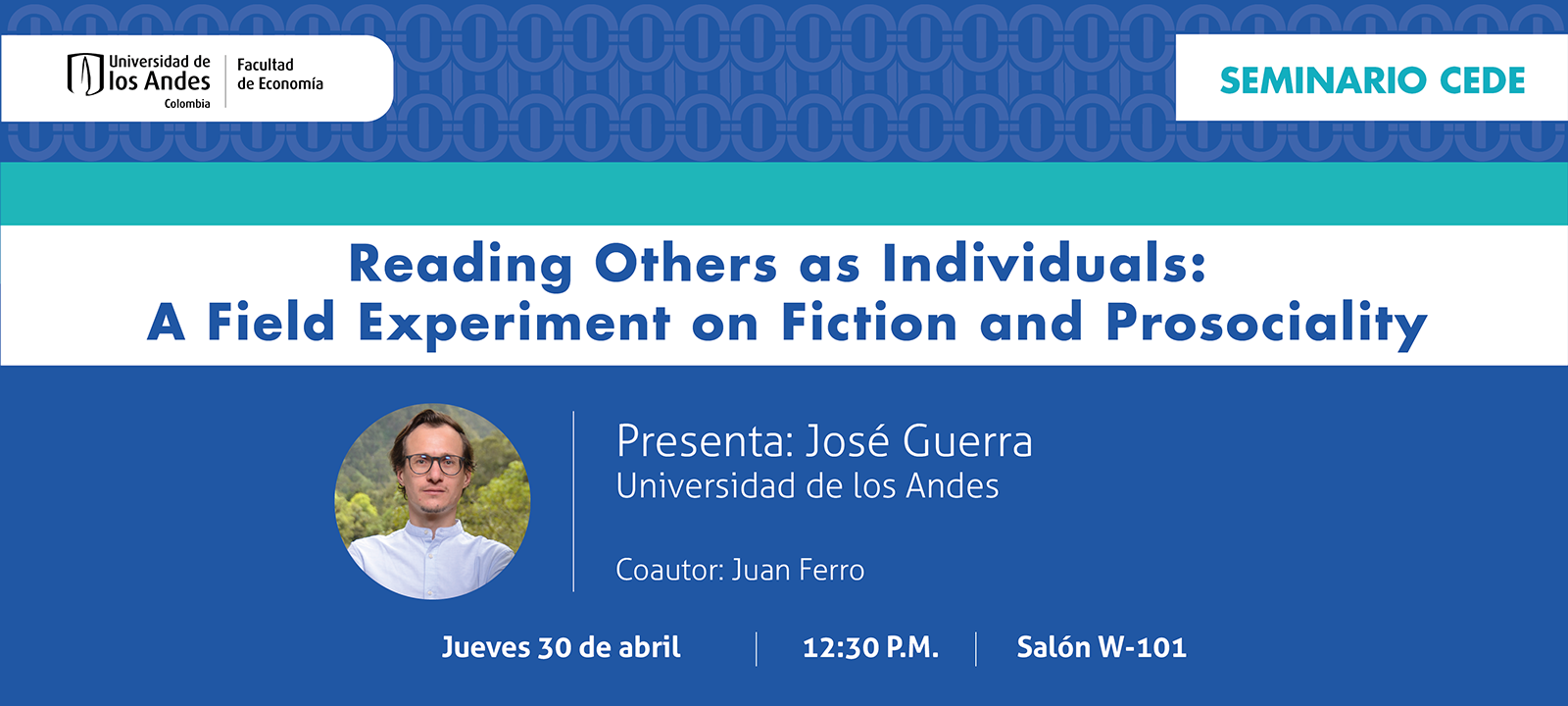

What drives prosocial behavior and how it can be shaped through education interventions? This paper examines whether reading literary fiction can causally influence prosociality. In a pre-registered field experiment, university students were randomly assigned to one of two four-week extracurricular courses: a fiction-reading curriculum or a placebo course focused on behavioral science, with equivalent intensity and reading content. After the intervention, participants took part in experimental sessions featuring incentivized economic games and psychological scales. We find evidence that the fiction course increases prosocial behavior, primarily through higher altruism and greater trustworthiness. The effects appear to reflect shifts in individual preferences rather than updates in social norms. While empathy does not change, we find suggestive evidence that fiction increases transportation and attention to what makes others unique—consistent with a social cognition mechanism centered on valuing individuation rather than self–other overlap or empathy. These findings contribute to the growing literature on how narrative experiences shape social behavior and offer paths for future interventions to increase prosociality without social norms change.