Documento CEDE 2010-34
12
MAR
12
MAR
Activo
Presencial
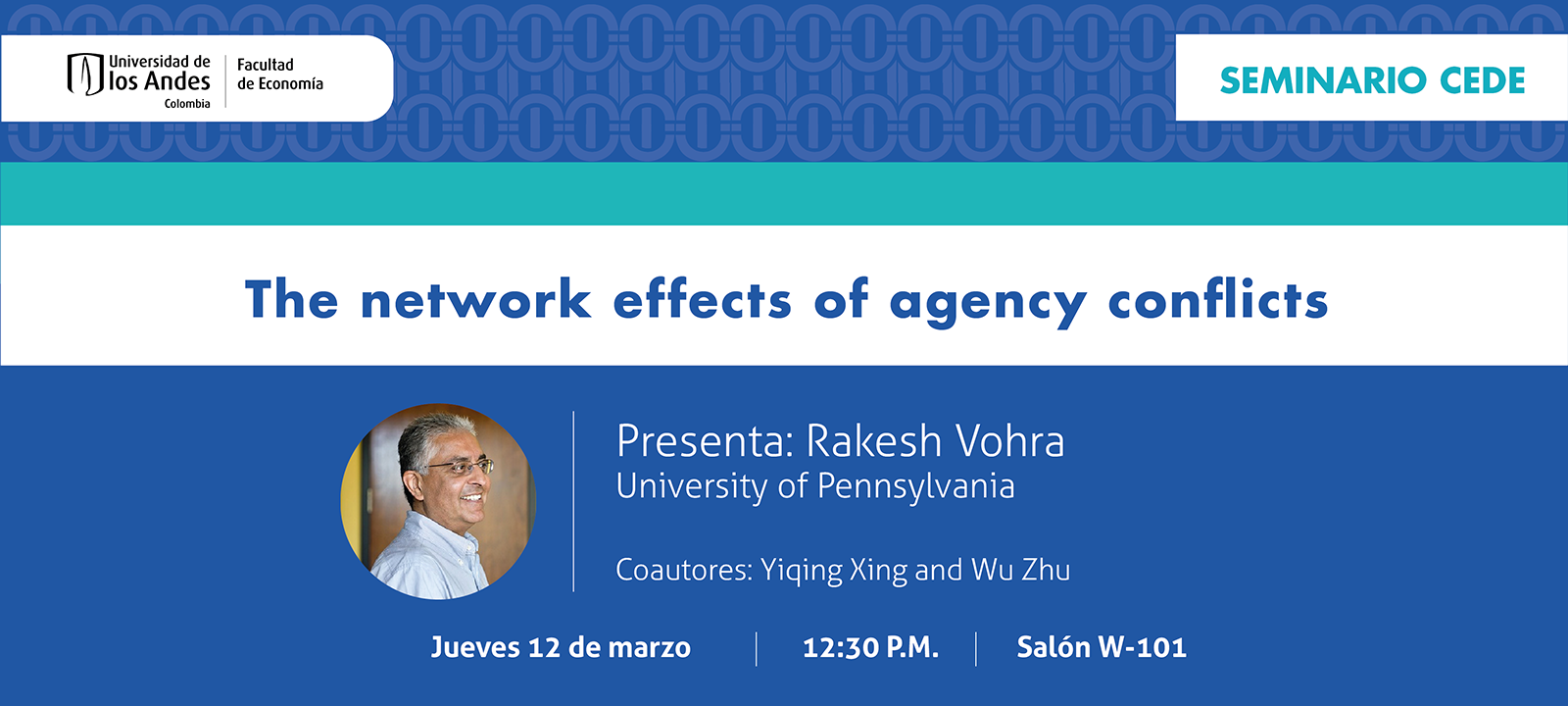
Seminario CEDE - Rakesh Vohra
Facultad de Economía
Facultad de Economía
We consider a collection of firms linked through equity-holdings whose managers choose risky investment decisions in response to an exogenous shock. Agency conflicts arising from a gap between the firm's value and a manager's present rewards (from shares, penalties, bonuses, etc.) or future career concerns will distort the manager's choices. The nature of the conflict determines whether they are overly conservative or overly risky, as well as the strategic complementarity or substitution of the managers choices, independent of the underlying equity network. However, the network will determine the magnitude of these distortions and whether they are amplified, and we characterize when this is so. Furthermore, even when the holding network is fully diversified, within-firm agency conflicts can prevent the aggregate effect of idiosyncratic shocks from diminishing as received wisdom would suggest. This implies that corporate governance plays an important role in macro fluctuations.