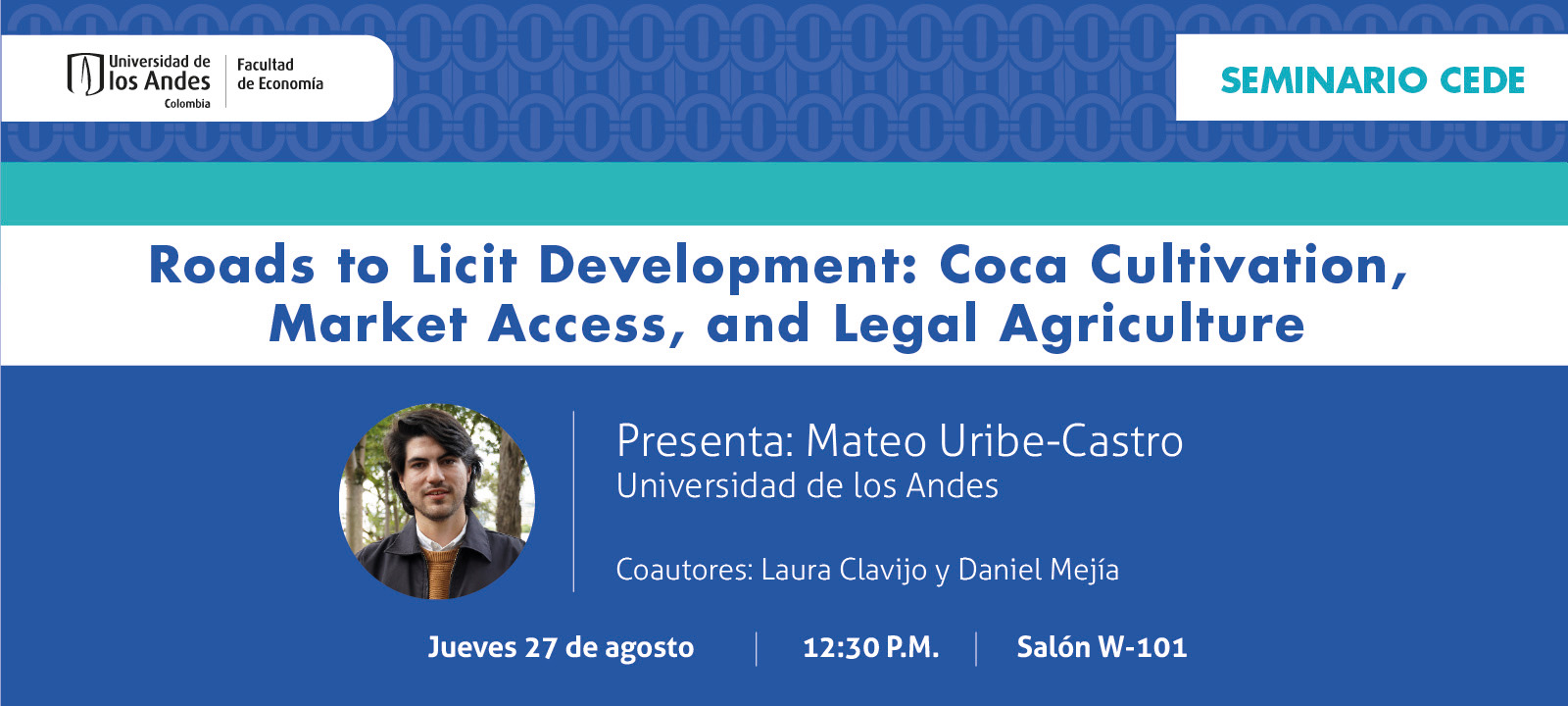
Mateo Uribe-Castro.
Illegal economies often persist because because legal markets are costly to access. In Colombia, coca buyers purchase output at the farm gate, shifting transportation costs from farmers to traffickers, while legal crops require costly commercialization. We explore how a large program of national road construction changed this relative profitability, helping farmers to substitute away from illegal crops. Exploiting the staggered rollout of Colombia's third- and fourth-generation road concessions, we estimate event-study models comparing municipalities before and after receiving a new road. Road construction reduces coca cultivation and expands legal cash crops. We develop a structural model of farmers' land allocation between licit and illicit crops that rationalizes these findings and use it to quantify the counterfactual level of coca cultivation absent road construction.